Improve your health
Improve your health
Improve your health
13. November 2025
HRV Biofeedback for Stress and Anxiety
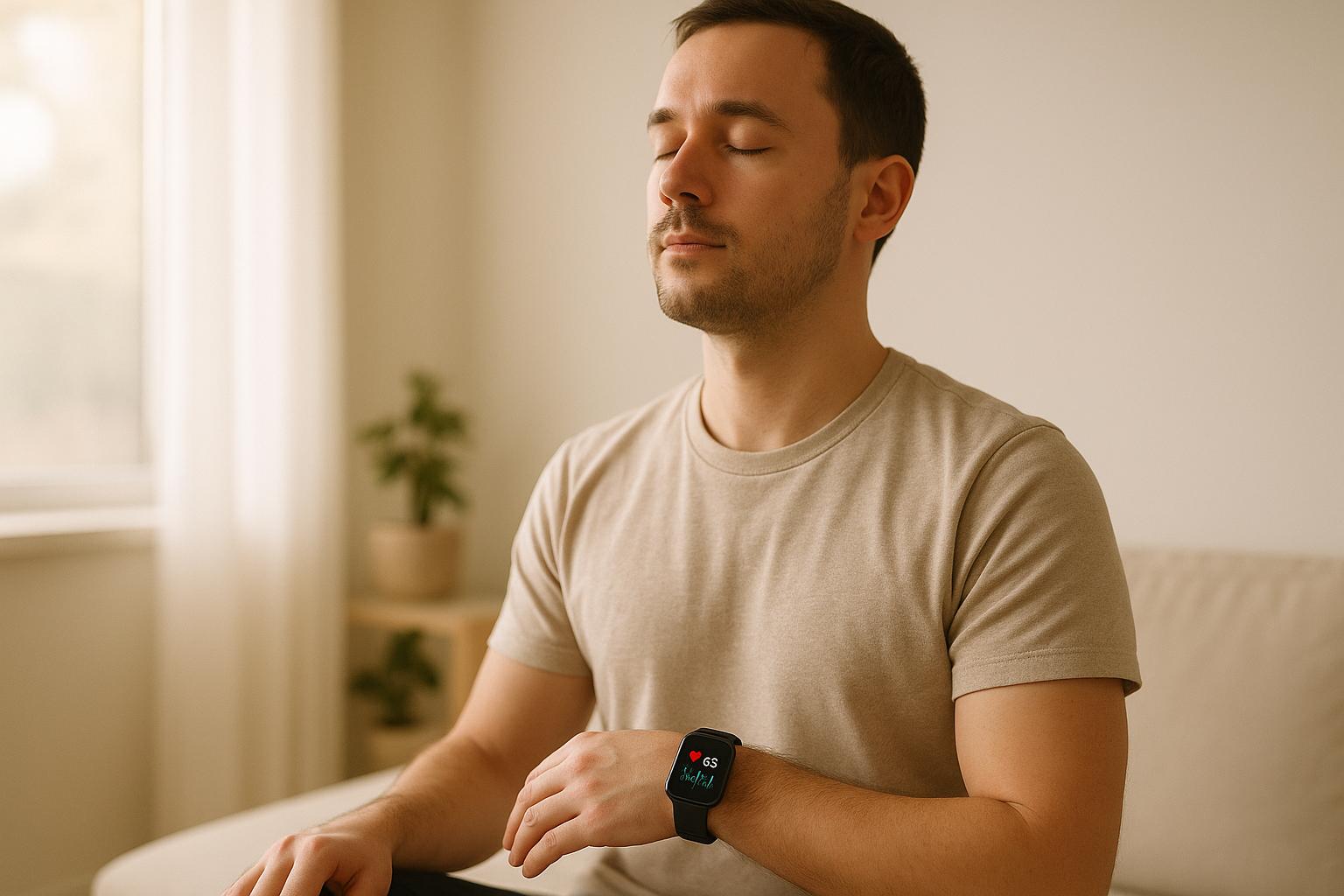
HRV biofeedback is a way to cut down stress and fear by checking and bettering your heart rate change (HRV). It gives live tips to help slow breaths (about 6 per minute), aiding in fixing your body's stress act and making peace. Studies say it can fast drop fear and make mood control better, with long-time use making mind health and toughness stronger.
Key Points:
What it does: Looks at HRV to help with stress by matching heart beat and breath.
Why it works: High HRV means good stress care, but low HRV shows stress is winning.
Right now plus points: Quick fix for fear, more peace, and better focus.
After a while plus points: Better mood control, higher HRV marks, and less long stress.
Who it helps: Good for health workers, students, kids, and grown-ups with stress, fear, or PTSD.
How to use it: Tools and apps lead breath tips and watch steps. Tools like Healify use AI to set advice.
HRV biofeedback is easy to get through wearables, apps, and AI tools, making it simple to add to daily life. Whether you're dealing with work stress, getting ready for a big test, or wanting to better your overall health, this way gives both fast and long-lasting help.
Study Findings on HRV Biofeedback
Key Results from Research
Studies show that HRV biofeedback cuts down on stress and worry. In one small test, people had their RMSSD rise by about 11.4 ms after a short session, with many feeling less anxious [5]. Main HRV scores, like RMSSD and SDNN, often get better with HRV biofeedback, showing improved body and mind balance [1][5]. These gains mean that HRV biofeedback makes the body handle stress better.
A strong case is from a study with frontline healthcare workers. After just five HRV biofeedback times, they felt much less stress and had better mental health. These changes matched up with better HRV scores, including SDNN and the LF/HF ratio [1].
Quick vs. Long-Lasting Effects
The perks of HRV biofeedback show up fast and stay for a long time. Short-term effects include quick cuts in worry and a feel of peace during or right after a session. For example, people under a lot of stress often feel more calm and less worried after just one go [4][8]. In one study, stressed students felt fast relief from worry and a bigger sense of calm after just one session [4]. Also, a 30-minute session helped musicians feel less anxious before a big show [8].
Over time, doing it every day leads to stronger results. Daily practice boosts resting HRV and makes brain networks that handle feelings stronger. This leads to steadier body rhythms and better self-check, helping long-term emotional steadiness and better health [2][3].
Outcomes Across Various Groups
HRV biofeedback's good effects show in many groups. From healthcare workers to students, kids, and teens, the good results are clear and strong. For instance, frontline healthcare workers who went through a five-session plan felt less stress and had better HRV scores like SDNN and the LF/HF ratio [1]. Students who did HRV biofeedback often had better focus [4]. Also, children and teens had less physical and mental issues after HRV biofeedback times [7].
Group | Right Away Effects | Effects Over Time | HRV Gets Better |
|---|---|---|---|
Nurses, Doctors | Less stress, better HRV in 5 times [1] | Less long stress [1] | SDNN, LF/HF balance |
Students | Better focus [4] | RMSSD | |
Grown-ups | Quick calm, good mood [2] | HRV at rest, match | |
Kids/Young people | Not many sick signs [7] | More whole well-being [7] | Many ways |
In short, the facts show that HRV biofeedback is good on its own or with other ways to help deal with stress and worry [6].
How HRV Biofeedback Works
The Science Behind HRV Training
HRV biofeedback makes a loop that helps your body get better at handling stress. It checks your heartbeats and uses visual or sound hints to help you breathe in a good rhythm [2][3]. Experts have found a breathing speed - about 4.5 to 6.5 breaths per minute for most - that makes your heart rate and breath match up. When you breathe slow, your heart and breath make smooth, wave-like lines, not the rough ones seen with stress [2]. With regular use of biofeedback, your body can get and keep this healthy beat, often in just a few tries [2]. This match is good for your heart, lungs, and also helps your brain and feelings stay in control.
Effects on Brain and Nervous System
HRV biofeedback does more than just calm your heart - it makes the link between your brain and feelings stronger. Regular use makes the talk between the medial prefrontal cortex and the amygdala - two brain parts that help control emotions - better [2]. Also, HRV work makes heartbeat-linked signals in the brain's front areas stronger during controlled breath, linking your heart and brain better [2]. A study found that five weeks of daily HRV work made the left orbitofrontal cortex - a brain part linked to emotion control - bigger [2]. On a wide scale, HRV biofeedback makes your autonomic nervous system more balanced. It ups parasympathetic (vagal) work - the part for "rest-and-digest" - and cuts down the sympathetic "fight-or-flight" answer [1][2][3]. This change shows in better HRV scores like SDNN and RMSSD, with lower stress signs like salivary alpha-amylase, boosting your skill to manage stress [4][5].
Breathing and Emotional Control Connection
Controlled breathing links your body and feelings. Good feelings, like thankfulness and care, go with smooth heart rhythms, while bad feelings, such as worry or upset, lead to rough ones [2]. The slow, even breathing in HRV training brings up your body’s natural calm answer, making you feel more at peace and in charge. This cuts stress hormones, keeps feelings even, and boosts well-being [2][3][4]. The key is in turning on the vagus nerve, which acts like a brake on your stress answer, helping you move to a calm state.
Breathing Way | Heart Beat Way | Feel of Stress or Calm |
|---|---|---|
Slow, in time (4.5–6.5 BPM) | Smooth, like a wave | Less stress, more calm |
Quick, not deep | Not steady, wild | More worry, more tight feelings |
As it comes, free | Changes often | Mixed feelings |
The link between how we breathe and how we feel is why HRV biofeedback often works fast. Just one 30-minute try can greatly cut down worry in high-stress times, making it a useful way for fast calm.
Simple Ways to Use HRV Biofeedback
Basic Training Steps
HRV biofeedback plans often use a step-by-step way to lessen stress and worry. Each meet lasts for 30–60 minutes and happens once or twice a week, over 4–10 weeks [1][6]. This sets a pace your body can keep up with as it learns new ways.
Each time starts with checking your baseline HRV. Then, the main part starts: you breathe slow at your own best pace, around 4.5–6.5 breaths a minute [1][9]. While you do this, you see or hear instant cues that show how your heart beat changes with your breaths. The session ends by looking at your progress and seeing how far you've come from the start.
For example, one study with healthcare staff used a 5-session approach and saw clear drops in stress and mental problems. They also found better HRV scores like SDNN and LF/HF ratio [1]. Another small study noted that people upped their HRV (RMSSD) by about +11.4 ms just after one biofeedback time, proving how fast your body can adjust [5].
With regular use over weeks, these steps make real changes in how your body deals with stress. Lots of people use these plans in clinics, at home, or even from afar.
Who and Where is HRV Biofeedback Used
HRV biofeedback works in many places to ease stress and worry. In clinical therapy, it helps with issues like worry, sadness, and PTSD. Pros help patients with custom plans, change training as needed, and keep an eye on progress [3][6].
Remote healthcare makes it easy to get HRV help through online meets. This way has been key for people who can't easily get to face-to-face care. It's become very useful lately, letting folks get help while staying home.
The biggest jump in use is in personal wellness, with devices and apps [3]. Athletes use it to keep a good balance of work and rest, and students to handle exam stress. Healthcare staff also use it to cut stress fast when needed.
Studies show it works: 70% of research finds real betterment in signs of worry, sadness, panic, and PTSD with HRV biofeedback [3]. This tells us why it’s not just for clinics anymore but also a common pick for handling daily stress.
Mixing HRV Biofeedback with Other Methods
HRV biofeedback is even more useful when mixed with other ways to manage stress. For example, adding it to mindfulness meditation lifts both mood and body balance [2]. The breathing in HRV training fits well with mindfulness, boosting their good results.
When mixed with CBT, HRV biofeedback hits stress from two sides: mind and body [2][6]. CBT changes bad thought loops, and HRV biofeedback calms the body's stress reaction. This mix lets you spot stress thoughts and use breath skills to get back in control.
Some find that starting with HRV breath work helps move into long meditate times. The even heart beats from biofeedback can make relax and focus better in meditate.
Healify’s digital tool goes further, mixing real-time HRV watch with AI coach cut for your stress styles [3]. This setup gives fast tips while you train and keeps giving advice to blend stress fix skills into daily life.
This full way works since stress hits many body parts. While HRV biofeedback trains your body's nerve system, adding mind skills gives a full tool set. Together, they tackle both body and mind stress sides, making a path for more tuned and deep fixes.
Tech and AI-Powered Ways to Check HRV
Wearables and Phone Apps for HRV
Things you wear like smartwatches and fitness bands now track your heart rate changes, making it easy to keep an eye on your stress levels every day. These tools measure your heart rate all the time and help you manage stress no matter where you are.
With these gadgets, phone apps show your stats right away. They show things like the time between heartbeats and how your heart’s work changes [2]. This helps you keep a calm and steady heart rate by showing you how to breathe slowly, around 5-6 times a minute [2].
A huge study looking at data from 1.8 million people using these apps showed how big and helpful these tech tools can be - the most data ever looked at in this area [2]. These apps watch your heart rate changes all the time at a low cost, letting you check it when you want. They even show how your heart rate changes with what you do every day, helping you see what makes you stressed during the day [2].
As tech gets better, these tools get smarter and mix different types of data to help you manage stress in a full way.
How Healify Changes HRV Checks
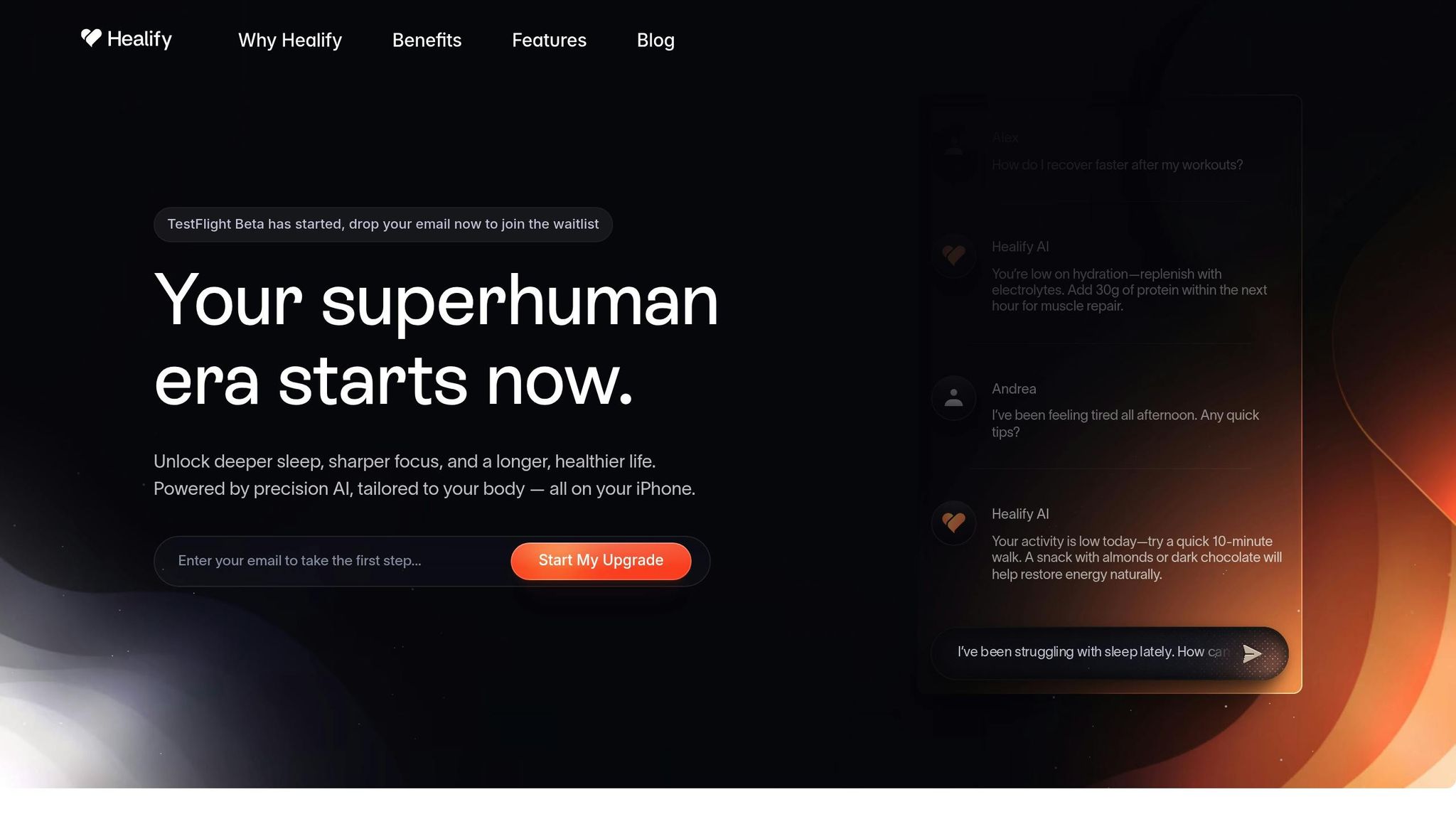
Healify isn’t just tracking your heart rate changes; it puts this info into a bigger picture. It uses info from your wearables, your biometrics, blood tests, and how you live to make a personal plan to manage your stress.
Acting like a health coach all day, Healify watches your stress levels in real time and gives a heads up when you’re getting stressed. If your heart rate info shows you’re stressed, it quickly gives you tips that fit your needs to help you handle it.
"Stop stress before it hits, not after"
Healify
Healify doesn't flood users with tons of data; it changes it into easy, useful tips. For example, if your HRV signs point to stress at certain times, the AI coach may suggest you do some deep breaths, make small life changes, or try out chill methods that fit your case.
Healify works well with well-known devices such as the Apple Watch and iPhone. It gathers HRV info and other health numbers. This gives a full view of your stress and how well you are all-around.
"Get clear guidance when you need it most based on your wearables, biometrics, bloodwork and lifestyle"
Healify
Healify adds HRV biofeedback into a big health plan to help users deal with stress and fear better within a full health world.
AI Teaching for Mind Health
Healify isn't just about checks on HRV - it uses AI to make its stress aid tools even better. The system looks over many data to find out what makes you stressed, when best to train, and the top ways to step in. Studies say that people with more stress see bigger gains from biofeedback than folks with less stress [4].
The AI coach, Anna, gives tips made just for you, based on your HRV, sleep, how much you move, and more. It spots mood issues that change your heart's beat and gives fast ways to fix them [2].
More than just tackling stress as it comes, Anna watches HRV changes over time, showing you how sleep, workout, eating, and friends play into how you react to stress. Often using biofeedback with AI's help can boost HRV at rest and even change how your brain controls feelings [2]. As your HRV gets better and you learn new ways to handle stress, the AI shifts its tips to stay up to date.
"Healify's AI-powered health coach simplifies complex data into personalized, actionable insights"
Healify
This kind of custom care makes HRV biofeedback work much better than basic fixes. Whether it’s deep breaths in the morning, letting go of stress at noon, or calming down at night, Healify changes your health numbers into a simple, clear plan to make mental health better.
HRV - Introduction to Real-Time Biofeedback for Stress Management and Performance
Ending Thoughts
HRV biofeedback has proven good at easing stress and worry in many people. Studies show it does a lot for mental health, with one report showing big drops in signs of worry, sadness, fear, and PTSD[3]. For instance, in one small test, sadness levels fell from 2.93 to 1.29, while HRV went up by 11.4 ms[5].
What makes HRV biofeedback great is two things: it gives quick help and builds lasting calm. One use can cut down a lot of worry, and doing it a lot keeps your feelings steady over time[2]. Even short plans work well, like those used for health workers with lots of stress[1].
More people can reach HRV biofeedback than ever with tech like wearables and phone apps. Apps like Healify track HRV and mix it with more health info, giving users easy, smart tips from their health data.
This way is changing how we handle stress. By spotting stress early and using smart, made-for-you help, HRV biofeedback keeps worry from getting too big. With strong study back-up, clear results in different people, and easy-to-use tech, HRV biofeedback is becoming a key way for people to look after their own mental health.
FAQs
How can HRV biofeedback make your mind stronger and help you stay calm over time?
HRV biofeedback helps you control your heart rate jumps, which tell you how well your body keeps a balance between fight mode and rest mode. By using this method often, you get better at dealing with stress and stay more calm in your mind.
When you add HRV biofeedback to your daily life, you grow stronger in handling emotions, get better focus, and have less worry and stress. This way, it gears your body up to recover quickly from tough times, leading to better mental health.
How does HRV biofeedback hold up against old ways of easing stress and fear?
HRV biofeedback is a good way to handle stress and fear. It often works with things like focus, deep breaths, or talking with someone. By watching and fixing how you differ in heart rate, it shows live info, making it easier to handle stress.
What makes HRV biofeedback stand out is its mix of tech with tested ways, giving personal insights and watching how you do over time. This blend is great for those who like using data to get better in mind health. It offers a made-for-you and fun way that many find is easier to stick with than old ways.
Related Blog Posts
HRV biofeedback is a way to cut down stress and fear by checking and bettering your heart rate change (HRV). It gives live tips to help slow breaths (about 6 per minute), aiding in fixing your body's stress act and making peace. Studies say it can fast drop fear and make mood control better, with long-time use making mind health and toughness stronger.
Key Points:
What it does: Looks at HRV to help with stress by matching heart beat and breath.
Why it works: High HRV means good stress care, but low HRV shows stress is winning.
Right now plus points: Quick fix for fear, more peace, and better focus.
After a while plus points: Better mood control, higher HRV marks, and less long stress.
Who it helps: Good for health workers, students, kids, and grown-ups with stress, fear, or PTSD.
How to use it: Tools and apps lead breath tips and watch steps. Tools like Healify use AI to set advice.
HRV biofeedback is easy to get through wearables, apps, and AI tools, making it simple to add to daily life. Whether you're dealing with work stress, getting ready for a big test, or wanting to better your overall health, this way gives both fast and long-lasting help.
Study Findings on HRV Biofeedback
Key Results from Research
Studies show that HRV biofeedback cuts down on stress and worry. In one small test, people had their RMSSD rise by about 11.4 ms after a short session, with many feeling less anxious [5]. Main HRV scores, like RMSSD and SDNN, often get better with HRV biofeedback, showing improved body and mind balance [1][5]. These gains mean that HRV biofeedback makes the body handle stress better.
A strong case is from a study with frontline healthcare workers. After just five HRV biofeedback times, they felt much less stress and had better mental health. These changes matched up with better HRV scores, including SDNN and the LF/HF ratio [1].
Quick vs. Long-Lasting Effects
The perks of HRV biofeedback show up fast and stay for a long time. Short-term effects include quick cuts in worry and a feel of peace during or right after a session. For example, people under a lot of stress often feel more calm and less worried after just one go [4][8]. In one study, stressed students felt fast relief from worry and a bigger sense of calm after just one session [4]. Also, a 30-minute session helped musicians feel less anxious before a big show [8].
Over time, doing it every day leads to stronger results. Daily practice boosts resting HRV and makes brain networks that handle feelings stronger. This leads to steadier body rhythms and better self-check, helping long-term emotional steadiness and better health [2][3].
Outcomes Across Various Groups
HRV biofeedback's good effects show in many groups. From healthcare workers to students, kids, and teens, the good results are clear and strong. For instance, frontline healthcare workers who went through a five-session plan felt less stress and had better HRV scores like SDNN and the LF/HF ratio [1]. Students who did HRV biofeedback often had better focus [4]. Also, children and teens had less physical and mental issues after HRV biofeedback times [7].
Group | Right Away Effects | Effects Over Time | HRV Gets Better |
|---|---|---|---|
Nurses, Doctors | Less stress, better HRV in 5 times [1] | Less long stress [1] | SDNN, LF/HF balance |
Students | Better focus [4] | RMSSD | |
Grown-ups | Quick calm, good mood [2] | HRV at rest, match | |
Kids/Young people | Not many sick signs [7] | More whole well-being [7] | Many ways |
In short, the facts show that HRV biofeedback is good on its own or with other ways to help deal with stress and worry [6].
How HRV Biofeedback Works
The Science Behind HRV Training
HRV biofeedback makes a loop that helps your body get better at handling stress. It checks your heartbeats and uses visual or sound hints to help you breathe in a good rhythm [2][3]. Experts have found a breathing speed - about 4.5 to 6.5 breaths per minute for most - that makes your heart rate and breath match up. When you breathe slow, your heart and breath make smooth, wave-like lines, not the rough ones seen with stress [2]. With regular use of biofeedback, your body can get and keep this healthy beat, often in just a few tries [2]. This match is good for your heart, lungs, and also helps your brain and feelings stay in control.
Effects on Brain and Nervous System
HRV biofeedback does more than just calm your heart - it makes the link between your brain and feelings stronger. Regular use makes the talk between the medial prefrontal cortex and the amygdala - two brain parts that help control emotions - better [2]. Also, HRV work makes heartbeat-linked signals in the brain's front areas stronger during controlled breath, linking your heart and brain better [2]. A study found that five weeks of daily HRV work made the left orbitofrontal cortex - a brain part linked to emotion control - bigger [2]. On a wide scale, HRV biofeedback makes your autonomic nervous system more balanced. It ups parasympathetic (vagal) work - the part for "rest-and-digest" - and cuts down the sympathetic "fight-or-flight" answer [1][2][3]. This change shows in better HRV scores like SDNN and RMSSD, with lower stress signs like salivary alpha-amylase, boosting your skill to manage stress [4][5].
Breathing and Emotional Control Connection
Controlled breathing links your body and feelings. Good feelings, like thankfulness and care, go with smooth heart rhythms, while bad feelings, such as worry or upset, lead to rough ones [2]. The slow, even breathing in HRV training brings up your body’s natural calm answer, making you feel more at peace and in charge. This cuts stress hormones, keeps feelings even, and boosts well-being [2][3][4]. The key is in turning on the vagus nerve, which acts like a brake on your stress answer, helping you move to a calm state.
Breathing Way | Heart Beat Way | Feel of Stress or Calm |
|---|---|---|
Slow, in time (4.5–6.5 BPM) | Smooth, like a wave | Less stress, more calm |
Quick, not deep | Not steady, wild | More worry, more tight feelings |
As it comes, free | Changes often | Mixed feelings |
The link between how we breathe and how we feel is why HRV biofeedback often works fast. Just one 30-minute try can greatly cut down worry in high-stress times, making it a useful way for fast calm.
Simple Ways to Use HRV Biofeedback
Basic Training Steps
HRV biofeedback plans often use a step-by-step way to lessen stress and worry. Each meet lasts for 30–60 minutes and happens once or twice a week, over 4–10 weeks [1][6]. This sets a pace your body can keep up with as it learns new ways.
Each time starts with checking your baseline HRV. Then, the main part starts: you breathe slow at your own best pace, around 4.5–6.5 breaths a minute [1][9]. While you do this, you see or hear instant cues that show how your heart beat changes with your breaths. The session ends by looking at your progress and seeing how far you've come from the start.
For example, one study with healthcare staff used a 5-session approach and saw clear drops in stress and mental problems. They also found better HRV scores like SDNN and LF/HF ratio [1]. Another small study noted that people upped their HRV (RMSSD) by about +11.4 ms just after one biofeedback time, proving how fast your body can adjust [5].
With regular use over weeks, these steps make real changes in how your body deals with stress. Lots of people use these plans in clinics, at home, or even from afar.
Who and Where is HRV Biofeedback Used
HRV biofeedback works in many places to ease stress and worry. In clinical therapy, it helps with issues like worry, sadness, and PTSD. Pros help patients with custom plans, change training as needed, and keep an eye on progress [3][6].
Remote healthcare makes it easy to get HRV help through online meets. This way has been key for people who can't easily get to face-to-face care. It's become very useful lately, letting folks get help while staying home.
The biggest jump in use is in personal wellness, with devices and apps [3]. Athletes use it to keep a good balance of work and rest, and students to handle exam stress. Healthcare staff also use it to cut stress fast when needed.
Studies show it works: 70% of research finds real betterment in signs of worry, sadness, panic, and PTSD with HRV biofeedback [3]. This tells us why it’s not just for clinics anymore but also a common pick for handling daily stress.
Mixing HRV Biofeedback with Other Methods
HRV biofeedback is even more useful when mixed with other ways to manage stress. For example, adding it to mindfulness meditation lifts both mood and body balance [2]. The breathing in HRV training fits well with mindfulness, boosting their good results.
When mixed with CBT, HRV biofeedback hits stress from two sides: mind and body [2][6]. CBT changes bad thought loops, and HRV biofeedback calms the body's stress reaction. This mix lets you spot stress thoughts and use breath skills to get back in control.
Some find that starting with HRV breath work helps move into long meditate times. The even heart beats from biofeedback can make relax and focus better in meditate.
Healify’s digital tool goes further, mixing real-time HRV watch with AI coach cut for your stress styles [3]. This setup gives fast tips while you train and keeps giving advice to blend stress fix skills into daily life.
This full way works since stress hits many body parts. While HRV biofeedback trains your body's nerve system, adding mind skills gives a full tool set. Together, they tackle both body and mind stress sides, making a path for more tuned and deep fixes.
Tech and AI-Powered Ways to Check HRV
Wearables and Phone Apps for HRV
Things you wear like smartwatches and fitness bands now track your heart rate changes, making it easy to keep an eye on your stress levels every day. These tools measure your heart rate all the time and help you manage stress no matter where you are.
With these gadgets, phone apps show your stats right away. They show things like the time between heartbeats and how your heart’s work changes [2]. This helps you keep a calm and steady heart rate by showing you how to breathe slowly, around 5-6 times a minute [2].
A huge study looking at data from 1.8 million people using these apps showed how big and helpful these tech tools can be - the most data ever looked at in this area [2]. These apps watch your heart rate changes all the time at a low cost, letting you check it when you want. They even show how your heart rate changes with what you do every day, helping you see what makes you stressed during the day [2].
As tech gets better, these tools get smarter and mix different types of data to help you manage stress in a full way.
How Healify Changes HRV Checks
Healify isn’t just tracking your heart rate changes; it puts this info into a bigger picture. It uses info from your wearables, your biometrics, blood tests, and how you live to make a personal plan to manage your stress.
Acting like a health coach all day, Healify watches your stress levels in real time and gives a heads up when you’re getting stressed. If your heart rate info shows you’re stressed, it quickly gives you tips that fit your needs to help you handle it.
"Stop stress before it hits, not after"
Healify
Healify doesn't flood users with tons of data; it changes it into easy, useful tips. For example, if your HRV signs point to stress at certain times, the AI coach may suggest you do some deep breaths, make small life changes, or try out chill methods that fit your case.
Healify works well with well-known devices such as the Apple Watch and iPhone. It gathers HRV info and other health numbers. This gives a full view of your stress and how well you are all-around.
"Get clear guidance when you need it most based on your wearables, biometrics, bloodwork and lifestyle"
Healify
Healify adds HRV biofeedback into a big health plan to help users deal with stress and fear better within a full health world.
AI Teaching for Mind Health
Healify isn't just about checks on HRV - it uses AI to make its stress aid tools even better. The system looks over many data to find out what makes you stressed, when best to train, and the top ways to step in. Studies say that people with more stress see bigger gains from biofeedback than folks with less stress [4].
The AI coach, Anna, gives tips made just for you, based on your HRV, sleep, how much you move, and more. It spots mood issues that change your heart's beat and gives fast ways to fix them [2].
More than just tackling stress as it comes, Anna watches HRV changes over time, showing you how sleep, workout, eating, and friends play into how you react to stress. Often using biofeedback with AI's help can boost HRV at rest and even change how your brain controls feelings [2]. As your HRV gets better and you learn new ways to handle stress, the AI shifts its tips to stay up to date.
"Healify's AI-powered health coach simplifies complex data into personalized, actionable insights"
Healify
This kind of custom care makes HRV biofeedback work much better than basic fixes. Whether it’s deep breaths in the morning, letting go of stress at noon, or calming down at night, Healify changes your health numbers into a simple, clear plan to make mental health better.
HRV - Introduction to Real-Time Biofeedback for Stress Management and Performance
Ending Thoughts
HRV biofeedback has proven good at easing stress and worry in many people. Studies show it does a lot for mental health, with one report showing big drops in signs of worry, sadness, fear, and PTSD[3]. For instance, in one small test, sadness levels fell from 2.93 to 1.29, while HRV went up by 11.4 ms[5].
What makes HRV biofeedback great is two things: it gives quick help and builds lasting calm. One use can cut down a lot of worry, and doing it a lot keeps your feelings steady over time[2]. Even short plans work well, like those used for health workers with lots of stress[1].
More people can reach HRV biofeedback than ever with tech like wearables and phone apps. Apps like Healify track HRV and mix it with more health info, giving users easy, smart tips from their health data.
This way is changing how we handle stress. By spotting stress early and using smart, made-for-you help, HRV biofeedback keeps worry from getting too big. With strong study back-up, clear results in different people, and easy-to-use tech, HRV biofeedback is becoming a key way for people to look after their own mental health.
FAQs
How can HRV biofeedback make your mind stronger and help you stay calm over time?
HRV biofeedback helps you control your heart rate jumps, which tell you how well your body keeps a balance between fight mode and rest mode. By using this method often, you get better at dealing with stress and stay more calm in your mind.
When you add HRV biofeedback to your daily life, you grow stronger in handling emotions, get better focus, and have less worry and stress. This way, it gears your body up to recover quickly from tough times, leading to better mental health.
How does HRV biofeedback hold up against old ways of easing stress and fear?
HRV biofeedback is a good way to handle stress and fear. It often works with things like focus, deep breaths, or talking with someone. By watching and fixing how you differ in heart rate, it shows live info, making it easier to handle stress.
What makes HRV biofeedback stand out is its mix of tech with tested ways, giving personal insights and watching how you do over time. This blend is great for those who like using data to get better in mind health. It offers a made-for-you and fun way that many find is easier to stick with than old ways.
Related Blog Posts
Endlich die Kontrolle über Ihre Gesundheit übernehmen

Endlich die Kontrolle über Ihre Gesundheit übernehmen
Endlich die Kontrolle über Ihre Gesundheit übernehmen