Improve your health
Improve your health
Improve your health
14. November 2025
AI Tools for Cognitive Stress Recovery

AI tools are changing the way we manage stress by offering personalized, real-time support. These apps analyze data from wearables, daily habits, and even your words to detect stress early and suggest actionable steps. Tools like Healify monitor heart rate, sleep, and activity to provide tailored advice, such as taking a short walk or drinking water. They also predict stress triggers, helping you prevent issues before they escalate. Apps like Wysa and Youper focus on emotional well-being, offering mood tracking and therapy techniques. With AI, stress management becomes proactive, precise, and accessible, guiding you toward better mental and physical health.
The Role of AI and Anxiety Recovery
AI Technologies for Stress Monitoring and Analysis
AI tools that we use today can watch and check our body and actions. They can see small signs of stress that we might not feel or know about.
AI Data Analysis for Stress Detection
AI does a good job at finding stress inside the things we do and the data we share each day. Small gadgets you wear watch key things like how fast your heart beats, how well you sleep, and how much you move. All this helps make a full picture of your body’s health. For instance, Healify takes data from your phone, watch, and other devices to check your stress all the time. When Healify sees a "CORTISOL PEAK DETECTED" or notes that your Health score went down - like by 7%[1] - it tells you fast and gives tips you can use right away. This way, you hear about stress even before you can feel it.
Natural Language Processing for Stress Indicators
Your words can show your stress even if your body does not. Healify’s smart coach uses AI that listens and looks at the words you use, your tone, and how you say things. It seeks signs like worry or feeling too tired. If you say lines like "I’ve been struggling with sleep" or "I’m feeling drained today," AI links these to stress. Journals that use this tech watch for changes in what you write or how you sound. If you start to use sad words or keep talking about stress, the tool spots it and lets you know.
Predictive Analytics for Stress Prevention
AI can do more than spot stress - it tries to see it coming. Healify has a tool called Stress Defense. It looks at how your body acts and how you live to find times when stress might be high. When it sees this, it sends you a "Instant Alert" and gives a tip, like "Stop stress before it hits, not after."[1] With time, this tool learns what makes you feel stress and helps give advice, such as go for a walk or take deep breaths, to help keep stress from getting worse.
Easy AI Tools for Stress Help
Smart systems now help people feel less stress. These tools give tips just for you, help with work, and offer kind words when you feel down.
Healify: Your Stress Helper
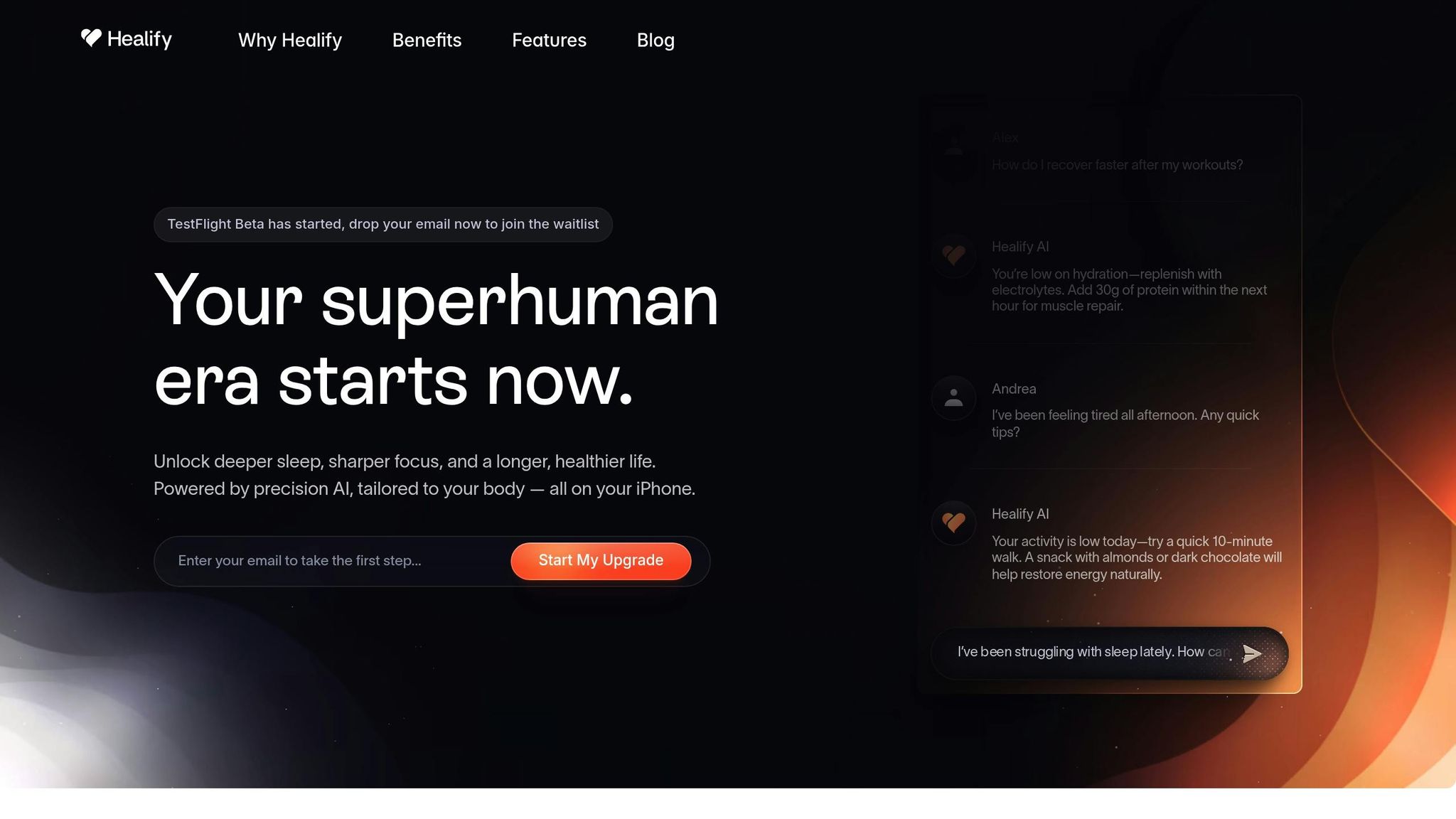
Healify works like a coach you can call on for help at any hour. It checks how you feel by looking at numbers from your phone, watch, and other gear. It knows when you get stressed and gives advice you can use right away.
Healify’s coach, Anna, is here all the time. If your stress hormone jumps to 250, Healify sends you a note. It may say, “Go take a breath,” or “Drink some water.” Healify takes hard health words and makes them easy for you. You can ask, “How do I get better fast after I work out?” Healify may say, “Have water and eat some protein soon. That will help your body.” All tips match how you work out and what you need.
The app also has ways to stop stress before it grows. If it sees signs that you might get tense, it tells you to do simple things like walk or slow your breath. Beyond this, other smart helpers make jobs and tasks less hard and keep your mind clear.
Smart Helpers for Tasks
If you have too much to do, AI tools like ChatGPT and Notion AI step in. ChatGPT can break big jobs into small easy steps, write notes, or help you put thoughts in order. Notion AI is good for writing what you talk about in meetings, making lists, and sorting ideas. These helpers take care of the small stuff so you can rest or think about new things.
AI Apps for Mind and Mood
Apps that use AI can help you fix busy or sad minds. Wysa is one such app with many users in lots of lands. It uses steps proven to help feelings, like talking things out and simple therapy ways. Wysa checks in with you, asks how you feel, and gives you good mood steps. It got special praise for helping minds from big health groups.
Youper helps in other ways. It looks at your mood each day and uses tricks from top care styles. Most people say they feel better after using Youper. People trust it, with high scores from users.
For folks who like to talk, Yuna lets you speak with the AI using your own voice. It keeps talks safe and private, too. People rate it high and feel their talks are safe.
These apps look at your words and can spot stress, worry, or sadness. They then give you tips and small steps to help you feel good, stay calm, and work through hard feelings. You can use them when you want help or need a lift.
Main Signs of Stress and Healing
Smart apps use AI to help spot stress early and help you heal by looking at key signs. These signs let apps like Healify find problems fast and give you simple tips made just for you.
Signs That AI Watches
Heart beat change is very important for stress. It looks at the gap between each heart beat. When you are tense, this gap gets smaller. When you feel calm, the gap gets bigger. Watching heart beat change helps apps see how your body deals with stress.
How well you sleep helps show if you are healing. Apps look at how long you sleep, how deep your sleep is, and the time spent in light, deep, and dream sleep. Healify finds habits that may raise your stress if sleep is bad. Bad sleep means you may need more rest and care.
Quick stress signs are sudden things like a fast heart beat or less moving. Healify points out fast changes, like a spike in stress hormone, so you can act fast.
Emotions tracking checks your mood and how you talk or show feelings. By looking at words you use and how you feel, apps learn more about your mind and mood.
Other signs like how much oxygen is in your blood, how much water you drink, and how much you move each day are watched too. Healify uses these signs to warn you, like "LOW BLOOD OXYGEN", or "not much moving today."
These signs all come together so the app can help with ideas when you need them.
How AI Turns Signs Into Help for You
Healify’s AI looks at these signs and turns them into steps that help you get better. If your health score goes down, it gives you advice that helps plug gaps and brings you back.
When the AI sees what works and what does not, it makes better suggestions. If you do less and your heart beat gap gets small, the app may tell you to walk, drink water, or breathe deep. If something big happens fast, it may tell you to act quick.
The app also learns what helps you by seeing what makes signs better over time. If deep breaths help your heart beat change, it will tell you to do more breathing next time.
Healify gives you a clear score, like “75 out of 100,” to show if you feel good or not. If your score goes down, the app will show you simple steps, like “Drink water,” or “Go for a short walk and eat a light snack.”
This way, the app turns lots of signs into easy tips that help you feel calm, rest, and heal.
"From stress levels to sleep patterns, it provides personalized insights and actionable advice, empowering you to optimize your physical and mental well-being instantly." [1]
Build Strong Minds with Help from AI
Cognitive resilience means your mind can bounce back when you feel stress and still work well, even when life is hard. AI tools now help people build this skill by giving ways to deal with stress before it gets too big. These tools look at your data all the time and give you quick, custom help to make stress easier to handle.
AI Helps You Change How You Act
With help from AI, you can form good habits and lower stress. For example, if the system sees your heart rate go up, it may tell you to try breathing slow or take a quiet moment. It might say to go for a short walk or stretch to feel more awake. You can also learn to break big tasks into small steps, take breaks, and feel less weighed down. As time goes on, AI learns what fits you best and it changes its advice to match your life. These tools help shape long-term plans that grow with your needs.
AI Coaches Guide You as You Recover
AI plans are made to grow with you. Look at Healify’s AI coach, Anna. Anna checks your data and shifts your plan as things change. If you sleep less or feel tense, Anna may show new ways to relax or share food tips that suit you. With Anna, you have help any time you need it. As Anna sees how you react, her help gets even better, so you can build a strong mind that stays with you.
"Healify changed that, giving me clear guidance. My energy has improved, and I now know exactly what steps to take for better health."
Sophie, Fitness Enthusiast [1]
The Future of AI in Easing Stress and Helping the Mind
AI will soon do much more than just help with stress after it starts. It will work to stop stress before it grows. Soon, AI will not just wait to act. It will look for early stress signs and step in fast. This new way is a big change in care for the mind. Now, help will be there all the time, made just for you.
Watching the body in real time will soon be normal. AI tools will check things like your heart rate, how you sleep, and stress in your body. They do this with things you wear or small tools. When something is off, like lost sleep or stress that goes up, your AI will know first and give you steps to feel calm and safe. What it tells you to do will match your own needs.
These new ways work. The NHS said in a 2025 study that people who used AI for stress saw a 42% rise in showing up for sessions and a 25% boost in getting better. One more study said people felt 54% less stress after just a week with AI care [2][3]. This shows that AI helps people feel better and it is also easy for them.
Care made just for you will be even better. AI won’t just keep a note of what helps you. It will figure out why certain things work for you. By looking at lots of data on you, the AI will see what makes your stress worse and what helps you heal. One tool, Healify, leads the way. Healify uses real-time facts from wearables, your health, and how you live to make plans for each person. The AI sees if you need slow breaths in the morning or a walk in the day. Your helper AI will shift with you, to get you the best care.
A person who used Healify told their story:
"I used to feel overwhelmed by health data on my iPhone and Apple Watch. Healify changed that, giving me clear guidance. My energy has improved, and I now know exactly what steps to take for better health." - Sophie, Fitness Enthusiast [1]
Spoken word-based tools are a big step ahead. These tools let you talk to your AI helper in hard times, like when you drive or work out. You do not need to stop to type; you just speak. The AI will hear how you sound, pick up if you are upset or stressed, and give the help or words you need for your mood.
AI will soon work much closer with health care. Smart tools will keep watch all the time, and send what they find right to your health records. Your doctor will see how your stress goes up and down before you go to see them. This kind of care uses smart tech for the easy, day-to-day checks and fixes, while your doctor looks after the hard cases and builds trust with you over time.
Smart AI looks ahead, picking out what brings stress your way before it gets too big. It might see you get tense near big work times and when you do not sleep well. It can change how it helps you so you feel less stress next time.
The way AI helps people with stress will change. It won't just be about what stress you have now. It will be about knowing you, seeing what you need, and being there right when you need help. With new ways to help, AI will not just lower stress, but help you grow strong over time with smart, kind support. This way is set to make stress less of a problem and help people feel and live better for many years.
FAQs
How does Healify use AI to detect stress before you notice it?
Healify leverages cutting-edge AI to dive deep into the data from your wearables, biometrics, bloodwork, and daily routines. By spotting small shifts and patterns in your health metrics, it can catch early signs of stress - sometimes even before you notice them yourself.
Through real-time tracking and tailored insights, Healify empowers you to take control of stress and make choices that enhance your overall well-being.
How does natural language processing (NLP) help detect signs of stress?
Natural language processing (NLP) is a powerful tool for spotting stress by examining how we communicate. It can analyze elements like the words we choose, how we structure sentences, and even the pace of our speech to uncover signs of stress.
When paired with data from wearables and other health-related metrics, AI-driven tools - like health apps - can offer tailored advice to help users manage and lower stress levels. This combination gives individuals actionable insights, enabling them to take meaningful steps toward better mental health.
How do AI-powered apps create personalized strategies for managing stress?
AI-driven apps like Healify tap into cutting-edge technology to process data from wearables, biometrics, blood tests, and daily habits. By analyzing this information, these tools deliver customized recommendations designed to help you tackle stress effectively.
Healify’s round-the-clock AI health coach, Anna, takes complex health metrics and breaks them down into practical advice. From strategies to prevent stress to tips for improving sleep and enhancing overall wellness, Anna ensures your plan aligns with your personal needs and lifestyle goals.
Related Blog Posts
AI tools are changing the way we manage stress by offering personalized, real-time support. These apps analyze data from wearables, daily habits, and even your words to detect stress early and suggest actionable steps. Tools like Healify monitor heart rate, sleep, and activity to provide tailored advice, such as taking a short walk or drinking water. They also predict stress triggers, helping you prevent issues before they escalate. Apps like Wysa and Youper focus on emotional well-being, offering mood tracking and therapy techniques. With AI, stress management becomes proactive, precise, and accessible, guiding you toward better mental and physical health.
The Role of AI and Anxiety Recovery
AI Technologies for Stress Monitoring and Analysis
AI tools that we use today can watch and check our body and actions. They can see small signs of stress that we might not feel or know about.
AI Data Analysis for Stress Detection
AI does a good job at finding stress inside the things we do and the data we share each day. Small gadgets you wear watch key things like how fast your heart beats, how well you sleep, and how much you move. All this helps make a full picture of your body’s health. For instance, Healify takes data from your phone, watch, and other devices to check your stress all the time. When Healify sees a "CORTISOL PEAK DETECTED" or notes that your Health score went down - like by 7%[1] - it tells you fast and gives tips you can use right away. This way, you hear about stress even before you can feel it.
Natural Language Processing for Stress Indicators
Your words can show your stress even if your body does not. Healify’s smart coach uses AI that listens and looks at the words you use, your tone, and how you say things. It seeks signs like worry or feeling too tired. If you say lines like "I’ve been struggling with sleep" or "I’m feeling drained today," AI links these to stress. Journals that use this tech watch for changes in what you write or how you sound. If you start to use sad words or keep talking about stress, the tool spots it and lets you know.
Predictive Analytics for Stress Prevention
AI can do more than spot stress - it tries to see it coming. Healify has a tool called Stress Defense. It looks at how your body acts and how you live to find times when stress might be high. When it sees this, it sends you a "Instant Alert" and gives a tip, like "Stop stress before it hits, not after."[1] With time, this tool learns what makes you feel stress and helps give advice, such as go for a walk or take deep breaths, to help keep stress from getting worse.
Easy AI Tools for Stress Help
Smart systems now help people feel less stress. These tools give tips just for you, help with work, and offer kind words when you feel down.
Healify: Your Stress Helper
Healify works like a coach you can call on for help at any hour. It checks how you feel by looking at numbers from your phone, watch, and other gear. It knows when you get stressed and gives advice you can use right away.
Healify’s coach, Anna, is here all the time. If your stress hormone jumps to 250, Healify sends you a note. It may say, “Go take a breath,” or “Drink some water.” Healify takes hard health words and makes them easy for you. You can ask, “How do I get better fast after I work out?” Healify may say, “Have water and eat some protein soon. That will help your body.” All tips match how you work out and what you need.
The app also has ways to stop stress before it grows. If it sees signs that you might get tense, it tells you to do simple things like walk or slow your breath. Beyond this, other smart helpers make jobs and tasks less hard and keep your mind clear.
Smart Helpers for Tasks
If you have too much to do, AI tools like ChatGPT and Notion AI step in. ChatGPT can break big jobs into small easy steps, write notes, or help you put thoughts in order. Notion AI is good for writing what you talk about in meetings, making lists, and sorting ideas. These helpers take care of the small stuff so you can rest or think about new things.
AI Apps for Mind and Mood
Apps that use AI can help you fix busy or sad minds. Wysa is one such app with many users in lots of lands. It uses steps proven to help feelings, like talking things out and simple therapy ways. Wysa checks in with you, asks how you feel, and gives you good mood steps. It got special praise for helping minds from big health groups.
Youper helps in other ways. It looks at your mood each day and uses tricks from top care styles. Most people say they feel better after using Youper. People trust it, with high scores from users.
For folks who like to talk, Yuna lets you speak with the AI using your own voice. It keeps talks safe and private, too. People rate it high and feel their talks are safe.
These apps look at your words and can spot stress, worry, or sadness. They then give you tips and small steps to help you feel good, stay calm, and work through hard feelings. You can use them when you want help or need a lift.
Main Signs of Stress and Healing
Smart apps use AI to help spot stress early and help you heal by looking at key signs. These signs let apps like Healify find problems fast and give you simple tips made just for you.
Signs That AI Watches
Heart beat change is very important for stress. It looks at the gap between each heart beat. When you are tense, this gap gets smaller. When you feel calm, the gap gets bigger. Watching heart beat change helps apps see how your body deals with stress.
How well you sleep helps show if you are healing. Apps look at how long you sleep, how deep your sleep is, and the time spent in light, deep, and dream sleep. Healify finds habits that may raise your stress if sleep is bad. Bad sleep means you may need more rest and care.
Quick stress signs are sudden things like a fast heart beat or less moving. Healify points out fast changes, like a spike in stress hormone, so you can act fast.
Emotions tracking checks your mood and how you talk or show feelings. By looking at words you use and how you feel, apps learn more about your mind and mood.
Other signs like how much oxygen is in your blood, how much water you drink, and how much you move each day are watched too. Healify uses these signs to warn you, like "LOW BLOOD OXYGEN", or "not much moving today."
These signs all come together so the app can help with ideas when you need them.
How AI Turns Signs Into Help for You
Healify’s AI looks at these signs and turns them into steps that help you get better. If your health score goes down, it gives you advice that helps plug gaps and brings you back.
When the AI sees what works and what does not, it makes better suggestions. If you do less and your heart beat gap gets small, the app may tell you to walk, drink water, or breathe deep. If something big happens fast, it may tell you to act quick.
The app also learns what helps you by seeing what makes signs better over time. If deep breaths help your heart beat change, it will tell you to do more breathing next time.
Healify gives you a clear score, like “75 out of 100,” to show if you feel good or not. If your score goes down, the app will show you simple steps, like “Drink water,” or “Go for a short walk and eat a light snack.”
This way, the app turns lots of signs into easy tips that help you feel calm, rest, and heal.
"From stress levels to sleep patterns, it provides personalized insights and actionable advice, empowering you to optimize your physical and mental well-being instantly." [1]
Build Strong Minds with Help from AI
Cognitive resilience means your mind can bounce back when you feel stress and still work well, even when life is hard. AI tools now help people build this skill by giving ways to deal with stress before it gets too big. These tools look at your data all the time and give you quick, custom help to make stress easier to handle.
AI Helps You Change How You Act
With help from AI, you can form good habits and lower stress. For example, if the system sees your heart rate go up, it may tell you to try breathing slow or take a quiet moment. It might say to go for a short walk or stretch to feel more awake. You can also learn to break big tasks into small steps, take breaks, and feel less weighed down. As time goes on, AI learns what fits you best and it changes its advice to match your life. These tools help shape long-term plans that grow with your needs.
AI Coaches Guide You as You Recover
AI plans are made to grow with you. Look at Healify’s AI coach, Anna. Anna checks your data and shifts your plan as things change. If you sleep less or feel tense, Anna may show new ways to relax or share food tips that suit you. With Anna, you have help any time you need it. As Anna sees how you react, her help gets even better, so you can build a strong mind that stays with you.
"Healify changed that, giving me clear guidance. My energy has improved, and I now know exactly what steps to take for better health."
Sophie, Fitness Enthusiast [1]
The Future of AI in Easing Stress and Helping the Mind
AI will soon do much more than just help with stress after it starts. It will work to stop stress before it grows. Soon, AI will not just wait to act. It will look for early stress signs and step in fast. This new way is a big change in care for the mind. Now, help will be there all the time, made just for you.
Watching the body in real time will soon be normal. AI tools will check things like your heart rate, how you sleep, and stress in your body. They do this with things you wear or small tools. When something is off, like lost sleep or stress that goes up, your AI will know first and give you steps to feel calm and safe. What it tells you to do will match your own needs.
These new ways work. The NHS said in a 2025 study that people who used AI for stress saw a 42% rise in showing up for sessions and a 25% boost in getting better. One more study said people felt 54% less stress after just a week with AI care [2][3]. This shows that AI helps people feel better and it is also easy for them.
Care made just for you will be even better. AI won’t just keep a note of what helps you. It will figure out why certain things work for you. By looking at lots of data on you, the AI will see what makes your stress worse and what helps you heal. One tool, Healify, leads the way. Healify uses real-time facts from wearables, your health, and how you live to make plans for each person. The AI sees if you need slow breaths in the morning or a walk in the day. Your helper AI will shift with you, to get you the best care.
A person who used Healify told their story:
"I used to feel overwhelmed by health data on my iPhone and Apple Watch. Healify changed that, giving me clear guidance. My energy has improved, and I now know exactly what steps to take for better health." - Sophie, Fitness Enthusiast [1]
Spoken word-based tools are a big step ahead. These tools let you talk to your AI helper in hard times, like when you drive or work out. You do not need to stop to type; you just speak. The AI will hear how you sound, pick up if you are upset or stressed, and give the help or words you need for your mood.
AI will soon work much closer with health care. Smart tools will keep watch all the time, and send what they find right to your health records. Your doctor will see how your stress goes up and down before you go to see them. This kind of care uses smart tech for the easy, day-to-day checks and fixes, while your doctor looks after the hard cases and builds trust with you over time.
Smart AI looks ahead, picking out what brings stress your way before it gets too big. It might see you get tense near big work times and when you do not sleep well. It can change how it helps you so you feel less stress next time.
The way AI helps people with stress will change. It won't just be about what stress you have now. It will be about knowing you, seeing what you need, and being there right when you need help. With new ways to help, AI will not just lower stress, but help you grow strong over time with smart, kind support. This way is set to make stress less of a problem and help people feel and live better for many years.
FAQs
How does Healify use AI to detect stress before you notice it?
Healify leverages cutting-edge AI to dive deep into the data from your wearables, biometrics, bloodwork, and daily routines. By spotting small shifts and patterns in your health metrics, it can catch early signs of stress - sometimes even before you notice them yourself.
Through real-time tracking and tailored insights, Healify empowers you to take control of stress and make choices that enhance your overall well-being.
How does natural language processing (NLP) help detect signs of stress?
Natural language processing (NLP) is a powerful tool for spotting stress by examining how we communicate. It can analyze elements like the words we choose, how we structure sentences, and even the pace of our speech to uncover signs of stress.
When paired with data from wearables and other health-related metrics, AI-driven tools - like health apps - can offer tailored advice to help users manage and lower stress levels. This combination gives individuals actionable insights, enabling them to take meaningful steps toward better mental health.
How do AI-powered apps create personalized strategies for managing stress?
AI-driven apps like Healify tap into cutting-edge technology to process data from wearables, biometrics, blood tests, and daily habits. By analyzing this information, these tools deliver customized recommendations designed to help you tackle stress effectively.
Healify’s round-the-clock AI health coach, Anna, takes complex health metrics and breaks them down into practical advice. From strategies to prevent stress to tips for improving sleep and enhancing overall wellness, Anna ensures your plan aligns with your personal needs and lifestyle goals.
Related Blog Posts



Endlich die Kontrolle über Ihre Gesundheit übernehmen

Endlich die Kontrolle über Ihre Gesundheit übernehmen
Endlich die Kontrolle über Ihre Gesundheit übernehmen