Improve your health
Improve your health
Improve your health
November 4, 2025
How AI Enhances Health Data Security Training


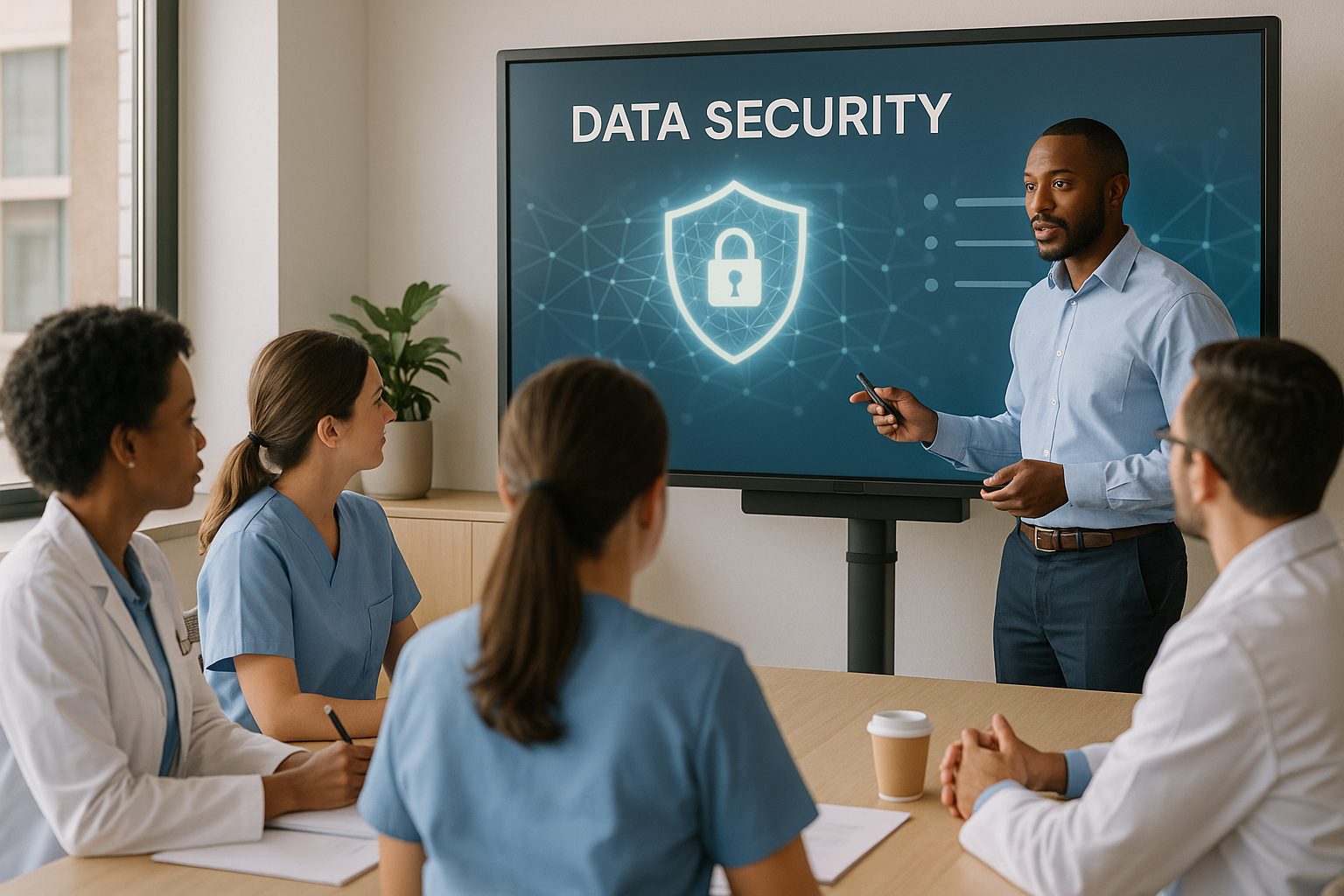
AI is reshaping how healthcare organizations train employees to safeguard sensitive patient data. Here's why this matters:
Rising Data Breaches: Healthcare data breaches increased by 93% from 2018 to 2022, with over 50 million patient records exposed in 2022. Phishing alone accounts for 40% of these breaches.
High Costs: Each breach costs an average of $10.93 million in the U.S., impacting finances, patient trust, and regulatory compliance.
Outdated Training: 60% of healthcare organizations hadn't updated their training as of 2023, leaving staff ill-prepared for modern threats.
AI-powered training solves these issues by delivering tailored, interactive, and continuous learning experiences. It identifies employee knowledge gaps, provides customized lessons, and simulates realistic threats like phishing emails and deepfake scams. This approach reduces susceptibility to attacks by up to 70% and ensures compliance with regulations like HIPAA.
Personalized Health Data Security Training with AI
Customizing Training Modules for Each Employee
AI tools are reshaping how organizations deliver security training by tailoring content to fit the specific needs of individual employees. These systems analyze factors like job roles, access levels, and even past behavior to create training modules that address the unique risks tied to each position. For instance, finance teams might receive focused training on spotting deepfake wire transfer scams, while developers learn best practices for securely using AI coding assistants [1]. This targeted approach ensures employees deal with scenarios that align closely with their day-to-day responsibilities.
What makes this system even more effective is its ability to adapt in real time. AI tracks employees' performance during simulations, noting failures, policy breaches, or slow response times. If a pattern emerges - like repeated struggles with identifying deepfake threats - the training adjusts immediately to address those gaps [1]. This dynamic process ensures that no one falls behind.
Beyond tailoring content to job roles, the format of the training itself is also personalized. Visual learners might benefit from scenario-based videos, hands-on learners engage with interactive modules, and others receive concise, text-based lessons or quick micro-tutorials delivered throughout their workday [1]. This flexibility makes the learning process both effective and engaging.
Finding Knowledge Gaps and Risk Areas
AI-powered training systems don’t just teach - they also identify where employees are vulnerable. By analyzing performance data across multiple scenarios, these tools build detailed profiles that reveal each person's strengths and weaknesses.
For example, if an employee clicks on a simulated phishing email, the system doesn’t just mark it as a failure. It highlights the specific red flags they missed and walks them through the correct steps to avoid such mistakes in the future [1]. Many organizations start with a few hours of foundational AI-driven security training, then reinforce it with brief monthly lessons and simulations. This ongoing approach helps employees stay sharp and ready to handle emerging threats [1].
Integration with Digital Health Platforms
When personalized training modules are integrated into digital health platforms, the impact of security education grows even stronger. Platforms like Healify bring a unique advantage by combining security training with insights from wearable devices, biometric data, and employee interactions. These additional data points help AI systems better understand employee behaviors and identify potential risks.
This integration allows for context-aware training. For instance, if an employee accesses sensitive health data during odd hours or from an unusual location, the system can instantly provide a micro-lesson on secure access protocols [1][5]. Healify’s ability to collect data like sleep patterns, stress levels, and device usage habits also helps the AI pinpoint the best times to deliver these lessons, ensuring they’re both timely and effective.
Of course, privacy is a top priority. AI training platforms must comply with HIPAA regulations, ensuring employee data is encrypted, access is tightly controlled, and usage is transparent [5][2]. Employees should also be informed about how their data is used to customize their training and have the option to opt out if they choose.
Creating Security Scenarios with AI Simulations
Interactive Security Threat Simulations
AI simulations take security training to the next level by immersing employees in realistic threat scenarios. These simulations mimic real-world attacks that healthcare organizations often face. For instance, they can generate convincing phishing emails that reference actual patient cases or internal projects. They can even create fake video interviews featuring candidates with fabricated credentials. By tailoring scenarios to specific roles, each department gets training that addresses its unique vulnerabilities. For example, developers might tackle code leakage risks, while administrative staff learn to identify suspicious requests for patient information. Finance teams, on the other hand, might face monthly deepfake voice call simulations to sharpen their ability to detect fraud. These exercises, combined with AI-generated phishing tests, provide employees with hands-on practice. When someone fails a simulation, immediate remediation steps kick in, helping to improve threat recognition and reduce policy violations over time [1].
Continuous Feedback for Skill Improvement
One of the standout features of AI-driven simulations is their ability to provide instant, actionable feedback. As employees navigate these simulated threats, AI systems track key performance metrics like how quickly and accurately threats are identified. This data is then used to build individual profiles that highlight both strengths and areas needing improvement. For repeated weaknesses, the system assigns targeted micro-lessons to reinforce learning. Organizations can measure the effectiveness of their training through metrics like failure rates, response times, and policy violations. This approach ensures that training evolves to address specific gaps, offering a dynamic and personalized learning experience [1].
Updating Scenarios for New Threats
Cybersecurity threats are constantly changing, and AI systems ensure training keeps pace. These systems automatically integrate the latest threat intelligence into simulations, keeping them relevant and effective. For example, monthly updates might introduce phishing templates reflecting the latest attack trends, while quarterly reviews could address changes in regulations like HIPAA. For healthcare organizations using platforms such as Healify - which collects data from wearables, biometrics, and lifestyle tracking - new simulations might focus on protecting these emerging data types. As privacy laws evolve, AI systems adjust training content to align with current legal standards. This ensures employees are always prepared to handle unpredictable, real-world threats while staying compliant with the latest requirements [5].
AI/LLM security for HIPAA compliance??
AI-Driven Tools for Secure Health Data Management
AI tools are stepping up to protect health data in real time, complementing advanced employee training efforts.
Automating Data Sharing and Access Controls
AI systems are revolutionizing how healthcare organizations manage data access by automating permissions based on user roles and behavior patterns. These tools continuously track who accesses what information and when, generating audit trails that meet HIPAA compliance standards. If an employee leaves the organization or their behavior raises red flags, AI can immediately revoke access, minimizing the risk of unauthorized data exposure [5].
For example, AI learns typical access behaviors and flags requests that seem out of place. If a nurse tries to access data outside their role, the system pauses the request and seeks verification. This dynamic control system adapts to changing workflows while upholding strict security measures.
To make these systems effective, organizations align user roles with specific data access requirements and rely on AI to detect unusual activity. Regular security audits and penetration tests ensure these automated defenses keep up with evolving threats [4][5]. The result? A scalable security framework that reduces the workload for IT teams while safeguarding sensitive information.
Advanced Encryption Methods for Health Data
Traditional encryption methods protect health data during storage and transmission but require decryption for analysis, which can expose sensitive information. Homomorphic encryption changes the game by allowing data to be processed while still encrypted. This approach supports secure collaboration between healthcare institutions and enables privacy-preserving AI model training.
In 2024, researchers successfully applied homomorphic encryption to electronic medical record (EMR) data from 300,000 patients across multiple institutions. They used this encrypted data to predict post-surgical mortality rates without compromising privacy. Even smaller hospitals could access these insights without risking patient confidentiality [3].
Feature | Standard Encryption | Homomorphic Encryption |
|---|---|---|
Data Processing | Requires decryption | No decryption needed |
Privacy During Analysis | Limited | High |
Computational Overhead | Low | High |
Use Cases | Storage, transfer | AI model training, analytics |
Regulatory Compliance | Good | Excellent |
For platforms like Healify, which analyze data from wearables, biometrics, and lifestyle tracking, homomorphic encryption ensures sensitive data remains secure during processing while still delivering personalized insights [5].
Building on these encryption methods, real-time AI monitoring adds another layer of protection to healthcare networks.
Real-Time Threat Detection and Monitoring
AI-powered monitoring systems provide continuous surveillance of healthcare networks, analyzing user behavior, network traffic, and system logs to detect threats before they can cause harm. Unlike traditional rule-based tools, these systems adapt to new attack methods by learning from emerging patterns across the healthcare sector.
AI excels at identifying sophisticated threats that traditional defenses might miss. It can detect deepfake voice phishing targeting finance teams, AI-generated spear phishing emails referencing actual patient cases, and insider threats that gradually escalate privileges over time [1][5].
Healthcare organizations evaluate the performance of these systems using metrics like the number of detected and prevented breaches, reductions in unauthorized access incidents, and compliance audit results. AI-driven security tools can cut threat detection and response times by up to 90% compared to traditional methods, allowing for faster containment of potential breaches [5].
These systems also monitor unusual data access and usage patterns. For instance, if someone tries to use AI chatbots to extract sensitive patient information or downloads an unusual volume of data, the system triggers real-time alerts and automated actions. This proactive strategy helps healthcare organizations stay ahead of threats while ensuring clinical teams have uninterrupted access to the data they need for patient care [5][6].
Conclusion: The Future of AI in Health Data Security Training
AI is reshaping the way healthcare organizations approach data security training by making it more tailored, dynamic, and responsive. The shift from generic, once-a-year sessions to role-specific, adaptive programs is revolutionizing how employees prepare to counter emerging threats.
With personalized training modules, employees receive content that directly aligns with their roles and the specific risks they face. Interactive AI simulations - like deepfake voice scenarios or synthetic interviews - offer hands-on practice, helping employees sharpen their ability to identify and respond to threats effectively [1]. These advancements in training go hand-in-hand with real-time monitoring systems.
Real-time monitoring adds another layer of security by enabling immediate corrective actions. For instance, AI can flag risky behaviors, such as sharing sensitive information in public AI tools, and provide instant micro-lessons to address the issue on the spot. This timely intervention significantly boosts the chances of meaningful behavior change compared to delayed training sessions.
Continuous and adaptive training ensures employees stay vigilant as threats evolve. Metrics like simulation failure rates, policy violations, and reports of suspicious AI-related activities offer valuable insights into the effectiveness of these training programs [1].
Platforms like Healify highlight the importance of integrating AI-enhanced security measures in healthcare. Healify, an AI-driven health coaching app that processes sensitive data from wearables and biometrics to deliver personalized recommendations, underscores the critical need for robust security training. In a world where AI-driven threats are becoming increasingly sophisticated, organizations that prioritize intelligent, adaptive training will be better equipped to protect patient data and maintain trust. AI-powered training doesn’t just inform - it transforms employee behavior through continuous learning [1].
FAQs
How can AI improve healthcare employee training by addressing individual knowledge gaps?
AI is transforming how healthcare employees are trained by pinpointing knowledge gaps through data analysis and customizing learning materials to address those areas. With AI-driven tools, training programs can simulate realistic security scenarios, giving employees hands-on experience in identifying and managing potential risks.
For instance, AI can evaluate performance data from training sessions and offer tailored suggestions to help employees improve where they struggle most. This method not only makes training more engaging but also ensures employees learn effectively, strengthening data security practices across the healthcare sector.
How does AI help ensure compliance with HIPAA during health data security training?
AI is transforming health data security training by making it more personalized and practical. For instance, it can develop custom training modules tailored to specific regulations like HIPAA, ensuring employees grasp the essentials of handling sensitive health information safely.
On top of that, AI-powered tools can simulate scenarios such as security breaches or compliance issues. These simulations allow employees to practice their responses in a risk-free setting, improving both their understanding and confidence in managing health data securely. By weaving AI into training programs, organizations can better prepare their teams to handle the challenges of health data security and meet regulatory demands effectively.
How can AI simulations help healthcare employees identify and respond to cybersecurity threats more effectively?
AI simulations are transforming how healthcare employees prepare for cybersecurity challenges by offering realistic, interactive training scenarios. These simulations replicate actual cyberattacks, like phishing scams or ransomware incidents, providing a safe space for employees to practice spotting and responding to potential threats.
What makes these tools even more effective is their ability to tailor training to each individual. By analyzing performance and behavior, AI ensures employees concentrate on areas where they need the most growth. This personalized method not only builds confidence but also sharpens their ability to tackle ever-changing cyber risks, helping protect sensitive health information more effectively.
Related Blog Posts
AI is reshaping how healthcare organizations train employees to safeguard sensitive patient data. Here's why this matters:
Rising Data Breaches: Healthcare data breaches increased by 93% from 2018 to 2022, with over 50 million patient records exposed in 2022. Phishing alone accounts for 40% of these breaches.
High Costs: Each breach costs an average of $10.93 million in the U.S., impacting finances, patient trust, and regulatory compliance.
Outdated Training: 60% of healthcare organizations hadn't updated their training as of 2023, leaving staff ill-prepared for modern threats.
AI-powered training solves these issues by delivering tailored, interactive, and continuous learning experiences. It identifies employee knowledge gaps, provides customized lessons, and simulates realistic threats like phishing emails and deepfake scams. This approach reduces susceptibility to attacks by up to 70% and ensures compliance with regulations like HIPAA.
Personalized Health Data Security Training with AI
Customizing Training Modules for Each Employee
AI tools are reshaping how organizations deliver security training by tailoring content to fit the specific needs of individual employees. These systems analyze factors like job roles, access levels, and even past behavior to create training modules that address the unique risks tied to each position. For instance, finance teams might receive focused training on spotting deepfake wire transfer scams, while developers learn best practices for securely using AI coding assistants [1]. This targeted approach ensures employees deal with scenarios that align closely with their day-to-day responsibilities.
What makes this system even more effective is its ability to adapt in real time. AI tracks employees' performance during simulations, noting failures, policy breaches, or slow response times. If a pattern emerges - like repeated struggles with identifying deepfake threats - the training adjusts immediately to address those gaps [1]. This dynamic process ensures that no one falls behind.
Beyond tailoring content to job roles, the format of the training itself is also personalized. Visual learners might benefit from scenario-based videos, hands-on learners engage with interactive modules, and others receive concise, text-based lessons or quick micro-tutorials delivered throughout their workday [1]. This flexibility makes the learning process both effective and engaging.
Finding Knowledge Gaps and Risk Areas
AI-powered training systems don’t just teach - they also identify where employees are vulnerable. By analyzing performance data across multiple scenarios, these tools build detailed profiles that reveal each person's strengths and weaknesses.
For example, if an employee clicks on a simulated phishing email, the system doesn’t just mark it as a failure. It highlights the specific red flags they missed and walks them through the correct steps to avoid such mistakes in the future [1]. Many organizations start with a few hours of foundational AI-driven security training, then reinforce it with brief monthly lessons and simulations. This ongoing approach helps employees stay sharp and ready to handle emerging threats [1].
Integration with Digital Health Platforms
When personalized training modules are integrated into digital health platforms, the impact of security education grows even stronger. Platforms like Healify bring a unique advantage by combining security training with insights from wearable devices, biometric data, and employee interactions. These additional data points help AI systems better understand employee behaviors and identify potential risks.
This integration allows for context-aware training. For instance, if an employee accesses sensitive health data during odd hours or from an unusual location, the system can instantly provide a micro-lesson on secure access protocols [1][5]. Healify’s ability to collect data like sleep patterns, stress levels, and device usage habits also helps the AI pinpoint the best times to deliver these lessons, ensuring they’re both timely and effective.
Of course, privacy is a top priority. AI training platforms must comply with HIPAA regulations, ensuring employee data is encrypted, access is tightly controlled, and usage is transparent [5][2]. Employees should also be informed about how their data is used to customize their training and have the option to opt out if they choose.
Creating Security Scenarios with AI Simulations
Interactive Security Threat Simulations
AI simulations take security training to the next level by immersing employees in realistic threat scenarios. These simulations mimic real-world attacks that healthcare organizations often face. For instance, they can generate convincing phishing emails that reference actual patient cases or internal projects. They can even create fake video interviews featuring candidates with fabricated credentials. By tailoring scenarios to specific roles, each department gets training that addresses its unique vulnerabilities. For example, developers might tackle code leakage risks, while administrative staff learn to identify suspicious requests for patient information. Finance teams, on the other hand, might face monthly deepfake voice call simulations to sharpen their ability to detect fraud. These exercises, combined with AI-generated phishing tests, provide employees with hands-on practice. When someone fails a simulation, immediate remediation steps kick in, helping to improve threat recognition and reduce policy violations over time [1].
Continuous Feedback for Skill Improvement
One of the standout features of AI-driven simulations is their ability to provide instant, actionable feedback. As employees navigate these simulated threats, AI systems track key performance metrics like how quickly and accurately threats are identified. This data is then used to build individual profiles that highlight both strengths and areas needing improvement. For repeated weaknesses, the system assigns targeted micro-lessons to reinforce learning. Organizations can measure the effectiveness of their training through metrics like failure rates, response times, and policy violations. This approach ensures that training evolves to address specific gaps, offering a dynamic and personalized learning experience [1].
Updating Scenarios for New Threats
Cybersecurity threats are constantly changing, and AI systems ensure training keeps pace. These systems automatically integrate the latest threat intelligence into simulations, keeping them relevant and effective. For example, monthly updates might introduce phishing templates reflecting the latest attack trends, while quarterly reviews could address changes in regulations like HIPAA. For healthcare organizations using platforms such as Healify - which collects data from wearables, biometrics, and lifestyle tracking - new simulations might focus on protecting these emerging data types. As privacy laws evolve, AI systems adjust training content to align with current legal standards. This ensures employees are always prepared to handle unpredictable, real-world threats while staying compliant with the latest requirements [5].
AI/LLM security for HIPAA compliance??
AI-Driven Tools for Secure Health Data Management
AI tools are stepping up to protect health data in real time, complementing advanced employee training efforts.
Automating Data Sharing and Access Controls
AI systems are revolutionizing how healthcare organizations manage data access by automating permissions based on user roles and behavior patterns. These tools continuously track who accesses what information and when, generating audit trails that meet HIPAA compliance standards. If an employee leaves the organization or their behavior raises red flags, AI can immediately revoke access, minimizing the risk of unauthorized data exposure [5].
For example, AI learns typical access behaviors and flags requests that seem out of place. If a nurse tries to access data outside their role, the system pauses the request and seeks verification. This dynamic control system adapts to changing workflows while upholding strict security measures.
To make these systems effective, organizations align user roles with specific data access requirements and rely on AI to detect unusual activity. Regular security audits and penetration tests ensure these automated defenses keep up with evolving threats [4][5]. The result? A scalable security framework that reduces the workload for IT teams while safeguarding sensitive information.
Advanced Encryption Methods for Health Data
Traditional encryption methods protect health data during storage and transmission but require decryption for analysis, which can expose sensitive information. Homomorphic encryption changes the game by allowing data to be processed while still encrypted. This approach supports secure collaboration between healthcare institutions and enables privacy-preserving AI model training.
In 2024, researchers successfully applied homomorphic encryption to electronic medical record (EMR) data from 300,000 patients across multiple institutions. They used this encrypted data to predict post-surgical mortality rates without compromising privacy. Even smaller hospitals could access these insights without risking patient confidentiality [3].
Feature | Standard Encryption | Homomorphic Encryption |
|---|---|---|
Data Processing | Requires decryption | No decryption needed |
Privacy During Analysis | Limited | High |
Computational Overhead | Low | High |
Use Cases | Storage, transfer | AI model training, analytics |
Regulatory Compliance | Good | Excellent |
For platforms like Healify, which analyze data from wearables, biometrics, and lifestyle tracking, homomorphic encryption ensures sensitive data remains secure during processing while still delivering personalized insights [5].
Building on these encryption methods, real-time AI monitoring adds another layer of protection to healthcare networks.
Real-Time Threat Detection and Monitoring
AI-powered monitoring systems provide continuous surveillance of healthcare networks, analyzing user behavior, network traffic, and system logs to detect threats before they can cause harm. Unlike traditional rule-based tools, these systems adapt to new attack methods by learning from emerging patterns across the healthcare sector.
AI excels at identifying sophisticated threats that traditional defenses might miss. It can detect deepfake voice phishing targeting finance teams, AI-generated spear phishing emails referencing actual patient cases, and insider threats that gradually escalate privileges over time [1][5].
Healthcare organizations evaluate the performance of these systems using metrics like the number of detected and prevented breaches, reductions in unauthorized access incidents, and compliance audit results. AI-driven security tools can cut threat detection and response times by up to 90% compared to traditional methods, allowing for faster containment of potential breaches [5].
These systems also monitor unusual data access and usage patterns. For instance, if someone tries to use AI chatbots to extract sensitive patient information or downloads an unusual volume of data, the system triggers real-time alerts and automated actions. This proactive strategy helps healthcare organizations stay ahead of threats while ensuring clinical teams have uninterrupted access to the data they need for patient care [5][6].
Conclusion: The Future of AI in Health Data Security Training
AI is reshaping the way healthcare organizations approach data security training by making it more tailored, dynamic, and responsive. The shift from generic, once-a-year sessions to role-specific, adaptive programs is revolutionizing how employees prepare to counter emerging threats.
With personalized training modules, employees receive content that directly aligns with their roles and the specific risks they face. Interactive AI simulations - like deepfake voice scenarios or synthetic interviews - offer hands-on practice, helping employees sharpen their ability to identify and respond to threats effectively [1]. These advancements in training go hand-in-hand with real-time monitoring systems.
Real-time monitoring adds another layer of security by enabling immediate corrective actions. For instance, AI can flag risky behaviors, such as sharing sensitive information in public AI tools, and provide instant micro-lessons to address the issue on the spot. This timely intervention significantly boosts the chances of meaningful behavior change compared to delayed training sessions.
Continuous and adaptive training ensures employees stay vigilant as threats evolve. Metrics like simulation failure rates, policy violations, and reports of suspicious AI-related activities offer valuable insights into the effectiveness of these training programs [1].
Platforms like Healify highlight the importance of integrating AI-enhanced security measures in healthcare. Healify, an AI-driven health coaching app that processes sensitive data from wearables and biometrics to deliver personalized recommendations, underscores the critical need for robust security training. In a world where AI-driven threats are becoming increasingly sophisticated, organizations that prioritize intelligent, adaptive training will be better equipped to protect patient data and maintain trust. AI-powered training doesn’t just inform - it transforms employee behavior through continuous learning [1].
FAQs
How can AI improve healthcare employee training by addressing individual knowledge gaps?
AI is transforming how healthcare employees are trained by pinpointing knowledge gaps through data analysis and customizing learning materials to address those areas. With AI-driven tools, training programs can simulate realistic security scenarios, giving employees hands-on experience in identifying and managing potential risks.
For instance, AI can evaluate performance data from training sessions and offer tailored suggestions to help employees improve where they struggle most. This method not only makes training more engaging but also ensures employees learn effectively, strengthening data security practices across the healthcare sector.
How does AI help ensure compliance with HIPAA during health data security training?
AI is transforming health data security training by making it more personalized and practical. For instance, it can develop custom training modules tailored to specific regulations like HIPAA, ensuring employees grasp the essentials of handling sensitive health information safely.
On top of that, AI-powered tools can simulate scenarios such as security breaches or compliance issues. These simulations allow employees to practice their responses in a risk-free setting, improving both their understanding and confidence in managing health data securely. By weaving AI into training programs, organizations can better prepare their teams to handle the challenges of health data security and meet regulatory demands effectively.
How can AI simulations help healthcare employees identify and respond to cybersecurity threats more effectively?
AI simulations are transforming how healthcare employees prepare for cybersecurity challenges by offering realistic, interactive training scenarios. These simulations replicate actual cyberattacks, like phishing scams or ransomware incidents, providing a safe space for employees to practice spotting and responding to potential threats.
What makes these tools even more effective is their ability to tailor training to each individual. By analyzing performance and behavior, AI ensures employees concentrate on areas where they need the most growth. This personalized method not only builds confidence but also sharpens their ability to tackle ever-changing cyber risks, helping protect sensitive health information more effectively.
Related Blog Posts
Load More


