
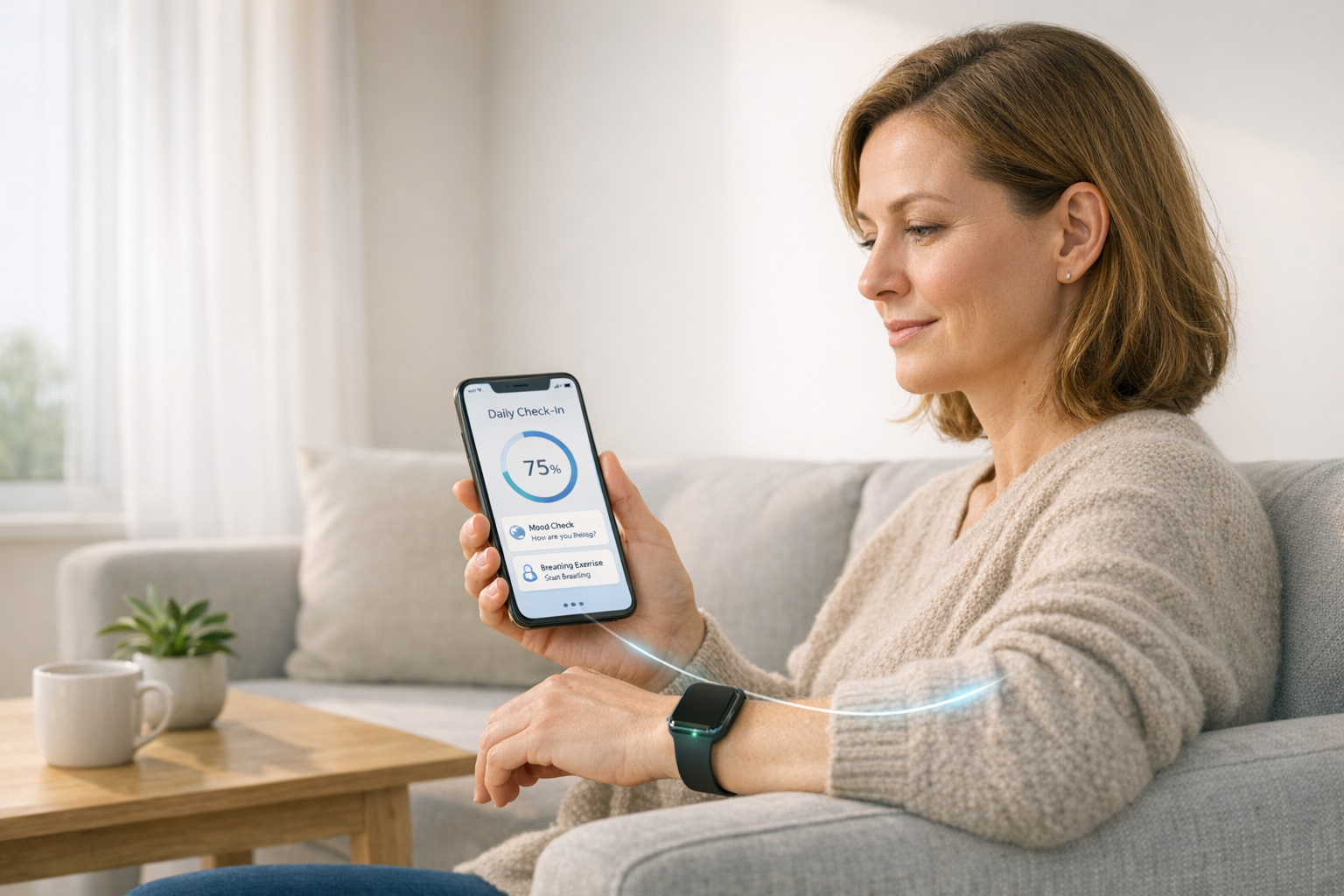
AI is transforming Cognitive Behavioral Therapy (CBT), especially for managing chronic conditions like anxiety, depression, and chronic pain. By addressing barriers such as limited access, high costs, and low engagement, AI-powered tools make mental health care more accessible, personalized, and effective. Here's what you need to know:
- Improved Access: AI tools provide 24/7 support, removing hurdles like mobility issues, long wait times, and high costs.
- Cost Efficiency: Automating routine tasks reduces the need for clinician time, lowering treatment expenses.
- Personalized Care: AI uses data from user interactions, wearables, and health records to tailor therapy.
- Higher Engagement: Interactive AI features encourage users to stay consistent with therapy exercises, boosting outcomes.
- Integration with Health Data: Platforms like BondMCP combine CBT with real-time health metrics for proactive care.
Clinical studies show AI-CBT reduces symptoms of depression and anxiety significantly, often with less clinician involvement. This technology bridges mental and physical health, offering a unified approach to chronic care management.
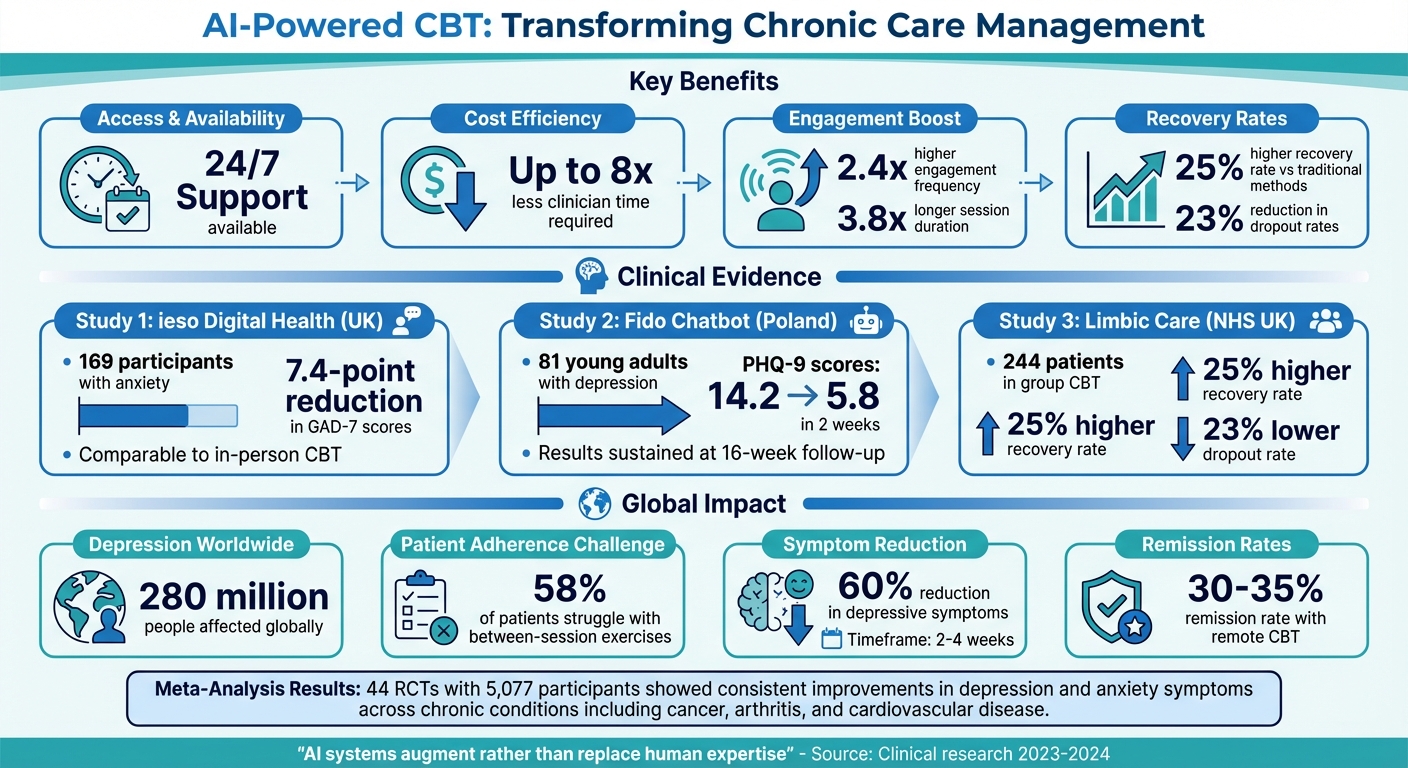
AI-CBT Benefits and Clinical Outcomes for Chronic Conditions
Key Benefits of AI in CBT for Chronic Conditions
Better Access and Lower Costs
AI-powered CBT removes many of the hurdles that prevent individuals from accessing mental health support. Traditional therapy often operates within strict schedules, which can be particularly tough for those managing chronic conditions. AI tools, however, are available 24/7. Whether symptoms worsen at 2 a.m. or over the weekend, help is always accessible. This round-the-clock availability is especially valuable for people with mobility issues, compromised immune systems, or those living far from specialized care [2][4][3].
Cost is another area where AI makes a big difference. Traditional CBT involves significant time from clinicians, but AI systems can handle routine tasks like psychoeducation and exercises. This reduces the workload for therapists and lowers the overall cost of treatment [4][8]. With approximately 280 million people worldwide affected by depression, the scalability of AI-CBT has the potential to reach far more individuals [8]. For patients already facing high medical expenses, the affordability of AI-CBT offers a much-needed financial reprieve [4].
Additionally, the online format of AI-CBT provides a sense of privacy and anonymity, helping to eliminate the stigma often associated with seeking mental health care [4]. Remote CBT options have shown remission rates of 30% to 35%, proving that they can deliver meaningful outcomes [4].
Personalized Interventions Using AI Data
AI takes a tailored approach to therapy by analyzing individual behavior and communication patterns. Using natural language processing (NLP), these systems adapt their responses based on how users interact, creating a dynamic and personalized experience instead of relying on generic scripts [4][11].
For example, between October 2023 and May 2024, ieso Digital Health tested an AI-driven anxiety program with human oversight. Among 169 participants, the program reduced GAD-7 anxiety scores by an average of 7.4 points - results comparable to in-person CBT, but with up to eight times less clinician involvement [7]. Similarly, in Poland, the Fido chatbot helped 81 young adults reduce their PHQ-9 depression scores from 14.2 to 5.8 in just two weeks, with these gains sustained over a 16-week follow-up [8].
"The transformative potential of AI in reshaping the practice of CBT heralds a new era of more accessible, efficient, and personalized mental health interventions."
– Meng Jiang et al., Researchers [9]
Modern AI systems go even further by integrating data from electronic health records, wearable devices, and environmental sensors through the Model Context Protocol. This comprehensive approach allows the technology to recommend specific actions - like breathing exercises or scheduling enjoyable activities - based on real-time data and the user’s current state [10][11]. These personalized suggestions ensure users stay engaged and ready for therapy, setting the stage for improved outcomes.
Better Engagement and Consistency
AI doesn’t just make therapy more accessible - it also keeps people engaged. One of the biggest challenges with traditional CBT is that 58% of patients struggle to complete between-session exercises [5]. AI changes this by turning static workbooks into interactive, conversational experiences. Instead of passively reading through PDFs, users interact with systems that respond, motivate, and adapt to their needs.
Generative AI-powered CBT apps have been shown to increase engagement frequency by 2.4 times and session duration by 3.8 times compared to static digital workbooks [1]. For instance, from October 2023 to January 2024, the Limbic Care AI tool was tested in five UK National Health Service (NHS) Talking Therapies programs. Among 244 patients in group-based CBT, those using the AI tool had higher session attendance and lower dropout rates compared to those using standard workbooks [5].
Empathy also plays a critical role in keeping patients engaged. A study involving 1,187 adults found that participants in AI-augmented internet-based CBT were 1.23 times more likely to participate consistently each week. Moreover, the activation of empathic feedback functions significantly boosted adherence, with an odds ratio of 9.99 [4][6].
"Empathic feedback emerged as a key mechanism for sustaining engagement, suggesting that AI communication may help maintain participation in scalable digital mental health interventions."
– Mirai So, MD, MBA, PhD, Tokyo Dental College [4]
With its constant availability and personalized support, AI ensures that individuals can maintain therapy consistency, which is essential for managing chronic conditions over time [12].
Integration of AI-CBT with BondMCP for Complete Health Optimization

Using BondMCP to Connect Wearables and CBT Tools
Managing chronic conditions like anxiety and depression often requires a complete picture of your overall health. BondMCP acts as a central hub, bringing together AI-CBT tools and data from wearables, lab results, and fitness trackers. Instead of working in isolation, these systems share information through a unified intelligence layer, creating a real-time, multi-faceted view of your health [14].
This setup allows AI-CBT platforms to use physiological data that traditional therapy methods typically don’t access. For instance, wearables track metrics like heart rate, sleep patterns, and stress levels, which feed directly into AI-CBT tools to create personalized interventions. Through a process called digital phenotyping, behavioral and physiological data are continuously analyzed to fine-tune these interventions. Imagine this: your wearable detects increased stress levels, and the AI-CBT system immediately suggests a breathing exercise tailored to your needs [15].
"AI systems serve as powerful decision support tools that augment rather than replace human expertise, augmenting clinician expertise for better care."
– Gang Feng et al., Department of Geriatrics at Wushan County People's Hospital [14]
By integrating with IoT devices and wearables, these platforms can monitor vital signs and behavioral trends in real time. This means adjustments can be made instantly, without waiting for a scheduled appointment. For the 78% of individuals aged 60 and older who live with at least one chronic condition, this continuous monitoring provides a level of care that traditional methods simply can’t match [14]. This approach connects fragmented health data into a cohesive system, paving the way for consistent, proactive management of chronic conditions.
Personalized Health Strategies Through BondMCP
Thanks to its ability to combine and analyze diverse health data, BondMCP takes personalized care to the next level. It integrates information from electronic health records (EHR), lab results, and wearable devices to uncover patterns that might otherwise go unnoticed [14]. This means your AI-CBT sessions are tailored to your unique health profile, not built on generic treatment plans.
For example, let’s say your lab results reveal stress-related biomarkers, and your fitness tracker shows poor sleep quality. BondMCP can combine these insights to guide your CBT sessions. The AI might focus on sleep hygiene exercises and targeted stress management techniques that align with your specific needs.
Beyond personalization, the system predicts potential health outcomes to prevent issues before they arise. For someone managing diabetes, it can forecast blood glucose fluctuations. For individuals with asthma or COPD, it can anticipate risks of acute episodes [13]. This forward-thinking approach shifts AI-CBT from simply reacting to symptoms to actively preventing them.
Automation and Preventive Care with BondMCP
BondMCP’s automation capabilities further enhance its role in preventive care. By continuously monitoring physiological data - like blood pressure and activity levels - the platform automatically adjusts your CBT plan in real time, without requiring manual input [13]. This goes beyond simple reminders, offering real-time feedback and modifying exercises as you progress [4].
This level of automation is especially useful for managing chronic conditions. Continuous monitoring and real-time adjustments through BondMCP allow for proactive interventions, reducing risks before they escalate. For instance, AI algorithms analyzing self-monitored data can predict hypoglycemic events within 24 hours with over 90% accuracy, enabling timely treatment changes [13]. Additionally, for conditions like cardiovascular and respiratory diseases, the system identifies potential risks early, triggering both automated interventions and alerts to healthcare providers when necessary [13][16].
Rather than replacing human care, how AI integration is transforming clinical care shows how this automation complements it. By handling routine monitoring and early interventions, BondMCP allows clinicians to focus on more complex cases while ensuring patients receive consistent support. The result is a seamless system that integrates medical, behavioral, and emotional care into one intelligent platform [13].
I tried an AI therapist. Does it actually work? | BBC News
sbb-itb-f5765c6
Evidence and Success Stories of AI-CBT
The growing body of research highlights how AI is reshaping cognitive behavioral therapy (CBT), particularly in managing chronic conditions.
Research on AI-CBT for Anxiety and Depression
Clinical trials have demonstrated that AI-powered CBT can significantly improve outcomes for those living with chronic conditions. For instance, a 2026 randomized controlled trial revealed that generative AI-enhanced CBT boosted engagement frequency by 2.4 times and extended session durations by 3.8 times compared to traditional digital workbooks [1].
A meta-analysis of 44 randomized controlled trials, including 5,077 participants with chronic illnesses like cancer, arthritis, and cardiovascular disease, found that internet and mobile-based CBT consistently improved symptoms of depression and anxiety. These effects were evident even during long-term follow-ups [3]. Interestingly, the study also indicated that addressing mental health symptoms through AI-CBT could lead to reductions in physical pain and discomfort, as mental and physical health are closely interconnected [3].
"AI support significantly improved adherence to a fully self-administered program... Empathic feedback emerged as a key mechanism for sustaining engagement." – Dr. Mirai So, Tokyo Dental College [4]
These findings underline the potential of AI-CBT in both research and practical applications.
Case Studies: Real-World Applications of AI-CBT
Several real-world implementations of AI-CBT showcase its effectiveness. For example, between October 2023 and January 2024, the UK's National Health Service introduced the Limbic Care generative AI tool to support group-based CBT sessions. Patients using this tool achieved a 25 percentage point higher recovery rate and experienced a 23% reduction in dropout rates compared to those relying on traditional workbooks [5].
"The use of this novel technology holds great potential to support clinical practice, especially for supporting patients between therapy sessions to meaningfully engage with their course of treatment." – Max Rollwage, PhD, Limbic Ltd [5]
In Poland, the Fido chatbot, which incorporates 90% of CBT's core principles, helped participants with moderate-to-severe depression reduce their PHQ-9 scores from 14.2 to 5.8 within two weeks. These improvements were sustained even 16 weeks later [8]. Meanwhile, in South Korea, a 2024 multicenter trial tested the Somzz app on 98 adults with insomnia. The AI-driven CBT intervention led to significant improvements in the Insomnia Severity Index (effect size d > 1.0), which persisted through a four-month follow-up [11].
Canada has also seen success with AI-CBT. Sixty-eight adults with chronic conditions such as arthritis and diabetes used the Wysa AI chatbot, which focuses on cognitive restructuring and mindfulness techniques. The results showed significant reductions in symptoms of depression and anxiety compared to the control group [11].
Future Potential of AI-CBT in Chronic Care
AI-CBT is poised to drive even greater advancements in chronic care. Emerging models powered by large language models like GPT-4 offer more natural and personalized treatment plans [11][5]. Preliminary data suggests that users engaging with AI tools featuring clinical personalization experience stronger symptom reductions than those using generic versions [1].
Integration into national health systems is accelerating, with AI tools increasingly embedded in primary care to complement human-led therapy. This integration aims to make evidence-based mental health care more accessible and scalable [5].
"Our findings suggest that, in self-directed usage, tailored genAI-enabled therapy safely enhances user engagement above and beyond static materials." – Jessica McFadyen, lead researcher at Limbic Limited [1]
With demonstrated success in addressing chronic conditions like pain, cancer, arthritis, and cardiovascular disease [3], the scope for broader adoption of AI-CBT continues to expand across healthcare systems.
Conclusion
By tackling barriers like access, personalization, and engagement, AI-powered CBT is reshaping how chronic conditions like anxiety and depression are managed. Generative AI plays a key role here - improving engagement, reducing depressive symptoms by 60% within just 2–4 weeks, and cutting clinician time by up to eightfold - all while maintaining clinical effectiveness [1][7][8]. These advancements bring evidence-based mental health care to individuals who once faced long wait times, mobility issues, or geographic limitations.
AI-CBT stands out by offering personalized, empathetic feedback on a large scale. Unlike static workbooks or generic digital programs, these tools adapt to each user’s unique needs, delivering the kind of tailored support that was once only possible in one-on-one therapy sessions. Research even shows that enabling empathic feedback functions significantly improves adherence rates [4].
"By combining AI and human support, the digital program achieved clinical outcomes comparable to human-delivered care, while significantly reducing the required clinician time by up to 8 times." – Clare E. Palmer et al., Researchers [7]
One of the most promising aspects of this approach is its ability to bridge mental and physical health. Studies reveal that improvements in mental health symptoms can lead to reductions in physical distress - and vice versa [3]. This interconnectedness opens the door to integrated care, where mental health interventions influence physical treatments and physiological data informs therapeutic strategies. It’s an exciting step toward unified platforms that address both mental and physical health as parts of a single, holistic system.
This is where tools like BondMCP come into play. While AI-CBT excels at delivering personalized mental health care, BondMCP acts as the intelligence hub that connects these interventions with AI-powered wearables, lab results, fitness routines, and sleep data. Instead of treating mental health in isolation, it integrates CBT progress with exercise plans, supplements, and real-time health decisions. For healthcare providers and developers, this means creating AI tools that are not just smart but also context-aware and deeply informed about overall health. The future of chronic condition management lies in this kind of intelligent integration, treating mental and physical health as two sides of the same coin.
FAQs
How does AI improve engagement in CBT for managing chronic conditions?
AI plays a growing role in improving engagement within Cognitive Behavioral Therapy (CBT) for chronic conditions by creating tailored and supportive interactions. For example, using natural language processing (NLP), AI can provide empathetic, real-time feedback that helps patients feel heard and encouraged to stick with their treatment plans.
Beyond that, AI-powered tools can send timely reminders, motivational messages, and adjust therapy approaches dynamically based on a patient’s progress. This adaptability ensures that the therapy evolves alongside the individual’s needs, making it easier for patients to stay committed and reducing dropout rates. By integrating data from wearables or health apps, AI can make therapy more interactive and responsive, offering better support for managing challenges like depression and anxiety.
How does AI enhance and personalize CBT for chronic conditions?
AI is shaking up cognitive-behavioral therapy (CBT) by making it more tailored, interactive, and accessible. By diving into individual data, AI can customize therapeutic exercises and content to better fit each person’s specific needs. This level of personalization not only boosts engagement but also helps improve outcomes. For instance, tools powered by natural language processing (NLP) can deliver real-time feedback that's context-aware, making interactions feel more responsive and supportive.
On top of that, AI tools like virtual agents and chatbots provide 24/7 support. They’re designed to scale assistance while maintaining an empathetic tone. These tools can track progress, adapt strategies as needed, and keep users actively involved in their therapy. This means the therapy stays aligned with their personal goals and situations. For individuals managing conditions like anxiety or depression, these advancements create a more flexible and effective mental health experience.
How does AI-enhanced CBT use health data to improve chronic condition management?
AI-powered cognitive behavioral therapy (CBT) is transforming how chronic conditions are managed by delivering care that's more tailored to each individual. By analyzing health data from wearables, lab results, and patient interactions, advanced algorithms can detect risks, track progress, and customize therapy based on a person’s unique needs.
In mental health, AI tools like therapy chatbots and natural language processing systems take this personalization even further. These tools adapt therapy in real time, responding to changes in symptoms and behaviors. This dynamic approach not only improves therapy outcomes but also keeps patients more engaged in their treatment.
When paired with interoperability platforms like BondMCP, AI can seamlessly integrate health data across different systems. This creates a smarter, more connected care network, making it easier to manage chronic conditions effectively.