
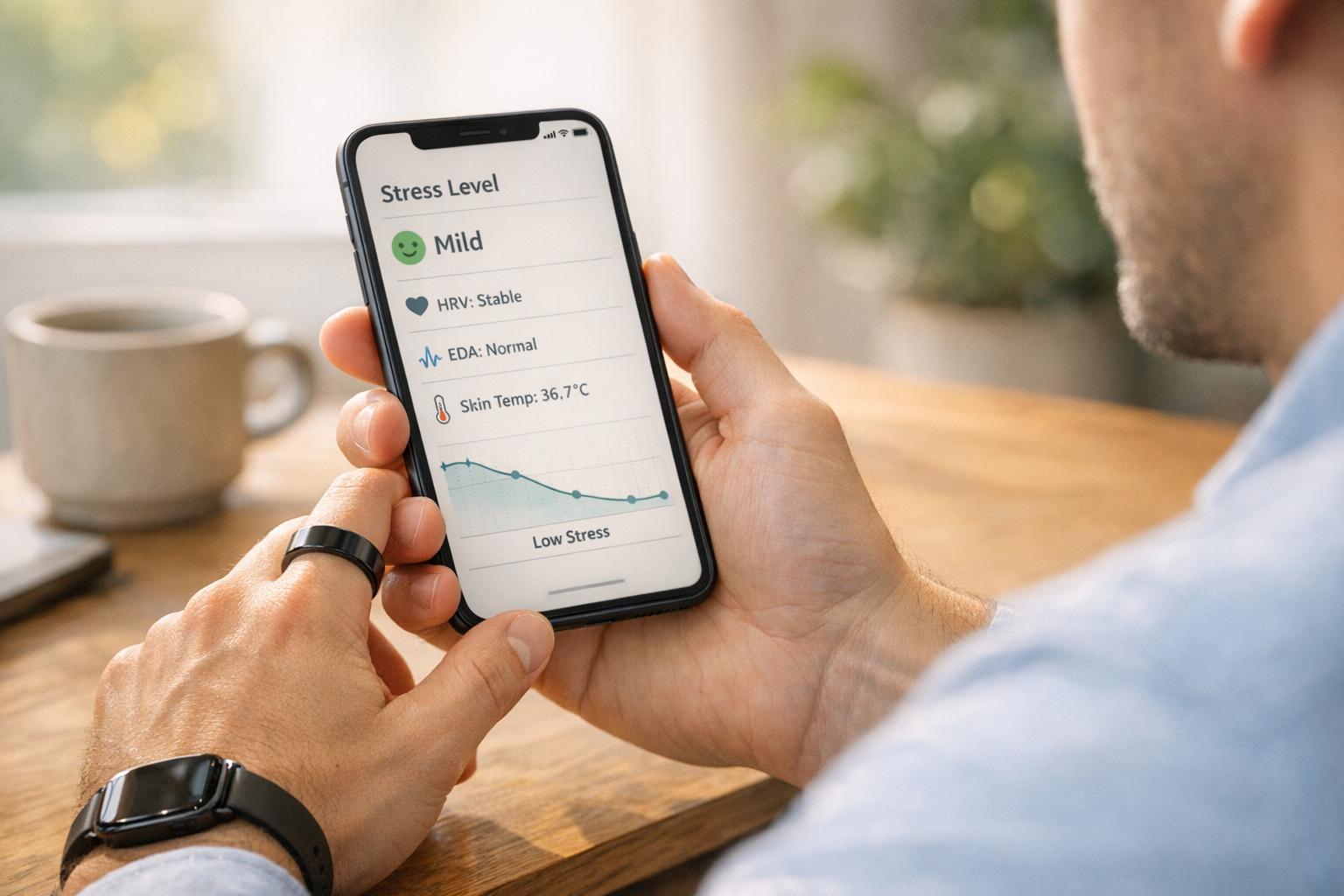
AI-powered wearables are reshaping how we manage stress by analyzing physiological signals like heart rate variability (HRV), electrodermal activity (EDA), and skin temperature. These devices don’t just predict stress using wearable data - they act on it, offering real-time alerts and interventions like guided breathing or haptic feedback. Here’s a quick look at the top options:
- WHOOP 5.0: Focuses on HRV and heart metrics for stress tracking, with 14+ days of battery life. Subscription-only, starting at $215/year.
- Oura Ring 4: Tracks HRV, skin temperature, and motion, offering stress insights and recovery coaching. Costs $349+ with a $5.99/month membership.
- Fitbit Sense 2: Uses EDA sensors for real-time stress detection and alerts. Priced at $249.95, with optional $9.99/month premium features.
- Apple Watch Series 11: Tracks HRV and integrates stress insights into its Vitals app. Starts at $399, no subscription required.
- Garmin Venu 3: Combines HRV-based stress monitoring with energy tracking and guided meditation. Priced at $449.99, no subscription needed.
These devices vary in features, pricing, and subscription models, making it easier to find one that fits your needs.
Quick Comparison
| Device | Stress Detection Method | Battery Life | Price Range (USD) | Subscription Required? | Key Features |
|---|---|---|---|---|---|
| WHOOP 5.0 | HRV, Heart Metrics | 14+ Days | $215+/year | Yes | AI coaching for strain, recovery, and sleep |
| Oura Ring 4 | HRV, Temp, Motion | 5–8 Days | $349+ + $5.99/mo | Yes | Daytime/Cumulative Stress insights |
| Fitbit Sense 2 | EDA, HRV | 6+ Days | $249.95 | Optional ($9.99/mo) | Real-time alerts, guided breathing |
| Apple Watch S11 | HRV, Vitals App | 18–36 Hours | $399 | No | Multi-signal health insights |
| Garmin Venu 3 | HRV-based Body Battery | Up to 14 Days | $449.99 | No | Energy tracking, guided meditation |
These wearables combine advanced AI with stress detection, offering actionable insights to improve mental well-being. Whether you prioritize battery life, affordability, or specific features like EDA sensors, there’s an option for everyone.
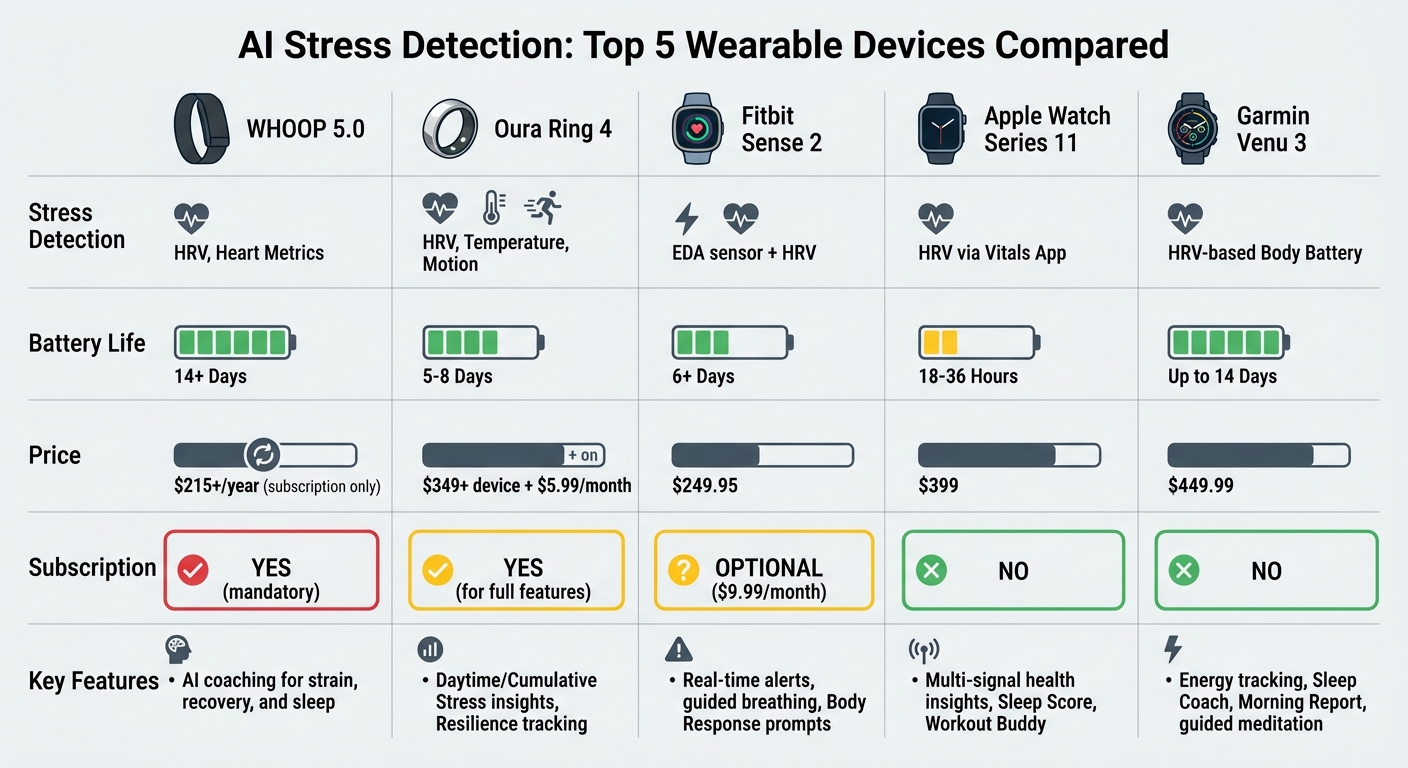
AI Stress Detection Wearables Comparison: Features, Battery Life, and Pricing
Startup: Moment real-time stress detection from voice + HRV | NLP, wearables, just-in-time prompts
sbb-itb-f5765c6
1. WHOOP 5.0

WHOOP 5.0 is a sleek, screenless wristband designed to track your body's physiological signals around the clock. It sends this data to your smartphone, where AI processes it in real time for actionable insights.
Stress Detection Method
WHOOP uses heart-based metrics like Heart Rate Variability (HRV), Resting Heart Rate (RHR), and respiratory rate to assess stress levels [3]. Unlike devices that rely on Electrodermal Activity (EDA) sensors, WHOOP focuses entirely on these heart-driven measurements and movement patterns [3]. Its AI translates this data into a real-time Stress Monitor score, helping you identify when your body enters a heightened state [3][7]. Additionally, WHOOP calculates daily Strain (your overall exertion) and Recovery (your readiness for the day), considering mental stress, physical activity, and sleep quality as a combined load on your system [3].
Key AI Features
WHOOP's AI-driven coaching provides personalized recommendations for daily activity and recovery, tailored to your specific physiological data [7]. It also introduces metrics like WHOOP Age and Pace of Aging, which offer insights into how your lifestyle choices influence your long-term health [6]. For women, WHOOP includes hormonal insights, tracking how menstrual cycles and hormonal shifts affect stress, recovery, and sleep [6]. A beta feature even estimates blood pressure by analyzing overnight data, offering daily systolic and diastolic ranges directly from your wrist [6]. These features push WHOOP 5.0 ahead of its competition.
Battery Life
With over 14 days of battery life on a single charge, WHOOP 5.0 ensures uninterrupted data collection [6][7]. Its advanced power efficiency - 10x greater than earlier versions - supports continuous second-by-second monitoring without frequent recharging [6].
Price Range
WHOOP follows a subscription-only model, eliminating upfront hardware costs [8]. Plans include:
- WHOOP One: Approximately $215 per year
- WHOOP Peak: Around $285 per year
- WHOOP Life: About $430 per year, featuring the medical-grade WHOOP MG device [7].
2. Oura Ring 4
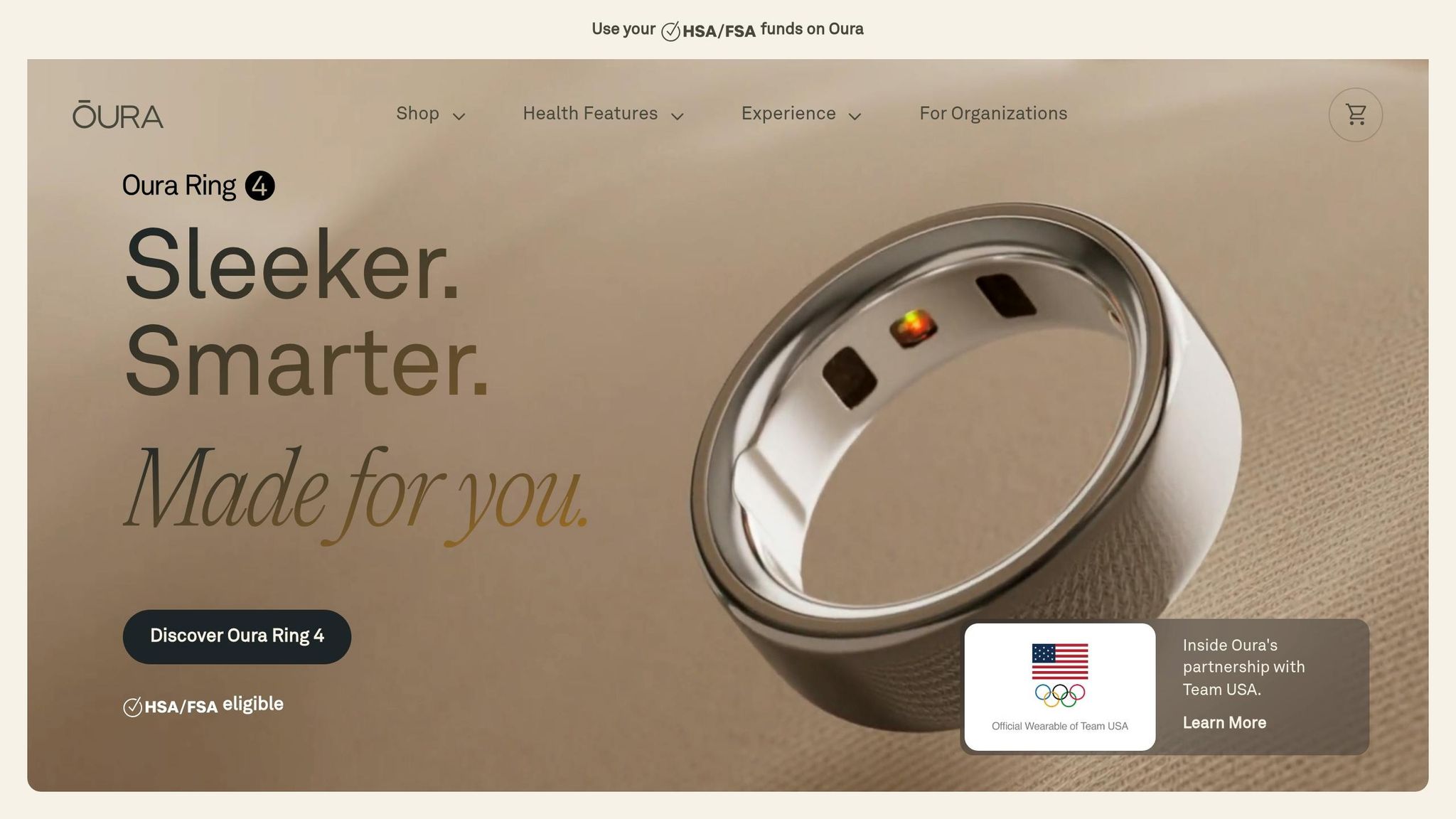
The Oura Ring 4 takes stress monitoring to a whole new level, combining cutting-edge AI technology with a sleek, wearable design. This lightweight ring is packed with advanced sensors that continuously monitor your body’s signals and provide personalized stress insights straight to your smartphone.
Here’s a closer look at how it works and what makes it stand out.
Stress Detection Method
The Oura Ring 4 measures stress by analyzing key biomarkers such as heart rate variability (HRV), heart rate, and skin temperature [11]. Its advanced 18-path multi-wavelength PPG system, equipped with green and infrared LEDs, uses Smart Sensing technology to adapt to your unique physiology. This tech improves tracking accuracy, reducing nighttime gaps by 31% and daytime gaps by 7% [9][12][13]. Stress insights are broken down into three categories:
- Daytime Stress: Tracks how daily activities impact your stress levels.
- Resilience: Evaluates how well you recover from stress.
- Cumulative Stress: Monitors long-term stress trends to help you avoid burnout [11].
Key AI Features
The Oura Ring 4 is powered by Oura Advisor, a generative AI tool that provides personalized coaching based on your data. It also automatically detects over 40 activities, offering insights into how your daily routines contribute to stress [10][12]. Holly Shelton, Chief Product Officer at ŌURA, describes the Smart Sensing technology as:
the future of health sensing, setting a new accuracy standard [13].
These AI-driven features make stress tracking more practical and actionable.
Battery Life
With a battery life of 5 to 8 days on a single charge, the Oura Ring 4 ensures continuous monitoring without frequent interruptions. Battery performance varies depending on ring size and daily use [11].
Price Range
The Oura Ring 4 starts at $349, with a membership required to unlock its full suite of AI features and stress insights. Membership costs $5.99 per month or $69.99 per year. Both the device and membership are eligible for HSA and FSA funds [12].
3. Fitbit Sense 2
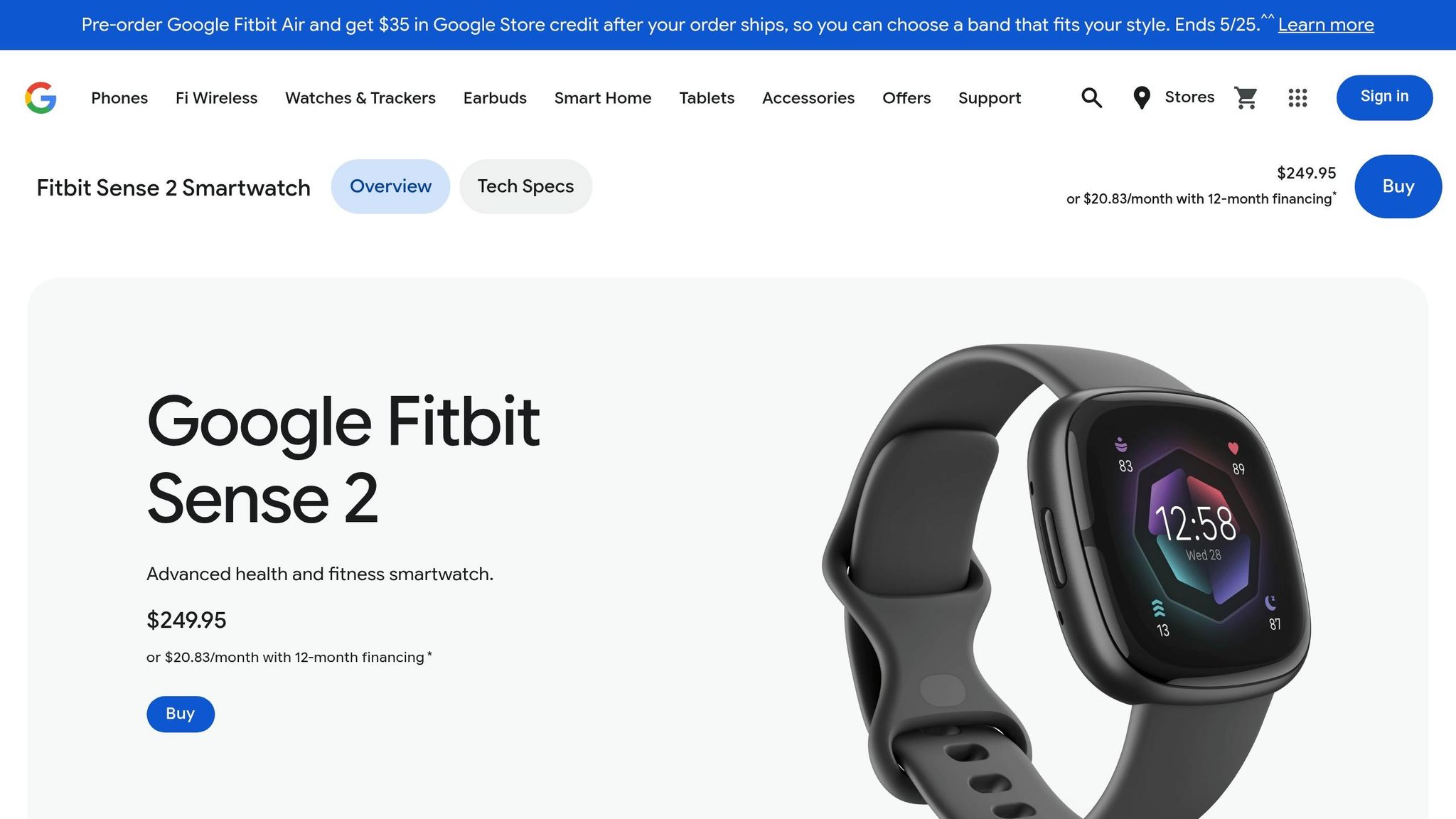
Building on advancements seen in devices like the WHOOP 5.0 and Oura Ring 4, the Fitbit Sense 2 takes stress monitoring to another level with its cutting-edge sensor technology.
The standout feature of the Sense 2 is its on-wrist continuous electrodermal activity (cEDA) sensor, which tracks tiny sweat changes through electrodes on the back of the device. This provides real-time insights into your stress levels.
Stress Detection Method
The Sense 2 uses a combination of metrics, including data from the cEDA sensor, heart rate, and heart rate variability (HRV), to identify stress. When it detects what’s called a "Body Response", the device sends AI-driven nudges encouraging you to reflect on your mood or take action. Elena Perez, Group Product Manager at Fitbit, explains:
"We can track your stress in real time by using a machine learning algorithm that was trained to know what to look for, like sweat levels, but also heart rate, heart rate variability and skin temperature." [17]
It also calculates a daily Stress Management Score on a scale of 1 to 100, factoring in over 10 elements like sleep quality, activity levels, and physiological data. To minimize false alarms, stress notifications are paused during exercise. This approach highlights how wearable tech is becoming more personalized and responsive.
Key AI Features
The Sense 2 works seamlessly with Google Health Coach, an AI-driven tool launched on May 26, 2026, and powered by Gemini. This feature offers tailored guidance based on your health data [14]. Additionally, the Relax app uses HRV metrics to suggest a custom breathing pace for guided relaxation. You can choose a quick 2-minute scan or extended guided sessions of up to 60 minutes to track your EDA responses in real time. These AI-driven tools enhance the device’s hardware capabilities.
Battery Life
The Sense 2 boasts a battery life of over 6 days, and just 12 minutes of fast charging provides enough power for an entire day [14] [16].
Price Range
At $249.95, the Fitbit Sense 2 delivers advanced stress-tracking features. However, access to premium tools like the Gemini-powered Health Coach requires a subscription, priced at $9.99 per month after the free trial period [14] [15].
4. Apple Watch Series 11

The Apple Watch Series 11 takes a different route when it comes to stress monitoring. Instead of offering a direct stress score, it uses Heart Rate Variability (HRV) as its main indicator. Stress insights are then integrated into the Vitals app and Mindfulness app, combining sensor data with both native and third-party AI tools. This combination helps the Series 11 stand out in the competitive world of wearables [19][21].
Stress Detection Method
The watch continuously tracks HRV using its third-generation optical heart sensor [18]. Through the Vitals app, it monitors overnight heart rate, respiratory rate, and wrist temperature. If any two of these metrics deviate from your usual range, it sends an alert [20].
"The new Vitals app gives users a way to check in on their daily health status and review overnight health metrics at a glance, so they can easily see when the metrics are out of their typical range." [22]
Third-party apps like Livity and Welltory bring additional value by interpreting HRV data to provide stress scores and burnout risk indicators [19][21].
"The hardware is already there. Your Apple Watch measures heart rate variability (HRV) throughout the day, and HRV is the single most reliable biomarker for stress that a wrist-worn device can capture." [19]
Key AI Features
The Series 11 uses advanced AI to deliver deeper health insights. Powered by the S10 chip with a 4-core Neural Engine, it applies machine learning to analyze blood vessel responses over a 30-day period. This helps detect hypertension patterns and provides a comprehensive Sleep Score [18][20]. The Sleep Score is calculated based on sleep stages and disturbances, while the Workout Buddy feature offers personalized motivational messages during exercise [20]. These features push wearables beyond basic tracking, helping users take a more active role in managing their stress and overall health.
Battery Life
The watch provides 24 hours of use (or 38 hours in Low Power Mode) and can reach 80% charge in just 30 minutes. This makes it convenient for nearly round-the-clock health tracking [18][20].
Price Range
Priced from $399, the Apple Watch Series 11 sits in the premium category [20]. For those looking for a more affordable option, the Apple Watch SE 3 starts at $249 [20].
5. Garmin Venu 3
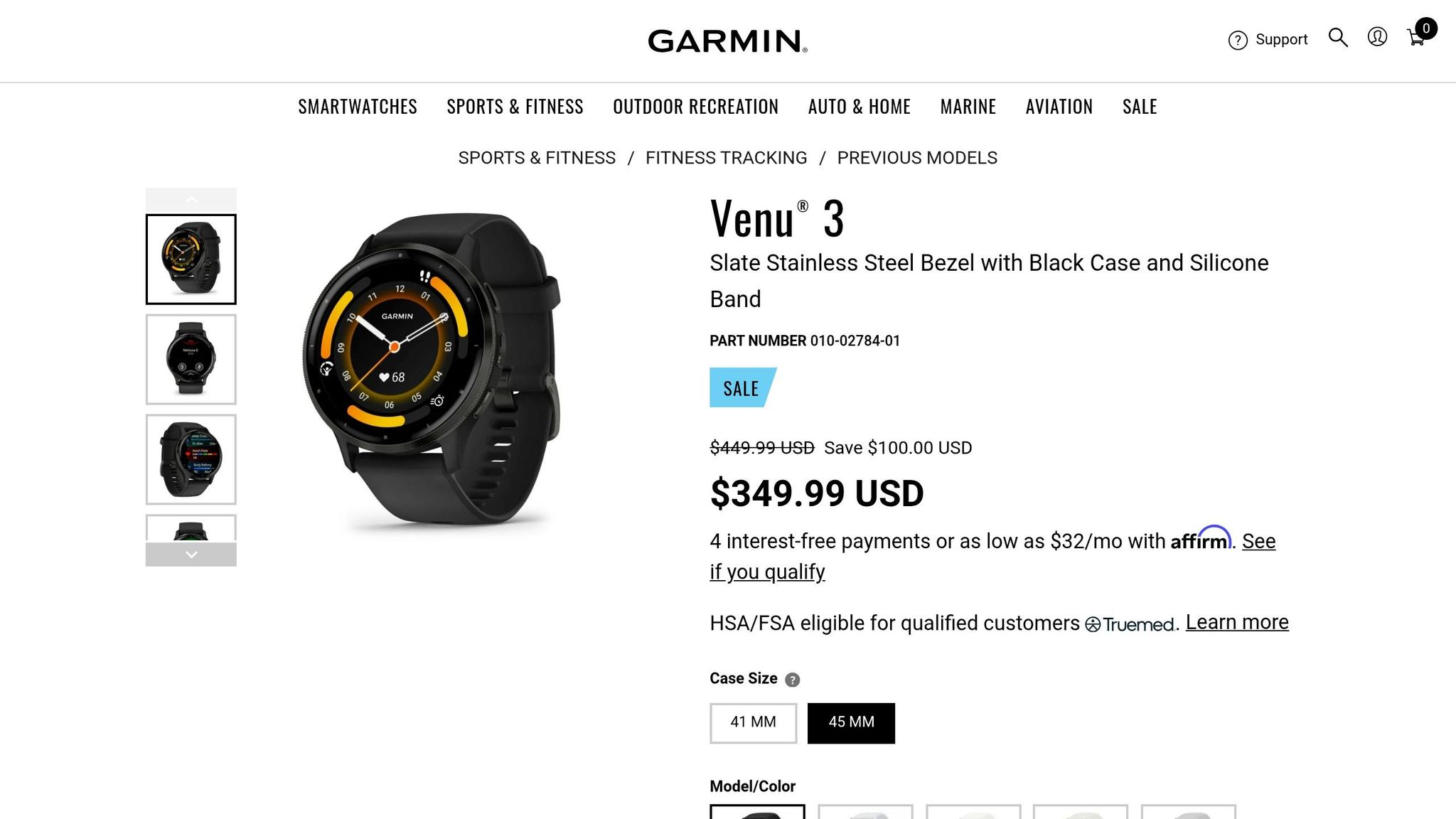
The Garmin Venu 3 blends advanced stress tracking with everyday smartwatch functionality, offering a lifestyle-focused approach. Priced at $449.99, it combines precise sensors with tailored coaching to support both fitness and daily well-being [25][27].
Stress Detection Method
The Venu 3 uses Heart Rate Variability (HRV) to monitor stress throughout the day. Its Elevate V5 optical sensor, equipped with reflector panels and four additional LEDs, ensures accurate readings whether you're at rest or exercising [24][25][26].
Stress levels are displayed on a scale from 0 to 100:
- 0–25: Resting state
- 26–50: Low stress
- 51–75: Medium stress
- 76–100: High stress
Color-coded bars make the data easy to interpret - blue represents rest, while yellow indicates stress. For accuracy, the device requires stillness to calculate stress scores; during movement, it provides notifications instead of numeric values [23][24][28].
Key AI Features
This stress tracking system powers several AI-driven tools designed to enhance your daily routine. The Sleep Coach offers advice tailored to your sleep habits, while the Morning Report summarizes key metrics like sleep quality, recovery, and HRV each day [25][27]. Another standout feature, Body Battery, combines HRV, stress, and activity data to estimate your energy reserves, showing how stress impacts your overall energy [25][27].
"The exciting new features on the Venu 3 series provide even more personalized data, making it easier to understand your body like never before." - Dan Bartel, Garmin Vice President of Global Consumer Sales [27]
For stress relief, the device includes guided meditation sessions and a breathing tool, both accessible directly from the stress display [23][27].
Battery Life
Battery performance is another highlight of the Venu 3. In standard smartwatch mode, it lasts up to 14 days [26][27]. With "always on" mode and regular GPS use, the battery life drops to around 5 days [25][26]. For extended use, the Battery Saver mode can stretch it to an impressive 26 days [26].
"Venu 3 series gets up to 14 days of battery life in smartwatch mode. And because users don't have to charge their watch every night, they can monitor health metrics 24/7 and receive a more holistic view of their stress, Body Battery™ and sleep." - Garmin [27]
Price Range
The Garmin Venu 3 is available for $449.99 [25][27].
Feature Comparison
When it comes to stress tracking, these five devices each bring something different to the table. From detection methods to battery life, pricing, and AI features, there's a lot to consider when deciding which one fits your lifestyle. Here's a breakdown of the key differences:
| Device | Key Detection Method | Battery Life | Price Range (USD) | Subscription Required? | AI-Driven Features |
|---|---|---|---|---|---|
| WHOOP 5.0 | HRV/HR Baseline (0-3 scale) | 14+ Days | From $30/month | Yes (Mandatory) | AI coaching for Strain, Recovery, and Sleep |
| Oura Ring 4 | HRV, Temp, Motion (Cumulative Stress) | 7-8 Days | $299-$549 + $5.99/month | Yes (for full data) | Daytime Stress, Resilience, Cumulative Stress metrics |
| Fitbit Sense 2 | cEDA (Skin Conductance) + HRV | 6+ Days | $199 | Optional ($9.99/month for Premium) | Real-time "Body Response" prompts, Daily Readiness Score |
| Apple Watch Series 11 | Vitals App (Outlier Detection) | 18-36 Hours | $399 | No | Vitals app flags out-of-range metrics across multiple health signals |
| Garmin Venu 3 | HRV-based "Body Battery" | Up to 14 Days | $449 | No | Body Battery energy monitoring, Sleep Coach, Morning Report |
The Fitbit Sense 2 stands out for its use of continuous electrodermal activity (cEDA) sensors, which capture real-time stress responses. Devices that combine multiple signals, like ECG and EDA, tend to provide more accurate anxiety detection compared to those relying on a single metric [5].
Battery life is another key factor. The Garmin Venu 3 offers up to 14 days of use on a single charge, making it ideal for continuous overnight tracking. On the other hand, the Apple Watch Series 11 requires daily charging, with a battery life of just 18-36 hours [29]. If you're someone who wants to monitor sleep and stress patterns consistently, this could be a dealbreaker.
Subscription costs also vary. The WHOOP 5.0 requires a mandatory monthly fee, which powers its advanced AI health coaching capabilities, while devices like the Apple Watch Series 11 and Garmin Venu 3 skip recurring charges altogether [29][3]. If you're planning to use your device for several years, opting for a no-subscription model might save you money in the long run, despite the higher upfront cost.
"The AI coaching is where WHOOP excels - it doesn't just show you data, it tells you what to do with it." - Clinical AI Report [29]
Conclusion
AI-powered wearables have come a long way from just tracking steps - they now play an active role in managing stress. By analyzing physiological signals like heart rate variability and skin conductance, these devices can alert you in real-time when stress levels rise.
This shift transforms raw data into meaningful insights for personal wellness. Platforms like Healify (https://healify.ai) take biometric data from devices like the Oura Ring, Apple Watch, or WHOOP and simplify it into actionable advice. Using its 24/7 AI health coach, Anna, Healify eliminates the need to interpret complex graphs, offering tailored recommendations based on your stress levels, sleep patterns, and overall health.
The result is a feedback loop that promotes long-term resilience. With machine learning models reaching 92% accuracy in identifying stress phases from wearable data [1], these systems become even more effective when paired with contextual information like your schedule, activity levels, and habits. They can suggest timely interventions - like a short breathing exercise or a reminder to pause for a mental reset - precisely when you need them. This smooth transition from data to action highlights how AI doesn’t just monitor stress but actively works to improve mental well-being.
Over time, the benefits become clear. Instead of focusing on daily fluctuations, AI-integrated wearables track weekly trends, leading to measurable improvements. For example, they can boost heart rate variability by an average of 11% [4] and add up to 60 minutes of deep sleep per night [4]. These gains not only reduce the risk of burnout but also enhance overall quality of life.
"The shift from passive biometric logging to active interpretation and action is being accelerated by advances in artificial intelligence." - Thryve Health [2]
FAQs
How accurate are stress readings from wearables?
Wearables estimate stress levels by analyzing proxies such as heart rate variability and skin conductance. Some devices improve their predictions by combining biometric sensors with AI technology, but it's important to understand that they don't directly measure stress. The accuracy of these devices can differ, with single-modality methods typically achieving about 77% accuracy. It’s best to view these results as useful indicators rather than exact measurements.
Which signals matter most for stress tracking (HRV vs EDA)?
Heart rate variability (HRV) and electrodermal activity (EDA) both play important roles in monitoring stress, but they focus on different aspects. HRV measures stress resilience and the balance of the autonomic nervous system, making it perfect for evaluating overall stress levels and recovery over time. On the other hand, EDA - which tracks skin conductivity - pinpoints emotional arousal and acute stress as it happens. While HRV provides valuable long-term insights, EDA shines when it comes to identifying immediate emotional shifts.
How do I choose between a subscription and no-subscription device?
Deciding between a subscription-based wearable and one without a subscription comes down to what you value most: ongoing support or simplicity.
Subscription-based devices typically include perks like regular updates, real-time insights, and personalized AI-driven tools to help with stress management. However, these benefits come with recurring fees.
On the other hand, no-subscription devices stick to the basics, offering features like heart rate and stress tracking for a one-time purchase. While they’re straightforward and budget-friendly, they usually lack the more advanced, AI-powered capabilities.
Your choice depends on whether you prioritize continuous guidance or prefer a simpler, no-strings-attached experience.