Improve your health
Improve your health
Improve your health
January 15, 2026
How AI Improves Kidney Disease Monitoring with Wearables


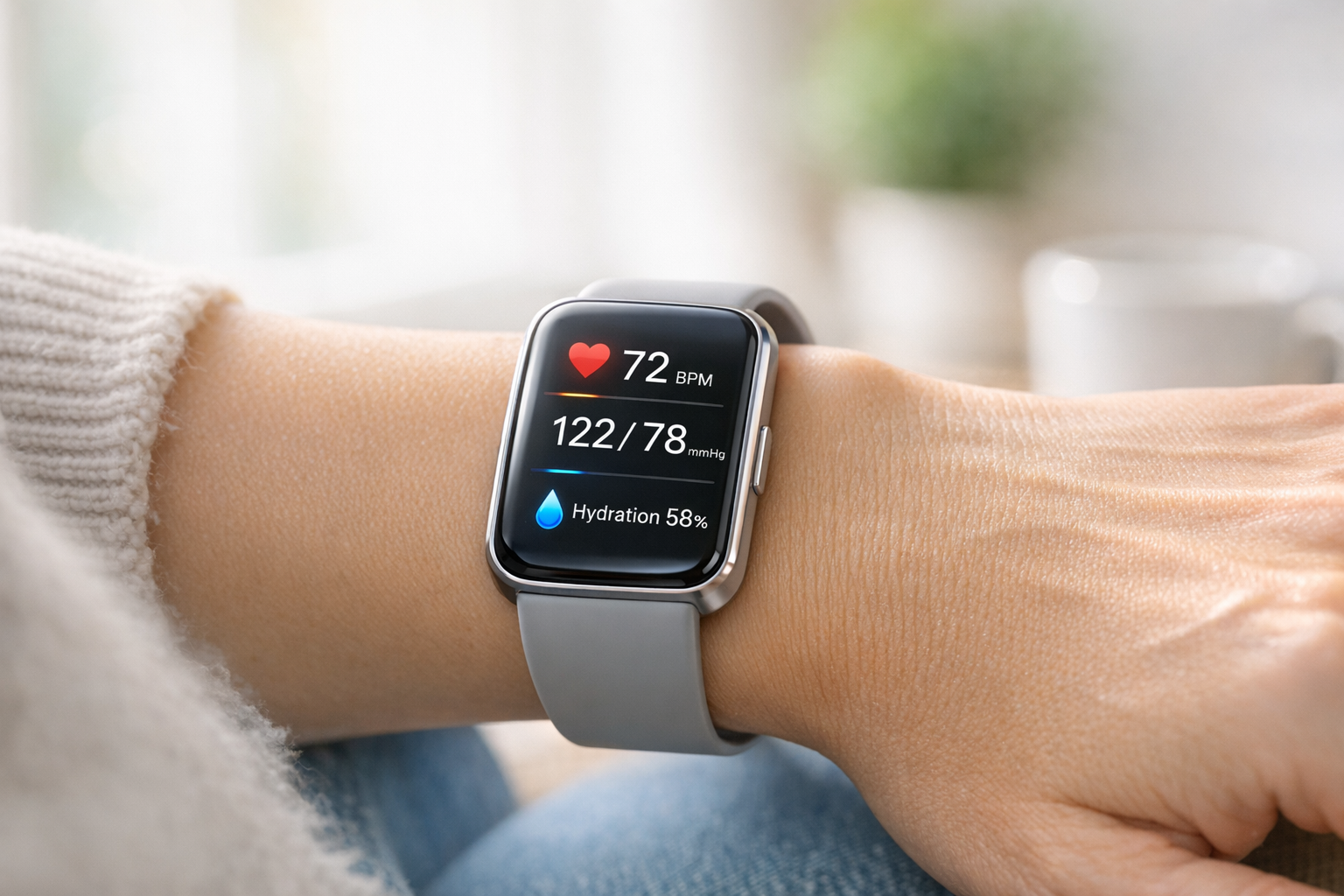
AI-powered wearables are changing how kidney health is monitored. They provide real-time tracking of key biomarkers like creatinine, urea, and cystatin C, along with blood pressure and heart rate variability. This allows for earlier detection of kidney issues, which is critical since nearly 50% of chronic kidney disease (CKD) cases go unnoticed until severe stages. Unlike clinic visits and delayed lab tests, wearables offer continuous monitoring, enabling faster interventions and better management of cardiovascular risks, a leading cause of death in CKD patients.
Key Highlights:
Real-Time Monitoring: Tracks biomarkers via sweat and interstitial fluid, avoiding delays from traditional methods.
Cardiovascular Insights: Monitors blood pressure, heart rate variability, and fluid balance to reduce risks of heart-related complications.
AI Analysis: Detects subtle health changes, predicts disease progression, and provides personalized alerts.
Patient Empowerment: Offers immediate feedback, helping users manage their health proactively.
These devices, coupled with AI, shift care from reactive to preventive, improving outcomes for those at risk of kidney disease and related complications.
Smart wearable gadgets which warn you before kidney failure happens!
Key Metrics Monitored by AI-Enabled Wearables
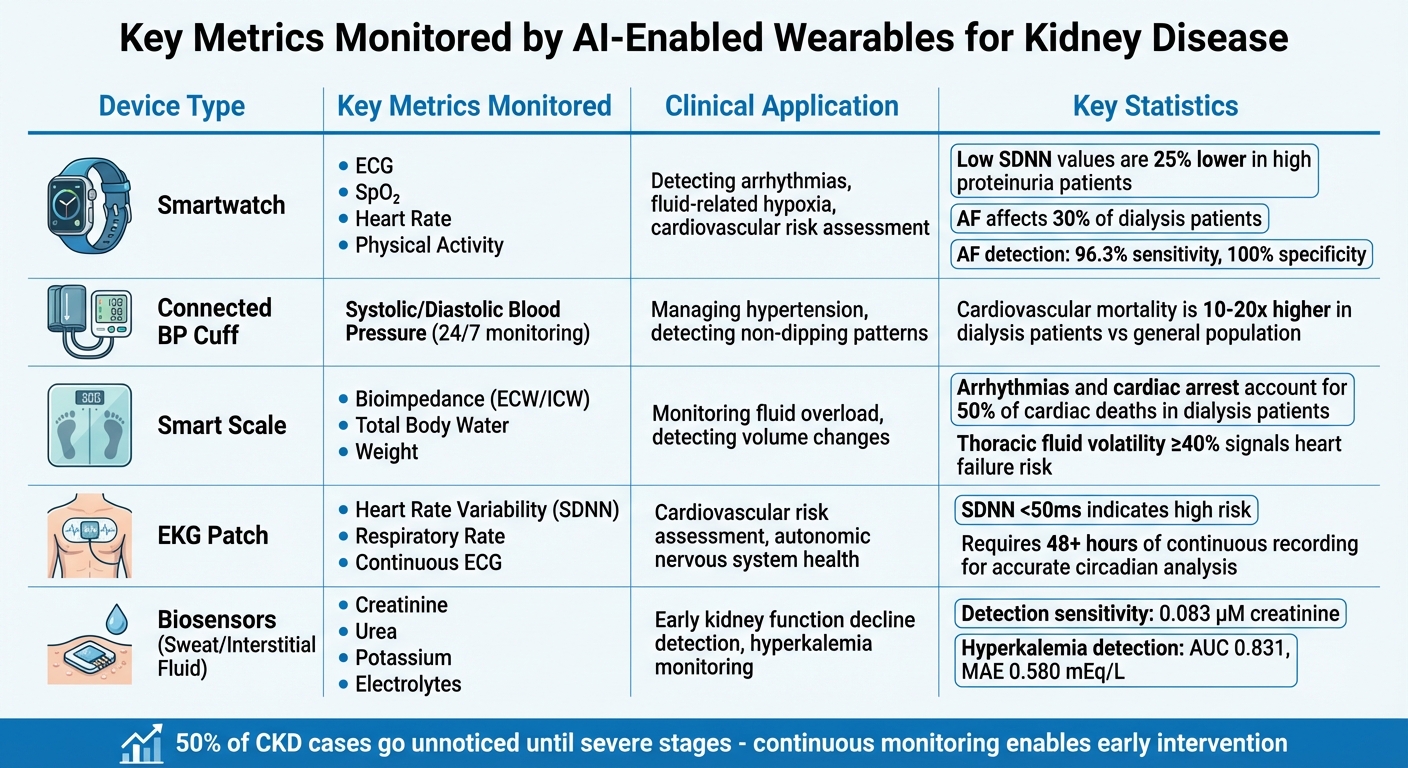
Key Metrics Monitored by AI-Powered Wearables for Kidney Disease
AI-powered wearables are transforming how we monitor kidney health by tracking multiple metrics at once. These devices focus on blood pressure, heart rate, fluid balance, and biomarkers critical for assessing kidney function. Let’s take a closer look at these key metrics.
Blood Pressure Tracking for Hypertension
High blood pressure is a major factor in the progression of kidney disease. With AI-enabled wearables, blood pressure can now be monitored 24/7, uncovering patterns like "non-dipping" - when blood pressure doesn’t drop during sleep. This kind of insight goes far beyond what a single clinic reading can provide.
Why does this matter? Cardiovascular mortality is 10 to 20 times higher in dialysis patients compared to the general population [4]. By identifying these risks early, wearables allow doctors to make timely adjustments to medications or recommend lifestyle changes. Beyond blood pressure, these devices also track heart rate variability and physical activity, offering a more comprehensive view of cardiovascular health.
Heart Rate and Activity Monitoring
Heart rate variability (HRV), especially a measure called SDNN, reflects the health of your autonomic nervous system. Between 2019 and 2023, the Chronic Renal Insufficiency Cohort (CRIC) study used BioPatch wearable devices to gather EKG data. The findings revealed that patients with high proteinuria had SDNN values nearly 25% lower than those with low proteinuria [2].
This is important because low SDNN values are linked to higher cardiovascular risk. In addition, wearables with accelerometers track physical activity, helping to monitor functional recovery and detect protein-energy wasting - a condition common in dialysis patients that increases frailty and the risk of falls [4]. The next layer of monitoring comes from biosensors that evaluate fluid and electrolyte balance.
Biosensors for Fluid and Electrolyte Balance
Advanced sensors in wearables now measure kidney-specific biomarkers like creatinine, urea, and electrolytes such as potassium through sweat and interstitial fluid. For example, an AI model using wearable data achieved a mean absolute error of 0.580 mEq/L and an AUC of 0.831 in detecting hyperkalemia [7].
Multifrequency bioimpedance sensors add another dimension by monitoring total body water, extracellular water, and intracellular water. This helps detect volume overload early, which is critical since arrhythmias and cardiac arrest account for 50% of cardiac deaths in dialysis patients [4]. Spotting fluid imbalances in time can make a life-saving difference.
How AI Analyzes and Improves Wearable Data
AI has the power to turn raw data from wearable devices into meaningful insights by uncovering patterns that humans might overlook. Let’s dive into how this process works.
Real-Time Data Processing for Early Detection
AI excels at spotting early warning signs. For example, frameworks like ChronoNet use Long Short-Term Memory (LSTM) neural networks to analyze time-sensitive clinical data, such as creatinine levels, urine output, and blood pressure over 48-hour periods. By employing attention mechanisms, these systems focus on the most critical time segments, helping predict complications like Acute Kidney Injury (AKI) [10].
Another game-changer is multimodal data fusion, which combines biochemical signals from sweat - like creatinine and urea - with physical metrics such as heart rate and ECG patterns. This approach uncovers complex patterns that can signal potential health issues before symptoms appear [10][6]. For instance, wearable sensors are now sensitive enough to detect creatinine concentrations as low as 0.083 μM, enabling detection at an incredibly early stage [1].
"The deployment of AI technologies in healthcare has advanced early diagnostic capabilities for AKI, supported by the predictive power of modern machine learning frameworks." - Bo Liang, Xinxiang Central Hospital [10]
AI doesn’t just analyze data; it also cleans it up in real time. Motion artifacts can distort heart rate readings, and chemical cross-sensitivity can obscure biomarker signals. AI uses pattern recognition to separate these signals, ensuring accurate detection even under challenging conditions [6]. This level of precision allows for personalized alerts tailored to an individual’s health profile.
Personalized Alerts and Recommendations
AI doesn’t rely on one-size-fits-all solutions. Instead, it creates personalized health profiles by continuously monitoring your metrics to establish a baseline unique to you. This "fingerprinting" approach means the system learns what’s normal for your body, rather than relying on generic population averages [1]. When your data deviates from this baseline, AI issues alerts without waiting for traditional diagnostic intervals like annual checkups.
For example, studies using models like cosinor analysis have shown that continuous monitoring can flag unsafe drops in nighttime heart rate variability - a strong indicator of cardiovascular risk in kidney patients. By identifying these shifts early, AI provides alerts tailored to your specific physiological patterns and risk factors [2].
Predictive Analytics for Disease Progression
AI goes beyond immediate alerts by forecasting future risks, giving healthcare providers a chance to intervene before conditions worsen. For instance, machine learning models can predict Acute Kidney Injury 24–48 hours in advance, achieving AUC values around 0.90 [11]. This early warning system creates a vital window for preventive action.
Convolutional Neural Networks (CNNs) are another powerful tool in this space. They analyze ECG waveforms to detect subtle "electrocardiographic signatures" of chronic kidney disease (CKD) that are invisible to the human eye. Researchers at Cedars-Sinai Medical Center used a CNN model trained on 247,655 ECGs collected between 2005 and 2019. The model achieved an AUC of 0.767 for identifying any stage of CKD, with even better performance (0.843) for patients under 60 [8].
"Deep learning analysis of ECG waveforms has had potentially promising performance in prognosticating outcomes, identifying subclinical disease, and identifying systemic phenotypes not traditionally associated with ECGs." - Nature Communications [8]
Tools like Klinrisk and KidneyIntelX take this a step further by integrating lab results with wearable data to assess risk and predict CKD progression. In real-world applications, KidneyIntelX has influenced treatment decisions and improved outcomes for patients with early-stage diabetic kidney disease [3]. This shift from reactive care to proactive management is reshaping how kidney disease is treated, catching problems before they escalate into emergencies.
Setting Up AI-Powered Wearable Monitoring
Transforming raw data into actionable insights is where AI shines. To set up your own AI-powered kidney monitoring system, start by choosing the right devices, ensuring they sync seamlessly, and learning how to interpret the personalized data they provide.
Choosing Compatible Wearable Devices
Not every wearable is up to the task when it comes to kidney health monitoring. You’ll need devices that measure critical markers like blood pressure, heart rate variability (HRV), and fluid status. It’s also important to prioritize wearables with clinical validation - look for FDA clearance or studies confirming their accuracy compared to gold-standard tools. For example, the Withings BPM Connect is a reliable option for blood pressure monitoring, while the Sibel Health ANNE One offers clinical-grade tracking of vital signs [4][5].
If fluid overload is a concern, consider smart scales with multi-frequency segmental bioimpedance. These scales can measure total body water and differentiate between intracellular and extracellular water, which is crucial for managing edema [4]. Additionally, since kidney disease significantly increases cardiovascular risks - by up to 20 times in dialysis patients - select wearables that detect atrial fibrillation (AF) and monitor oxygen saturation (SpO₂). For instance, the Withings Scanwatch boasts an AF detection algorithm with 96.3% sensitivity and 100% specificity, making it a valuable tool for dialysis patients, where AF affects nearly 30% of individuals [4].
Here’s a quick breakdown of device types and their applications:
Device Type | Key Metrics for Kidney Health | Clinical Application |
|---|---|---|
Smartwatch | ECG, SpO₂, Heart Rate, Activity | Detecting arrhythmias, fluid-related hypoxia [4] |
Connected BP Cuff | Systolic/Diastolic Blood Pressure | Managing hypertension [4] |
Smart Scale | Bioimpedance (ECW/ICW), Weight | Monitoring fluid overload [4] |
EKG Patch | HRV (SDNN), Respiratory Rate | Cardiovascular risk assessment [2] |
When selecting an EKG patch for HRV monitoring, aim for one that supports at least 48 hours of continuous recording. This ensures it captures two full circadian cycles, which are vital for understanding kidney and heart function [2]. Once you’ve chosen your devices, the next step is making sure they work seamlessly with your AI health platform.
Syncing Wearables with AI Health Platforms
Getting your wearable up and running is usually straightforward. Download the relevant app, create your profile, and pair the device using Wi-Fi, Bluetooth, or cellular connections [4]. For a more complete health picture, consider using "Health Super Apps" that aggregate data from multiple sources into one centralized dashboard [4][12]. These platforms pull information from hundreds of health apps and devices, transmitting it via APIs to secure databases where AI algorithms process the data in real time [13].
To maximize the benefits, look for platforms that integrate with Electronic Health Records (EHRs). This allows wearable data to be combined with lab results and clinical notes, creating a more comprehensive view of your health [12]. Setting up automated alerts is also key - these notifications can warn you immediately when any metric falls outside your normal range [13][14]. Some AI models have even reached 89.5% accuracy in diagnosing conditions through continuous monitoring [13].
"Technology is advancing at a rapid pace in today's world. The Internet of Things (IoT) will help devices connect and share information." – MDPI [13]
For accurate readings, ensure your wearable maintains proper contact with your skin. Metrics like heart rate and SpO₂ depend on solid surface contact and correct positioning [13]. Once your devices are synced, you’re ready to dive into the insights they provide.
Interpreting and Acting on AI Insights
This is where the magic of AI comes into play. Unlike traditional methods that compare your metrics to general population averages, AI analyzes your data over time to establish a personal baseline [1]. This tailored approach allows the system to detect deviations that are meaningful for your unique physiology.
It’s often more helpful to focus on multi-biomarker ratios rather than individual metrics. For example, urea levels can vary with diet and age, while creatinine levels depend on muscle mass. AI evaluates these markers together to provide more reliable insights [1].
Heart rate variability (HRV) is another crucial metric. The Standard Deviation of NN Intervals (SDNN) is a key indicator, and values below 50 ms should prompt a discussion with your care team [2]. For fluid management, combining bioimpedance and weight data is essential. A thoracic fluid volatility reading of 40% or higher could signal an impending heart failure event, requiring immediate consultation with your nephrologist [15]. Similarly, monitoring blood pressure patterns is critical - a non-dipping pattern, where blood pressure remains elevated during sleep, is linked to higher mortality in hypertensive patients [2].
Finally, pay close attention to alerts for atrial fibrillation or sleep apnea. AI-powered wearables can calculate your Apnea-Hypopnea Index (AHI), and elevated values are strongly associated with increased mortality in kidney disease patients [4]. If you notice any critical deviations, consult your care team promptly to take actionable steps that protect your health.
Benefits of Combining AI and Wearables for Kidney Health
Improved Early Detection of Complications
AI-powered wearables continuously monitor biomarkers through sweat and interstitial fluid, spotting subtle changes before symptoms appear. This is a game-changer for chronic kidney disease, which often remains silent until it progresses to advanced stages (4 or 5) [1][3].
These devices also offer cardiovascular insights. By tracking heart rate variability, they can identify patients at higher cardiovascular risk - a crucial feature for those on dialysis. Some advanced wearables even detect atrial fibrillation with impressive accuracy, allowing for timely medical intervention [4].
This kind of early detection opens the door to personalized care strategies.
Better Personalization in Treatment Plans
AI doesn't just stop at identifying potential issues - it takes things a step further by customizing treatment plans to fit individual needs. By analyzing your baseline data, AI can make tailored recommendations. For example, between January 2017 and April 2023, the KidneyOnline system in China managed 11,893 patients with nondialysis-dependent CKD using AI-driven, nurse-led care. The results were compelling: patients in the intervention group experienced an eGFR decline of only -1.3 mL/min/1.73 m² per year, compared to -2.8 mL/min/1.73 m² in those receiving standard care. Additionally, their mean arterial pressure dropped significantly, from 94.9 mm Hg to 83.6 mm Hg, within six months [16].
"The utilization of KidneyOnline, an AI-based, nurse-led, patient-centered care system, may be beneficial in slowing the progression of nondialysis-dependent CKD." - Dr. Xueyan Bian, First Affiliated Hospital of Ningbo University [16]
This personalized approach goes far beyond generic treatment protocols. AI analyzes unique patterns - like daily blood pressure fluctuations or fluid retention tendencies - and adjusts interventions to meet those specific needs.
What’s more, this tailored data empowers patients with actionable insights in real time.
Empowering Patients with Real-Time Feedback
The traditional wait for lab results often creates a disconnect between daily habits and their impact on health. AI-powered wearables eliminate this gap by delivering instant feedback. This allows patients to see, in real time, how their lifestyle choices affect kidney function [1][4]. With this kind of visibility, patients move from being passive recipients of care to actively managing their health.
This proactive approach is especially useful for addressing complications like fluid overload. Instead of waiting for symptoms to appear, bioimpedance sensors detect early fluid retention and send alerts, helping patients and caregivers act before the condition worsens [4].
Using Healify for Complete Kidney Health Monitoring
Healify takes the benefits of AI-powered continuous monitoring and packages them into a single, easy-to-use platform designed to simplify kidney health management.
Healify's Key Features for Kidney Health
Healify pulls together data from various sources like wearables, blood pressure monitors, smart scales, and even photos of lab reports, creating a centralized hub for all your health information. Its deep learning OCR technology processes and organizes data from uploaded images, so you can skip the hassle of manual entries. Plus, it connects effortlessly with smart home devices to track vital signs around the clock.
At the heart of Healify is Anna, a 24/7 AI health coach. Anna continuously analyzes real-time data to spot potential risks, such as abnormal lab results or medication interactions, and sends immediate alerts. For kidney health, this means keeping a close eye on critical markers like blood pressure changes, fluid retention trends, and electrolyte levels.
What sets Healify apart is its personalized approach. Depending on your kidney health stage and preferences, the AI creates meal plans that align with specific dietary needs - like managing protein or electrolyte intake. It also offers tailored lifestyle advice, covering essentials like diet, exercise, and sleep, to help you make meaningful changes.
Advantages Over Standard Monitoring Methods
Healify offers a modern, proactive alternative to traditional kidney health monitoring, addressing several common limitations.
Feature | Standard Monitoring Methods | Healify (AI-Powered) Monitoring |
|---|---|---|
Data Collection | Manual logs or occasional clinic visits | Real-time syncing with wearables and OCR |
Analysis Speed | Delayed (requires doctor review) | Instant AI-driven risk detection |
Personalization | General medical advice | AI-crafted recipes and lifestyle plans |
Alerts | Reactive (after complications arise) | Proactive (early warnings for abnormalities) |
Accuracy | Prone to manual entry errors | Automated and verified data processing |
This proactive model is backed by clinical research, emphasizing the importance of continuous monitoring, rapid analysis, and individualized care. By addressing risks early, Healify helps you stay ahead of potential kidney complications instead of reacting after the fact.
Conclusion
AI-powered wearables are reshaping how kidney disease is managed, shifting the focus from sporadic clinic visits to proactive, continuous monitoring at home. This change is crucial because chronic kidney disease often goes unnoticed until it reaches stages 4 or 5, when the damage is irreversible [1]. By providing real-time insights, these devices allow for earlier interventions, helping to prevent complications before they arise. As outlined earlier, the combination of AI and wearable technology is redefining kidney care.
For dialysis patients, the stakes are even higher. Cardiovascular mortality rates in this group are 10 to 20 times higher than in the general population, with nearly half of these deaths caused by cardiovascular events [4]. The advanced AI algorithms we discussed can now predict life-threatening events like arrhythmias and cardiac arrest, especially during the two-day interdialytic period when hospitalization and mortality risks spike by 20% to 40% [4]. These predictions are backed by clinical data, offering a powerful tool for risk mitigation.
"Successful commercial translations of wearable biosensing devices are expected to benefit patients by reducing costs and providing invaluable real-time biochemical information for clinical decision making." - Nature Reviews Nephrology [9]
Looking ahead, exciting breakthroughs are on the horizon. Implantable bioelectronics could enable direct monitoring of kidney tissue [9], while "second skin" sensors promise clinical-grade data collection [5]. The integration of multiomics with wearable metrics and the use of digital twins to simulate disease progression and treatment outcomes are also poised to revolutionize care [17].
FAQs
How can AI-powered wearables help detect kidney disease early?
AI-powered wearables are transforming how we monitor kidney health by tracking vital metrics like heart rate variability (HRV), blood pressure trends, activity levels, and sleep patterns. These devices can spot early warning signs of kidney disease - sometimes even before noticeable symptoms emerge. By leveraging advanced machine learning, they analyze this data to uncover subtle changes, such as electrolyte imbalances or shifts in HRV, which might signal declining kidney function.
What makes these wearables even more effective is their ability to compare real-time data against both personal and population-wide baselines. If anomalies like elevated creatinine levels or irregular heart patterns are detected, users are promptly alerted. Apps like Healify take it a step further by offering round-the-clock personalized insights and actionable tips, helping individuals take charge of their kidney health and adopt preventive measures.
What biomarkers do AI-powered wearables track for kidney disease monitoring?
AI-powered wearables are transforming the way kidney health is monitored by keeping track of key biomarkers. These include blood creatinine levels, which provide a snapshot of kidney function, and the urine albumin-to-creatinine ratio, a critical indicator of potential kidney damage. They also monitor serum potassium levels to identify hyperkalemia and assess fluid balance metrics, such as bioimpedance-derived volume status, to gauge hydration and fluid retention.
With real-time analysis of these biomarkers, these devices offer personalized insights, enabling earlier detection and more effective management of kidney-related conditions.
How does AI use wearables to personalize kidney health monitoring?
AI taps into data from wearables, lab tests, and lifestyle habits to offer a tailored approach to kidney health monitoring. By evaluating key metrics - such as heart rate, activity levels, sleep patterns, blood pressure, and lab results like creatinine or eGFR - it can spot early signs of declining kidney function or imbalances. This proactive analysis enables early detection and personalized recommendations.
These algorithms adjust in real time, recalculating risk scores as fresh data becomes available. They deliver specific, actionable insights - like reminders to drink more water, tweak sodium intake, or book a doctor’s appointment - based on an individual’s health patterns. Platforms like Healify bring these features to life, providing round-the-clock support through an AI health coach to ensure users follow care plans tailored to their kidney health.
Related Blog Posts
AI-powered wearables are changing how kidney health is monitored. They provide real-time tracking of key biomarkers like creatinine, urea, and cystatin C, along with blood pressure and heart rate variability. This allows for earlier detection of kidney issues, which is critical since nearly 50% of chronic kidney disease (CKD) cases go unnoticed until severe stages. Unlike clinic visits and delayed lab tests, wearables offer continuous monitoring, enabling faster interventions and better management of cardiovascular risks, a leading cause of death in CKD patients.
Key Highlights:
Real-Time Monitoring: Tracks biomarkers via sweat and interstitial fluid, avoiding delays from traditional methods.
Cardiovascular Insights: Monitors blood pressure, heart rate variability, and fluid balance to reduce risks of heart-related complications.
AI Analysis: Detects subtle health changes, predicts disease progression, and provides personalized alerts.
Patient Empowerment: Offers immediate feedback, helping users manage their health proactively.
These devices, coupled with AI, shift care from reactive to preventive, improving outcomes for those at risk of kidney disease and related complications.
Smart wearable gadgets which warn you before kidney failure happens!
Key Metrics Monitored by AI-Enabled Wearables

Key Metrics Monitored by AI-Powered Wearables for Kidney Disease
AI-powered wearables are transforming how we monitor kidney health by tracking multiple metrics at once. These devices focus on blood pressure, heart rate, fluid balance, and biomarkers critical for assessing kidney function. Let’s take a closer look at these key metrics.
Blood Pressure Tracking for Hypertension
High blood pressure is a major factor in the progression of kidney disease. With AI-enabled wearables, blood pressure can now be monitored 24/7, uncovering patterns like "non-dipping" - when blood pressure doesn’t drop during sleep. This kind of insight goes far beyond what a single clinic reading can provide.
Why does this matter? Cardiovascular mortality is 10 to 20 times higher in dialysis patients compared to the general population [4]. By identifying these risks early, wearables allow doctors to make timely adjustments to medications or recommend lifestyle changes. Beyond blood pressure, these devices also track heart rate variability and physical activity, offering a more comprehensive view of cardiovascular health.
Heart Rate and Activity Monitoring
Heart rate variability (HRV), especially a measure called SDNN, reflects the health of your autonomic nervous system. Between 2019 and 2023, the Chronic Renal Insufficiency Cohort (CRIC) study used BioPatch wearable devices to gather EKG data. The findings revealed that patients with high proteinuria had SDNN values nearly 25% lower than those with low proteinuria [2].
This is important because low SDNN values are linked to higher cardiovascular risk. In addition, wearables with accelerometers track physical activity, helping to monitor functional recovery and detect protein-energy wasting - a condition common in dialysis patients that increases frailty and the risk of falls [4]. The next layer of monitoring comes from biosensors that evaluate fluid and electrolyte balance.
Biosensors for Fluid and Electrolyte Balance
Advanced sensors in wearables now measure kidney-specific biomarkers like creatinine, urea, and electrolytes such as potassium through sweat and interstitial fluid. For example, an AI model using wearable data achieved a mean absolute error of 0.580 mEq/L and an AUC of 0.831 in detecting hyperkalemia [7].
Multifrequency bioimpedance sensors add another dimension by monitoring total body water, extracellular water, and intracellular water. This helps detect volume overload early, which is critical since arrhythmias and cardiac arrest account for 50% of cardiac deaths in dialysis patients [4]. Spotting fluid imbalances in time can make a life-saving difference.
How AI Analyzes and Improves Wearable Data
AI has the power to turn raw data from wearable devices into meaningful insights by uncovering patterns that humans might overlook. Let’s dive into how this process works.
Real-Time Data Processing for Early Detection
AI excels at spotting early warning signs. For example, frameworks like ChronoNet use Long Short-Term Memory (LSTM) neural networks to analyze time-sensitive clinical data, such as creatinine levels, urine output, and blood pressure over 48-hour periods. By employing attention mechanisms, these systems focus on the most critical time segments, helping predict complications like Acute Kidney Injury (AKI) [10].
Another game-changer is multimodal data fusion, which combines biochemical signals from sweat - like creatinine and urea - with physical metrics such as heart rate and ECG patterns. This approach uncovers complex patterns that can signal potential health issues before symptoms appear [10][6]. For instance, wearable sensors are now sensitive enough to detect creatinine concentrations as low as 0.083 μM, enabling detection at an incredibly early stage [1].
"The deployment of AI technologies in healthcare has advanced early diagnostic capabilities for AKI, supported by the predictive power of modern machine learning frameworks." - Bo Liang, Xinxiang Central Hospital [10]
AI doesn’t just analyze data; it also cleans it up in real time. Motion artifacts can distort heart rate readings, and chemical cross-sensitivity can obscure biomarker signals. AI uses pattern recognition to separate these signals, ensuring accurate detection even under challenging conditions [6]. This level of precision allows for personalized alerts tailored to an individual’s health profile.
Personalized Alerts and Recommendations
AI doesn’t rely on one-size-fits-all solutions. Instead, it creates personalized health profiles by continuously monitoring your metrics to establish a baseline unique to you. This "fingerprinting" approach means the system learns what’s normal for your body, rather than relying on generic population averages [1]. When your data deviates from this baseline, AI issues alerts without waiting for traditional diagnostic intervals like annual checkups.
For example, studies using models like cosinor analysis have shown that continuous monitoring can flag unsafe drops in nighttime heart rate variability - a strong indicator of cardiovascular risk in kidney patients. By identifying these shifts early, AI provides alerts tailored to your specific physiological patterns and risk factors [2].
Predictive Analytics for Disease Progression
AI goes beyond immediate alerts by forecasting future risks, giving healthcare providers a chance to intervene before conditions worsen. For instance, machine learning models can predict Acute Kidney Injury 24–48 hours in advance, achieving AUC values around 0.90 [11]. This early warning system creates a vital window for preventive action.
Convolutional Neural Networks (CNNs) are another powerful tool in this space. They analyze ECG waveforms to detect subtle "electrocardiographic signatures" of chronic kidney disease (CKD) that are invisible to the human eye. Researchers at Cedars-Sinai Medical Center used a CNN model trained on 247,655 ECGs collected between 2005 and 2019. The model achieved an AUC of 0.767 for identifying any stage of CKD, with even better performance (0.843) for patients under 60 [8].
"Deep learning analysis of ECG waveforms has had potentially promising performance in prognosticating outcomes, identifying subclinical disease, and identifying systemic phenotypes not traditionally associated with ECGs." - Nature Communications [8]
Tools like Klinrisk and KidneyIntelX take this a step further by integrating lab results with wearable data to assess risk and predict CKD progression. In real-world applications, KidneyIntelX has influenced treatment decisions and improved outcomes for patients with early-stage diabetic kidney disease [3]. This shift from reactive care to proactive management is reshaping how kidney disease is treated, catching problems before they escalate into emergencies.
Setting Up AI-Powered Wearable Monitoring
Transforming raw data into actionable insights is where AI shines. To set up your own AI-powered kidney monitoring system, start by choosing the right devices, ensuring they sync seamlessly, and learning how to interpret the personalized data they provide.
Choosing Compatible Wearable Devices
Not every wearable is up to the task when it comes to kidney health monitoring. You’ll need devices that measure critical markers like blood pressure, heart rate variability (HRV), and fluid status. It’s also important to prioritize wearables with clinical validation - look for FDA clearance or studies confirming their accuracy compared to gold-standard tools. For example, the Withings BPM Connect is a reliable option for blood pressure monitoring, while the Sibel Health ANNE One offers clinical-grade tracking of vital signs [4][5].
If fluid overload is a concern, consider smart scales with multi-frequency segmental bioimpedance. These scales can measure total body water and differentiate between intracellular and extracellular water, which is crucial for managing edema [4]. Additionally, since kidney disease significantly increases cardiovascular risks - by up to 20 times in dialysis patients - select wearables that detect atrial fibrillation (AF) and monitor oxygen saturation (SpO₂). For instance, the Withings Scanwatch boasts an AF detection algorithm with 96.3% sensitivity and 100% specificity, making it a valuable tool for dialysis patients, where AF affects nearly 30% of individuals [4].
Here’s a quick breakdown of device types and their applications:
Device Type | Key Metrics for Kidney Health | Clinical Application |
|---|---|---|
Smartwatch | ECG, SpO₂, Heart Rate, Activity | Detecting arrhythmias, fluid-related hypoxia [4] |
Connected BP Cuff | Systolic/Diastolic Blood Pressure | Managing hypertension [4] |
Smart Scale | Bioimpedance (ECW/ICW), Weight | Monitoring fluid overload [4] |
EKG Patch | HRV (SDNN), Respiratory Rate | Cardiovascular risk assessment [2] |
When selecting an EKG patch for HRV monitoring, aim for one that supports at least 48 hours of continuous recording. This ensures it captures two full circadian cycles, which are vital for understanding kidney and heart function [2]. Once you’ve chosen your devices, the next step is making sure they work seamlessly with your AI health platform.
Syncing Wearables with AI Health Platforms
Getting your wearable up and running is usually straightforward. Download the relevant app, create your profile, and pair the device using Wi-Fi, Bluetooth, or cellular connections [4]. For a more complete health picture, consider using "Health Super Apps" that aggregate data from multiple sources into one centralized dashboard [4][12]. These platforms pull information from hundreds of health apps and devices, transmitting it via APIs to secure databases where AI algorithms process the data in real time [13].
To maximize the benefits, look for platforms that integrate with Electronic Health Records (EHRs). This allows wearable data to be combined with lab results and clinical notes, creating a more comprehensive view of your health [12]. Setting up automated alerts is also key - these notifications can warn you immediately when any metric falls outside your normal range [13][14]. Some AI models have even reached 89.5% accuracy in diagnosing conditions through continuous monitoring [13].
"Technology is advancing at a rapid pace in today's world. The Internet of Things (IoT) will help devices connect and share information." – MDPI [13]
For accurate readings, ensure your wearable maintains proper contact with your skin. Metrics like heart rate and SpO₂ depend on solid surface contact and correct positioning [13]. Once your devices are synced, you’re ready to dive into the insights they provide.
Interpreting and Acting on AI Insights
This is where the magic of AI comes into play. Unlike traditional methods that compare your metrics to general population averages, AI analyzes your data over time to establish a personal baseline [1]. This tailored approach allows the system to detect deviations that are meaningful for your unique physiology.
It’s often more helpful to focus on multi-biomarker ratios rather than individual metrics. For example, urea levels can vary with diet and age, while creatinine levels depend on muscle mass. AI evaluates these markers together to provide more reliable insights [1].
Heart rate variability (HRV) is another crucial metric. The Standard Deviation of NN Intervals (SDNN) is a key indicator, and values below 50 ms should prompt a discussion with your care team [2]. For fluid management, combining bioimpedance and weight data is essential. A thoracic fluid volatility reading of 40% or higher could signal an impending heart failure event, requiring immediate consultation with your nephrologist [15]. Similarly, monitoring blood pressure patterns is critical - a non-dipping pattern, where blood pressure remains elevated during sleep, is linked to higher mortality in hypertensive patients [2].
Finally, pay close attention to alerts for atrial fibrillation or sleep apnea. AI-powered wearables can calculate your Apnea-Hypopnea Index (AHI), and elevated values are strongly associated with increased mortality in kidney disease patients [4]. If you notice any critical deviations, consult your care team promptly to take actionable steps that protect your health.
Benefits of Combining AI and Wearables for Kidney Health
Improved Early Detection of Complications
AI-powered wearables continuously monitor biomarkers through sweat and interstitial fluid, spotting subtle changes before symptoms appear. This is a game-changer for chronic kidney disease, which often remains silent until it progresses to advanced stages (4 or 5) [1][3].
These devices also offer cardiovascular insights. By tracking heart rate variability, they can identify patients at higher cardiovascular risk - a crucial feature for those on dialysis. Some advanced wearables even detect atrial fibrillation with impressive accuracy, allowing for timely medical intervention [4].
This kind of early detection opens the door to personalized care strategies.
Better Personalization in Treatment Plans
AI doesn't just stop at identifying potential issues - it takes things a step further by customizing treatment plans to fit individual needs. By analyzing your baseline data, AI can make tailored recommendations. For example, between January 2017 and April 2023, the KidneyOnline system in China managed 11,893 patients with nondialysis-dependent CKD using AI-driven, nurse-led care. The results were compelling: patients in the intervention group experienced an eGFR decline of only -1.3 mL/min/1.73 m² per year, compared to -2.8 mL/min/1.73 m² in those receiving standard care. Additionally, their mean arterial pressure dropped significantly, from 94.9 mm Hg to 83.6 mm Hg, within six months [16].
"The utilization of KidneyOnline, an AI-based, nurse-led, patient-centered care system, may be beneficial in slowing the progression of nondialysis-dependent CKD." - Dr. Xueyan Bian, First Affiliated Hospital of Ningbo University [16]
This personalized approach goes far beyond generic treatment protocols. AI analyzes unique patterns - like daily blood pressure fluctuations or fluid retention tendencies - and adjusts interventions to meet those specific needs.
What’s more, this tailored data empowers patients with actionable insights in real time.
Empowering Patients with Real-Time Feedback
The traditional wait for lab results often creates a disconnect between daily habits and their impact on health. AI-powered wearables eliminate this gap by delivering instant feedback. This allows patients to see, in real time, how their lifestyle choices affect kidney function [1][4]. With this kind of visibility, patients move from being passive recipients of care to actively managing their health.
This proactive approach is especially useful for addressing complications like fluid overload. Instead of waiting for symptoms to appear, bioimpedance sensors detect early fluid retention and send alerts, helping patients and caregivers act before the condition worsens [4].
Using Healify for Complete Kidney Health Monitoring

Healify takes the benefits of AI-powered continuous monitoring and packages them into a single, easy-to-use platform designed to simplify kidney health management.
Healify's Key Features for Kidney Health
Healify pulls together data from various sources like wearables, blood pressure monitors, smart scales, and even photos of lab reports, creating a centralized hub for all your health information. Its deep learning OCR technology processes and organizes data from uploaded images, so you can skip the hassle of manual entries. Plus, it connects effortlessly with smart home devices to track vital signs around the clock.
At the heart of Healify is Anna, a 24/7 AI health coach. Anna continuously analyzes real-time data to spot potential risks, such as abnormal lab results or medication interactions, and sends immediate alerts. For kidney health, this means keeping a close eye on critical markers like blood pressure changes, fluid retention trends, and electrolyte levels.
What sets Healify apart is its personalized approach. Depending on your kidney health stage and preferences, the AI creates meal plans that align with specific dietary needs - like managing protein or electrolyte intake. It also offers tailored lifestyle advice, covering essentials like diet, exercise, and sleep, to help you make meaningful changes.
Advantages Over Standard Monitoring Methods
Healify offers a modern, proactive alternative to traditional kidney health monitoring, addressing several common limitations.
Feature | Standard Monitoring Methods | Healify (AI-Powered) Monitoring |
|---|---|---|
Data Collection | Manual logs or occasional clinic visits | Real-time syncing with wearables and OCR |
Analysis Speed | Delayed (requires doctor review) | Instant AI-driven risk detection |
Personalization | General medical advice | AI-crafted recipes and lifestyle plans |
Alerts | Reactive (after complications arise) | Proactive (early warnings for abnormalities) |
Accuracy | Prone to manual entry errors | Automated and verified data processing |
This proactive model is backed by clinical research, emphasizing the importance of continuous monitoring, rapid analysis, and individualized care. By addressing risks early, Healify helps you stay ahead of potential kidney complications instead of reacting after the fact.
Conclusion
AI-powered wearables are reshaping how kidney disease is managed, shifting the focus from sporadic clinic visits to proactive, continuous monitoring at home. This change is crucial because chronic kidney disease often goes unnoticed until it reaches stages 4 or 5, when the damage is irreversible [1]. By providing real-time insights, these devices allow for earlier interventions, helping to prevent complications before they arise. As outlined earlier, the combination of AI and wearable technology is redefining kidney care.
For dialysis patients, the stakes are even higher. Cardiovascular mortality rates in this group are 10 to 20 times higher than in the general population, with nearly half of these deaths caused by cardiovascular events [4]. The advanced AI algorithms we discussed can now predict life-threatening events like arrhythmias and cardiac arrest, especially during the two-day interdialytic period when hospitalization and mortality risks spike by 20% to 40% [4]. These predictions are backed by clinical data, offering a powerful tool for risk mitigation.
"Successful commercial translations of wearable biosensing devices are expected to benefit patients by reducing costs and providing invaluable real-time biochemical information for clinical decision making." - Nature Reviews Nephrology [9]
Looking ahead, exciting breakthroughs are on the horizon. Implantable bioelectronics could enable direct monitoring of kidney tissue [9], while "second skin" sensors promise clinical-grade data collection [5]. The integration of multiomics with wearable metrics and the use of digital twins to simulate disease progression and treatment outcomes are also poised to revolutionize care [17].
FAQs
How can AI-powered wearables help detect kidney disease early?
AI-powered wearables are transforming how we monitor kidney health by tracking vital metrics like heart rate variability (HRV), blood pressure trends, activity levels, and sleep patterns. These devices can spot early warning signs of kidney disease - sometimes even before noticeable symptoms emerge. By leveraging advanced machine learning, they analyze this data to uncover subtle changes, such as electrolyte imbalances or shifts in HRV, which might signal declining kidney function.
What makes these wearables even more effective is their ability to compare real-time data against both personal and population-wide baselines. If anomalies like elevated creatinine levels or irregular heart patterns are detected, users are promptly alerted. Apps like Healify take it a step further by offering round-the-clock personalized insights and actionable tips, helping individuals take charge of their kidney health and adopt preventive measures.
What biomarkers do AI-powered wearables track for kidney disease monitoring?
AI-powered wearables are transforming the way kidney health is monitored by keeping track of key biomarkers. These include blood creatinine levels, which provide a snapshot of kidney function, and the urine albumin-to-creatinine ratio, a critical indicator of potential kidney damage. They also monitor serum potassium levels to identify hyperkalemia and assess fluid balance metrics, such as bioimpedance-derived volume status, to gauge hydration and fluid retention.
With real-time analysis of these biomarkers, these devices offer personalized insights, enabling earlier detection and more effective management of kidney-related conditions.
How does AI use wearables to personalize kidney health monitoring?
AI taps into data from wearables, lab tests, and lifestyle habits to offer a tailored approach to kidney health monitoring. By evaluating key metrics - such as heart rate, activity levels, sleep patterns, blood pressure, and lab results like creatinine or eGFR - it can spot early signs of declining kidney function or imbalances. This proactive analysis enables early detection and personalized recommendations.
These algorithms adjust in real time, recalculating risk scores as fresh data becomes available. They deliver specific, actionable insights - like reminders to drink more water, tweak sodium intake, or book a doctor’s appointment - based on an individual’s health patterns. Platforms like Healify bring these features to life, providing round-the-clock support through an AI health coach to ensure users follow care plans tailored to their kidney health.


