Improve your health

Improve your health

Improve your health

January 13, 2026

AI Health Coaching: Motivation Techniques

AI health coaching is making it easier to stay motivated and achieve your health goals. By using data from wearables and applying proven methods like Motivational Interviewing (MI) and Cognitive Behavioral Techniques (CBT), these tools offer personalized support to help you build lasting habits. Here's how:

  • Motivation matters: Many people struggle to maintain health routines, with 43% dropping out of digital programs. AI tools provide consistent, tailored guidance to keep you on track.

  • Personalized insights: AI uses your data - like activity levels and sleep patterns - to deliver specific recommendations, such as bedtime routines or stress management tips.

  • Proven techniques: MI helps you clarify your goals, while CBT turns them into actionable steps like goal setting, self-monitoring, and planning.

  • Real-time feedback: AI coaches adjust suggestions based on your progress, making it easier to adapt to challenges and stay engaged.

For example, platforms like Healify use AI coaches to analyze your health data and provide actionable advice, whether it’s improving sleep, reducing stress, or increasing activity. This approach has shown measurable success, such as reducing distress by 79% and boosting productivity by 18% in studies.

AI health coaching offers a practical way to overcome obstacles, stay motivated, and turn small changes into lasting habits.
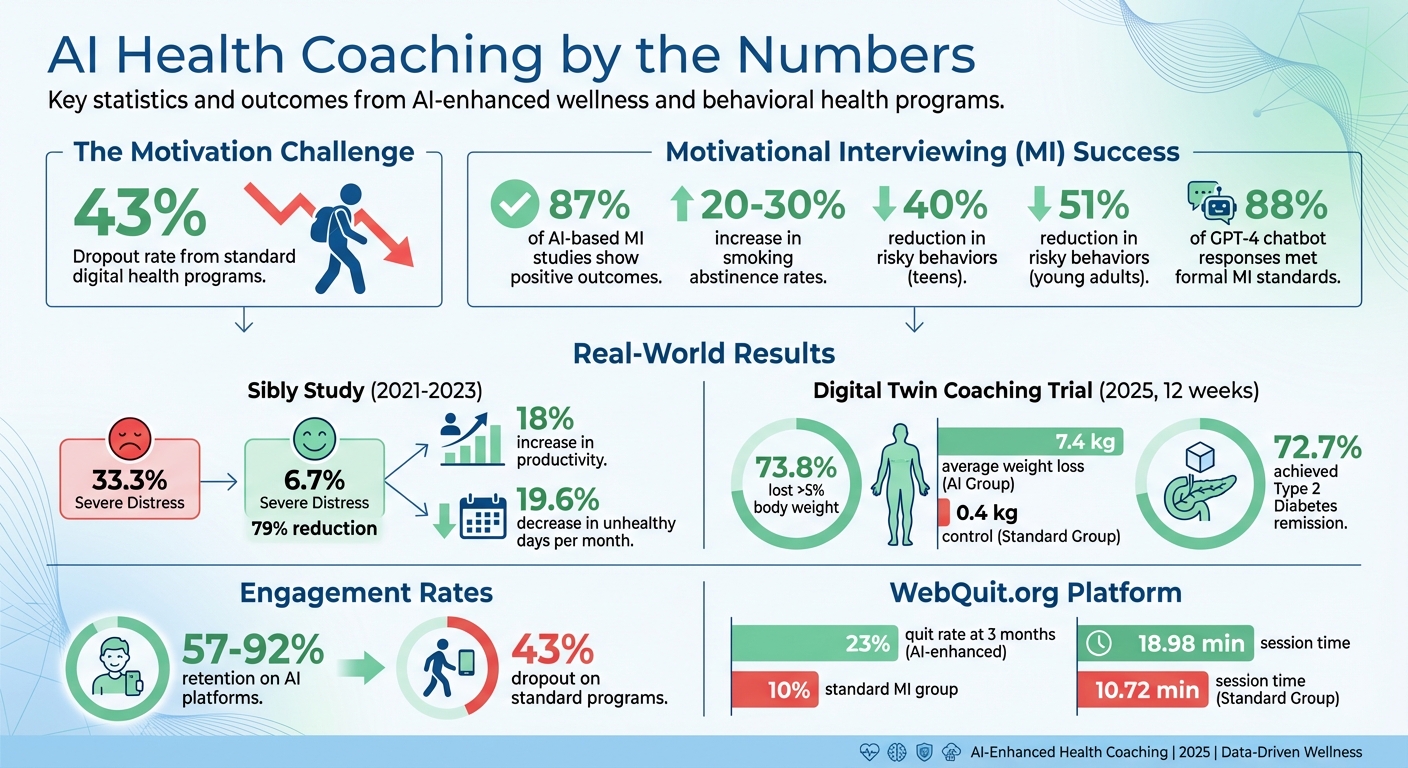
AI Health Coaching Impact: Key Statistics and Success Rates

AI Health Coaching Impact: Key Statistics and Success Rates

The Science Behind AI Fitness Coaches

Core Motivation Techniques in AI Health Coaching

AI-powered health coaching brings a personalized touch to motivating individuals by incorporating proven behavioral science techniques. Two standout methods - Motivational Interviewing (MI) and Cognitive Behavioral Techniques (CBT) - are seamlessly integrated into AI systems to keep users engaged and on track. These approaches, backed by decades of research, are accessible anytime, offering support when it's needed most.

Motivational Interviewing in AI Coaching

Motivational Interviewing is a conversational approach that helps you uncover your own reasons for making changes, rather than being told what you "should" do. AI coaches using MI ask open-ended questions, reflect on your responses, and guide you through any conflicting feelings about your goals. This non-judgmental style is particularly effective for sensitive health challenges like substance use or eating disorders, where fear of criticism might otherwise hold you back.

"MI's unique strength lies in fostering intrinsic, sustainable motivation, making it well suited for long-term lifestyle modification." - Ahmed A. Bahri, Department of Family and Community Medicine [7]

AI systems leverage natural language processing to replicate this conversational style. They apply MI techniques like OARS - open-ended questions, affirmations, reflective listening, and summaries - to build trust and encourage "change talk", where you articulate your own commitment to healthier choices [8][9]. For instance, a 2021 study led by Judith J. Prochaska evaluated Woebot, an MI-informed digital agent, in a trial with 101 adults dealing with substance use. The results showed significant reductions in cravings and substance use, with participants appreciating the tool's empathetic tone [9]. Similarly, in 2024, researchers validated a smoking cessation chatbot powered by GPT-4, which generated reflective responses that met formal MI standards in 88% of cases [9].

AI-driven MI adapts to your "stage of change", whether you're just thinking about a goal or ready to take action. A review found that 87% of studies on AI-based MI reported positive outcomes in terms of feasibility and user satisfaction [8][9]. Even brief MI sessions (1–2 over six months) can boost smoking abstinence rates by 20% to 30% [7]. AI-facilitated MI has also been shown to reduce risky sexual behaviors by 40% among teens and 51% among young adults [7].

While MI helps you tap into your inner drive, CBT translates that motivation into actionable habits.

Cognitive Behavioral Techniques for Better Habits

Cognitive Behavioral Techniques focus on turning motivation into practical steps. AI platforms use CBT strategies like goal setting, self-monitoring, feedback, and action planning to help you replace negative patterns with healthier routines.

Goal setting creates clear objectives, such as walking 10,000 steps daily or getting seven hours of sleep each night. Self-monitoring, often through wearables or digital logs, raises awareness of your habits, while real-time feedback reinforces positive behaviors or highlights areas for improvement [10][2]. AI "nudges" encourage key actions, like taking a short walk after lunch or winding down before bedtime [10][3]. Action planning involves creating "if-then" strategies to handle triggers, such as "If I feel stressed after work, then I'll do a five-minute breathing exercise" [2][3].

In 2024, researchers evaluated the Physical Activity Coaching Engine (PACE), a chat-based assistant that delivered personalized nudges using Fogg's Behavior Model. Over a 21-day study with 33 participants, PACE achieved results comparable to human coaching in terms of step counts and user engagement [3]. Another study in 2025 examined WebQuit.org, a smoking cessation platform combining Acceptance and Commitment Therapy with brief MI. Users spent nearly twice as long per session - 18.98 minutes versus 10.72 minutes - and achieved a 23% quit rate at three months, compared to 10% in the standard MI group [7].

Six behavior change strategies consistently drive higher engagement in health apps: goal setting, self-monitoring, feedback, prompts/cues, rewards, and social support [10]. Advanced AI coaches, particularly those powered by Large Language Models, also offer cognitive reframing, helping users turn negative thoughts into actionable steps [3]. By addressing both the mental and behavioral sides of habit change, these techniques make it easier to stick with your goals over time.

Data-Driven Personalization for Long-Term Habits

AI health coaching stands out because of its ability to adapt to you - your body, your lifestyle, and your goals. By analyzing data from wearables, lab results, and daily habits, these systems create a dynamic, ever-evolving picture of your health. This personalized approach ties seamlessly into the motivational strategies we’ve touched on earlier, constantly adjusting recommendations as your behaviors change. With this data-driven foundation, tracking progress becomes not only possible but also crystal clear.

Tracking Progress with Data Visualization

One of the most effective ways AI health coaches help you stay on track is through data visualization. They transform raw numbers into easy-to-read visuals, like line graphs, heat maps, and bar charts, making trends in sleep, stress, and fitness more understandable. Metrics like heart rate variability (HRV) and deep sleep percentages, which might otherwise feel abstract, become actionable insights.

Take Healify, for example. This platform integrates data from wearables, biometrics, bloodwork, and lifestyle habits into a single, user-friendly dashboard. Imagine noticing a dip in your HRV - Healify might link it to poor sleep quality and suggest changes like an earlier bedtime or a relaxing wind-down routine. By syncing with tools like Apple Health or other devices, the AI pinpoints the metrics that matter most, helping you focus on the areas that can make a real difference in your long-term health.

Real-Time Feedback and Flexible Goal Adjustments

Visualization is only part of the equation. Real-time feedback is essential for staying adaptable to life’s ups and downs. Static goals don’t always work when things get unpredictable, but AI health coaches excel at adjusting on the fly. For instance, if your sleep quality takes a hit or your HRV drops, the system might reduce your step goal for the day to help you avoid overexertion. This kind of dynamic scaling keeps your goals realistic and achievable, boosting your motivation.

Between 2021 and 2023, Sibly, Inc. conducted an observational study led by Dr. Paula Wilbourne. The study examined employees using an AI-assisted, text-based coaching platform. After just four coaching sessions over a minimum of 14 days, the results were striking: reports of severe distress dropped from 33.3% to 6.7% - a 79% relative reduction. Additionally, "unhealthy days" decreased from 19.57 to 15.87 per month, and there was an 18% increase in self-reported productivity [11].

Healify’s AI coach, Anna, takes real-time feedback to the next level. She monitors your health score and sends instant alerts when something’s off - like a 7% drop in your baseline. If you’ve been sitting too long, she might suggest a quick 10-minute walk. Feeling an energy slump? Anna could recommend a snack like almonds, perfectly timed to your meal schedule and glycemic needs. Thrive AI Health highlights this flexibility, noting, "Your coach can dynamically change your plan based on how you're feeling or roadblocks you may have" [12]. By analyzing signals like cortisol spikes and mood patterns, these AI systems deliver support that feels timely and personal, even though it’s powered by advanced algorithms.

How Healify Applies Motivation Techniques
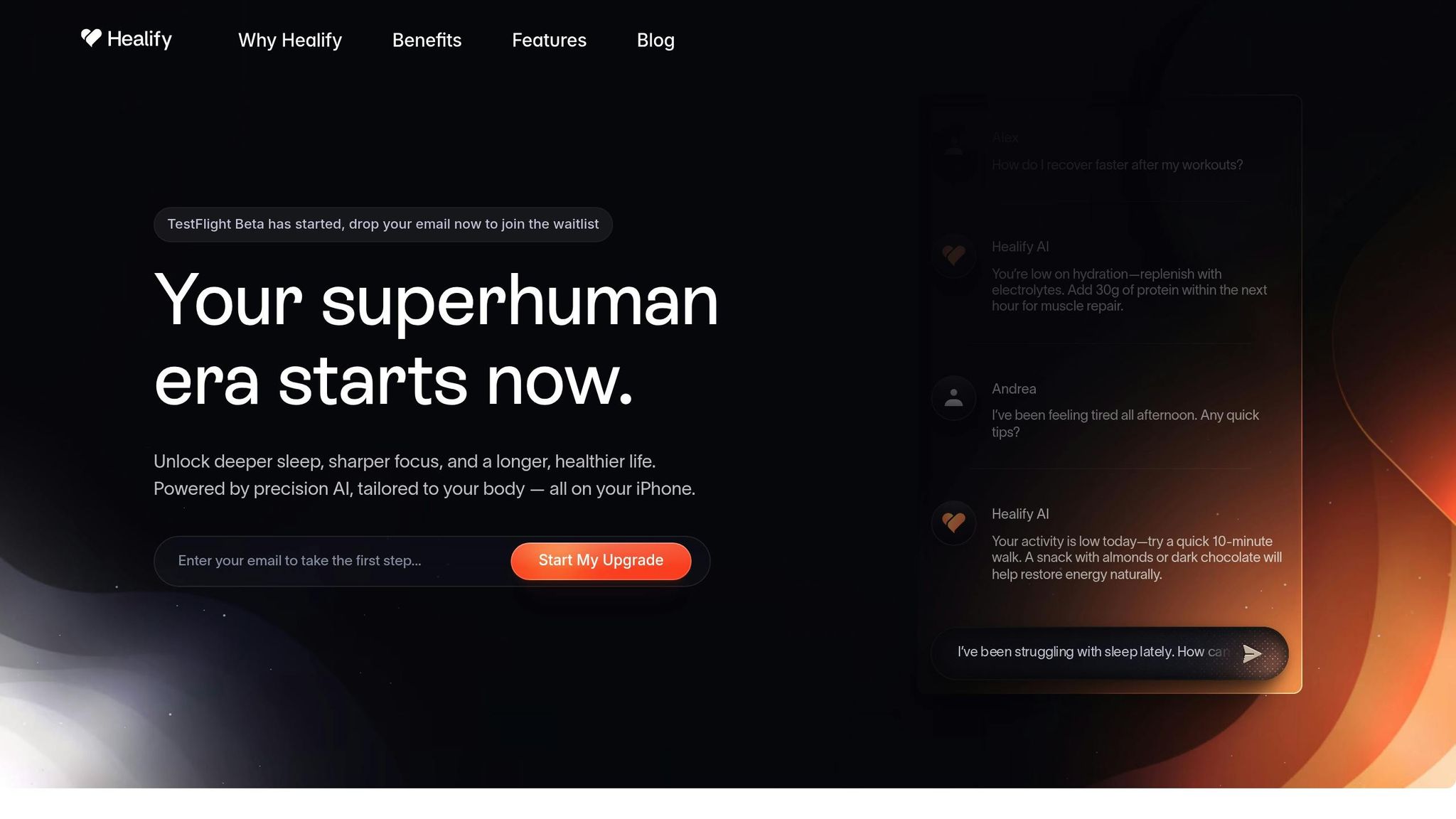
Healify

Healify blends motivational strategies with cutting-edge data analysis to keep users actively engaged over the long term. By transforming data from wearables, biometric devices, blood tests, and lifestyle tracking into actionable recommendations, the app delivers a personalized experience tailored for iPhone users.

Anna: Your AI Health Coach, Always On

Meet Anna, Healify's AI-powered health coach, available 24/7 to guide you on your wellness journey. Using your health data, Anna applies motivational interviewing techniques - like asking open-ended questions and offering positive reinforcement - to keep you engaged and inspired. Research highlights that AI tools using these methods maintain over 90% fidelity and boost positive emotions in 57% of interactions[13][6].

Anna’s approach is proactive. If your stress levels spike, she steps in with personalized stress management tips. Been sitting too long? She might nudge you to take a short walk. After an intense workout, she could suggest recovery techniques. This method aligns with cognitive behavioral strategies, helping you turn small, daily habits into lasting routines - like sticking to a consistent sleep schedule.

Her guidance goes beyond general advice, addressing specific challenges like stress management and sleep improvement.

Tackling Stress and Enhancing Sleep

Anna doesn’t just react to stress; she helps prevent it. By analyzing real-time biometric data - such as heart rate variability and skin temperature - she identifies periods of high cortisol, often referred to as "Peak Cortisol" times. For instance, if your data indicates recurring stress spikes before certain meetings, Anna might suggest a quick 20-minute workout to build resilience and reduce tension.

When it comes to sleep, Healify monitors metrics like sleep duration, consistency, and transitions between sleep stages. Anna provides tailored advice to help you improve your rest. Curious about why you wake up during the night? Just ask Anna, and she’ll offer insights based on your recent wearable data. If your sleep quality dips, she might recommend relaxing activities before bed or suggest an earlier bedtime, such as starting a wind-down routine around 10:30 PM.

Conclusion: AI-Driven Motivation in Health Coaching

AI coaching is revolutionizing health management by combining advanced motivational strategies with data-driven insights. By leveraging behavioral science frameworks - like Self-Determination Theory and COM-B - AI coaches go beyond simple reminders. They deliver tailored, empathetic interactions that respect individual autonomy while addressing specific challenges [3].

The impact is undeniable. In a 12-week trial conducted in 2025, participants using digital twin coaching achieved remarkable results: 73.8% lost more than 5% of their body weight (an average loss of 7.4 kg, or roughly 16.3 lbs, compared to just 0.4 kg - or 0.9 lbs - in the control group) and 72.7% experienced remission of Type 2 Diabetes [5]. Daily engagement with AI coaches has consistently been linked to significant health outcomes, with retention rates on AI-powered platforms ranging from 57% to 92% - a stark contrast to the 43% dropout rate typically seen in standard digital health programs [5][1].

What sets AI coaching apart is its ability to deliver immediate, personalized support. By analyzing data from wearables, biometrics, and lifestyle habits, AI coaches provide context-specific guidance to tackle daily hurdles. This real-time feedback and encouragement help transform small, everyday efforts into lasting habits [2][4].

Healify brings these proven methods together in a single iPhone app, turning health data into actionable insights. With Healify's AI coach, Anna, you can experience this personalized approach firsthand during the private beta. Join the waitlist now to access free premium features.

This new wave of AI-driven coaching doesn’t aim to replace human connection - it’s about making expert-level guidance available whenever you need it. Grounded in your unique data and designed to support your autonomy, AI health coaching offers a future where achieving your health goals is both accessible and sustainable.

FAQs

How does AI use Motivational Interviewing to support health coaching?

AI health coaches bring Motivational Interviewing (MI) to life through the power of natural language processing (NLP), creating engaging, personalized conversations. These AI-driven interactions use MI techniques like open-ended questions, reflective listening, affirmations, and summarizing to help users clarify their goals, tackle obstacles, and maintain motivation.

By tapping into real-time data from wearables, biometrics, and daily habits, AI offers guidance tailored to each person’s unique circumstances. For example, if stress levels spike, the AI might ask something like, “What’s one small step you can take right now to unwind?” This method promotes collaboration, encourages self-reflection, and nurtures internal motivation.

Apps such as Healify incorporate these strategies effortlessly. With features like a 24/7 AI coach providing gentle nudges and positive feedback, users can see their progress and celebrate small victories. This supportive approach makes long-term behavior changes feel more achievable and rewarding.

How does wearable data enhance AI health coaching?

Wearable devices collect real-time data like heart rate, activity levels, sleep patterns, and stress indicators. AI health coaches take this information and turn it into customized advice, monitor your progress, and even send early health alerts if potential risks arise.

By examining these ongoing metrics, AI can provide insights designed specifically for you, making it easier to improve both your physical and mental well-being. This approach ensures your health decisions are always backed by precise, current data.

Can AI health coaches replace human health coaches?

AI health coaches are stepping into roles traditionally held by humans, offering features like round-the-clock personalized guidance, real-time health tracking, and data-driven recommendations. By tapping into information from wearables, biometrics, and daily habits, apps like Healify break down complex health data into simple, actionable steps to improve overall well-being. They’re also budget-friendly, with monthly subscriptions typically priced between $10 and $50, and they provide instant feedback on changes in activity, sleep, or stress levels.

That said, AI falls short when it comes to empathy and building an emotional connection. While it’s great at crunching numbers and scaling services, it can’t pick up on subtle non-verbal cues or provide the emotional support that often makes a difference in sticking to health goals. For many, the most effective solution blends AI’s precision and insights with the encouragement and accountability that only a human coach can deliver.

Related Blog Posts

AI health coaching is making it easier to stay motivated and achieve your health goals. By using data from wearables and applying proven methods like Motivational Interviewing (MI) and Cognitive Behavioral Techniques (CBT), these tools offer personalized support to help you build lasting habits. Here's how:

  • Motivation matters: Many people struggle to maintain health routines, with 43% dropping out of digital programs. AI tools provide consistent, tailored guidance to keep you on track.

  • Personalized insights: AI uses your data - like activity levels and sleep patterns - to deliver specific recommendations, such as bedtime routines or stress management tips.

  • Proven techniques: MI helps you clarify your goals, while CBT turns them into actionable steps like goal setting, self-monitoring, and planning.

  • Real-time feedback: AI coaches adjust suggestions based on your progress, making it easier to adapt to challenges and stay engaged.

For example, platforms like Healify use AI coaches to analyze your health data and provide actionable advice, whether it’s improving sleep, reducing stress, or increasing activity. This approach has shown measurable success, such as reducing distress by 79% and boosting productivity by 18% in studies.

AI health coaching offers a practical way to overcome obstacles, stay motivated, and turn small changes into lasting habits.

AI Health Coaching Impact: Key Statistics and Success Rates

AI Health Coaching Impact: Key Statistics and Success Rates

The Science Behind AI Fitness Coaches

Core Motivation Techniques in AI Health Coaching

AI-powered health coaching brings a personalized touch to motivating individuals by incorporating proven behavioral science techniques. Two standout methods - Motivational Interviewing (MI) and Cognitive Behavioral Techniques (CBT) - are seamlessly integrated into AI systems to keep users engaged and on track. These approaches, backed by decades of research, are accessible anytime, offering support when it's needed most.

Motivational Interviewing in AI Coaching

Motivational Interviewing is a conversational approach that helps you uncover your own reasons for making changes, rather than being told what you "should" do. AI coaches using MI ask open-ended questions, reflect on your responses, and guide you through any conflicting feelings about your goals. This non-judgmental style is particularly effective for sensitive health challenges like substance use or eating disorders, where fear of criticism might otherwise hold you back.

"MI's unique strength lies in fostering intrinsic, sustainable motivation, making it well suited for long-term lifestyle modification." - Ahmed A. Bahri, Department of Family and Community Medicine [7]

AI systems leverage natural language processing to replicate this conversational style. They apply MI techniques like OARS - open-ended questions, affirmations, reflective listening, and summaries - to build trust and encourage "change talk", where you articulate your own commitment to healthier choices [8][9]. For instance, a 2021 study led by Judith J. Prochaska evaluated Woebot, an MI-informed digital agent, in a trial with 101 adults dealing with substance use. The results showed significant reductions in cravings and substance use, with participants appreciating the tool's empathetic tone [9]. Similarly, in 2024, researchers validated a smoking cessation chatbot powered by GPT-4, which generated reflective responses that met formal MI standards in 88% of cases [9].

AI-driven MI adapts to your "stage of change", whether you're just thinking about a goal or ready to take action. A review found that 87% of studies on AI-based MI reported positive outcomes in terms of feasibility and user satisfaction [8][9]. Even brief MI sessions (1–2 over six months) can boost smoking abstinence rates by 20% to 30% [7]. AI-facilitated MI has also been shown to reduce risky sexual behaviors by 40% among teens and 51% among young adults [7].

While MI helps you tap into your inner drive, CBT translates that motivation into actionable habits.

Cognitive Behavioral Techniques for Better Habits

Cognitive Behavioral Techniques focus on turning motivation into practical steps. AI platforms use CBT strategies like goal setting, self-monitoring, feedback, and action planning to help you replace negative patterns with healthier routines.

Goal setting creates clear objectives, such as walking 10,000 steps daily or getting seven hours of sleep each night. Self-monitoring, often through wearables or digital logs, raises awareness of your habits, while real-time feedback reinforces positive behaviors or highlights areas for improvement [10][2]. AI "nudges" encourage key actions, like taking a short walk after lunch or winding down before bedtime [10][3]. Action planning involves creating "if-then" strategies to handle triggers, such as "If I feel stressed after work, then I'll do a five-minute breathing exercise" [2][3].

In 2024, researchers evaluated the Physical Activity Coaching Engine (PACE), a chat-based assistant that delivered personalized nudges using Fogg's Behavior Model. Over a 21-day study with 33 participants, PACE achieved results comparable to human coaching in terms of step counts and user engagement [3]. Another study in 2025 examined WebQuit.org, a smoking cessation platform combining Acceptance and Commitment Therapy with brief MI. Users spent nearly twice as long per session - 18.98 minutes versus 10.72 minutes - and achieved a 23% quit rate at three months, compared to 10% in the standard MI group [7].

Six behavior change strategies consistently drive higher engagement in health apps: goal setting, self-monitoring, feedback, prompts/cues, rewards, and social support [10]. Advanced AI coaches, particularly those powered by Large Language Models, also offer cognitive reframing, helping users turn negative thoughts into actionable steps [3]. By addressing both the mental and behavioral sides of habit change, these techniques make it easier to stick with your goals over time.

Data-Driven Personalization for Long-Term Habits

AI health coaching stands out because of its ability to adapt to you - your body, your lifestyle, and your goals. By analyzing data from wearables, lab results, and daily habits, these systems create a dynamic, ever-evolving picture of your health. This personalized approach ties seamlessly into the motivational strategies we’ve touched on earlier, constantly adjusting recommendations as your behaviors change. With this data-driven foundation, tracking progress becomes not only possible but also crystal clear.

Tracking Progress with Data Visualization

One of the most effective ways AI health coaches help you stay on track is through data visualization. They transform raw numbers into easy-to-read visuals, like line graphs, heat maps, and bar charts, making trends in sleep, stress, and fitness more understandable. Metrics like heart rate variability (HRV) and deep sleep percentages, which might otherwise feel abstract, become actionable insights.

Take Healify, for example. This platform integrates data from wearables, biometrics, bloodwork, and lifestyle habits into a single, user-friendly dashboard. Imagine noticing a dip in your HRV - Healify might link it to poor sleep quality and suggest changes like an earlier bedtime or a relaxing wind-down routine. By syncing with tools like Apple Health or other devices, the AI pinpoints the metrics that matter most, helping you focus on the areas that can make a real difference in your long-term health.

Real-Time Feedback and Flexible Goal Adjustments

Visualization is only part of the equation. Real-time feedback is essential for staying adaptable to life’s ups and downs. Static goals don’t always work when things get unpredictable, but AI health coaches excel at adjusting on the fly. For instance, if your sleep quality takes a hit or your HRV drops, the system might reduce your step goal for the day to help you avoid overexertion. This kind of dynamic scaling keeps your goals realistic and achievable, boosting your motivation.

Between 2021 and 2023, Sibly, Inc. conducted an observational study led by Dr. Paula Wilbourne. The study examined employees using an AI-assisted, text-based coaching platform. After just four coaching sessions over a minimum of 14 days, the results were striking: reports of severe distress dropped from 33.3% to 6.7% - a 79% relative reduction. Additionally, "unhealthy days" decreased from 19.57 to 15.87 per month, and there was an 18% increase in self-reported productivity [11].

Healify’s AI coach, Anna, takes real-time feedback to the next level. She monitors your health score and sends instant alerts when something’s off - like a 7% drop in your baseline. If you’ve been sitting too long, she might suggest a quick 10-minute walk. Feeling an energy slump? Anna could recommend a snack like almonds, perfectly timed to your meal schedule and glycemic needs. Thrive AI Health highlights this flexibility, noting, "Your coach can dynamically change your plan based on how you're feeling or roadblocks you may have" [12]. By analyzing signals like cortisol spikes and mood patterns, these AI systems deliver support that feels timely and personal, even though it’s powered by advanced algorithms.

How Healify Applies Motivation Techniques

Healify

Healify blends motivational strategies with cutting-edge data analysis to keep users actively engaged over the long term. By transforming data from wearables, biometric devices, blood tests, and lifestyle tracking into actionable recommendations, the app delivers a personalized experience tailored for iPhone users.

Anna: Your AI Health Coach, Always On

Meet Anna, Healify's AI-powered health coach, available 24/7 to guide you on your wellness journey. Using your health data, Anna applies motivational interviewing techniques - like asking open-ended questions and offering positive reinforcement - to keep you engaged and inspired. Research highlights that AI tools using these methods maintain over 90% fidelity and boost positive emotions in 57% of interactions[13][6].

Anna’s approach is proactive. If your stress levels spike, she steps in with personalized stress management tips. Been sitting too long? She might nudge you to take a short walk. After an intense workout, she could suggest recovery techniques. This method aligns with cognitive behavioral strategies, helping you turn small, daily habits into lasting routines - like sticking to a consistent sleep schedule.

Her guidance goes beyond general advice, addressing specific challenges like stress management and sleep improvement.

Tackling Stress and Enhancing Sleep

Anna doesn’t just react to stress; she helps prevent it. By analyzing real-time biometric data - such as heart rate variability and skin temperature - she identifies periods of high cortisol, often referred to as "Peak Cortisol" times. For instance, if your data indicates recurring stress spikes before certain meetings, Anna might suggest a quick 20-minute workout to build resilience and reduce tension.

When it comes to sleep, Healify monitors metrics like sleep duration, consistency, and transitions between sleep stages. Anna provides tailored advice to help you improve your rest. Curious about why you wake up during the night? Just ask Anna, and she’ll offer insights based on your recent wearable data. If your sleep quality dips, she might recommend relaxing activities before bed or suggest an earlier bedtime, such as starting a wind-down routine around 10:30 PM.

Conclusion: AI-Driven Motivation in Health Coaching

AI coaching is revolutionizing health management by combining advanced motivational strategies with data-driven insights. By leveraging behavioral science frameworks - like Self-Determination Theory and COM-B - AI coaches go beyond simple reminders. They deliver tailored, empathetic interactions that respect individual autonomy while addressing specific challenges [3].

The impact is undeniable. In a 12-week trial conducted in 2025, participants using digital twin coaching achieved remarkable results: 73.8% lost more than 5% of their body weight (an average loss of 7.4 kg, or roughly 16.3 lbs, compared to just 0.4 kg - or 0.9 lbs - in the control group) and 72.7% experienced remission of Type 2 Diabetes [5]. Daily engagement with AI coaches has consistently been linked to significant health outcomes, with retention rates on AI-powered platforms ranging from 57% to 92% - a stark contrast to the 43% dropout rate typically seen in standard digital health programs [5][1].

What sets AI coaching apart is its ability to deliver immediate, personalized support. By analyzing data from wearables, biometrics, and lifestyle habits, AI coaches provide context-specific guidance to tackle daily hurdles. This real-time feedback and encouragement help transform small, everyday efforts into lasting habits [2][4].

Healify brings these proven methods together in a single iPhone app, turning health data into actionable insights. With Healify's AI coach, Anna, you can experience this personalized approach firsthand during the private beta. Join the waitlist now to access free premium features.

This new wave of AI-driven coaching doesn’t aim to replace human connection - it’s about making expert-level guidance available whenever you need it. Grounded in your unique data and designed to support your autonomy, AI health coaching offers a future where achieving your health goals is both accessible and sustainable.

FAQs

How does AI use Motivational Interviewing to support health coaching?

AI health coaches bring Motivational Interviewing (MI) to life through the power of natural language processing (NLP), creating engaging, personalized conversations. These AI-driven interactions use MI techniques like open-ended questions, reflective listening, affirmations, and summarizing to help users clarify their goals, tackle obstacles, and maintain motivation.

By tapping into real-time data from wearables, biometrics, and daily habits, AI offers guidance tailored to each person’s unique circumstances. For example, if stress levels spike, the AI might ask something like, “What’s one small step you can take right now to unwind?” This method promotes collaboration, encourages self-reflection, and nurtures internal motivation.

Apps such as Healify incorporate these strategies effortlessly. With features like a 24/7 AI coach providing gentle nudges and positive feedback, users can see their progress and celebrate small victories. This supportive approach makes long-term behavior changes feel more achievable and rewarding.

How does wearable data enhance AI health coaching?

Wearable devices collect real-time data like heart rate, activity levels, sleep patterns, and stress indicators. AI health coaches take this information and turn it into customized advice, monitor your progress, and even send early health alerts if potential risks arise.

By examining these ongoing metrics, AI can provide insights designed specifically for you, making it easier to improve both your physical and mental well-being. This approach ensures your health decisions are always backed by precise, current data.

Can AI health coaches replace human health coaches?

AI health coaches are stepping into roles traditionally held by humans, offering features like round-the-clock personalized guidance, real-time health tracking, and data-driven recommendations. By tapping into information from wearables, biometrics, and daily habits, apps like Healify break down complex health data into simple, actionable steps to improve overall well-being. They’re also budget-friendly, with monthly subscriptions typically priced between $10 and $50, and they provide instant feedback on changes in activity, sleep, or stress levels.

That said, AI falls short when it comes to empathy and building an emotional connection. While it’s great at crunching numbers and scaling services, it can’t pick up on subtle non-verbal cues or provide the emotional support that often makes a difference in sticking to health goals. For many, the most effective solution blends AI’s precision and insights with the encouragement and accountability that only a human coach can deliver.

Related Blog Posts

Finally take control of your health

Finally take control of your health

Finally take control of your health

© 2026 Healify Limited
English
© 2026 Healify Limited