Improve your health

Improve your health

Improve your health

January 11, 2026

5 Benefits of Real-Time Cortisol Tracking

Real-time cortisol tracking offers a clear way to monitor your stress hormone throughout the day, delivering insights that single lab tests can’t provide. By continuously measuring cortisol levels, you can better understand your body’s stress response, sleep patterns, and overall health. Here’s what you need to know:

  • Catch Stress Early: Spot irregular cortisol patterns before they lead to chronic stress.

  • Tailored Stress Management: Identify personal triggers and adjust your lifestyle with precision.

  • Better Sleep: Understand how nighttime cortisol impacts rest and make changes to improve sleep quality.

  • Mental Health Insights: Track how your body reacts to stress and build resilience over time.

  • Long-Term Health Tracking: Combine cortisol data with other metrics like heart rate or glucose for a full health picture.

This technology uses wearable sensors to measure cortisol in sweat every 20 minutes, offering a detailed view of your hormonal rhythms. Platforms like Healify even integrate this data with AI to provide practical recommendations for managing stress, improving sleep, and optimizing daily routines. Whether you’re looking to stay ahead of stress or fine-tune your wellness plan, real-time cortisol monitoring provides actionable insights to support your health.

Eli Hormometer Can Measure Stress Levels

1. Early Stress Detection and Prevention

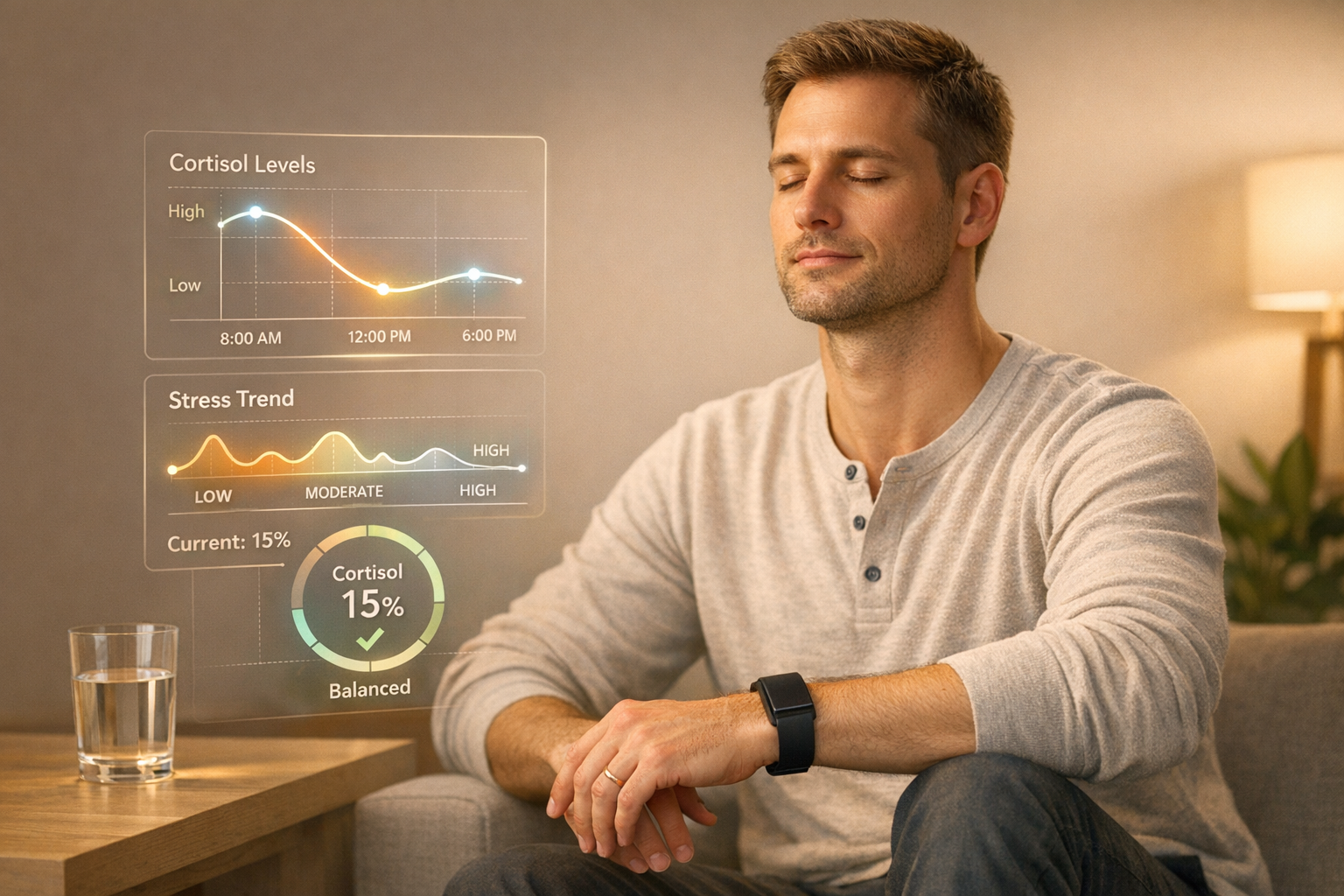
Real-time cortisol tracking offers a way to catch stress early, before it has the chance to become a long-term problem. While traditional tests only provide a snapshot of cortisol levels, they miss the natural ups and downs throughout the day. Continuous monitoring, on the other hand, reveals the complete picture - starting with the natural morning peak and ending with a gradual decline in the evening. When this rhythm is thrown off, it can signal the early stages of stress. This ongoing data allows for a deeper analysis of trends over time.

Thanks to advancements in wearable technology, cortisol can now be measured every 20 minutes, capturing rapid fluctuations (known as ultradian rhythms) that single tests often overlook [3]. This high-frequency tracking can uncover subtle but telling patterns, like cortisol levels staying elevated in the evening when they should drop. Persistent high readings at night might point to ongoing stress or trouble relaxing - issues that can be addressed before they become ingrained [1].

The focus here is on identifying patterns rather than relying on one-off results. By tracking cortisol regularly - such as within 30 minutes of waking, mid-afternoon, and late evening - and recording factors like sleep, meals, and stress levels, it becomes easier to spot triggers and address them [1].

Professor Stafford Lightman from Bristol Medical School highlights the benefits:

The ability to measure the dynamics of hormone secretion across the day and night in patients in their own home will... improve our ability to accurately diagnose any abnormality in hormone secretion without the need for complex inpatient investigations [3].

Building on this early detection approach, Healify combines cortisol data with wearables and lifestyle logs. Its AI coach, Anna, steps in to alert you to potential stress patterns and suggests actionable steps, like a quick workout or a mindfulness exercise, to help you regain balance.

2. Personalized Stress Management and Coaching

Real-time cortisol tracking has revolutionized how we approach stress management. Instead of relying on generic advice, this data allows you to create a plan tailored specifically to your needs. By continuously monitoring your cortisol levels, you can identify not just when stress occurs, but also what triggers it and how your body reacts. This creates a roadmap for interventions designed just for you.

The first step is understanding your personal cortisol baseline. Research shows that one-third of adults have undiagnosed cortisol dysregulation [2]. To establish this baseline, testing at consistent times - such as 30 minutes after waking, mid-afternoon, and 1–2 hours before bed - can help you map your natural daily rhythm. Typically, cortisol levels range from 20 ng/mL to 250 ng/mL [5], and knowing your patterns helps you spot deviations that could signal chronic stress.

Ad hoc testing adds another layer of insight. By tracking how specific events - like an intense workout, too much caffeine, or a challenging meeting - affect your cortisol levels, you can start to see patterns. Pairing these readings with logs of your sleep quality, meals, and perceived stress helps uncover connections you might otherwise miss. As Eli Health explains, "Patterns, not one-offs, guide better decisions" [1]. These patterns provide the foundation for making meaningful lifestyle changes.

You can also use cortisol testing to refine activities like meditation or exercise. For instance, testing after a workout can show whether you need to adjust its intensity based on your recovery. Similarly, identifying your natural cortisol peaks can help you schedule demanding tasks when your body is best equipped to handle them. Healify’s AI coach Anna takes this a step further by analyzing your cortisol trends alongside wearable data and biometrics. The result? Personalized recommendations like timing workouts before stress spikes or fine-tuning your evening routine to promote better cortisol tapering.

3. Better Sleep Quality and Circadian Rhythm Support

Your cortisol rhythm essentially functions as your body’s internal alarm clock. When this rhythm becomes disrupted, your sleep can take a hit. Normally, cortisol peaks in the morning after you wake up and gradually decreases throughout the day, allowing melatonin to take over in the evening. This evening drop is what signals your body that it’s time to wind down. With real-time tracking, you can see if your cortisol levels are following this natural pattern or staying elevated when they should be tapering off.

Tracking cortisol levels can reveal just how much evening cortisol impacts sleep quality. For example, a June 2024 pilot study involving five participants and 93 samples found a strong connection between high nighttime cortisol levels (measured between 8:00 and 10:00 p.m.) and lower Sleep Scores. As noted by the Ultrahuman Science Team, "Elevated night-time cortisol levels were associated with decreased Sleep Scores indicating the impact of evening stress on sleep quality" [7]. Simply put, higher stress in the evening often leads to a restless night.

Another study, led by Yap and colleagues and published in Sleep (2024), observed 95 healthy women over 15 days using at-home EEG and 2,000 saliva samples. The findings showed that elevated cortisol levels before sleep were linked to shorter total sleep duration and longer times to fall asleep. Additionally, poor sleep quality led to a flatter cortisol slope the next day [6]. This means that when cortisol doesn’t drop as it should at night, it becomes harder to fall asleep, and the resulting poor sleep can disrupt your cortisol rhythm the following day.

Real-time cortisol monitoring can help you break this cycle by identifying what’s keeping your evening cortisol levels high. Testing your cortisol 1 to 2 hours before bed can show whether it has dropped to the typical range of 0.725 ± 0.429 ng/ml for healthy adults [7]. If your levels remain elevated, you can reflect on potential triggers like late-day caffeine, a strenuous workout, or excessive screen time. Pairing this data with activity logs allows you to uncover patterns and make adjustments to reduce evening stress.

Healify’s AI coach, Anna, takes this a step further by using your cortisol data alongside wearable insights to fine-tune your evening routine. Anna might suggest shifting workouts to earlier in the day, dimming lights after 8:00 p.m., or incorporating a short meditation session to encourage a natural cortisol drop. The goal is to sync your daily habits with your body’s natural circadian rhythm, helping you fall asleep faster, enjoy deeper rest, and wake up feeling refreshed.

4. Improved Mental Health Awareness and Resilience

Building on the benefits of better sleep and personalized stress management, real-time cortisol tracking takes mental health awareness to a new level. Recognizing and understanding stress can be tricky, especially when it manifests in subtle ways before you're fully aware of it. Real-time cortisol tracking steps in as an objective tool, offering a direct measure of your body's stress response. Unlike heart rate or skin temperature - which can fluctuate due to exercise or illness - cortisol levels specifically reflect activity in your Hypothalamic-Pituitary-Adrenal (HPA) axis, providing a clearer picture of how your body reacts to stress.

What makes continuous cortisol monitoring so impactful is its ability to uncover patterns that might otherwise go unnoticed. By measuring cortisol at consistent times - like 30 minutes after waking and 1 to 2 hours before bedtime - you can establish a personal baseline. This helps differentiate between normal daily variations and significant changes. For example, you might observe higher evening cortisol levels during a busy workweek or notice sharper morning spikes after improving your sleep habits. Pairing this data with a simple lifestyle journal allows you to connect specific events to shifts in your hormonal response.

Early detection of hormonal imbalances through continuous monitoring enables proactive interventions, potentially preventing chronic conditions. Chronic stress is closely linked to depression, anxiety, cardiovascular issues, and even structural changes in the brain that can affect memory and cognition. Prolonged high cortisol levels also raise the risk of Alzheimer's and dementia. By tracking cortisol in real-time, you can adopt a preventive approach, identifying imbalances before they lead to long-term health issues. For instance, a quick cortisol test after a stressful event can reveal how quickly your body recovers - a vital marker of resilience.

Healify's AI coach, Anna, takes this a step further by analyzing your cortisol data alongside wearables and other biometric insights to create personalized stress management strategies. If your data shows elevated cortisol levels in the afternoon, Anna might recommend reorganizing your workload to align with natural energy dips. Persistent high cortisol in the evening? Anna could suggest calming activities like meditation or adjusting your workout schedule to avoid overtraining. This data-driven approach helps validate whether new habits or mindfulness practices are actually improving your stress response. These tailored strategies effortlessly blend into your broader wellness routine.

Shifting from subjective stress surveys to objective biological data transforms how you approach mental well-being. As endocrinologist Hans Selye once said, "Stress is the non-specific response of the body to any demand" [8]. By consistently measuring this response, you gain the tools to anticipate stress and manage its effects. This focus on understanding your unique stress patterns lays the foundation for building long-term resilience.

5. Support for Personalized Medicine and Long-Term Health Optimization

Real-time cortisol tracking is transforming the way we approach long-term, personalized care. Instead of relying on one-size-fits-all thresholds, continuous monitoring creates a baseline tailored specifically to you. It takes into account your age, gender, medical history, and daily routines, making it easier to spot meaningful health changes rather than just normal fluctuations.

When cortisol levels are combined with other metrics, the result is a more complete picture of your overall well-being. For instance, pairing cortisol data with Heart Rate Variability (HRV) can help determine if your body is ready for intense exercise or if you’d benefit more from active recovery. Similarly, integrating sleep tracking can reveal whether your diurnal rhythm - the natural cycle of high cortisol in the morning and lower levels at night - is supporting your energy levels and quality of rest. For those managing weight or blood sugar, cortisol data alongside continuous glucose monitoring can uncover how stress hormones are influencing metabolism and fat storage.

Metric Integrated with Cortisol

Role in Personalized Medicine

Outcome

Heart Rate Variability (HRV)

Tracks balance in the autonomic nervous system

Helps identify whether stress is physical or mental; guides exercise intensity

Sleep Patterns

Links hormonal activity with sleep stages

Pinpoints causes of insomnia; offers better wind-down strategies

Blood Glucose

Monitors how stress affects metabolism

Fine-tunes insulin use and meal timing for weight management or diabetes care

Activity Levels

Connects physical effort with hormonal response

Flags overtraining risks by detecting high cortisol during low-exertion periods

This kind of integrated tracking isn’t just about managing stress in the moment - it’s about crafting a proactive, data-informed health strategy. By combining cortisol insights with other health metrics, you can make smarter adjustments to your overall wellness plan. For example, Anna uses this data to create a treatment plan that evolves as your stress levels, fitness, and recovery needs change. Whether it’s monitoring how a new supplement impacts your cortisol levels or tweaking your diet to better support hormonal balance, this feedback loop ensures your care stays relevant and effective.

To make the most of this data, consistency is key. Testing at regular intervals - morning, mid-afternoon, and evening - provides a clear picture of your cortisol patterns. Logging contextual factors like sleep quality, meal timing, and perceived stress adds even more depth. Rather than focusing on a single reading, look for trends over several days. This method turns complex data into simple, actionable steps that help you optimize both your current health and long-term well-being.

What to Know About Real-Time Cortisol Tracking
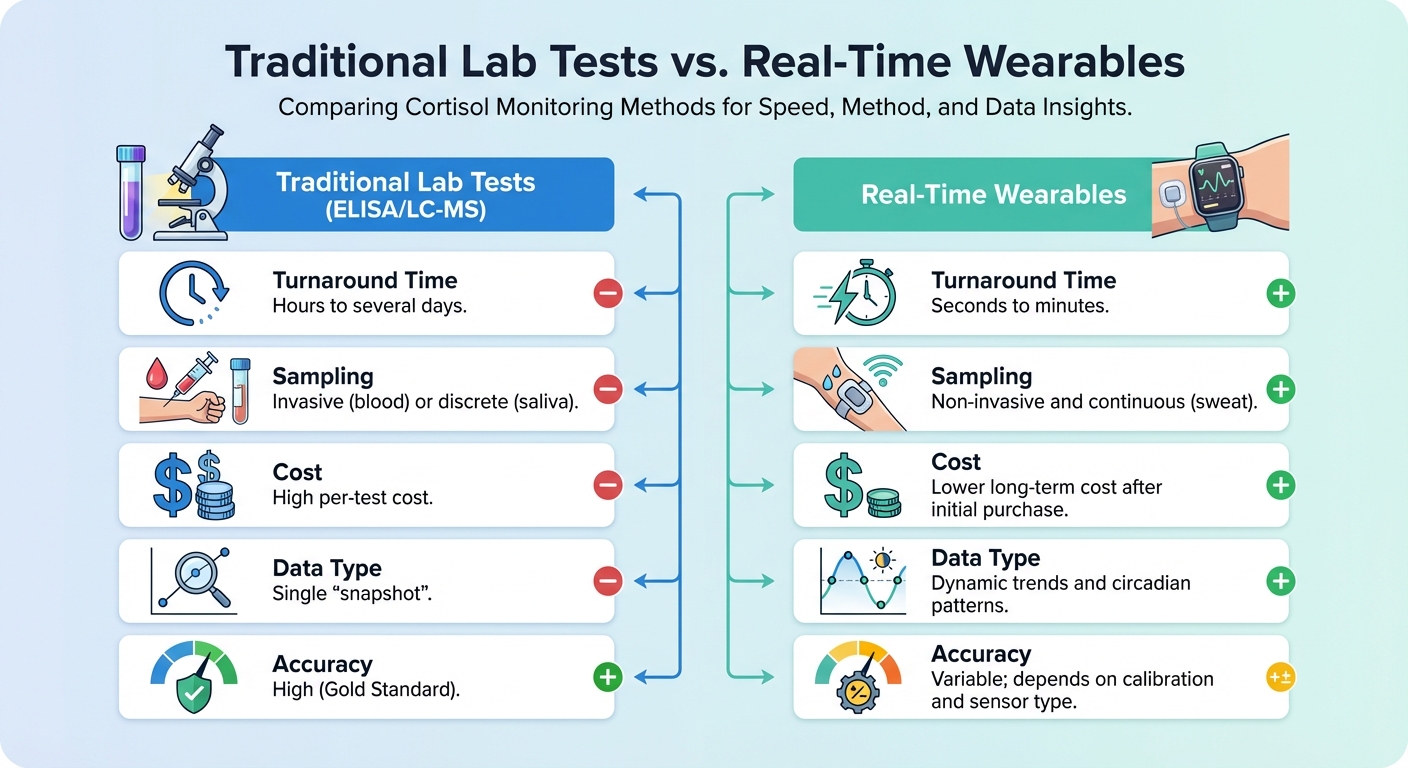
Traditional Lab Tests vs Real-Time Cortisol Wearables Comparison

Traditional Lab Tests vs Real-Time Cortisol Wearables Comparison

Real-time cortisol monitoring uses advanced sensors to detect cortisol levels in sweat. These sensors rely on specialized biorecognition elements that bind to cortisol molecules. Once cortisol attaches, the sensor translates this interaction into an electrical signal. For instance, in FET sensors, the binding changes the electric field and current flow, producing a measurable output [9].

Sweat-based wearables typically use microfluidic channels or absorbent materials to guide sweat to the sensor. Some devices take an indirect approach, measuring cortisol by observing how it blocks charged ions, like sodium or potassium, from passing through a membrane. Meanwhile, implantable sensors aim to measure cortisol directly in interstitial fluids or blood for long-term monitoring, though these remain experimental. Onur Parlak, a post-doctoral scholar at Stanford University, emphasizes:

We are particularly interested in sweat sensing, because it offers noninvasive and continuous monitoring of various biomarkers for a range of physiological conditions [4].

While these technologies promise continuous data, they face challenges. Antibody instability can affect reliability over time. Additionally, cortisol’s low nanomolar concentration and interference from similar hormones require precise calibration to maintain accuracy [5] [8] [9].

Feature

Traditional Lab Tests (ELISA/LC-MS)

Real-Time Wearables

Turnaround Time

Hours to several days

Seconds to minutes

Sampling

Invasive (blood) or discrete (saliva)

Non-invasive and continuous (sweat)

Cost

High per-test cost

Lower long-term cost after initial purchase

Data Type

Single "snapshot"

Dynamic trends and circadian patterns

Accuracy

High (Gold Standard)

Variable; depends on calibration and sensor type

Individual factors can also influence the performance of these sensors. For those with endocrine conditions like Cushing’s or Addison’s disease, these wearables should complement, not replace, professional medical advice. They’re primarily designed to help track daily stress patterns rather than serve as a diagnostic tool. To get the most accurate readings, ensure the wearable maintains good skin contact and occasionally validate its results against lab tests like ELISA [8]. These considerations highlight how real-time cortisol tracking can turn complex data into practical insights for managing personal wellness.

Conclusion

Real-time cortisol tracking is transforming how we approach stress management. By monitoring the full diurnal rhythm - from the morning peak 30 to 45 minutes after waking to the evening low - this continuous data offers insights that single lab tests simply can't match [1]. It allows you to recognize acute stress spikes early, evaluate whether lifestyle adjustments are effective, and sync your daily routine with your body's natural circadian rhythm. This level of insight opens the door to tailored stress management strategies.

Platforms like Healify take this a step further by integrating AI with continuous cortisol readings, wearables, biometrics, and lifestyle data. Instead of sifting through raw numbers, you get clear, actionable guidance from Anna, your 24/7 AI health coach. Anna helps you interpret your cortisol patterns and understand their impact on your sleep, mental resilience, and overall health.

"By measuring it consistently and understanding your patterns, you can make simple lifestyle changes that support recovery, energy, and long-term resilience." – Eli Health [2]

Considering that nearly 1 in 3 adults experience cortisol imbalances without even knowing it [2], real-time tracking offers a proactive solution. Whether you're looking to enhance athletic recovery, manage anxiety, or improve your sleep, continuous cortisol monitoring makes stress more visible - and manageable. Shifting from reactive healthcare to proactive wellness begins with understanding your hormonal rhythms. Intelligent tools that transform complex data into practical steps make personalized stress management a reality for everyone.

FAQs

How can real-time cortisol tracking help with managing stress more effectively?

Real-time cortisol tracking offers immediate insights into your stress hormone levels, empowering you to address stress before it spirals out of control. Unlike traditional lab tests, which are sporadic and come with delayed results, continuous monitoring reveals your natural daily rhythms and highlights significant changes as they happen.

With up-to-the-minute data, AI-powered tools like Healify can recommend tailored solutions - whether it’s practicing breathing techniques, tweaking your sleep schedule, or planning a workout - right when your cortisol levels begin to climb. This real-time, data-driven approach makes managing stress more precise and effective, helping you maintain balance and enhance your overall well-being.

How does AI enhance real-time cortisol tracking to improve health and well-being?

AI is revolutionizing how we track cortisol in real time by combining hormone level analysis with other data points like heart rate variability, sleep patterns, and activity levels. It creates a personalized baseline for you and quickly identifies any shifts, offering timely suggestions to help you manage stress more effectively.

By leveraging advanced pattern recognition, AI uncovers how your daily habits influence cortisol levels over time. It provides tailored, actionable advice - whether it’s taking a mindfulness break, tweaking your workout schedule, or improving your sleep routine. These insights can help you tackle stress-related challenges, enhance sleep quality, and maintain better mental well-being. With AI, cortisol tracking becomes a proactive tool for improving overall health.

Can tracking cortisol levels in real time help identify chronic health issues?

Tracking cortisol levels in real time offers a window into your body's stress response and overall health. Over time, irregular cortisol patterns can point to underlying issues like metabolic disorders, mood swings, or sleep problems.

Continuous monitoring provides a clearer picture of how your body reacts to stress and other influences. This can pave the way for early detection of potential health concerns and allow for tailored strategies to improve long-term well-being.

Related Blog Posts

Real-time cortisol tracking offers a clear way to monitor your stress hormone throughout the day, delivering insights that single lab tests can’t provide. By continuously measuring cortisol levels, you can better understand your body’s stress response, sleep patterns, and overall health. Here’s what you need to know:

  • Catch Stress Early: Spot irregular cortisol patterns before they lead to chronic stress.

  • Tailored Stress Management: Identify personal triggers and adjust your lifestyle with precision.

  • Better Sleep: Understand how nighttime cortisol impacts rest and make changes to improve sleep quality.

  • Mental Health Insights: Track how your body reacts to stress and build resilience over time.

  • Long-Term Health Tracking: Combine cortisol data with other metrics like heart rate or glucose for a full health picture.

This technology uses wearable sensors to measure cortisol in sweat every 20 minutes, offering a detailed view of your hormonal rhythms. Platforms like Healify even integrate this data with AI to provide practical recommendations for managing stress, improving sleep, and optimizing daily routines. Whether you’re looking to stay ahead of stress or fine-tune your wellness plan, real-time cortisol monitoring provides actionable insights to support your health.

Eli Hormometer Can Measure Stress Levels

1. Early Stress Detection and Prevention

Real-time cortisol tracking offers a way to catch stress early, before it has the chance to become a long-term problem. While traditional tests only provide a snapshot of cortisol levels, they miss the natural ups and downs throughout the day. Continuous monitoring, on the other hand, reveals the complete picture - starting with the natural morning peak and ending with a gradual decline in the evening. When this rhythm is thrown off, it can signal the early stages of stress. This ongoing data allows for a deeper analysis of trends over time.

Thanks to advancements in wearable technology, cortisol can now be measured every 20 minutes, capturing rapid fluctuations (known as ultradian rhythms) that single tests often overlook [3]. This high-frequency tracking can uncover subtle but telling patterns, like cortisol levels staying elevated in the evening when they should drop. Persistent high readings at night might point to ongoing stress or trouble relaxing - issues that can be addressed before they become ingrained [1].

The focus here is on identifying patterns rather than relying on one-off results. By tracking cortisol regularly - such as within 30 minutes of waking, mid-afternoon, and late evening - and recording factors like sleep, meals, and stress levels, it becomes easier to spot triggers and address them [1].

Professor Stafford Lightman from Bristol Medical School highlights the benefits:

The ability to measure the dynamics of hormone secretion across the day and night in patients in their own home will... improve our ability to accurately diagnose any abnormality in hormone secretion without the need for complex inpatient investigations [3].

Building on this early detection approach, Healify combines cortisol data with wearables and lifestyle logs. Its AI coach, Anna, steps in to alert you to potential stress patterns and suggests actionable steps, like a quick workout or a mindfulness exercise, to help you regain balance.

2. Personalized Stress Management and Coaching

Real-time cortisol tracking has revolutionized how we approach stress management. Instead of relying on generic advice, this data allows you to create a plan tailored specifically to your needs. By continuously monitoring your cortisol levels, you can identify not just when stress occurs, but also what triggers it and how your body reacts. This creates a roadmap for interventions designed just for you.

The first step is understanding your personal cortisol baseline. Research shows that one-third of adults have undiagnosed cortisol dysregulation [2]. To establish this baseline, testing at consistent times - such as 30 minutes after waking, mid-afternoon, and 1–2 hours before bed - can help you map your natural daily rhythm. Typically, cortisol levels range from 20 ng/mL to 250 ng/mL [5], and knowing your patterns helps you spot deviations that could signal chronic stress.

Ad hoc testing adds another layer of insight. By tracking how specific events - like an intense workout, too much caffeine, or a challenging meeting - affect your cortisol levels, you can start to see patterns. Pairing these readings with logs of your sleep quality, meals, and perceived stress helps uncover connections you might otherwise miss. As Eli Health explains, "Patterns, not one-offs, guide better decisions" [1]. These patterns provide the foundation for making meaningful lifestyle changes.

You can also use cortisol testing to refine activities like meditation or exercise. For instance, testing after a workout can show whether you need to adjust its intensity based on your recovery. Similarly, identifying your natural cortisol peaks can help you schedule demanding tasks when your body is best equipped to handle them. Healify’s AI coach Anna takes this a step further by analyzing your cortisol trends alongside wearable data and biometrics. The result? Personalized recommendations like timing workouts before stress spikes or fine-tuning your evening routine to promote better cortisol tapering.

3. Better Sleep Quality and Circadian Rhythm Support

Your cortisol rhythm essentially functions as your body’s internal alarm clock. When this rhythm becomes disrupted, your sleep can take a hit. Normally, cortisol peaks in the morning after you wake up and gradually decreases throughout the day, allowing melatonin to take over in the evening. This evening drop is what signals your body that it’s time to wind down. With real-time tracking, you can see if your cortisol levels are following this natural pattern or staying elevated when they should be tapering off.

Tracking cortisol levels can reveal just how much evening cortisol impacts sleep quality. For example, a June 2024 pilot study involving five participants and 93 samples found a strong connection between high nighttime cortisol levels (measured between 8:00 and 10:00 p.m.) and lower Sleep Scores. As noted by the Ultrahuman Science Team, "Elevated night-time cortisol levels were associated with decreased Sleep Scores indicating the impact of evening stress on sleep quality" [7]. Simply put, higher stress in the evening often leads to a restless night.

Another study, led by Yap and colleagues and published in Sleep (2024), observed 95 healthy women over 15 days using at-home EEG and 2,000 saliva samples. The findings showed that elevated cortisol levels before sleep were linked to shorter total sleep duration and longer times to fall asleep. Additionally, poor sleep quality led to a flatter cortisol slope the next day [6]. This means that when cortisol doesn’t drop as it should at night, it becomes harder to fall asleep, and the resulting poor sleep can disrupt your cortisol rhythm the following day.

Real-time cortisol monitoring can help you break this cycle by identifying what’s keeping your evening cortisol levels high. Testing your cortisol 1 to 2 hours before bed can show whether it has dropped to the typical range of 0.725 ± 0.429 ng/ml for healthy adults [7]. If your levels remain elevated, you can reflect on potential triggers like late-day caffeine, a strenuous workout, or excessive screen time. Pairing this data with activity logs allows you to uncover patterns and make adjustments to reduce evening stress.

Healify’s AI coach, Anna, takes this a step further by using your cortisol data alongside wearable insights to fine-tune your evening routine. Anna might suggest shifting workouts to earlier in the day, dimming lights after 8:00 p.m., or incorporating a short meditation session to encourage a natural cortisol drop. The goal is to sync your daily habits with your body’s natural circadian rhythm, helping you fall asleep faster, enjoy deeper rest, and wake up feeling refreshed.

4. Improved Mental Health Awareness and Resilience

Building on the benefits of better sleep and personalized stress management, real-time cortisol tracking takes mental health awareness to a new level. Recognizing and understanding stress can be tricky, especially when it manifests in subtle ways before you're fully aware of it. Real-time cortisol tracking steps in as an objective tool, offering a direct measure of your body's stress response. Unlike heart rate or skin temperature - which can fluctuate due to exercise or illness - cortisol levels specifically reflect activity in your Hypothalamic-Pituitary-Adrenal (HPA) axis, providing a clearer picture of how your body reacts to stress.

What makes continuous cortisol monitoring so impactful is its ability to uncover patterns that might otherwise go unnoticed. By measuring cortisol at consistent times - like 30 minutes after waking and 1 to 2 hours before bedtime - you can establish a personal baseline. This helps differentiate between normal daily variations and significant changes. For example, you might observe higher evening cortisol levels during a busy workweek or notice sharper morning spikes after improving your sleep habits. Pairing this data with a simple lifestyle journal allows you to connect specific events to shifts in your hormonal response.

Early detection of hormonal imbalances through continuous monitoring enables proactive interventions, potentially preventing chronic conditions. Chronic stress is closely linked to depression, anxiety, cardiovascular issues, and even structural changes in the brain that can affect memory and cognition. Prolonged high cortisol levels also raise the risk of Alzheimer's and dementia. By tracking cortisol in real-time, you can adopt a preventive approach, identifying imbalances before they lead to long-term health issues. For instance, a quick cortisol test after a stressful event can reveal how quickly your body recovers - a vital marker of resilience.

Healify's AI coach, Anna, takes this a step further by analyzing your cortisol data alongside wearables and other biometric insights to create personalized stress management strategies. If your data shows elevated cortisol levels in the afternoon, Anna might recommend reorganizing your workload to align with natural energy dips. Persistent high cortisol in the evening? Anna could suggest calming activities like meditation or adjusting your workout schedule to avoid overtraining. This data-driven approach helps validate whether new habits or mindfulness practices are actually improving your stress response. These tailored strategies effortlessly blend into your broader wellness routine.

Shifting from subjective stress surveys to objective biological data transforms how you approach mental well-being. As endocrinologist Hans Selye once said, "Stress is the non-specific response of the body to any demand" [8]. By consistently measuring this response, you gain the tools to anticipate stress and manage its effects. This focus on understanding your unique stress patterns lays the foundation for building long-term resilience.

5. Support for Personalized Medicine and Long-Term Health Optimization

Real-time cortisol tracking is transforming the way we approach long-term, personalized care. Instead of relying on one-size-fits-all thresholds, continuous monitoring creates a baseline tailored specifically to you. It takes into account your age, gender, medical history, and daily routines, making it easier to spot meaningful health changes rather than just normal fluctuations.

When cortisol levels are combined with other metrics, the result is a more complete picture of your overall well-being. For instance, pairing cortisol data with Heart Rate Variability (HRV) can help determine if your body is ready for intense exercise or if you’d benefit more from active recovery. Similarly, integrating sleep tracking can reveal whether your diurnal rhythm - the natural cycle of high cortisol in the morning and lower levels at night - is supporting your energy levels and quality of rest. For those managing weight or blood sugar, cortisol data alongside continuous glucose monitoring can uncover how stress hormones are influencing metabolism and fat storage.

Metric Integrated with Cortisol

Role in Personalized Medicine

Outcome

Heart Rate Variability (HRV)

Tracks balance in the autonomic nervous system

Helps identify whether stress is physical or mental; guides exercise intensity

Sleep Patterns

Links hormonal activity with sleep stages

Pinpoints causes of insomnia; offers better wind-down strategies

Blood Glucose

Monitors how stress affects metabolism

Fine-tunes insulin use and meal timing for weight management or diabetes care

Activity Levels

Connects physical effort with hormonal response

Flags overtraining risks by detecting high cortisol during low-exertion periods

This kind of integrated tracking isn’t just about managing stress in the moment - it’s about crafting a proactive, data-informed health strategy. By combining cortisol insights with other health metrics, you can make smarter adjustments to your overall wellness plan. For example, Anna uses this data to create a treatment plan that evolves as your stress levels, fitness, and recovery needs change. Whether it’s monitoring how a new supplement impacts your cortisol levels or tweaking your diet to better support hormonal balance, this feedback loop ensures your care stays relevant and effective.

To make the most of this data, consistency is key. Testing at regular intervals - morning, mid-afternoon, and evening - provides a clear picture of your cortisol patterns. Logging contextual factors like sleep quality, meal timing, and perceived stress adds even more depth. Rather than focusing on a single reading, look for trends over several days. This method turns complex data into simple, actionable steps that help you optimize both your current health and long-term well-being.

What to Know About Real-Time Cortisol Tracking

Traditional Lab Tests vs Real-Time Cortisol Wearables Comparison

Traditional Lab Tests vs Real-Time Cortisol Wearables Comparison

Real-time cortisol monitoring uses advanced sensors to detect cortisol levels in sweat. These sensors rely on specialized biorecognition elements that bind to cortisol molecules. Once cortisol attaches, the sensor translates this interaction into an electrical signal. For instance, in FET sensors, the binding changes the electric field and current flow, producing a measurable output [9].

Sweat-based wearables typically use microfluidic channels or absorbent materials to guide sweat to the sensor. Some devices take an indirect approach, measuring cortisol by observing how it blocks charged ions, like sodium or potassium, from passing through a membrane. Meanwhile, implantable sensors aim to measure cortisol directly in interstitial fluids or blood for long-term monitoring, though these remain experimental. Onur Parlak, a post-doctoral scholar at Stanford University, emphasizes:

We are particularly interested in sweat sensing, because it offers noninvasive and continuous monitoring of various biomarkers for a range of physiological conditions [4].

While these technologies promise continuous data, they face challenges. Antibody instability can affect reliability over time. Additionally, cortisol’s low nanomolar concentration and interference from similar hormones require precise calibration to maintain accuracy [5] [8] [9].

Feature

Traditional Lab Tests (ELISA/LC-MS)

Real-Time Wearables

Turnaround Time

Hours to several days

Seconds to minutes

Sampling

Invasive (blood) or discrete (saliva)

Non-invasive and continuous (sweat)

Cost

High per-test cost

Lower long-term cost after initial purchase

Data Type

Single "snapshot"

Dynamic trends and circadian patterns

Accuracy

High (Gold Standard)

Variable; depends on calibration and sensor type

Individual factors can also influence the performance of these sensors. For those with endocrine conditions like Cushing’s or Addison’s disease, these wearables should complement, not replace, professional medical advice. They’re primarily designed to help track daily stress patterns rather than serve as a diagnostic tool. To get the most accurate readings, ensure the wearable maintains good skin contact and occasionally validate its results against lab tests like ELISA [8]. These considerations highlight how real-time cortisol tracking can turn complex data into practical insights for managing personal wellness.

Conclusion

Real-time cortisol tracking is transforming how we approach stress management. By monitoring the full diurnal rhythm - from the morning peak 30 to 45 minutes after waking to the evening low - this continuous data offers insights that single lab tests simply can't match [1]. It allows you to recognize acute stress spikes early, evaluate whether lifestyle adjustments are effective, and sync your daily routine with your body's natural circadian rhythm. This level of insight opens the door to tailored stress management strategies.

Platforms like Healify take this a step further by integrating AI with continuous cortisol readings, wearables, biometrics, and lifestyle data. Instead of sifting through raw numbers, you get clear, actionable guidance from Anna, your 24/7 AI health coach. Anna helps you interpret your cortisol patterns and understand their impact on your sleep, mental resilience, and overall health.

"By measuring it consistently and understanding your patterns, you can make simple lifestyle changes that support recovery, energy, and long-term resilience." – Eli Health [2]

Considering that nearly 1 in 3 adults experience cortisol imbalances without even knowing it [2], real-time tracking offers a proactive solution. Whether you're looking to enhance athletic recovery, manage anxiety, or improve your sleep, continuous cortisol monitoring makes stress more visible - and manageable. Shifting from reactive healthcare to proactive wellness begins with understanding your hormonal rhythms. Intelligent tools that transform complex data into practical steps make personalized stress management a reality for everyone.

FAQs

How can real-time cortisol tracking help with managing stress more effectively?

Real-time cortisol tracking offers immediate insights into your stress hormone levels, empowering you to address stress before it spirals out of control. Unlike traditional lab tests, which are sporadic and come with delayed results, continuous monitoring reveals your natural daily rhythms and highlights significant changes as they happen.

With up-to-the-minute data, AI-powered tools like Healify can recommend tailored solutions - whether it’s practicing breathing techniques, tweaking your sleep schedule, or planning a workout - right when your cortisol levels begin to climb. This real-time, data-driven approach makes managing stress more precise and effective, helping you maintain balance and enhance your overall well-being.

How does AI enhance real-time cortisol tracking to improve health and well-being?

AI is revolutionizing how we track cortisol in real time by combining hormone level analysis with other data points like heart rate variability, sleep patterns, and activity levels. It creates a personalized baseline for you and quickly identifies any shifts, offering timely suggestions to help you manage stress more effectively.

By leveraging advanced pattern recognition, AI uncovers how your daily habits influence cortisol levels over time. It provides tailored, actionable advice - whether it’s taking a mindfulness break, tweaking your workout schedule, or improving your sleep routine. These insights can help you tackle stress-related challenges, enhance sleep quality, and maintain better mental well-being. With AI, cortisol tracking becomes a proactive tool for improving overall health.

Can tracking cortisol levels in real time help identify chronic health issues?

Tracking cortisol levels in real time offers a window into your body's stress response and overall health. Over time, irregular cortisol patterns can point to underlying issues like metabolic disorders, mood swings, or sleep problems.

Continuous monitoring provides a clearer picture of how your body reacts to stress and other influences. This can pave the way for early detection of potential health concerns and allow for tailored strategies to improve long-term well-being.

Related Blog Posts

Finally take control of your health

Finally take control of your health

Finally take control of your health

© 2026 Healify Limited
English
© 2026 Healify Limited