Improve your health
Improve your health
Improve your health
19 de diciembre de 2025
Cómo los terceros utilizan los datos de salud de dispositivos portátiles
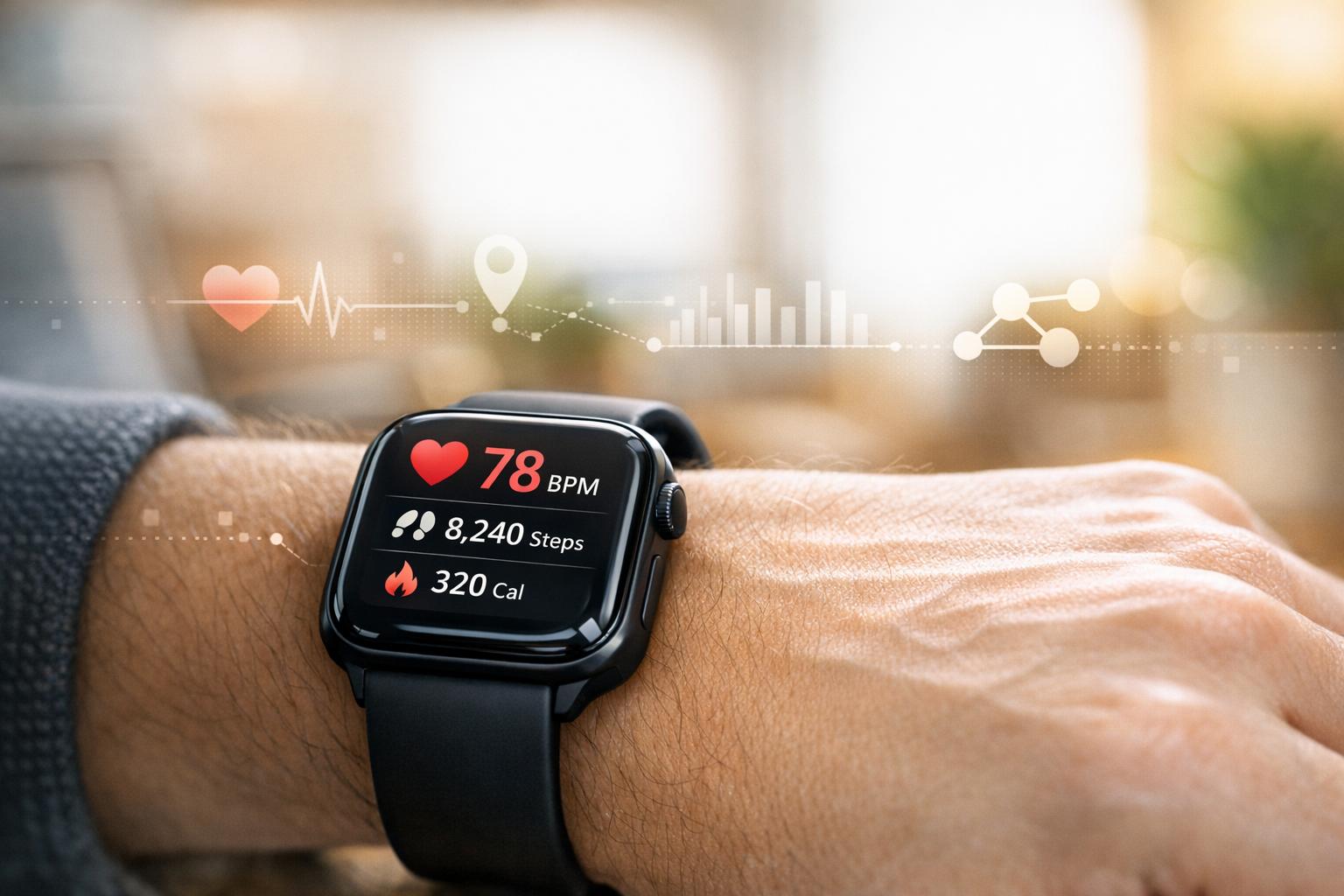
Los dispositivos de salud portátiles como los relojes inteligentes y rastreadoras de fitness recopilan datos personales detallados, incluyendo la frecuencia cardíaca, patrones de sueño e incluso ubicaciones GPS. Estos datos a menudo se comparten con terceros, tales como anunciantes, aseguradoras, empleadores e investigadores. Aunque ayudan a crear perspectivas personalizadas y apoyan iniciativas de salud, también representan serios riesgos de privacidad debido a regulaciones limitadas y falta de transparencia en los EE.UU.
Puntos Clave:
Datos Recopilados: Frecuencia cardíaca, ciclos de sueño, movimiento, GPS y más.
Uso por Terceros:
Los anunciantes y corredores lo usan para marketing dirigido.
Las aseguradoras y empleadores lo vinculan a programas de bienestar y beneficios.
Los investigadores estudian tendencias y riesgos de salud.
Riesgos de Privacidad:
Es posible la reidentificación de datos anónimos.
Las políticas de intercambio de datos suelen ser poco claras.
Las leyes de EE.UU. brindan protecciones limitadas fuera de HIPAA.
Controles de privacidad más sólidos, políticas claras y manejo seguro de datos son críticos para equilibrar los beneficios de la tecnología portátil con la confianza del usuario.
¿Tu Reloj Inteligente Está Espiándote? Analizamos 17 Políticas de Privacidad Para Averiguarlo.
Cómo Se Recopilan y Comparten los Datos de Salud Portátiles
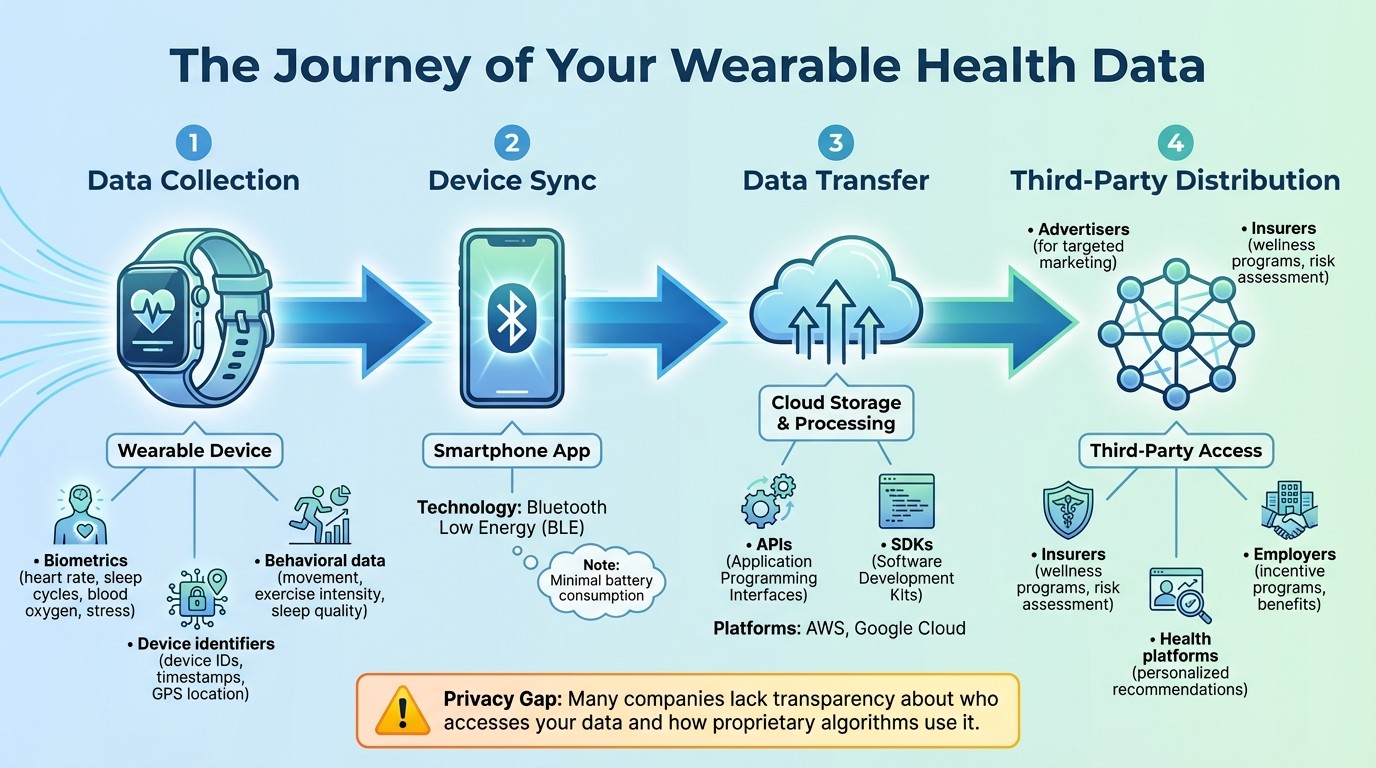
Cómo Fluyen los Datos de Salud Portátiles desde el Dispositivo hasta Terceros
Recopilación de Datos por Dispositivos Portátiles
Los dispositivos portátiles dependen de sensores integrados para recolectar datos de salud las 24 horas. Por ejemplo, los acelerómetros miden el movimiento y cuentan tus pasos, los monitores ópticos de frecuencia cardíaca rastrean tu pulso y los giroscopios capturan la orientación y patrones de movimiento. Algunos dispositivos incluso incluyen GPS para mapear tu ubicación, lo que puede ofrecer perspectivas sobre dónde haces ejercicio o descansas.[1] Estos sensores proporcionan datos objetivos, a menudo más confiables que las métricas autoinformadas, para evaluar la actividad física y los patrones de sueño.[1]
Los datos recopilados generalmente se dividen en tres categorías:
Biometría: Incluye información como frecuencia cardíaca, ciclos de sueño, niveles de oxígeno en la sangre e indicadores de estrés.
Datos conductuales: Registra hábitos de movimiento, intensidad del ejercicio y calidad del sueño.
Identificadores del dispositivo: Cubre IDs únicos del dispositivo, marcas de tiempo y datos de ubicación.[6]
Una vez recopilados, estos datos comienzan su viaje desde tu dispositivo portátil hacia varias plataformas y organizaciones.
Cómo se Transfieren los Datos desde los Dispositivos a Terceros
La transferencia de datos desde tu dispositivo portátil implica varios pasos. Inicialmente, tu dispositivo se sincroniza con una aplicación complementaria en el smartphone usando Bluetooth Low Energy (BLE), lo que asegura un consumo mínimo de batería durante la transferencia de datos.[1] A partir de ahí, los datos se comparten con terceros a través de APIs (interfaces de programación de aplicaciones) y SDKs (kits de desarrollo de software), los cuales permiten que las aplicaciones extraigan y transmitan información.[6][2] Servicios en la nube como AWS o Google Cloud almacenan y procesan los datos para varios interesados, incluyendo anunciantes, aseguradoras, investigadores y plataformas de salud como Healify, que combina datos portátiles con biometría y análisis de sangre para ofrecer recomendaciones de salud personalizadas.[6]
Este proceso optimizado apoya iniciativas de salud a gran escala. Por ejemplo, el programa Todos Nosotros del NIH usa datos portátiles recopilados a través de aplicaciones para analizar tendencias de salud en la población, mientras que Scripps Research emplea datos sincronizados en la nube para monitorear brotes virales.[6] A pesar de la conveniencia de otorgar permisos a las aplicaciones para compartir datos, las empresas a menudo carecen de transparencia sobre sus algoritmos propietarios o la lista completa de entidades que acceden a tus datos.[1] Aunque esta conectividad impulsa la innovación en salud, también plantea preguntas sobre privacidad y seguridad de los datos.
Políticas de Privacidad y Derechos de Compartición de Datos
A medida que los datos de los dispositivos portátiles se mueven más allá de tu dispositivo, entran en juego preocupaciones de privacidad. Un análisis de las políticas de privacidad de 17 principales fabricantes de dispositivos portátiles, evaluadas con un marco de 24 criterios, destacó importantes brechas de transparencia.[6] Muchas políticas permiten a las empresas compartir datos desidentificados (datos despojados de identificadores personales) o datos agregados (conjuntos de datos anonimizados combinados de múltiples usuarios) con terceros para fines como investigación, publicidad o salud pública, a menudo sin ofrecer opciones claras de exclusión para todos los usos.[6] Aunque los usuarios generalmente tienen derechos para acceder o eliminar sus datos y revocar permisos de aplicaciones, el modelo de consentimiento por defecto a menudo permite un análisis extensivo por terceros.[6]
Incluso los datos desidentificados no están completamente exentos de riesgo. La reidentificación sigue siendo una posibilidad, exponiendo a los usuarios a vulnerabilidades imprevistas cuando aceptan compartir su información.[5] Sin regulaciones federales integrales en los EE.UU. - aparte de las leyes de privacidad en 20 estados - muchas empresas de dispositivos portátiles operan con supervisión limitada, permitiendo prácticas de intercambio de datos que a menudo priorizan intereses corporativos sobre el control del usuario.[6][4]
Cómo Utilizan Terceros los Datos de Salud Portátiles
Los datos de salud portátiles se han convertido en una mina de oro para anunciantes, aseguradoras e investigadores, transformando corrientes de información en bruto en perspectivas útiles. Estas perspectivas se utilizan para dar forma a estrategias de marketing, evaluar riesgos e incluso monitorear tendencias de salud en poblaciones.
Publicidad y Corretaje de Datos
Los anunciantes y corredores de datos ahora mezclan métricas de salud portátiles - como los conteos de pasos, patrones de sueño y frecuencias cardíacas - con otros datos de consumo, como el uso de aplicaciones, hábitos de compra y actividad en la web. Esto les permite agrupar a los usuarios en categorías como "profesionales con alto nivel de estrés", "entusiastas del fitness" o "en riesgo de enfermedad metabólica" [2][5]. Estas perspectivas permiten campañas altamente dirigidas, recomendaciones de productos personalizadas y ubicaciones de anuncios precisas [2][3].
Sin embargo, la historia no termina ahí. Los datos portátiles también revelan rasgos que van más allá de lo obvio, como la fatiga crónica o hábitos de trabajo sedentarios [3][5]. Incluso cuando se eliminan los identificadores personales, los estudios de privacidad han demostrado que los patrones de movimiento pueden actuar como una "huella digital conductual", haciendo posible reconstruir perfiles individuales e inferir información sensible [3][5].
Aseguradoras y Programas de Bienestar
Las compañías de seguros y los programas de bienestar de empleadores también están aprovechando los datos portátiles, particularmente para la evaluación de riesgos y programas basados en incentivos. En los EE.UU., los aseguradores y empleadores suelen vincular recompensas como descuentos en primas o bonos en efectivo a métricas como conteo diario de pasos, minutos activos o participación en desafíos fitness [2][8]. Aunque estos programas se comercializan como herramientas para fomentar estilos de vida más saludables y prevenir enfermedades crónicas, también generan conjuntos de datos detallados que alimentan modelos de puntuación de riesgos para condiciones como diabetes o enfermedad cardíaca [2][9]. Los expertos advierten que esto podría llevar a cambios sutiles en las primas o cobertura basados en perfiles de riesgo individuales [3][4].
Los programas de bienestar empresarial van un paso más allá, utilizando dispositivos portátiles para rastrear métricas como calidad del sueño, frecuencia cardíaca y niveles de actividad. Los empleados que cumplen ciertos objetivos pueden recibir incentivos como tarjetas de regalo o primas de seguro reducidas [2][9]. Pero los defensores de la privacidad advierten que incluso los datos desidentificados pueden ser agregados de maneras que permitan a los empleadores inferir condiciones de salud, niveles de estrés o discapacidades, lo que podría conducir a la discriminación en promociones o cargas de trabajo. El desequilibrio de conocimiento entre empleadores y empleados sobre cómo se pueden analizar estos datos solo profundiza estas preocupaciones [3][4][5].
Investigación Clínica y Salud Pública
Los datos portátiles no son solo para negocios - también están jugando un papel cada vez mayor en la salud pública y la investigación. Programas como el Programa de Investigación Todos Nosotros del NIH recopilan datos portátiles de cientos de miles de participantes para estudiar patrones de salud en grupos diversos. Los datos agregados ayudan a monitorear las tendencias de salud de la comunidad, evaluar riesgos de enfermedades e incluso detectar signos tempranos de brotes virales, complementando métodos de vigilancia tradicionales [3].
Por ejemplo, la investigación de instituciones como Scripps Research ha demostrado que los cambios en métricas como la frecuencia cardíaca en reposo y los patrones de sueño pueden indicar el inicio de una infección - a veces días antes de que aparezcan los síntomas. Al analizar millones de días de datos portátiles, los investigadores han desarrollado modelos que señalan patrones anormales, ayudando en el monitoreo de salud pública en tiempo real y la detección de puntos críticos. Los datos portátiles también han demostrado ser prometedores en la predicción de enfermedades crónicas como fibrilación auricular o diabetes tipo 2, ofreciendo oportunidades para diagnósticos e intervenciones más tempranos [3][8].
Riesgos de Privacidad y Brechas Regulatorias
Los dispositivos de salud portátiles ofrecen perspectivas personalizadas pero también exponen detalles sensibles sobre tu salud, hábitos e identidad - a menudo sin que lo sepas. Analicemos los riesgos que representan estos dispositivos y las carencias regulatorias que dejan a los usuarios vulnerables.
Riesgos de Reidentificación e Inferencia
Incluso cuando se eliminan los identificadores personales como nombres y direcciones, los datos portátiles no son tan anónimos como parecen. Métricas como conteo de pasos, variabilidad de frecuencia cardíaca y ubicaciones GPS crean patrones digitales únicos que pueden ser reidentificados cruzando registros públicos [6].
La inteligencia artificial lleva esto un paso más allá. Al analizar datos como frecuencia cardíaca, patrones de sueño y niveles de actividad, los algoritmos pueden predecir cosas que nunca compartiste explícitamente - como tus niveles de estrés, salud mental o incluso el inicio temprano de enfermedades como el COVID-19 [1]. Estas predicciones pueden ir más allá de la salud, revelando perspectivas sobre el estatus socioeconómico o el estado de ánimo. A medida que la IA se vuelve más avanzada, estas métricas de fitness que parecen inofensivas podrían exponer más sobre ti de lo que pretendías, aumentando las preocupaciones sobre cómo podrían usar esta información los terceros.
Desafíos de las Políticas de Privacidad
Los riesgos no terminan con la recopilación de datos. Una revisión de las políticas de privacidad de 17 fabricantes de dispositivos portátiles - usando un criterio de 24 puntos - descubrió importantes problemas con la transparencia y el control del usuario [6]. Muchos usuarios desconocen que sus datos se comparten, ya que el consentimiento a menudo está oculto en términos extensos llenos de jerga que contribuyen a la "fatiga del consentimiento". Estas políticas rara vez explican cómo los datos se comparten con anunciantes, aseguradoras o investigadores, ni ofrecen opciones claras para optar por no participar. Los detalles sobre la retención de datos y las transferencias internacionales también son vagos. La aplicación de estas políticas es débil, y pocas abordan los riesgos de reidentificación.
Panorama Regulatorio de los EE.UU.
El marco regulatorio para los datos portátiles en los EE.UU. tiene brechas significativas. Las protecciones federales son mínimas. HIPAA, que regula los datos de atención médica, solo se aplica a los proveedores y aseguradores - no a los dispositivos portátiles de los consumidores - a menos que los datos se interconecten directamente con información de salud protegida en entornos clínicos [4]. Esto significa que los datos compartidos con anunciantes o corredores, incluso si incluyen datos biométricos sensibles, a menudo quedan fuera del alcance de HIPAA.
La FTC hace cumplir la Sección 5, que requiere revelaciones transparentes y medidas de seguridad razonables para los datos de salud [4]. Sin embargo, no existe una ley federal integral específicamente dirigida a los datos portátiles. Solo 20 estados tienen leyes generales de privacidad, lo que resulta en protecciones inconsistentes en todo EE.UU. [4]. A diferencia de HIPAA, los portátiles no están obligados a cumplir con normas específicas de desidentificación o notificar a los usuarios sobre brechas que involucren flujos continuos de biometría, dejando a los usuarios expuestos.
Desafío Reglamentario en EE.UU. | Descripción |
|---|---|
Falta de Mandato Federal | No existen reglas nacionales que obliguen a las empresas de dispositivos portátiles a proteger los datos de salud; las protecciones varían en 20 estados [4] |
Limitaciones de HIPAA | Los dispositivos portátiles para el consumidor y los datos derivados de aplicaciones generalmente quedan fuera del alcance de HIPAA a menos que estén vinculados a entidades cubiertas [4] |
Estrategias para un Uso Seguro y Gobernanza de los Datos de Salud Portátiles
Controles de Privacidad Centrados en el Usuario
Proteger tus datos de salud portátiles comienza teniendo control sobre cómo se utilizan. En lugar de acordar una política que lo incluye todo, los usuarios deberían tener la opción de otorgar o denegar el acceso a tipos específicos de información. Por ejemplo, podrías permitir que tus datos de frecuencia cardíaca se utilicen para seguimiento de fitness pero bloquear su uso con anunciantes. O podrías permitir que tus datos de sueño se utilicen para investigación mientras mantienes privada tu ubicación GPS de programas de bienestar de aseguradoras. Los paneles de control pueden hacer este proceso más fácil al mostrar qué datos se recopilan, dónde se almacenan y quién tiene acceso. Con simples alternadores, puedes revocar permisos instantáneamente. Las notificaciones push para cambios en la configuración y la capacidad de exportar tus registros en formatos estándar añaden otra capa de transparencia y control.
Las políticas de privacidad deben ser cortas, claras y fáciles de entender. Una etiqueta de privacidad en la portada que resuma los tipos de datos recopilados, cómo se utilizan y con quién se comparten es un gran punto de partida. Esto debería enlazar a explicaciones detalladas, indicando explícitamente si tus datos se venden, alquilan o intercambian por beneficios como descuentos en primas o puntos de recompensa. Las políticas también deben aclarar si los datos desidentificados aún pueden utilizarse para perfiles. Los informes de transparencia, publicados regularmente, deberían detallar con qué frecuencia se comparte los datos de los usuarios y bajo qué circunstancias legales.
Salvaguardas Técnicas
Medidas técnicas fuertes son esenciales para mantener seguros los datos portátiles. Las transferencias de datos deberían utilizar cifrado de extremo a extremo, y los datos almacenados deberían estar protegidos con métodos de cifrado robustos. El procesamiento en el dispositivo es otro salvaguarda efectiva - permite que los dispositivos manejan tareas como calcular conteos de pasos o analizar patrones de sueño sin enviar datos en bruto a servidores externos. Este enfoque reduce el riesgo de exposición. Recopilar solo los datos necesarios para el servicio es igualmente importante. Por ejemplo, los datos de frecuencia cardíaca de alta frecuencia pueden almacenarse brevemente para calcular resúmenes y luego eliminarse. La investigación ha demostrado que incluso los datos supuestamente desidentificados, como conteos de pasos o patrones de localización, a veces pueden rastrearse hasta individuos.[5] Cuando se combinan con controles centrados en el usuario, estas salvaguardas técnicas crean un entorno más seguro para manejar datos de salud sensibles.
Equilibrio entre Personalización y Privacidad
Es posible disfrutar de perspectivas de salud personalizadas sin comprometer tu privacidad. Aplicaciones como Healify demuestran esto procesando la mayoría de los datos directamente en tu dispositivo. Por ejemplo, Healify utiliza tu iPhone para calcular niveles de estrés, calidad de sueño y recomendaciones de hábitos sin enviar datos de sensores crudos a servidores externos. Los usuarios pueden decidir qué entradas - como conteos de pasos, frecuencia cardíaca, niveles de glucosa o incluso el estado de ánimo - utiliza el entrenador de salud AI de la aplicación. También puedes desactivar flujos de datos específicos sin perder acceso a las funciones principales de la aplicación. Por defecto, el intercambio de datos con terceros está desactivado, y cualquier opción de participación para la investigación está claramente separada de los usos comerciales.
Healify también simplifica métricas de salud complejas en perspectivas fáciles de entender, tales como puntajes semanales de recuperación, deuda de sueño (medida en horas) o tendencias de riesgo metabólico. Luego proporciona consejos accionables, como ajustar tu hora de dormir, establecer objetivos de pasos o programar descansos para el estrés. Este enfoque demuestra cómo las aplicaciones pueden ofrecer altos niveles de personalización manteniendo al mínimo la exposición de datos en bruto. Es un modelo para el coaching de salud seguro y centrado en la privacidad que no sacrifica funcionalidad.
Conclusión
Los datos de salud portátiles tienen el potencial de transformar el bienestar, impulsar la investigación en salud pública e incluso reducir los costos de atención médica en EE.UU. en hasta 100 mil millones de dólares[2]. Pero junto con estos beneficios prometedores vienen serias preocupaciones de privacidad. Fuera de los 20 estados con leyes de privacidad de datos, no hay mandatos federales que obliguen a las empresas de dispositivos portátiles a proteger tu información de salud[4]. Este mosaico de protecciones deja a muchos usuarios vulnerables, con poca transparencia y poco control sobre cómo se comparte su información con terceros.
Sin regulaciones más estrictas, el valor de tus datos para anunciantes, aseguradoras y corredores de datos podría seguir siendo a expensas de tu autonomía personal. Expertos de Nature Digital Medicine y el IAPP enfatizan que las empresas deben priorizar la transparencia, la interoperabilidad para evitar el bloqueo de proveedores, y las salvaguardas robustas contra la reidentificación[3][5]. Estas protecciones de privacidad son esenciales si se espera que la tecnología portátil cumpla su promesa de ofrecer perspectivas de salud personalizadas.
Para abordar estos riesgos y las brechas actuales en la política, los usuarios deberían exigir más control sobre sus datos, mientras que los legisladores impulsan estándares de privacidad federales integrales. Los proveedores de tecnología también tienen un papel que desempeñar - deben implementar el consentimiento optativo, cifrado de extremo a extremo y el procesamiento de datos en el dispositivo como prácticas estándar. Para 2025, se espera que los dispositivos portátiles generen perspectivas de salud personal más detalladas que las visitas tradicionales al médico[7], haciendo que las protecciones de privacidad sólidas sean no solo importantes, sino esenciales.
Para que los datos de salud portátiles realmente cumplan su potencial, la innovación debe emparejarse con la confianza y el consentimiento informado claro. Con las medidas de privacidad adecuadas y una gobernanza transparente, estos dispositivos pueden proporcionar perspectivas personalizadas que mejoren tu bienestar - sin poner en riesgo tu seguridad. La tecnología ya está aquí. Ahora es el momento de que las políticas y prácticas se pongan al día.
Preguntas Frecuentes
¿Cómo puedo gestionar quién tiene acceso a mis datos de salud portátiles?
Tu tienes control sobre quién accede a tus datos de salud portátiles ajustando la configuración de privacidad de tu dispositivo y revisando los permisos de las aplicaciones. La mayoría de los dispositivos portátiles y sus aplicaciones complementarias te ofrecen opciones para decidir cómo se comparte tu información, especialmente con terceros como anunciantes o compañías de seguros.
Para proteger mejor tu privacidad, haz un hábito revisar actualizaciones de las políticas de privacidad de tu dispositivo o aplicaciones. Además, restringe el intercambio de datos al mínimo necesario. Estos pasos proactivos te ayudan a mantener un mayor control sobre tu información personal de salud.
¿Cuáles son los posibles riesgos de privacidad de compartir datos de salud portátiles?
Compartir datos de dispositivos de salud portátiles, incluso cuando se han eliminado los detalles identificables, no está exento de preocupaciones de privacidad. Existe la posibilidad de que estos datos puedan ser rastreados a individuos, revelando información de salud sensible. Tales escenarios podrían abrir la puerta a usos indebidos, como publicidad adaptada o decisiones por parte de compañías de seguros, lo que potencialmente podría llevar a un trato injusto o violaciones de privacidad.
Entender cómo se maneja tu información y asegurarse de que existen fuertes protecciones es crucial para salvaguardar tu información personal.
¿Cómo protegen las leyes de EE.UU. la privacidad de los datos de salud portátiles?
En los EE.UU., leyes de privacidad como HIPAA están diseñadas para proteger tipos específicos de datos de salud. Sin embargo, a menudo no logran cubrir la información recopilada por dispositivos portátiles. Esto crea un área gris donde terceros, incluidos anunciantes y aseguradores, pueden acceder, compartir o incluso vender esta información con poco control - lo que genera serias preocupaciones de privacidad.
Ha habido movimientos recientes para abordar este problema, como la introducción de nuevas leyes destinadas a aumentar la transparencia y requerir que los usuarios den su consentimiento antes de que se utilicen sus datos. Aun así, la aplicación de estas medidas puede ser inconsistente, dejando importantes brechas en la protección de los datos recopilados por dispositivos portátiles.
Entradas de Blog Relacionadas
Los dispositivos de salud portátiles como los relojes inteligentes y rastreadoras de fitness recopilan datos personales detallados, incluyendo la frecuencia cardíaca, patrones de sueño e incluso ubicaciones GPS. Estos datos a menudo se comparten con terceros, tales como anunciantes, aseguradoras, empleadores e investigadores. Aunque ayudan a crear perspectivas personalizadas y apoyan iniciativas de salud, también representan serios riesgos de privacidad debido a regulaciones limitadas y falta de transparencia en los EE.UU.
Puntos Clave:
Datos Recopilados: Frecuencia cardíaca, ciclos de sueño, movimiento, GPS y más.
Uso por Terceros:
Los anunciantes y corredores lo usan para marketing dirigido.
Las aseguradoras y empleadores lo vinculan a programas de bienestar y beneficios.
Los investigadores estudian tendencias y riesgos de salud.
Riesgos de Privacidad:
Es posible la reidentificación de datos anónimos.
Las políticas de intercambio de datos suelen ser poco claras.
Las leyes de EE.UU. brindan protecciones limitadas fuera de HIPAA.
Controles de privacidad más sólidos, políticas claras y manejo seguro de datos son críticos para equilibrar los beneficios de la tecnología portátil con la confianza del usuario.
¿Tu Reloj Inteligente Está Espiándote? Analizamos 17 Políticas de Privacidad Para Averiguarlo.
Cómo Se Recopilan y Comparten los Datos de Salud Portátiles
Cómo Fluyen los Datos de Salud Portátiles desde el Dispositivo hasta Terceros
Recopilación de Datos por Dispositivos Portátiles
Los dispositivos portátiles dependen de sensores integrados para recolectar datos de salud las 24 horas. Por ejemplo, los acelerómetros miden el movimiento y cuentan tus pasos, los monitores ópticos de frecuencia cardíaca rastrean tu pulso y los giroscopios capturan la orientación y patrones de movimiento. Algunos dispositivos incluso incluyen GPS para mapear tu ubicación, lo que puede ofrecer perspectivas sobre dónde haces ejercicio o descansas.[1] Estos sensores proporcionan datos objetivos, a menudo más confiables que las métricas autoinformadas, para evaluar la actividad física y los patrones de sueño.[1]
Los datos recopilados generalmente se dividen en tres categorías:
Biometría: Incluye información como frecuencia cardíaca, ciclos de sueño, niveles de oxígeno en la sangre e indicadores de estrés.
Datos conductuales: Registra hábitos de movimiento, intensidad del ejercicio y calidad del sueño.
Identificadores del dispositivo: Cubre IDs únicos del dispositivo, marcas de tiempo y datos de ubicación.[6]
Una vez recopilados, estos datos comienzan su viaje desde tu dispositivo portátil hacia varias plataformas y organizaciones.
Cómo se Transfieren los Datos desde los Dispositivos a Terceros
La transferencia de datos desde tu dispositivo portátil implica varios pasos. Inicialmente, tu dispositivo se sincroniza con una aplicación complementaria en el smartphone usando Bluetooth Low Energy (BLE), lo que asegura un consumo mínimo de batería durante la transferencia de datos.[1] A partir de ahí, los datos se comparten con terceros a través de APIs (interfaces de programación de aplicaciones) y SDKs (kits de desarrollo de software), los cuales permiten que las aplicaciones extraigan y transmitan información.[6][2] Servicios en la nube como AWS o Google Cloud almacenan y procesan los datos para varios interesados, incluyendo anunciantes, aseguradoras, investigadores y plataformas de salud como Healify, que combina datos portátiles con biometría y análisis de sangre para ofrecer recomendaciones de salud personalizadas.[6]
Este proceso optimizado apoya iniciativas de salud a gran escala. Por ejemplo, el programa Todos Nosotros del NIH usa datos portátiles recopilados a través de aplicaciones para analizar tendencias de salud en la población, mientras que Scripps Research emplea datos sincronizados en la nube para monitorear brotes virales.[6] A pesar de la conveniencia de otorgar permisos a las aplicaciones para compartir datos, las empresas a menudo carecen de transparencia sobre sus algoritmos propietarios o la lista completa de entidades que acceden a tus datos.[1] Aunque esta conectividad impulsa la innovación en salud, también plantea preguntas sobre privacidad y seguridad de los datos.
Políticas de Privacidad y Derechos de Compartición de Datos
A medida que los datos de los dispositivos portátiles se mueven más allá de tu dispositivo, entran en juego preocupaciones de privacidad. Un análisis de las políticas de privacidad de 17 principales fabricantes de dispositivos portátiles, evaluadas con un marco de 24 criterios, destacó importantes brechas de transparencia.[6] Muchas políticas permiten a las empresas compartir datos desidentificados (datos despojados de identificadores personales) o datos agregados (conjuntos de datos anonimizados combinados de múltiples usuarios) con terceros para fines como investigación, publicidad o salud pública, a menudo sin ofrecer opciones claras de exclusión para todos los usos.[6] Aunque los usuarios generalmente tienen derechos para acceder o eliminar sus datos y revocar permisos de aplicaciones, el modelo de consentimiento por defecto a menudo permite un análisis extensivo por terceros.[6]
Incluso los datos desidentificados no están completamente exentos de riesgo. La reidentificación sigue siendo una posibilidad, exponiendo a los usuarios a vulnerabilidades imprevistas cuando aceptan compartir su información.[5] Sin regulaciones federales integrales en los EE.UU. - aparte de las leyes de privacidad en 20 estados - muchas empresas de dispositivos portátiles operan con supervisión limitada, permitiendo prácticas de intercambio de datos que a menudo priorizan intereses corporativos sobre el control del usuario.[6][4]
Cómo Utilizan Terceros los Datos de Salud Portátiles
Los datos de salud portátiles se han convertido en una mina de oro para anunciantes, aseguradoras e investigadores, transformando corrientes de información en bruto en perspectivas útiles. Estas perspectivas se utilizan para dar forma a estrategias de marketing, evaluar riesgos e incluso monitorear tendencias de salud en poblaciones.
Publicidad y Corretaje de Datos
Los anunciantes y corredores de datos ahora mezclan métricas de salud portátiles - como los conteos de pasos, patrones de sueño y frecuencias cardíacas - con otros datos de consumo, como el uso de aplicaciones, hábitos de compra y actividad en la web. Esto les permite agrupar a los usuarios en categorías como "profesionales con alto nivel de estrés", "entusiastas del fitness" o "en riesgo de enfermedad metabólica" [2][5]. Estas perspectivas permiten campañas altamente dirigidas, recomendaciones de productos personalizadas y ubicaciones de anuncios precisas [2][3].
Sin embargo, la historia no termina ahí. Los datos portátiles también revelan rasgos que van más allá de lo obvio, como la fatiga crónica o hábitos de trabajo sedentarios [3][5]. Incluso cuando se eliminan los identificadores personales, los estudios de privacidad han demostrado que los patrones de movimiento pueden actuar como una "huella digital conductual", haciendo posible reconstruir perfiles individuales e inferir información sensible [3][5].
Aseguradoras y Programas de Bienestar
Las compañías de seguros y los programas de bienestar de empleadores también están aprovechando los datos portátiles, particularmente para la evaluación de riesgos y programas basados en incentivos. En los EE.UU., los aseguradores y empleadores suelen vincular recompensas como descuentos en primas o bonos en efectivo a métricas como conteo diario de pasos, minutos activos o participación en desafíos fitness [2][8]. Aunque estos programas se comercializan como herramientas para fomentar estilos de vida más saludables y prevenir enfermedades crónicas, también generan conjuntos de datos detallados que alimentan modelos de puntuación de riesgos para condiciones como diabetes o enfermedad cardíaca [2][9]. Los expertos advierten que esto podría llevar a cambios sutiles en las primas o cobertura basados en perfiles de riesgo individuales [3][4].
Los programas de bienestar empresarial van un paso más allá, utilizando dispositivos portátiles para rastrear métricas como calidad del sueño, frecuencia cardíaca y niveles de actividad. Los empleados que cumplen ciertos objetivos pueden recibir incentivos como tarjetas de regalo o primas de seguro reducidas [2][9]. Pero los defensores de la privacidad advierten que incluso los datos desidentificados pueden ser agregados de maneras que permitan a los empleadores inferir condiciones de salud, niveles de estrés o discapacidades, lo que podría conducir a la discriminación en promociones o cargas de trabajo. El desequilibrio de conocimiento entre empleadores y empleados sobre cómo se pueden analizar estos datos solo profundiza estas preocupaciones [3][4][5].
Investigación Clínica y Salud Pública
Los datos portátiles no son solo para negocios - también están jugando un papel cada vez mayor en la salud pública y la investigación. Programas como el Programa de Investigación Todos Nosotros del NIH recopilan datos portátiles de cientos de miles de participantes para estudiar patrones de salud en grupos diversos. Los datos agregados ayudan a monitorear las tendencias de salud de la comunidad, evaluar riesgos de enfermedades e incluso detectar signos tempranos de brotes virales, complementando métodos de vigilancia tradicionales [3].
Por ejemplo, la investigación de instituciones como Scripps Research ha demostrado que los cambios en métricas como la frecuencia cardíaca en reposo y los patrones de sueño pueden indicar el inicio de una infección - a veces días antes de que aparezcan los síntomas. Al analizar millones de días de datos portátiles, los investigadores han desarrollado modelos que señalan patrones anormales, ayudando en el monitoreo de salud pública en tiempo real y la detección de puntos críticos. Los datos portátiles también han demostrado ser prometedores en la predicción de enfermedades crónicas como fibrilación auricular o diabetes tipo 2, ofreciendo oportunidades para diagnósticos e intervenciones más tempranos [3][8].
Riesgos de Privacidad y Brechas Regulatorias
Los dispositivos de salud portátiles ofrecen perspectivas personalizadas pero también exponen detalles sensibles sobre tu salud, hábitos e identidad - a menudo sin que lo sepas. Analicemos los riesgos que representan estos dispositivos y las carencias regulatorias que dejan a los usuarios vulnerables.
Riesgos de Reidentificación e Inferencia
Incluso cuando se eliminan los identificadores personales como nombres y direcciones, los datos portátiles no son tan anónimos como parecen. Métricas como conteo de pasos, variabilidad de frecuencia cardíaca y ubicaciones GPS crean patrones digitales únicos que pueden ser reidentificados cruzando registros públicos [6].
La inteligencia artificial lleva esto un paso más allá. Al analizar datos como frecuencia cardíaca, patrones de sueño y niveles de actividad, los algoritmos pueden predecir cosas que nunca compartiste explícitamente - como tus niveles de estrés, salud mental o incluso el inicio temprano de enfermedades como el COVID-19 [1]. Estas predicciones pueden ir más allá de la salud, revelando perspectivas sobre el estatus socioeconómico o el estado de ánimo. A medida que la IA se vuelve más avanzada, estas métricas de fitness que parecen inofensivas podrían exponer más sobre ti de lo que pretendías, aumentando las preocupaciones sobre cómo podrían usar esta información los terceros.
Desafíos de las Políticas de Privacidad
Los riesgos no terminan con la recopilación de datos. Una revisión de las políticas de privacidad de 17 fabricantes de dispositivos portátiles - usando un criterio de 24 puntos - descubrió importantes problemas con la transparencia y el control del usuario [6]. Muchos usuarios desconocen que sus datos se comparten, ya que el consentimiento a menudo está oculto en términos extensos llenos de jerga que contribuyen a la "fatiga del consentimiento". Estas políticas rara vez explican cómo los datos se comparten con anunciantes, aseguradoras o investigadores, ni ofrecen opciones claras para optar por no participar. Los detalles sobre la retención de datos y las transferencias internacionales también son vagos. La aplicación de estas políticas es débil, y pocas abordan los riesgos de reidentificación.
Panorama Regulatorio de los EE.UU.
El marco regulatorio para los datos portátiles en los EE.UU. tiene brechas significativas. Las protecciones federales son mínimas. HIPAA, que regula los datos de atención médica, solo se aplica a los proveedores y aseguradores - no a los dispositivos portátiles de los consumidores - a menos que los datos se interconecten directamente con información de salud protegida en entornos clínicos [4]. Esto significa que los datos compartidos con anunciantes o corredores, incluso si incluyen datos biométricos sensibles, a menudo quedan fuera del alcance de HIPAA.
La FTC hace cumplir la Sección 5, que requiere revelaciones transparentes y medidas de seguridad razonables para los datos de salud [4]. Sin embargo, no existe una ley federal integral específicamente dirigida a los datos portátiles. Solo 20 estados tienen leyes generales de privacidad, lo que resulta en protecciones inconsistentes en todo EE.UU. [4]. A diferencia de HIPAA, los portátiles no están obligados a cumplir con normas específicas de desidentificación o notificar a los usuarios sobre brechas que involucren flujos continuos de biometría, dejando a los usuarios expuestos.
Desafío Reglamentario en EE.UU. | Descripción |
|---|---|
Falta de Mandato Federal | No existen reglas nacionales que obliguen a las empresas de dispositivos portátiles a proteger los datos de salud; las protecciones varían en 20 estados [4] |
Limitaciones de HIPAA | Los dispositivos portátiles para el consumidor y los datos derivados de aplicaciones generalmente quedan fuera del alcance de HIPAA a menos que estén vinculados a entidades cubiertas [4] |
Estrategias para un Uso Seguro y Gobernanza de los Datos de Salud Portátiles
Controles de Privacidad Centrados en el Usuario
Proteger tus datos de salud portátiles comienza teniendo control sobre cómo se utilizan. En lugar de acordar una política que lo incluye todo, los usuarios deberían tener la opción de otorgar o denegar el acceso a tipos específicos de información. Por ejemplo, podrías permitir que tus datos de frecuencia cardíaca se utilicen para seguimiento de fitness pero bloquear su uso con anunciantes. O podrías permitir que tus datos de sueño se utilicen para investigación mientras mantienes privada tu ubicación GPS de programas de bienestar de aseguradoras. Los paneles de control pueden hacer este proceso más fácil al mostrar qué datos se recopilan, dónde se almacenan y quién tiene acceso. Con simples alternadores, puedes revocar permisos instantáneamente. Las notificaciones push para cambios en la configuración y la capacidad de exportar tus registros en formatos estándar añaden otra capa de transparencia y control.
Las políticas de privacidad deben ser cortas, claras y fáciles de entender. Una etiqueta de privacidad en la portada que resuma los tipos de datos recopilados, cómo se utilizan y con quién se comparten es un gran punto de partida. Esto debería enlazar a explicaciones detalladas, indicando explícitamente si tus datos se venden, alquilan o intercambian por beneficios como descuentos en primas o puntos de recompensa. Las políticas también deben aclarar si los datos desidentificados aún pueden utilizarse para perfiles. Los informes de transparencia, publicados regularmente, deberían detallar con qué frecuencia se comparte los datos de los usuarios y bajo qué circunstancias legales.
Salvaguardas Técnicas
Medidas técnicas fuertes son esenciales para mantener seguros los datos portátiles. Las transferencias de datos deberían utilizar cifrado de extremo a extremo, y los datos almacenados deberían estar protegidos con métodos de cifrado robustos. El procesamiento en el dispositivo es otro salvaguarda efectiva - permite que los dispositivos manejan tareas como calcular conteos de pasos o analizar patrones de sueño sin enviar datos en bruto a servidores externos. Este enfoque reduce el riesgo de exposición. Recopilar solo los datos necesarios para el servicio es igualmente importante. Por ejemplo, los datos de frecuencia cardíaca de alta frecuencia pueden almacenarse brevemente para calcular resúmenes y luego eliminarse. La investigación ha demostrado que incluso los datos supuestamente desidentificados, como conteos de pasos o patrones de localización, a veces pueden rastrearse hasta individuos.[5] Cuando se combinan con controles centrados en el usuario, estas salvaguardas técnicas crean un entorno más seguro para manejar datos de salud sensibles.
Equilibrio entre Personalización y Privacidad
Es posible disfrutar de perspectivas de salud personalizadas sin comprometer tu privacidad. Aplicaciones como Healify demuestran esto procesando la mayoría de los datos directamente en tu dispositivo. Por ejemplo, Healify utiliza tu iPhone para calcular niveles de estrés, calidad de sueño y recomendaciones de hábitos sin enviar datos de sensores crudos a servidores externos. Los usuarios pueden decidir qué entradas - como conteos de pasos, frecuencia cardíaca, niveles de glucosa o incluso el estado de ánimo - utiliza el entrenador de salud AI de la aplicación. También puedes desactivar flujos de datos específicos sin perder acceso a las funciones principales de la aplicación. Por defecto, el intercambio de datos con terceros está desactivado, y cualquier opción de participación para la investigación está claramente separada de los usos comerciales.
Healify también simplifica métricas de salud complejas en perspectivas fáciles de entender, tales como puntajes semanales de recuperación, deuda de sueño (medida en horas) o tendencias de riesgo metabólico. Luego proporciona consejos accionables, como ajustar tu hora de dormir, establecer objetivos de pasos o programar descansos para el estrés. Este enfoque demuestra cómo las aplicaciones pueden ofrecer altos niveles de personalización manteniendo al mínimo la exposición de datos en bruto. Es un modelo para el coaching de salud seguro y centrado en la privacidad que no sacrifica funcionalidad.
Conclusión
Los datos de salud portátiles tienen el potencial de transformar el bienestar, impulsar la investigación en salud pública e incluso reducir los costos de atención médica en EE.UU. en hasta 100 mil millones de dólares[2]. Pero junto con estos beneficios prometedores vienen serias preocupaciones de privacidad. Fuera de los 20 estados con leyes de privacidad de datos, no hay mandatos federales que obliguen a las empresas de dispositivos portátiles a proteger tu información de salud[4]. Este mosaico de protecciones deja a muchos usuarios vulnerables, con poca transparencia y poco control sobre cómo se comparte su información con terceros.
Sin regulaciones más estrictas, el valor de tus datos para anunciantes, aseguradoras y corredores de datos podría seguir siendo a expensas de tu autonomía personal. Expertos de Nature Digital Medicine y el IAPP enfatizan que las empresas deben priorizar la transparencia, la interoperabilidad para evitar el bloqueo de proveedores, y las salvaguardas robustas contra la reidentificación[3][5]. Estas protecciones de privacidad son esenciales si se espera que la tecnología portátil cumpla su promesa de ofrecer perspectivas de salud personalizadas.
Para abordar estos riesgos y las brechas actuales en la política, los usuarios deberían exigir más control sobre sus datos, mientras que los legisladores impulsan estándares de privacidad federales integrales. Los proveedores de tecnología también tienen un papel que desempeñar - deben implementar el consentimiento optativo, cifrado de extremo a extremo y el procesamiento de datos en el dispositivo como prácticas estándar. Para 2025, se espera que los dispositivos portátiles generen perspectivas de salud personal más detalladas que las visitas tradicionales al médico[7], haciendo que las protecciones de privacidad sólidas sean no solo importantes, sino esenciales.
Para que los datos de salud portátiles realmente cumplan su potencial, la innovación debe emparejarse con la confianza y el consentimiento informado claro. Con las medidas de privacidad adecuadas y una gobernanza transparente, estos dispositivos pueden proporcionar perspectivas personalizadas que mejoren tu bienestar - sin poner en riesgo tu seguridad. La tecnología ya está aquí. Ahora es el momento de que las políticas y prácticas se pongan al día.
Preguntas Frecuentes
¿Cómo puedo gestionar quién tiene acceso a mis datos de salud portátiles?
Tu tienes control sobre quién accede a tus datos de salud portátiles ajustando la configuración de privacidad de tu dispositivo y revisando los permisos de las aplicaciones. La mayoría de los dispositivos portátiles y sus aplicaciones complementarias te ofrecen opciones para decidir cómo se comparte tu información, especialmente con terceros como anunciantes o compañías de seguros.
Para proteger mejor tu privacidad, haz un hábito revisar actualizaciones de las políticas de privacidad de tu dispositivo o aplicaciones. Además, restringe el intercambio de datos al mínimo necesario. Estos pasos proactivos te ayudan a mantener un mayor control sobre tu información personal de salud.
¿Cuáles son los posibles riesgos de privacidad de compartir datos de salud portátiles?
Compartir datos de dispositivos de salud portátiles, incluso cuando se han eliminado los detalles identificables, no está exento de preocupaciones de privacidad. Existe la posibilidad de que estos datos puedan ser rastreados a individuos, revelando información de salud sensible. Tales escenarios podrían abrir la puerta a usos indebidos, como publicidad adaptada o decisiones por parte de compañías de seguros, lo que potencialmente podría llevar a un trato injusto o violaciones de privacidad.
Entender cómo se maneja tu información y asegurarse de que existen fuertes protecciones es crucial para salvaguardar tu información personal.
¿Cómo protegen las leyes de EE.UU. la privacidad de los datos de salud portátiles?
En los EE.UU., leyes de privacidad como HIPAA están diseñadas para proteger tipos específicos de datos de salud. Sin embargo, a menudo no logran cubrir la información recopilada por dispositivos portátiles. Esto crea un área gris donde terceros, incluidos anunciantes y aseguradores, pueden acceder, compartir o incluso vender esta información con poco control - lo que genera serias preocupaciones de privacidad.
Ha habido movimientos recientes para abordar este problema, como la introducción de nuevas leyes destinadas a aumentar la transparencia y requerir que los usuarios den su consentimiento antes de que se utilicen sus datos. Aun así, la aplicación de estas medidas puede ser inconsistente, dejando importantes brechas en la protección de los datos recopilados por dispositivos portátiles.
Entradas de Blog Relacionadas
Finalmente toma el control de tu salud

Finalmente toma el control de tu salud
Finalmente toma el control de tu salud