Improve your health
Improve your health
Improve your health
5 de diciembre de 2025
Anonimización vs. Desidentificación en Dispositivos Wearables
Tu dispositivo portátil recopila datos de salud detallados, como la frecuencia cardíaca, los patrones de sueño y los niveles de estrés. Pero, ¿cómo se protege tu privacidad? Dos enfoques principales se utilizan: anonimización y des-identificación.
Anonimización elimina permanentemente cualquier vínculo con tu identidad, haciendo que sea casi imposible rastrear los datos hasta ti. Esto es ideal para investigaciones a gran escala, pero limita la retroalimentación personalizada.
Des-identificación elimina identificadores directos (como tu nombre o correo electrónico) pero conserva una clave seudonimizada, permitiendo insights personalizados mientras reduce los riesgos de privacidad.
Ambos métodos intentan equilibrar la privacidad y la utilidad, pero difieren en reversibilidad, riesgo de re-identificación y cómo se utilizan. Por ejemplo, los datos anonimizados son más seguros para la investigación pública, mientras que los datos des-identificados apoyan aplicaciones de salud personalizadas como Healify.
Comparación rápida
Aspecto | Anonimización | Des-identificación |
|---|---|---|
Reversibilidad | Permanente, no es posible relinkear | Relinkeo posible con claves seguras |
Riesgo de re-identificación | Muy bajo | Moderado, especialmente con datos únicos |
Utilidad de los datos | Limitada para personalización | Alta para insights personalizados |
Casos de uso | Investigaciones públicas, estudios a gran escala | Aplicaciones de salud, monitoreo personalizado |
Plataformas como Healify combinan ambos métodos: des-identificación para coaching personalizado y anonimización para investigación, asegurando que tus datos sean seguros y útiles sin comprometer la privacidad.
Riesgos de re-identificación en datos de sensores portátiles | Camille Nebeker & Santosh Kumar | Foro ELSI
¿Qué es la Des-identificación en Dispositivos Portátiles?
La des-identificación implica remover o enmascarar identificadores personales directos de los datos de dispositivos portátiles mientras se mantiene una clave interna que permite enlazar los datos de un mismo individuo a lo largo del tiempo. A diferencia de la anonimización, este método conserva un ID de usuario pseudonimizado estable.
En el contexto de los dispositivos portátiles, esto significa eliminar detalles como tu nombre, correo electrónico, número de teléfono, número de serie del dispositivo y dirección exacta. Sin embargo, el sistema mantiene un ID de usuario pseudonimizado que conecta tus puntos de datos a lo largo del tiempo. Esto permite que las plataformas rastreen tendencias en los datos de salud sin exponer tu identidad.
Este enfoque es particularmente útil para aplicaciones de salud que dependen de insights personalizados. Toma Healify, por ejemplo, que integra datos de dispositivos portátiles, biometría, análisis de sangre y registros de estilo de vida para ofrecer coaching de salud personalizado las 24 horas del día. La aplicación puede identificar patrones como deshidratación, recomendar ingesta de proteínas después del ejercicio o señalar niveles altos de cortisol, todo lo cual requiere rastrear tus datos durante períodos prolongados. La des-identificación permite estos insights mientras reduce el riesgo de que ingenieros o analistas en la plataforma puedan identificar de quién son los datos con los que están trabajando.
Desde una perspectiva regulatoria, la des-identificación ayuda a las organizaciones de EE. UU. a alinearse con marcos como HIPAA, leyes de privacidad estatales y regulaciones emergentes de datos de salud. Esto es particularmente crítico cuando los datos de dispositivos portátiles se combinan con registros clínicos o se comparten con aseguradoras. También reduce el impacto de posibles brechas de datos: si los datos des-identificados son expuestos, la ausencia de identificadores directos minimiza el daño inmediato.
A continuación, desglosaremos las técnicas comunes utilizadas para lograr la des-identificación en datos de dispositivos portátiles.
Técnicas Comunes para la Des-identificación
Varias estrategias ayudan a proteger las identidades de los usuarios mientras mantienen los datos de dispositivos portátiles útiles para análisis y personalización.
Pseudonimización: Esta reemplaza identificadores personales con tokens artificiales. Por ejemplo, en lugar de "Jane Smith", los analistas podrían ver "Usuario A1234". El mapeo entre la identidad real y el seudónimo se almacena en un sistema separado y seguro con acceso restringido. Algunas plataformas rotan los seudónimos periódicamente, como generar un nuevo ID de usuario cada trimestre, para minimizar el riesgo si se filtra un token.
En una aplicación de salud, la pseudonimización podría funcionar así: al registrarte con tu correo electrónico, el sistema te asigna un ID de usuario generado aleatoriamente. Todos los análisis y recomendaciones hacen referencia solo a este ID, mientras que el vínculo entre tu correo electrónico y el ID se almacena de manera segura en una base de datos separada.
Compresión de marcas de tiempo: Los dispositivos portátiles a menudo registran datos hasta el segundo exacto, pero este nivel de detalle puede facilitar el emparejamiento de eventos con registros externos. Para mitigar esto, los desarrolladores pueden almacenar solo la fecha y la hora o agregar datos en intervalos de 5 o 15 minutos. Esto todavía permite un análisis de tendencias significativo, como el seguimiento de patrones de sueño, sin crear una línea de tiempo detallada que podría ser referenciada cruzadamente con otras fuentes.
Manejo de datos de ubicación: Las coordenadas GPS precisas pueden actuar como identificadores directos. Por ejemplo, si un dispositivo portátil registra que estás en una dirección específica cada noche, es probable que sea tu hogar. Las estrategias para des-identificar datos de ubicación incluyen reemplazar coordenadas exactas con regiones más amplias, como áreas a nivel de ciudad, códigos ZIP3 (los primeros tres dígitos de un código postal) o celdas de geohash. En casos de alto riesgo, los datos de ubicación pueden ser excluidos por completo mientras se preservan insights como patrones de actividad urbana versus rural.
Limitar atributos compartidos: Atributos como fechas de nacimiento o condiciones médicas raras pueden hacer que los registros sean identificables de forma única. Agrupar o clasificar estos atributos reduce su especificidad, dificultando el rastreo de un registro a un individuo.
Beneficios y Desventajas de la Des-identificación
La des-identificación logra un equilibrio entre la privacidad y la capacidad de proporcionar insights personalizados.
Una ventaja clave es que preserva los datos longitudinales, permitiendo a las plataformas ofrecer recomendaciones personalizadas y realizar investigaciones a gran escala. Por ejemplo, las plataformas pueden refinar algoritmos para metas de condición física adaptativas, coaching de sueño o manejo del estrés al rastrear datos de usuarios durante semanas o meses. También pueden analizar tendencias como cambios estacionales en la frecuencia cardíaca o evaluar el impacto de nuevas características de la aplicación a través de demografías, todo mientras maneja información menos sensible que conjuntos de datos totalmente identificados.
Dicho esto, la des-identificación tiene sus desafíos. Los datos de dispositivos portátiles son inherentemente únicos, incluso sin identificadores directos. Patrones en la frecuencia cardíaca, movimientos, trazas de GPS o rutinas diarias pueden actuar como cuasi-identificadores, detalles indirectos que pueden revelar identidades cuando se combinan con otros datos. Estudios muestran que modelos de aprendizaje automático pueden re-identificar individuos en conjuntos de datos des-identificados con alta precisión, a veces usando solo unos segundos de datos de sensores.
El riesgo crece cuando los conjuntos de datos se combinan. Por ejemplo, si los datos de dispositivos portátiles des-identificados se asocian con publicaciones en redes sociales, bases de datos de cuentas filtradas o registros de ubicación de otras aplicaciones, aún podría ser posible deducir la identidad de alguien.
Para utilizar responsablemente datos des-identificados mientras se minimizan los riesgos de re-identificación, las organizaciones necesitan múltiples salvaguardas. Esto incluye limitar el acceso a conjuntos de datos des-identificados, registrar y monitorear el uso de datos, y mantener claves de mapeo de identidad separadas de los sistemas analíticos. En el lado técnico, métodos como la privacidad diferencial para informes agregados, entornos seguros para el entrenamiento de modelos, y evaluaciones de riesgo de privacidad regulares pueden ayudar a detectar vulnerabilidades antes de que los datos se compartan externamente.
Esta discusión sobre las fortalezas y riesgos de la des-identificación prepara el escenario para un examen más profundo sobre cómo se diferencia de la anonimización completa.
¿Qué es la Anonimización en Dispositivos Portátiles?
La anonimización cambia los datos de dispositivos portátiles de una manera que hace imposible rastrearlos a individuos específicos, incluso cuando se combinan con otra información externa[8]. La naturaleza única de los datos de dispositivos portátiles crea una especie de "huella" de comportamiento. Una revisión de 72 estudios mostró que las tasas de re-identificación en conjuntos de datos de dispositivos portátiles seguían entre el 86% y el 100%, con solo entre 1 y 300 segundos de datos de sensores siendo suficientes para identificar individuos[1].
Para lograr una verdadera anonimización, los datos deben ser alterados fundamentalmente. Esto puede involucrar combinar registros, agregar ruido controlado o crear conjuntos de datos sintéticos que reflejan tendencias generales sin vincularse a ningún individuo.
Este método es particularmente útil para estudios a gran escala, investigaciones de salud pública, desarrollo de algoritmos o compartir datos externamente. Por ejemplo, investigadores analizando patrones de sueño en todo el país podrían utilizar datos anonimizados para detectar tendencias entre diferentes grupos de edad o regiones sin necesidad de conocer detalles específicos sobre usuarios individuales. Los datos debidamente anonimizados a menudo caen en la categoría de datos no personales según regulaciones como HIPAA y GDPR, siempre que el proceso minimice eficazmente los riesgos de re-identificación[8].
Sin embargo, la anonimización tiene sus desventajas. Los mismos métodos que protegen la privacidad también hacen que los datos sean menos efectivos para aplicaciones personalizadas. Por ejemplo, es imposible ofrecer consejos de salud personalizados o seguir el progreso de un individuo cuando los datos han sido agregados o alterados. Esta es la razón por la que aplicaciones como Healify - que utiliza su coach de salud AI Anna para analizar dispositivos portátiles, análisis de sangre y datos de estilo de vida - dependen de la des-identificación en lugar de la anonimización completa para ofrecer insights personalizados.
Siguiente, exploremos algunas de las técnicas utilizadas para anonimizar eficazmente los datos de dispositivos portátiles.
Técnicas de Anonimización para Datos de Dispositivos Portátiles
Varias métodos pueden anonimizar datos de dispositivos portátiles mientras conservan suficientes detalles para un análisis significativo.
Agregación simplifica los datos resumiéndolos a lo largo del tiempo o a través de grupos. En lugar de capturar lecturas de sensores minuto a minuto, los datos podrían ser reportados como promedios diarios para un grupo de edad o región específicos. Si bien esto funciona bien para estudios de población, sacrifica la granularidad necesaria para retroalimentación personalizada[1].
Adición de ruido implica agregar aleatoriedad controlada a los datos. Un método popular, la privacidad diferencial, introduce ligeras variaciones a estadísticas agregadas, asegurando que la contribución de ningún individuo pueda ser reversa a ingenios. Por ejemplo, en lugar de reportar una frecuencia cardíaca media exacta en reposo de 68 latidos por minuto, se hacen pequeños ajustes aleatorios para oscurecer los datos individuales mientras se mantiene la tendencia general[9].
K-Anonimidad asegura que cada registro en un conjunto de datos sea indistinguible de al menos k-1 otros. Por ejemplo, si k es igual a 5, cualquier combinación de atributos - como edad, ubicación o nivel de actividad - debe ser compartida por al menos cinco personas. Variaciones como la l-diversidad y la t-cercanía añaden más garantías al asegurar que los atributos sensibles se mantandan variados dentro de los grupos[3].
Generación de Datos Sintéticos utiliza modelos de aprendizaje automático para crear conjuntos de datos artificiales que imitan los patrones estadísticos de los datos reales sin corresponder a ningún individuo específico. Este método reduce los riesgos de privacidad mientras todavía permite el análisis[9].
En casos de alto riesgo, los datos de ubicación también se pueden generalizar a áreas más amplias o eliminar por completo para mejorar la privacidad.
Beneficios y Desventajas de la Anonimización
La mayor ventaja de la anonimización es el riesgo reducido de re-identificación. Los datos de dispositivos portátiles debidamente anonimizados son mucho más seguros para compartir con los investigadores, publicarlos en estudios, o utilizarlos en iniciativas de salud pública a gran escala[1].
Desde una perspectiva legal, los datos anonimizados a menudo se tratan como información no personal bajo regulaciones como HIPAA y GDPR. Esto puede simplificar el cumplimiento al reducir la necesidad de consentimientos individuales y otros controles estrictos, siempre que el proceso de anonimización sea minucioso[8].
Sin embargo, la anonimización viene acompañada de compensaciones. Las transformaciones que protegen la privacidad también limitan la capacidad de generar insights detallados e individualizados. Los datos agregados podrían mostrar tendencias - como un grupo demográfico que promedie siete horas de sueño por noche - pero no pueden revelar si tu calidad personal de sueño está mejorando o cómo hábitos específicos afectan tus niveles de estrés. Esta es una limitación clave para aplicaciones como Healify, que dependen de datos individualizados para funciones como el coaching personalizado. Estas aplicaciones suelen utilizar des-identificación en lugar de anonimización completa para mantener la utilidad mientras se salvaguarda la privacidad.
La verdadera anonimización de datos de dispositivos portátiles es también un desafío técnico. Muchos conjuntos de datos etiquetados como "anonimizados" todavía llevan riesgos de re-identificación porque retienen demasiada estructura detallada[7]. Para abordar esto, las organizaciones deben realizar evaluaciones de riesgo para evaluar la probabilidad de re-identificación, considerando posibles enlaces a fuentes externas como redes sociales, registros públicos o bases de datos filtradas. Estas evaluaciones deben ser actualizadas regularmente para tener en cuenta nuevas amenazas y métodos de ataque[3].
Para aplicaciones que sirven a consumidores, una solución común es separar los datos operacionales de los datos de investigación. Los servicios en vivo que ofrecen consejos en tiempo real mantienen datos identificables o pseudonimizados bajo controles estrictos, mientras que solo los datos destinados a investigación o compartición pública se someten a anonimización completa. Este enfoque equilibra la necesidad de funcionalidad personalizada con los beneficios de la compartición de datos más amplios y protegidos por la privacidad.
Anonymización vs. Des-identificación: Principales Diferencias
La anonimización y la des-identificación ambas apuntan a proteger la privacidad en los datos de dispositivos portátiles, pero toman diferentes enfoques cuando se trata de separar los datos de las identidades individuales. La elección entre las dos depende de sus diferencias fundamentales y del uso previsto de los datos.
Reversibilidad:
La anonimización separa permanentemente la conexión entre los datos de los dispositivos portátiles y una persona específica, haciendo que sea casi imposible re-identificar al individuo [2][4]. Por otro lado, la des-identificación elimina o disimula los identificadores directos (como nombre, correo electrónico o ID de dispositivo), pero mantiene un vínculo indirecto, como un identificador codificado. Este enlace permite la re-identificación bajo condiciones controladas, como en sistemas de salud o aplicaciones de salud digital que necesitan reconocer usuarios [2][4].
Riesgo de re-identificación:
Los datos des-identificados llevan un mayor riesgo de re-identificación. Incluso después de eliminar identificadores directos, atributos únicos como patrones de movimiento, variabilidad de frecuencia cardíaca o marcha pueden ser emparejados con conjuntos de datos identificados. Estudios muestran que las tasas de re-identificación pueden variar de 86% a 100% usando datos breves de sensores [1][7]. La anonimización reduce este riesgo aplicando técnicas como agregación, inyección de ruido o generalización irreversible. Sin embargo, los expertos ahora la ven como un medio para reducir, en lugar de eliminar, los riesgos de re-identificación [4][6].
Utilidad de los datos para modelos de IA:
Los datos des-identificados retienen más de su detalle original, haciéndolos altamente valiosos para tareas de IA como detectar arritmias o proporcionar coaching de actividad personalizado [1][4]. La anonimización, aunque mejor para la privacidad, a menudo reduce la utilidad de los datos debido a técnicas como promediación o adición de ruido, que pueden degradar el rendimiento en tareas que requieren análisis detallado [6].
Perspectiva regulatoria:
Bajo HIPAA, los datos de salud des-identificados deben cumplir con estándares específicos (como Puerto Seguro o Determinación de Expertos) y adherirse a salvaguardas de seguridad. En contraste, los datos anonimizados, que reducen significativamente los riesgos de re-identificación, a menudo enfrentan menos supervisión regulatoria [2][4][7]. De manera similar, las leyes de privacidad inspiradas por GDPR tratan los datos des-identificados como datos personales, mientras que los datos anonimizados - si no pueden vincularse razonablemente a un individuo - están sujetos a menos restricciones [4][5].
Tabla de comparación: Anonimización vs. Des-identificación
Aquí hay un vistazo rápido de cómo estos dos enfoques difieren:
Dimensión | Anonimización | Des-identificación |
|---|---|---|
Reversibilidad | Rompe permanentemente el vínculo, haciendo la re-identificación casi imposible | Enmascara la identidad pero permite la re-identificación bajo estrictas condiciones usando una clave o datos auxiliares |
Riesgo de re-identificación | Muy bajo, aunque no nulo con ataques avanzados | Reducido pero aún presente; datos únicos de dispositivos portátiles pueden llevar a la re-identificación (86–100% en algunos casos) |
Utilidad para modelos de IA | Menor debido a agregación, inyección de ruido o generalización | Alta; retiene detalle temporal y patrones individuales para insights personalizados |
Estado regulatorio | A menudo tratado como datos no personales, con menos supervisión | Clasificado como datos personales, requiriendo medidas y salvaguardas de seguridad estrictas |
Técnicas comunes | Agregación, inyección de ruido, generalización irreversible | Enmascaramiento, pseudonimización, tokenización y cifrado |
Casos de uso típicos | Conjuntos de datos de investigación pública, estudios de salud poblacional | Cuidado clínico, aplicaciones de salud personalizadas y seguimiento individual |
Requisitos de gobernanza | Menos supervisión después de una anonimización adecuada | Controles más estrictos como gestión de acceso, registros de auditoría y seguridad de la clave de re-identificación |
Cuándo usar cada enfoque
La elección entre la anonimización y la des-identificación depende en gran medida del uso previsto de los datos y el nivel de granularidad requerido.
La anonimización funciona mejor para análisis a gran escala donde no se necesita información a nivel individual. Por ejemplo, es ideal para crear conjuntos de datos de investigación pública, como estudios sobre tendencias de actividad, patrones de sueño o conteo de pasos en la población de Estados Unidos [4][6]. Este enfoque es particularmente útil cuando los datos serán ampliamente compartidos o publicados en repositorios de ciencia abierta, ya que una distribución más amplia incrementa el riesgo de re-identificación. Para mitigar esto, las organizaciones a menudo agregan datos en resúmenes (por ejemplo, promedios diarios o semanales) para reducir los riesgos de privacidad y aliviar las cargas regulatorias [1][7].
La des-identificación, por otro lado, es más adecuada para escenarios donde los datos a nivel individual son esenciales. Por ejemplo, aplicaciones de salud digital que envían alertas personalizadas de ritmos cardíacos anormales o tableros de control de clínicos que monitorean la recuperación dependen de mantener un enlace seguro entre los datos y el usuario [4]. En estos casos, los identificadores seudónimos, el cifrado y los controles de acceso estrictos aseguran que solo las partes autorizadas puedan volver a vincular los datos a un individuo [2][4].
Una práctica común es utilizar des-identificación para datos operacionales mientras se aplica anonimización para fines secundarios como investigación o evaluación comparativa de modelos. Por ejemplo, las organizaciones pueden anonimizar conjuntos de datos eliminando identificadores, agregando características y generalizando atributos raros antes de compartirlos externamente. Este enfoque asegura la privacidad mientras todavía permite tareas como análisis de patrones de sueño o estrés [6]. También permite a las plataformas ofrecer funciones personalizadas, como metas de actividad o entrenamiento basado en frecuencia cardíaca, mientras salvaguardan datos biométricos sensibles [1][7].
Los expertos recomiendan ver la anonimización y la des-identificación como parte de un continuo en lugar de categorías distintas. Realizar evaluaciones de riesgo de re-identificación antes de compartir datos de dispositivos portátiles externamente se considera una mejor práctica [4][6]. En EE.UU., alinear los métodos de des-identificación con los estándares de HIPAA, cifrar las claves de re-identificación, limitar la granularidad de tiempo y ubicación y utilizar técnicas avanzadas como el aprendizaje federado o la privacidad diferencial, pueden reducir aún más los riesgos al trabajar con datos de biosensores detallados [1][6][7].
Balanceando la privacidad y la utilidad: La aproximación de Healify
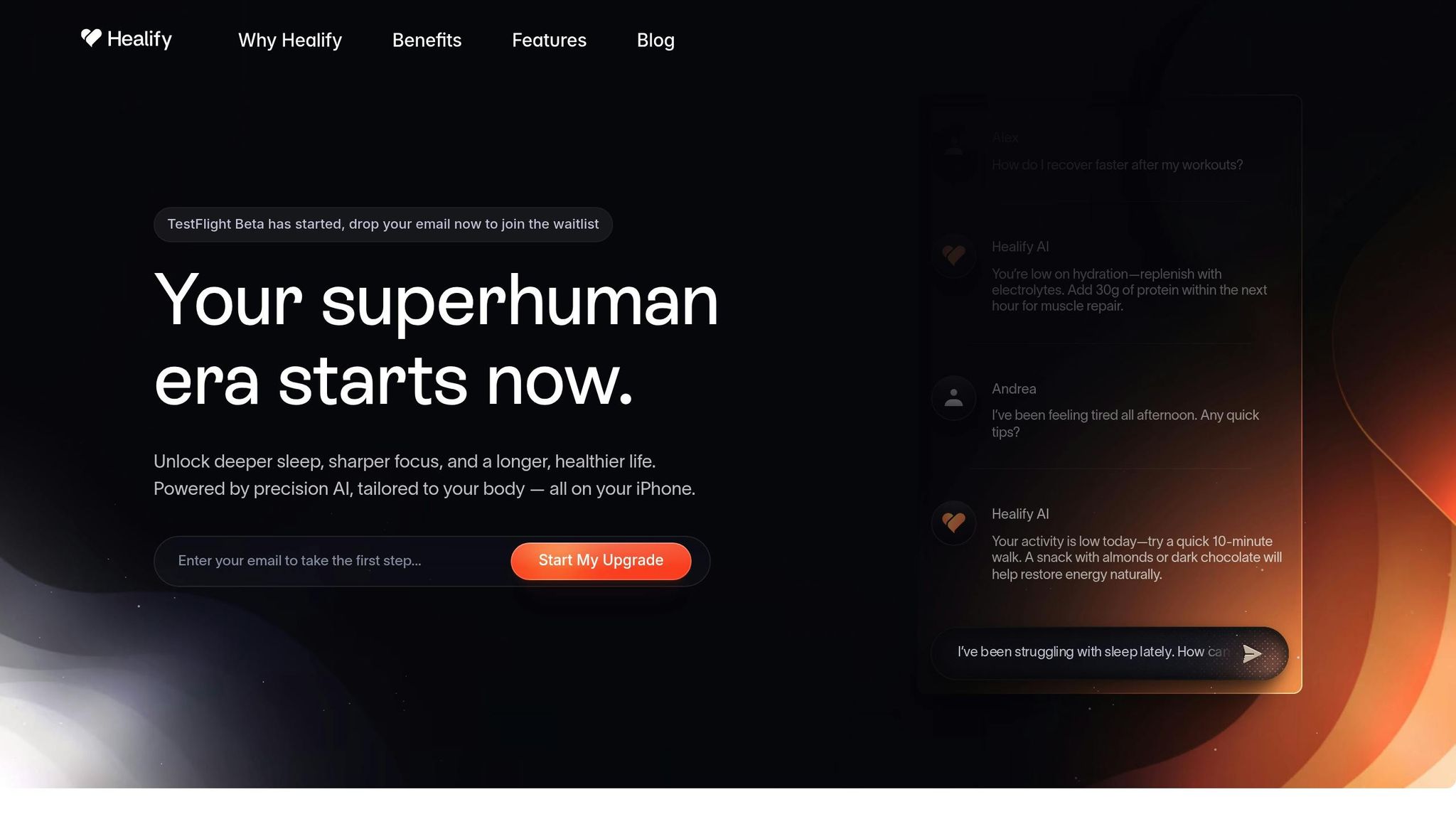
Healify encuentra un cuidadoso equilibrio entre proteger la privacidad individual y proporcionar insights accionables. La aplicación procesa datos de dispositivos portátiles -como frecuencia cardíaca, etapas de sueño y conteos de pasos- para ofrecer orientación personalizada a través de su coach de IA, Anna. Esto requiere una recolección de datos detallada y a largo plazo, lo que puede representar riesgos de re-identificación si no se maneja adecuadamente.
En Healify, la privacidad no es una idea de último momento, es una característica incorporada. La plataforma separa la información identificable de los datos analíticos en dos capas distintas. Una capa de identidad delgada contiene detalles personales como direcciones de correo electrónico, ID de dispositivos e información de facturación. Mientras tanto, el flujo de datos de sensores de alto volumen pasa por sistemas de modelado y recomendación que nunca interactúan con estos identificadores personales. Esto asegura que Anna pueda analizar tendencias como variabilidad de frecuencia cardíaca o eficiencia del sueño sin exponer nombres, correos electrónicos o direcciones.
Healify emplea una estrategia de privacidad por capas, adaptando técnicas a usos de datos específicos. Para recomendaciones personalizadas, se aplican des-identificación y pseudonimización. Para investigación más amplia y desarrollo de funciones, la anonimización más fuerte asegura que los datos no puedan rastrearse hasta los individuos. Este enfoque permite una atención personalizada al mismo tiempo que habilita investigaciones que respetan la privacidad del usuario.
Técnicas de preservación de la privacidad en Healify
Healify utiliza pseudonimización para reemplazar identificadores directos con tokens abstractos. Esto significa que los datos de dispositivos portátiles, como la frecuencia cardíaca, conteos de pasos y niveles de glucosa, se etiquetan con estos tokens, mientras que cuasi-identificadores como la edad o la ubicación se generalizan. Por ejemplo, el sistema podría usar rangos de edad en lugar de fechas exactas de nacimiento o regiones amplias en lugar de códigos postales precisos. Esto reduce el riesgo de re-identificación mientras mantiene suficiente contexto para un análisis significativo.
Las claves de pseudonimización se almacenan de forma segura, con estrictos controles de acceso en vigor. La re-vinculación de datos a un individuo solo es posible para propósitos específicos, como soporte al cliente o cumplir con solicitudes de eliminación de datos. El acceso basado en roles asegura que el personal de soporte pueda ver tu dirección de correo electrónico para resolver un problema, pero no tendrán acceso a tus datos biométricos. A su vez, los analistas que trabajan en algoritmos de recomendación pueden acceder a flujos de datos de sensores, pero no a identificadores personales.
Otro elemento crítico de la estrategia de privacidad de Healify es el procesamiento en el dispositivo. La aplicación procesa muchos de los datos localmente en tu iPhone o dispositivo portátil. Métricas como la frecuencia cardíaca en reposo, la eficiencia del sueño y los niveles de actividad se calculan en el propio dispositivo antes de ser resumidos y enviados a la nube. Esto minimiza la cantidad de datos sin procesar, como formas de onda de alta frecuencia o trazas GPS, que alguna vez deja tu dispositivo. Las alertas, como picos de estrés o patrones de frecuencia cardíaca anormales, también pueden generarse localmente, reduciendo la necesidad de almacenar datos de alta resolución centralmente.
Se emplean cifrado y controles de seguridad en cada paso. Los datos se cifran durante la transmisión entre tu dispositivo portátil, la aplicación y el backend utilizando protocolos modernos TLS. En reposo, Healify utiliza cifrado robusto para bases de datos y discos, impone políticas de acceso estrictas y monitorea el acceso no autorizado. Las claves de cifrado y los tokens de pseudonimización se gestionan en sistemas seguros con rotación regular, asegurando una capa adicional de protección.
Por ejemplo, si tu dispositivo portátil detecta una frecuencia cardíaca elevada y una eficiencia del sueño pobre, Healify asocia estos datos con un token pseudónimo. Anna utiliza estos datos tokenizados para proporcionar recomendaciones, como ajustar tu rutina de sueño, sin vincular nunca estos insights a tu identidad personal. Solo la aplicación en tu dispositivo, funcionando bajo tu cuenta autenticada, vincula estos insights de vuelta a ti.
Anonimización e Investigación en Healify
Mientras que los datos des-identificados impulsan los insights personalizados, las técnicas de anonimización se utilizan para la investigación a nivel poblacional. Estos métodos ayudan a Healify a estudiar patrones entre grandes grupos -como cómo varía la calidad del sueño según la edad o cómo los usuarios responden a las intervenciones de estrés- sin vincular datos a ningún individuo específico.
Para propósitos de investigación, Healify elimina identificadores directos, generaliza información demográfica y agrega datos en categorías más amplias. Por ejemplo, la edad se agrupa en bandas, las ubicaciones se reducen a regiones y las métricas sensibles pueden ser aleatorizadas o alteradas ligeramente para proteger a los individuos en cohortes pequeñas. A veces se crean conjuntos de datos sintéticos, que imitan los patrones estadísticos de los datos reales sin vincular a usuarios reales, para pruebas y desarrollo de algoritmos.
Un ejemplo de esta anonimización en acción: Healify podría analizar datos de estrés y sueño de miles de usuarios, agrupados por edad y región, para identificar cuándo los niveles de estrés son más altos y cómo las intervenciones de sueño impactan la recuperación. Los hallazgos son reportados en agregado, como cambios promedio o intervalos de confianza, asegurando que los datos de ningún individuo puedan ser individualizados. Insights como descubrir que caminatas cortas por la tarde mejoran la variabilidad de la frecuencia cardíaca por la noche para ciertos grupos de edad pueden luego ser utilizados para mejorar las estrategias de coaching para usuarios futuros.
Healify adopta un enfoque basado en el riesgo para la anonimización, asumiendo que los atacantes potenciales podrían tener acceso a datos externos. Para mitigar riesgos, se excluyen combinaciones de atributos altamente únicas, y las cohortes pequeñas son agregadas o suprimidas. Evaluaciones regulares de riesgo de privacidad y pruebas simuladas de re-identificación aseguran que los conjuntos de datos anonimizados sigan siendo seguros. Las políticas internas prohíben estrictamente intentos de re-identificación de individuos a partir de datos de investigación.
Conclusión: Elegir el Enfoque Correcto
La anonimización y la des-identificación sirven propósitos distintos cuando se trata de equilibrar la utilidad de los datos y la privacidad. La anonimización elimina permanentemente los enlaces a individuos, lo que la hace ideal para usos amplios y secundarios, como análisis a nivel poblacional o informes regulatorios. Por otro lado, la des-identificación conserva identificadores de manera que permite insights personalizados, pero requiere una gobernanza estricta y salvaguardas técnicas para reducir el riesgo de re-identificación.
La elección entre estos métodos depende de los objetivos específicos y las preocupaciones de privacidad en cuestión. Por ejemplo, la anonimización podría ser la mejor opción para el entrenamiento de modelos a gran escala o colaboraciones de investigación externas, donde la identidad individual no es necesaria. Sin embargo, la des-identificación es más adecuada para aplicaciones que requieren datos continuos y personalizados, como la detección de anomalías o recomendaciones de salud personalizadas.
En EE. UU., marcos como HIPAA y varias leyes de privacidad estatales enfatizan la importancia de las salvaguardas para los datos des-identificados. Mientras que los datos verdaderamente anonimizados pueden no caer bajo las mismas obligaciones legales, consideraciones éticas todavía exigen que las organizaciones minimicen la recolección de datos, limiten la retención y utilicen los métodos menos identificatorios posibles para ofrecer características seguras y efectivas.
Plataformas como Healify ilustran cómo se puede lograr este equilibrio. Por ejemplo, los datos des-identificados, como los conteos de pasos, frecuencia cardíaca y patrones de sueño, alimentan a Anna, la entrenadora de salud AI, para proporcionar coaching y alertas personalizadas. Mientras tanto, los conjuntos de datos anonimizados, despojados de identificadores, se utilizan para investigaciones más amplias, como estudiar el impacto de intervenciones específicas sobre la mejora del sueño. Healify emplea prácticas avanzadas como la pseudonimización, cifrado y acceso basado en roles para proteger los datos del usuario. Además, métodos como el aprendizaje federado y la agregación de datos aseguran que la información sensible se mantenga segura, ya sea en el dispositivo del usuario o dentro de un entorno controlado en la nube.
A pesar de estas medidas, incluso los datos des-identificados pueden estar en riesgo si se combinan con otros conjuntos de datos externos. Para abordar esto, las plataformas conscientes de la privacidad implementan salvaguardas escalonadas, limitan la compartición de datos y mantienen la transparencia sobre sus prácticas. Este enfoque les permite ofrecer características como detección de estrés, optimización del sueño e insights basados en frecuencia cardíaca mientras mantienen los riesgos de privacidad bajos.
En última instancia, una estrategia de privacidad completa es crítica para un coaching de salud eficaz. Las organizaciones deben evaluar regularmente los riesgos de privacidad, definir claramente cuándo usar la anonimización frente a la des-identificación, y controlar estrictamente el acceso a los datos. La comunicación transparente de estas prácticas no solo construye confianza, sino que también apoya mejores resultados de salud.
No hay una solución universal. El enfoque correcto depende del caso de uso específico, los requisitos regulatorios y las consideraciones éticas. Combinando la des-identificación para características personalizadas con la anonimización para análisis más amplios, plataformas como Healify demuestran cómo respetar la privacidad del usuario mientras se entregan beneficios significativos a partir de datos de salud de dispositivos portátiles.
Preguntas frecuentes
¿Cómo asegura la des-identificación la privacidad mientras sigue permitiendo insights de salud personalizados a partir de datos de dispositivos portátiles?
La des-identificación implica eliminar o oscurecer detalles personales, como nombres o información de contacto, de los datos de dispositivos portátiles para salvaguardar la privacidad del usuario. A diferencia de la anonimización completa, los datos des-identificados pueden a veces aún conectarse a un individuo bajo circunstancias estrictamente controladas. Esto permite la entrega de insights de salud personalizados mientras se mantiene la privacidad como máxima prioridad.
Este enfoque es particularmente crucial para aplicaciones de coaching de salud como Healify. Estas aplicaciones dependen de datos de dispositivos portátiles y estilo de vida para ofrecer recomendaciones personalizadas. Al des-identificar de manera segura los datos sensibles, pueden proporcionar insights significativos y accionables mientras aseguran que la confidencialidad del usuario nunca se vea comprometida. Es un equilibrio reflexivo entre privacidad y personalización.
¿Cómo se des-identifican los datos de dispositivos portátiles para asegurar la privacidad y prevenir la re-identificación?
Des-identificar datos de dispositivos portátiles implica usar métodos para eliminar o disfrazar detalles personales, dificultando vincular la información de nuevo a un individuo específico. Las técnicas a menudo incluyen eliminación de identificadores directos como nombres o direcciones de correo electrónico, ampliación de detalles específicos (como reemplazar edades exactas con rangos de edad), e introducción de ruido en datos sensibles para diluir patrones reconocibles.
Para fortalecer aún más la seguridad, las organizaciones frecuentemente implementan métodos avanzados de cifrado y limitan el acceso a los datos des-identificados, asegurando que solo el personal o sistemas aprobados puedan manejarlos. Estas prácticas salvaguardan la privacidad del usuario mientras siguen permitiendo un análisis valioso de los datos de salud.
¿Cuándo es mejor usar la anonimización en lugar de la des-identificación para datos de salud de dispositivos portátiles?
La anonimización a menudo es el método preferido cuando el objetivo es eliminar completamente cualquier posibilidad de vincular los datos a un individuo. Es particularmente adecuado para proyectos de investigación a gran escala o compartir conjuntos de datos públicamente, especialmente cuando están en juego estrictas leyes de privacidad y regulaciones de protección de datos.
En contraste, la des-identificación mantiene algún nivel de rastreabilidad intacto. Esto lo hace más adecuado para situaciones como coaching de salud personalizado o análisis internos, donde volver a conectar los datos a un usuario -bajo estrictas salvaguardas- es necesario para ofrecer insights personalizados. Por ejemplo, aplicaciones como Healify aprovechan los datos des-identificados para proporcionar recomendaciones de salud personalizadas mientras siguen asegurando la privacidad del usuario.
Entradas de blog relacionadas
Tu dispositivo portátil recopila datos de salud detallados, como la frecuencia cardíaca, los patrones de sueño y los niveles de estrés. Pero, ¿cómo se protege tu privacidad? Dos enfoques principales se utilizan: anonimización y des-identificación.
Anonimización elimina permanentemente cualquier vínculo con tu identidad, haciendo que sea casi imposible rastrear los datos hasta ti. Esto es ideal para investigaciones a gran escala, pero limita la retroalimentación personalizada.
Des-identificación elimina identificadores directos (como tu nombre o correo electrónico) pero conserva una clave seudonimizada, permitiendo insights personalizados mientras reduce los riesgos de privacidad.
Ambos métodos intentan equilibrar la privacidad y la utilidad, pero difieren en reversibilidad, riesgo de re-identificación y cómo se utilizan. Por ejemplo, los datos anonimizados son más seguros para la investigación pública, mientras que los datos des-identificados apoyan aplicaciones de salud personalizadas como Healify.
Comparación rápida
Aspecto | Anonimización | Des-identificación |
|---|---|---|
Reversibilidad | Permanente, no es posible relinkear | Relinkeo posible con claves seguras |
Riesgo de re-identificación | Muy bajo | Moderado, especialmente con datos únicos |
Utilidad de los datos | Limitada para personalización | Alta para insights personalizados |
Casos de uso | Investigaciones públicas, estudios a gran escala | Aplicaciones de salud, monitoreo personalizado |
Plataformas como Healify combinan ambos métodos: des-identificación para coaching personalizado y anonimización para investigación, asegurando que tus datos sean seguros y útiles sin comprometer la privacidad.
Riesgos de re-identificación en datos de sensores portátiles | Camille Nebeker & Santosh Kumar | Foro ELSI
¿Qué es la Des-identificación en Dispositivos Portátiles?
La des-identificación implica remover o enmascarar identificadores personales directos de los datos de dispositivos portátiles mientras se mantiene una clave interna que permite enlazar los datos de un mismo individuo a lo largo del tiempo. A diferencia de la anonimización, este método conserva un ID de usuario pseudonimizado estable.
En el contexto de los dispositivos portátiles, esto significa eliminar detalles como tu nombre, correo electrónico, número de teléfono, número de serie del dispositivo y dirección exacta. Sin embargo, el sistema mantiene un ID de usuario pseudonimizado que conecta tus puntos de datos a lo largo del tiempo. Esto permite que las plataformas rastreen tendencias en los datos de salud sin exponer tu identidad.
Este enfoque es particularmente útil para aplicaciones de salud que dependen de insights personalizados. Toma Healify, por ejemplo, que integra datos de dispositivos portátiles, biometría, análisis de sangre y registros de estilo de vida para ofrecer coaching de salud personalizado las 24 horas del día. La aplicación puede identificar patrones como deshidratación, recomendar ingesta de proteínas después del ejercicio o señalar niveles altos de cortisol, todo lo cual requiere rastrear tus datos durante períodos prolongados. La des-identificación permite estos insights mientras reduce el riesgo de que ingenieros o analistas en la plataforma puedan identificar de quién son los datos con los que están trabajando.
Desde una perspectiva regulatoria, la des-identificación ayuda a las organizaciones de EE. UU. a alinearse con marcos como HIPAA, leyes de privacidad estatales y regulaciones emergentes de datos de salud. Esto es particularmente crítico cuando los datos de dispositivos portátiles se combinan con registros clínicos o se comparten con aseguradoras. También reduce el impacto de posibles brechas de datos: si los datos des-identificados son expuestos, la ausencia de identificadores directos minimiza el daño inmediato.
A continuación, desglosaremos las técnicas comunes utilizadas para lograr la des-identificación en datos de dispositivos portátiles.
Técnicas Comunes para la Des-identificación
Varias estrategias ayudan a proteger las identidades de los usuarios mientras mantienen los datos de dispositivos portátiles útiles para análisis y personalización.
Pseudonimización: Esta reemplaza identificadores personales con tokens artificiales. Por ejemplo, en lugar de "Jane Smith", los analistas podrían ver "Usuario A1234". El mapeo entre la identidad real y el seudónimo se almacena en un sistema separado y seguro con acceso restringido. Algunas plataformas rotan los seudónimos periódicamente, como generar un nuevo ID de usuario cada trimestre, para minimizar el riesgo si se filtra un token.
En una aplicación de salud, la pseudonimización podría funcionar así: al registrarte con tu correo electrónico, el sistema te asigna un ID de usuario generado aleatoriamente. Todos los análisis y recomendaciones hacen referencia solo a este ID, mientras que el vínculo entre tu correo electrónico y el ID se almacena de manera segura en una base de datos separada.
Compresión de marcas de tiempo: Los dispositivos portátiles a menudo registran datos hasta el segundo exacto, pero este nivel de detalle puede facilitar el emparejamiento de eventos con registros externos. Para mitigar esto, los desarrolladores pueden almacenar solo la fecha y la hora o agregar datos en intervalos de 5 o 15 minutos. Esto todavía permite un análisis de tendencias significativo, como el seguimiento de patrones de sueño, sin crear una línea de tiempo detallada que podría ser referenciada cruzadamente con otras fuentes.
Manejo de datos de ubicación: Las coordenadas GPS precisas pueden actuar como identificadores directos. Por ejemplo, si un dispositivo portátil registra que estás en una dirección específica cada noche, es probable que sea tu hogar. Las estrategias para des-identificar datos de ubicación incluyen reemplazar coordenadas exactas con regiones más amplias, como áreas a nivel de ciudad, códigos ZIP3 (los primeros tres dígitos de un código postal) o celdas de geohash. En casos de alto riesgo, los datos de ubicación pueden ser excluidos por completo mientras se preservan insights como patrones de actividad urbana versus rural.
Limitar atributos compartidos: Atributos como fechas de nacimiento o condiciones médicas raras pueden hacer que los registros sean identificables de forma única. Agrupar o clasificar estos atributos reduce su especificidad, dificultando el rastreo de un registro a un individuo.
Beneficios y Desventajas de la Des-identificación
La des-identificación logra un equilibrio entre la privacidad y la capacidad de proporcionar insights personalizados.
Una ventaja clave es que preserva los datos longitudinales, permitiendo a las plataformas ofrecer recomendaciones personalizadas y realizar investigaciones a gran escala. Por ejemplo, las plataformas pueden refinar algoritmos para metas de condición física adaptativas, coaching de sueño o manejo del estrés al rastrear datos de usuarios durante semanas o meses. También pueden analizar tendencias como cambios estacionales en la frecuencia cardíaca o evaluar el impacto de nuevas características de la aplicación a través de demografías, todo mientras maneja información menos sensible que conjuntos de datos totalmente identificados.
Dicho esto, la des-identificación tiene sus desafíos. Los datos de dispositivos portátiles son inherentemente únicos, incluso sin identificadores directos. Patrones en la frecuencia cardíaca, movimientos, trazas de GPS o rutinas diarias pueden actuar como cuasi-identificadores, detalles indirectos que pueden revelar identidades cuando se combinan con otros datos. Estudios muestran que modelos de aprendizaje automático pueden re-identificar individuos en conjuntos de datos des-identificados con alta precisión, a veces usando solo unos segundos de datos de sensores.
El riesgo crece cuando los conjuntos de datos se combinan. Por ejemplo, si los datos de dispositivos portátiles des-identificados se asocian con publicaciones en redes sociales, bases de datos de cuentas filtradas o registros de ubicación de otras aplicaciones, aún podría ser posible deducir la identidad de alguien.
Para utilizar responsablemente datos des-identificados mientras se minimizan los riesgos de re-identificación, las organizaciones necesitan múltiples salvaguardas. Esto incluye limitar el acceso a conjuntos de datos des-identificados, registrar y monitorear el uso de datos, y mantener claves de mapeo de identidad separadas de los sistemas analíticos. En el lado técnico, métodos como la privacidad diferencial para informes agregados, entornos seguros para el entrenamiento de modelos, y evaluaciones de riesgo de privacidad regulares pueden ayudar a detectar vulnerabilidades antes de que los datos se compartan externamente.
Esta discusión sobre las fortalezas y riesgos de la des-identificación prepara el escenario para un examen más profundo sobre cómo se diferencia de la anonimización completa.
¿Qué es la Anonimización en Dispositivos Portátiles?
La anonimización cambia los datos de dispositivos portátiles de una manera que hace imposible rastrearlos a individuos específicos, incluso cuando se combinan con otra información externa[8]. La naturaleza única de los datos de dispositivos portátiles crea una especie de "huella" de comportamiento. Una revisión de 72 estudios mostró que las tasas de re-identificación en conjuntos de datos de dispositivos portátiles seguían entre el 86% y el 100%, con solo entre 1 y 300 segundos de datos de sensores siendo suficientes para identificar individuos[1].
Para lograr una verdadera anonimización, los datos deben ser alterados fundamentalmente. Esto puede involucrar combinar registros, agregar ruido controlado o crear conjuntos de datos sintéticos que reflejan tendencias generales sin vincularse a ningún individuo.
Este método es particularmente útil para estudios a gran escala, investigaciones de salud pública, desarrollo de algoritmos o compartir datos externamente. Por ejemplo, investigadores analizando patrones de sueño en todo el país podrían utilizar datos anonimizados para detectar tendencias entre diferentes grupos de edad o regiones sin necesidad de conocer detalles específicos sobre usuarios individuales. Los datos debidamente anonimizados a menudo caen en la categoría de datos no personales según regulaciones como HIPAA y GDPR, siempre que el proceso minimice eficazmente los riesgos de re-identificación[8].
Sin embargo, la anonimización tiene sus desventajas. Los mismos métodos que protegen la privacidad también hacen que los datos sean menos efectivos para aplicaciones personalizadas. Por ejemplo, es imposible ofrecer consejos de salud personalizados o seguir el progreso de un individuo cuando los datos han sido agregados o alterados. Esta es la razón por la que aplicaciones como Healify - que utiliza su coach de salud AI Anna para analizar dispositivos portátiles, análisis de sangre y datos de estilo de vida - dependen de la des-identificación en lugar de la anonimización completa para ofrecer insights personalizados.
Siguiente, exploremos algunas de las técnicas utilizadas para anonimizar eficazmente los datos de dispositivos portátiles.
Técnicas de Anonimización para Datos de Dispositivos Portátiles
Varias métodos pueden anonimizar datos de dispositivos portátiles mientras conservan suficientes detalles para un análisis significativo.
Agregación simplifica los datos resumiéndolos a lo largo del tiempo o a través de grupos. En lugar de capturar lecturas de sensores minuto a minuto, los datos podrían ser reportados como promedios diarios para un grupo de edad o región específicos. Si bien esto funciona bien para estudios de población, sacrifica la granularidad necesaria para retroalimentación personalizada[1].
Adición de ruido implica agregar aleatoriedad controlada a los datos. Un método popular, la privacidad diferencial, introduce ligeras variaciones a estadísticas agregadas, asegurando que la contribución de ningún individuo pueda ser reversa a ingenios. Por ejemplo, en lugar de reportar una frecuencia cardíaca media exacta en reposo de 68 latidos por minuto, se hacen pequeños ajustes aleatorios para oscurecer los datos individuales mientras se mantiene la tendencia general[9].
K-Anonimidad asegura que cada registro en un conjunto de datos sea indistinguible de al menos k-1 otros. Por ejemplo, si k es igual a 5, cualquier combinación de atributos - como edad, ubicación o nivel de actividad - debe ser compartida por al menos cinco personas. Variaciones como la l-diversidad y la t-cercanía añaden más garantías al asegurar que los atributos sensibles se mantandan variados dentro de los grupos[3].
Generación de Datos Sintéticos utiliza modelos de aprendizaje automático para crear conjuntos de datos artificiales que imitan los patrones estadísticos de los datos reales sin corresponder a ningún individuo específico. Este método reduce los riesgos de privacidad mientras todavía permite el análisis[9].
En casos de alto riesgo, los datos de ubicación también se pueden generalizar a áreas más amplias o eliminar por completo para mejorar la privacidad.
Beneficios y Desventajas de la Anonimización
La mayor ventaja de la anonimización es el riesgo reducido de re-identificación. Los datos de dispositivos portátiles debidamente anonimizados son mucho más seguros para compartir con los investigadores, publicarlos en estudios, o utilizarlos en iniciativas de salud pública a gran escala[1].
Desde una perspectiva legal, los datos anonimizados a menudo se tratan como información no personal bajo regulaciones como HIPAA y GDPR. Esto puede simplificar el cumplimiento al reducir la necesidad de consentimientos individuales y otros controles estrictos, siempre que el proceso de anonimización sea minucioso[8].
Sin embargo, la anonimización viene acompañada de compensaciones. Las transformaciones que protegen la privacidad también limitan la capacidad de generar insights detallados e individualizados. Los datos agregados podrían mostrar tendencias - como un grupo demográfico que promedie siete horas de sueño por noche - pero no pueden revelar si tu calidad personal de sueño está mejorando o cómo hábitos específicos afectan tus niveles de estrés. Esta es una limitación clave para aplicaciones como Healify, que dependen de datos individualizados para funciones como el coaching personalizado. Estas aplicaciones suelen utilizar des-identificación en lugar de anonimización completa para mantener la utilidad mientras se salvaguarda la privacidad.
La verdadera anonimización de datos de dispositivos portátiles es también un desafío técnico. Muchos conjuntos de datos etiquetados como "anonimizados" todavía llevan riesgos de re-identificación porque retienen demasiada estructura detallada[7]. Para abordar esto, las organizaciones deben realizar evaluaciones de riesgo para evaluar la probabilidad de re-identificación, considerando posibles enlaces a fuentes externas como redes sociales, registros públicos o bases de datos filtradas. Estas evaluaciones deben ser actualizadas regularmente para tener en cuenta nuevas amenazas y métodos de ataque[3].
Para aplicaciones que sirven a consumidores, una solución común es separar los datos operacionales de los datos de investigación. Los servicios en vivo que ofrecen consejos en tiempo real mantienen datos identificables o pseudonimizados bajo controles estrictos, mientras que solo los datos destinados a investigación o compartición pública se someten a anonimización completa. Este enfoque equilibra la necesidad de funcionalidad personalizada con los beneficios de la compartición de datos más amplios y protegidos por la privacidad.
Anonymización vs. Des-identificación: Principales Diferencias
La anonimización y la des-identificación ambas apuntan a proteger la privacidad en los datos de dispositivos portátiles, pero toman diferentes enfoques cuando se trata de separar los datos de las identidades individuales. La elección entre las dos depende de sus diferencias fundamentales y del uso previsto de los datos.
Reversibilidad:
La anonimización separa permanentemente la conexión entre los datos de los dispositivos portátiles y una persona específica, haciendo que sea casi imposible re-identificar al individuo [2][4]. Por otro lado, la des-identificación elimina o disimula los identificadores directos (como nombre, correo electrónico o ID de dispositivo), pero mantiene un vínculo indirecto, como un identificador codificado. Este enlace permite la re-identificación bajo condiciones controladas, como en sistemas de salud o aplicaciones de salud digital que necesitan reconocer usuarios [2][4].
Riesgo de re-identificación:
Los datos des-identificados llevan un mayor riesgo de re-identificación. Incluso después de eliminar identificadores directos, atributos únicos como patrones de movimiento, variabilidad de frecuencia cardíaca o marcha pueden ser emparejados con conjuntos de datos identificados. Estudios muestran que las tasas de re-identificación pueden variar de 86% a 100% usando datos breves de sensores [1][7]. La anonimización reduce este riesgo aplicando técnicas como agregación, inyección de ruido o generalización irreversible. Sin embargo, los expertos ahora la ven como un medio para reducir, en lugar de eliminar, los riesgos de re-identificación [4][6].
Utilidad de los datos para modelos de IA:
Los datos des-identificados retienen más de su detalle original, haciéndolos altamente valiosos para tareas de IA como detectar arritmias o proporcionar coaching de actividad personalizado [1][4]. La anonimización, aunque mejor para la privacidad, a menudo reduce la utilidad de los datos debido a técnicas como promediación o adición de ruido, que pueden degradar el rendimiento en tareas que requieren análisis detallado [6].
Perspectiva regulatoria:
Bajo HIPAA, los datos de salud des-identificados deben cumplir con estándares específicos (como Puerto Seguro o Determinación de Expertos) y adherirse a salvaguardas de seguridad. En contraste, los datos anonimizados, que reducen significativamente los riesgos de re-identificación, a menudo enfrentan menos supervisión regulatoria [2][4][7]. De manera similar, las leyes de privacidad inspiradas por GDPR tratan los datos des-identificados como datos personales, mientras que los datos anonimizados - si no pueden vincularse razonablemente a un individuo - están sujetos a menos restricciones [4][5].
Tabla de comparación: Anonimización vs. Des-identificación
Aquí hay un vistazo rápido de cómo estos dos enfoques difieren:
Dimensión | Anonimización | Des-identificación |
|---|---|---|
Reversibilidad | Rompe permanentemente el vínculo, haciendo la re-identificación casi imposible | Enmascara la identidad pero permite la re-identificación bajo estrictas condiciones usando una clave o datos auxiliares |
Riesgo de re-identificación | Muy bajo, aunque no nulo con ataques avanzados | Reducido pero aún presente; datos únicos de dispositivos portátiles pueden llevar a la re-identificación (86–100% en algunos casos) |
Utilidad para modelos de IA | Menor debido a agregación, inyección de ruido o generalización | Alta; retiene detalle temporal y patrones individuales para insights personalizados |
Estado regulatorio | A menudo tratado como datos no personales, con menos supervisión | Clasificado como datos personales, requiriendo medidas y salvaguardas de seguridad estrictas |
Técnicas comunes | Agregación, inyección de ruido, generalización irreversible | Enmascaramiento, pseudonimización, tokenización y cifrado |
Casos de uso típicos | Conjuntos de datos de investigación pública, estudios de salud poblacional | Cuidado clínico, aplicaciones de salud personalizadas y seguimiento individual |
Requisitos de gobernanza | Menos supervisión después de una anonimización adecuada | Controles más estrictos como gestión de acceso, registros de auditoría y seguridad de la clave de re-identificación |
Cuándo usar cada enfoque
La elección entre la anonimización y la des-identificación depende en gran medida del uso previsto de los datos y el nivel de granularidad requerido.
La anonimización funciona mejor para análisis a gran escala donde no se necesita información a nivel individual. Por ejemplo, es ideal para crear conjuntos de datos de investigación pública, como estudios sobre tendencias de actividad, patrones de sueño o conteo de pasos en la población de Estados Unidos [4][6]. Este enfoque es particularmente útil cuando los datos serán ampliamente compartidos o publicados en repositorios de ciencia abierta, ya que una distribución más amplia incrementa el riesgo de re-identificación. Para mitigar esto, las organizaciones a menudo agregan datos en resúmenes (por ejemplo, promedios diarios o semanales) para reducir los riesgos de privacidad y aliviar las cargas regulatorias [1][7].
La des-identificación, por otro lado, es más adecuada para escenarios donde los datos a nivel individual son esenciales. Por ejemplo, aplicaciones de salud digital que envían alertas personalizadas de ritmos cardíacos anormales o tableros de control de clínicos que monitorean la recuperación dependen de mantener un enlace seguro entre los datos y el usuario [4]. En estos casos, los identificadores seudónimos, el cifrado y los controles de acceso estrictos aseguran que solo las partes autorizadas puedan volver a vincular los datos a un individuo [2][4].
Una práctica común es utilizar des-identificación para datos operacionales mientras se aplica anonimización para fines secundarios como investigación o evaluación comparativa de modelos. Por ejemplo, las organizaciones pueden anonimizar conjuntos de datos eliminando identificadores, agregando características y generalizando atributos raros antes de compartirlos externamente. Este enfoque asegura la privacidad mientras todavía permite tareas como análisis de patrones de sueño o estrés [6]. También permite a las plataformas ofrecer funciones personalizadas, como metas de actividad o entrenamiento basado en frecuencia cardíaca, mientras salvaguardan datos biométricos sensibles [1][7].
Los expertos recomiendan ver la anonimización y la des-identificación como parte de un continuo en lugar de categorías distintas. Realizar evaluaciones de riesgo de re-identificación antes de compartir datos de dispositivos portátiles externamente se considera una mejor práctica [4][6]. En EE.UU., alinear los métodos de des-identificación con los estándares de HIPAA, cifrar las claves de re-identificación, limitar la granularidad de tiempo y ubicación y utilizar técnicas avanzadas como el aprendizaje federado o la privacidad diferencial, pueden reducir aún más los riesgos al trabajar con datos de biosensores detallados [1][6][7].
Balanceando la privacidad y la utilidad: La aproximación de Healify
Healify encuentra un cuidadoso equilibrio entre proteger la privacidad individual y proporcionar insights accionables. La aplicación procesa datos de dispositivos portátiles -como frecuencia cardíaca, etapas de sueño y conteos de pasos- para ofrecer orientación personalizada a través de su coach de IA, Anna. Esto requiere una recolección de datos detallada y a largo plazo, lo que puede representar riesgos de re-identificación si no se maneja adecuadamente.
En Healify, la privacidad no es una idea de último momento, es una característica incorporada. La plataforma separa la información identificable de los datos analíticos en dos capas distintas. Una capa de identidad delgada contiene detalles personales como direcciones de correo electrónico, ID de dispositivos e información de facturación. Mientras tanto, el flujo de datos de sensores de alto volumen pasa por sistemas de modelado y recomendación que nunca interactúan con estos identificadores personales. Esto asegura que Anna pueda analizar tendencias como variabilidad de frecuencia cardíaca o eficiencia del sueño sin exponer nombres, correos electrónicos o direcciones.
Healify emplea una estrategia de privacidad por capas, adaptando técnicas a usos de datos específicos. Para recomendaciones personalizadas, se aplican des-identificación y pseudonimización. Para investigación más amplia y desarrollo de funciones, la anonimización más fuerte asegura que los datos no puedan rastrearse hasta los individuos. Este enfoque permite una atención personalizada al mismo tiempo que habilita investigaciones que respetan la privacidad del usuario.
Técnicas de preservación de la privacidad en Healify
Healify utiliza pseudonimización para reemplazar identificadores directos con tokens abstractos. Esto significa que los datos de dispositivos portátiles, como la frecuencia cardíaca, conteos de pasos y niveles de glucosa, se etiquetan con estos tokens, mientras que cuasi-identificadores como la edad o la ubicación se generalizan. Por ejemplo, el sistema podría usar rangos de edad en lugar de fechas exactas de nacimiento o regiones amplias en lugar de códigos postales precisos. Esto reduce el riesgo de re-identificación mientras mantiene suficiente contexto para un análisis significativo.
Las claves de pseudonimización se almacenan de forma segura, con estrictos controles de acceso en vigor. La re-vinculación de datos a un individuo solo es posible para propósitos específicos, como soporte al cliente o cumplir con solicitudes de eliminación de datos. El acceso basado en roles asegura que el personal de soporte pueda ver tu dirección de correo electrónico para resolver un problema, pero no tendrán acceso a tus datos biométricos. A su vez, los analistas que trabajan en algoritmos de recomendación pueden acceder a flujos de datos de sensores, pero no a identificadores personales.
Otro elemento crítico de la estrategia de privacidad de Healify es el procesamiento en el dispositivo. La aplicación procesa muchos de los datos localmente en tu iPhone o dispositivo portátil. Métricas como la frecuencia cardíaca en reposo, la eficiencia del sueño y los niveles de actividad se calculan en el propio dispositivo antes de ser resumidos y enviados a la nube. Esto minimiza la cantidad de datos sin procesar, como formas de onda de alta frecuencia o trazas GPS, que alguna vez deja tu dispositivo. Las alertas, como picos de estrés o patrones de frecuencia cardíaca anormales, también pueden generarse localmente, reduciendo la necesidad de almacenar datos de alta resolución centralmente.
Se emplean cifrado y controles de seguridad en cada paso. Los datos se cifran durante la transmisión entre tu dispositivo portátil, la aplicación y el backend utilizando protocolos modernos TLS. En reposo, Healify utiliza cifrado robusto para bases de datos y discos, impone políticas de acceso estrictas y monitorea el acceso no autorizado. Las claves de cifrado y los tokens de pseudonimización se gestionan en sistemas seguros con rotación regular, asegurando una capa adicional de protección.
Por ejemplo, si tu dispositivo portátil detecta una frecuencia cardíaca elevada y una eficiencia del sueño pobre, Healify asocia estos datos con un token pseudónimo. Anna utiliza estos datos tokenizados para proporcionar recomendaciones, como ajustar tu rutina de sueño, sin vincular nunca estos insights a tu identidad personal. Solo la aplicación en tu dispositivo, funcionando bajo tu cuenta autenticada, vincula estos insights de vuelta a ti.
Anonimización e Investigación en Healify
Mientras que los datos des-identificados impulsan los insights personalizados, las técnicas de anonimización se utilizan para la investigación a nivel poblacional. Estos métodos ayudan a Healify a estudiar patrones entre grandes grupos -como cómo varía la calidad del sueño según la edad o cómo los usuarios responden a las intervenciones de estrés- sin vincular datos a ningún individuo específico.
Para propósitos de investigación, Healify elimina identificadores directos, generaliza información demográfica y agrega datos en categorías más amplias. Por ejemplo, la edad se agrupa en bandas, las ubicaciones se reducen a regiones y las métricas sensibles pueden ser aleatorizadas o alteradas ligeramente para proteger a los individuos en cohortes pequeñas. A veces se crean conjuntos de datos sintéticos, que imitan los patrones estadísticos de los datos reales sin vincular a usuarios reales, para pruebas y desarrollo de algoritmos.
Un ejemplo de esta anonimización en acción: Healify podría analizar datos de estrés y sueño de miles de usuarios, agrupados por edad y región, para identificar cuándo los niveles de estrés son más altos y cómo las intervenciones de sueño impactan la recuperación. Los hallazgos son reportados en agregado, como cambios promedio o intervalos de confianza, asegurando que los datos de ningún individuo puedan ser individualizados. Insights como descubrir que caminatas cortas por la tarde mejoran la variabilidad de la frecuencia cardíaca por la noche para ciertos grupos de edad pueden luego ser utilizados para mejorar las estrategias de coaching para usuarios futuros.
Healify adopta un enfoque basado en el riesgo para la anonimización, asumiendo que los atacantes potenciales podrían tener acceso a datos externos. Para mitigar riesgos, se excluyen combinaciones de atributos altamente únicas, y las cohortes pequeñas son agregadas o suprimidas. Evaluaciones regulares de riesgo de privacidad y pruebas simuladas de re-identificación aseguran que los conjuntos de datos anonimizados sigan siendo seguros. Las políticas internas prohíben estrictamente intentos de re-identificación de individuos a partir de datos de investigación.
Conclusión: Elegir el Enfoque Correcto
La anonimización y la des-identificación sirven propósitos distintos cuando se trata de equilibrar la utilidad de los datos y la privacidad. La anonimización elimina permanentemente los enlaces a individuos, lo que la hace ideal para usos amplios y secundarios, como análisis a nivel poblacional o informes regulatorios. Por otro lado, la des-identificación conserva identificadores de manera que permite insights personalizados, pero requiere una gobernanza estricta y salvaguardas técnicas para reducir el riesgo de re-identificación.
La elección entre estos métodos depende de los objetivos específicos y las preocupaciones de privacidad en cuestión. Por ejemplo, la anonimización podría ser la mejor opción para el entrenamiento de modelos a gran escala o colaboraciones de investigación externas, donde la identidad individual no es necesaria. Sin embargo, la des-identificación es más adecuada para aplicaciones que requieren datos continuos y personalizados, como la detección de anomalías o recomendaciones de salud personalizadas.
En EE. UU., marcos como HIPAA y varias leyes de privacidad estatales enfatizan la importancia de las salvaguardas para los datos des-identificados. Mientras que los datos verdaderamente anonimizados pueden no caer bajo las mismas obligaciones legales, consideraciones éticas todavía exigen que las organizaciones minimicen la recolección de datos, limiten la retención y utilicen los métodos menos identificatorios posibles para ofrecer características seguras y efectivas.
Plataformas como Healify ilustran cómo se puede lograr este equilibrio. Por ejemplo, los datos des-identificados, como los conteos de pasos, frecuencia cardíaca y patrones de sueño, alimentan a Anna, la entrenadora de salud AI, para proporcionar coaching y alertas personalizadas. Mientras tanto, los conjuntos de datos anonimizados, despojados de identificadores, se utilizan para investigaciones más amplias, como estudiar el impacto de intervenciones específicas sobre la mejora del sueño. Healify emplea prácticas avanzadas como la pseudonimización, cifrado y acceso basado en roles para proteger los datos del usuario. Además, métodos como el aprendizaje federado y la agregación de datos aseguran que la información sensible se mantenga segura, ya sea en el dispositivo del usuario o dentro de un entorno controlado en la nube.
A pesar de estas medidas, incluso los datos des-identificados pueden estar en riesgo si se combinan con otros conjuntos de datos externos. Para abordar esto, las plataformas conscientes de la privacidad implementan salvaguardas escalonadas, limitan la compartición de datos y mantienen la transparencia sobre sus prácticas. Este enfoque les permite ofrecer características como detección de estrés, optimización del sueño e insights basados en frecuencia cardíaca mientras mantienen los riesgos de privacidad bajos.
En última instancia, una estrategia de privacidad completa es crítica para un coaching de salud eficaz. Las organizaciones deben evaluar regularmente los riesgos de privacidad, definir claramente cuándo usar la anonimización frente a la des-identificación, y controlar estrictamente el acceso a los datos. La comunicación transparente de estas prácticas no solo construye confianza, sino que también apoya mejores resultados de salud.
No hay una solución universal. El enfoque correcto depende del caso de uso específico, los requisitos regulatorios y las consideraciones éticas. Combinando la des-identificación para características personalizadas con la anonimización para análisis más amplios, plataformas como Healify demuestran cómo respetar la privacidad del usuario mientras se entregan beneficios significativos a partir de datos de salud de dispositivos portátiles.
Preguntas frecuentes
¿Cómo asegura la des-identificación la privacidad mientras sigue permitiendo insights de salud personalizados a partir de datos de dispositivos portátiles?
La des-identificación implica eliminar o oscurecer detalles personales, como nombres o información de contacto, de los datos de dispositivos portátiles para salvaguardar la privacidad del usuario. A diferencia de la anonimización completa, los datos des-identificados pueden a veces aún conectarse a un individuo bajo circunstancias estrictamente controladas. Esto permite la entrega de insights de salud personalizados mientras se mantiene la privacidad como máxima prioridad.
Este enfoque es particularmente crucial para aplicaciones de coaching de salud como Healify. Estas aplicaciones dependen de datos de dispositivos portátiles y estilo de vida para ofrecer recomendaciones personalizadas. Al des-identificar de manera segura los datos sensibles, pueden proporcionar insights significativos y accionables mientras aseguran que la confidencialidad del usuario nunca se vea comprometida. Es un equilibrio reflexivo entre privacidad y personalización.
¿Cómo se des-identifican los datos de dispositivos portátiles para asegurar la privacidad y prevenir la re-identificación?
Des-identificar datos de dispositivos portátiles implica usar métodos para eliminar o disfrazar detalles personales, dificultando vincular la información de nuevo a un individuo específico. Las técnicas a menudo incluyen eliminación de identificadores directos como nombres o direcciones de correo electrónico, ampliación de detalles específicos (como reemplazar edades exactas con rangos de edad), e introducción de ruido en datos sensibles para diluir patrones reconocibles.
Para fortalecer aún más la seguridad, las organizaciones frecuentemente implementan métodos avanzados de cifrado y limitan el acceso a los datos des-identificados, asegurando que solo el personal o sistemas aprobados puedan manejarlos. Estas prácticas salvaguardan la privacidad del usuario mientras siguen permitiendo un análisis valioso de los datos de salud.
¿Cuándo es mejor usar la anonimización en lugar de la des-identificación para datos de salud de dispositivos portátiles?
La anonimización a menudo es el método preferido cuando el objetivo es eliminar completamente cualquier posibilidad de vincular los datos a un individuo. Es particularmente adecuado para proyectos de investigación a gran escala o compartir conjuntos de datos públicamente, especialmente cuando están en juego estrictas leyes de privacidad y regulaciones de protección de datos.
En contraste, la des-identificación mantiene algún nivel de rastreabilidad intacto. Esto lo hace más adecuado para situaciones como coaching de salud personalizado o análisis internos, donde volver a conectar los datos a un usuario -bajo estrictas salvaguardas- es necesario para ofrecer insights personalizados. Por ejemplo, aplicaciones como Healify aprovechan los datos des-identificados para proporcionar recomendaciones de salud personalizadas mientras siguen asegurando la privacidad del usuario.
Entradas de blog relacionadas
Finalmente toma el control de tu salud

Finalmente toma el control de tu salud
Finalmente toma el control de tu salud