Improve your health
Improve your health
Improve your health
7 de diciembre de 2025
Bucles de retroalimentación de IA para el seguimiento de hábitos
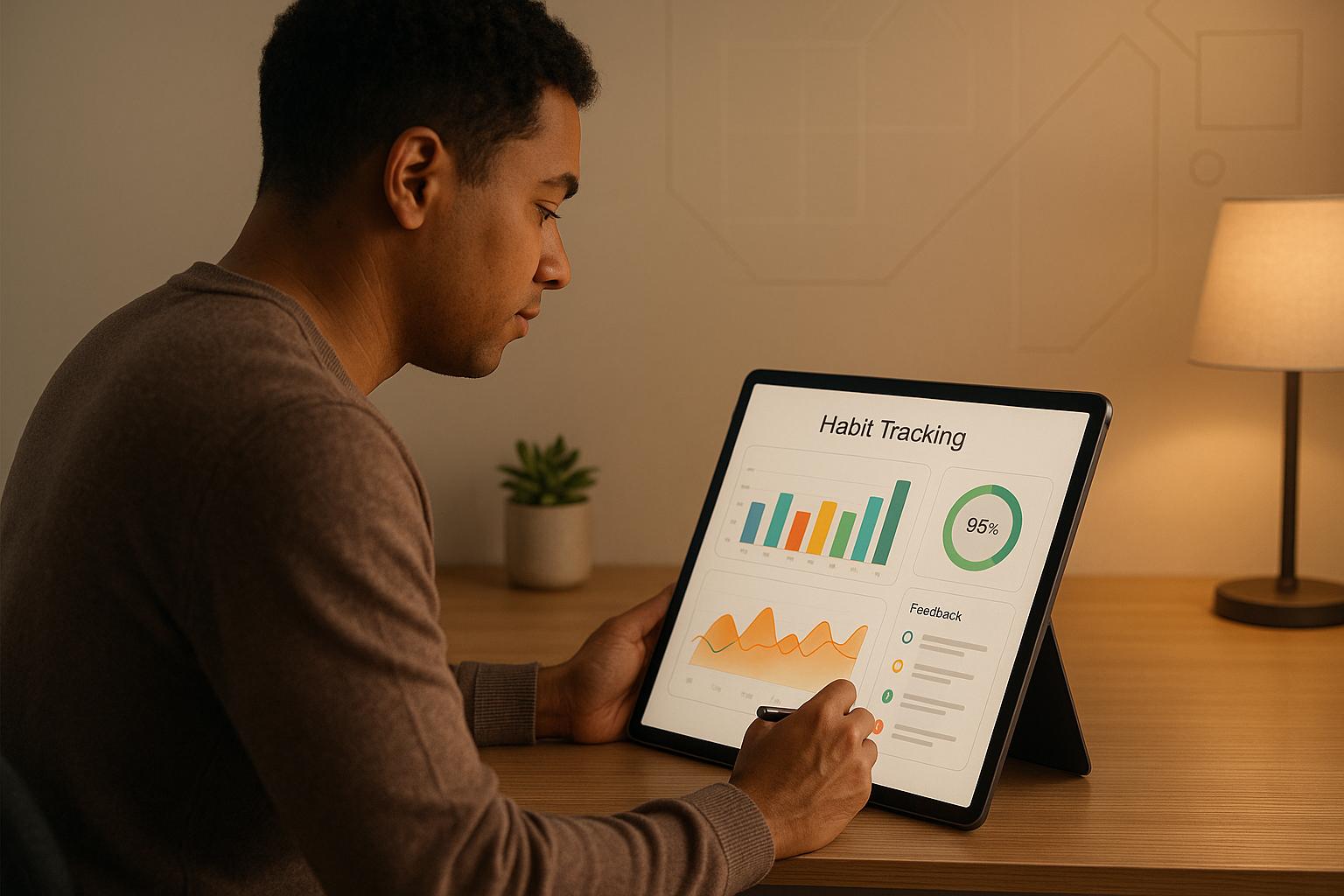
¿Quieres construir mejores hábitos? La IA puede ayudar.
Los bucles de retroalimentación de IA simplifican el seguimiento de hábitos automatizando la recolección de datos y proporcionando consejos personalizados en tiempo real. A diferencia del automonitoreo manual, que requiere esfuerzo y consistencia, herramientas de IA como Healify analizan tu comportamiento y ofrecen recomendaciones personalizadas basadas en patrones de tus datos. Por ejemplo, pueden ajustar los recordatorios de entrenamiento a tus momentos más activos o sugerir consejos de recuperación según tus niveles de estrés.
Puntos clave:
Herramientas de IA: Automatizan el seguimiento, proporcionan retroalimentación oportuna y personalizan sugerencias utilizando wearables y datos de salud.
Seguimiento manual: Fomenta la autoconciencia pero requiere tiempo y esfuerzo, con retroalimentación retrasada y conocimientos limitados.
Mejor enfoque: Combinar la eficiencia de la IA con la reflexión manual para equilibrar automatización y atención plena.
Ya sea que prefieras soluciones impulsadas por tecnología o un enfoque práctico, el objetivo es el mismo: crear hábitos que perduren sin añadir estrés adicional.
1. Bucles de Retroalimentación de IA
Recolección de Datos
Los bucles de retroalimentación de IA dependen de la recolección de información de una variedad de fuentes para crear una comprensión detallada de tus hábitos y salud general. A diferencia del seguimiento manual, que requiere esfuerzo y consistencia, la IA automatiza este proceso obteniendo datos de wearables, biometría, análisis de sangre y registros de estilo de vida. Esto construye un perfil rico, organizando la información en categorías conductuales, fisiológicas y contextuales. Por ejemplo, la IA podría notar que generalmente completas una carrera matutina a las 6:30 a.m. en días laborables pero tiendes a saltártela los lunes después de una mala noche de sueño. Conecta este patrón con tus datos de sueño. Algunas aplicaciones incluso van más allá al analizar reflexiones escritas o de voz para descubrir tendencias en tus niveles de energía, estrés o motivación. Cuantos más datos de alta calidad proporciones, más precisa y útil se vuelve la orientación [1] [2].
Una vez que este perfil de datos está en su lugar, la IA determina los mejores momentos para ofrecer consejos, asegurando que las recomendaciones sean tanto oportunas como efectivas.
Oportunidad de la Retroalimentación
Una característica destacada de los bucles de retroalimentación de IA es su capacidad para ofrecer consejos en el momento justo. Los rastreadores de hábitos tradicionales a menudo dependen de horarios fijos, como enviar recordatorios todos los días a las 7:00 a.m., sin considerar si ese horario te funciona. Los sistemas de IA, por otro lado, utilizan datos históricos, como cuando normalmente completas tareas o respondes a notificaciones, para identificar cuándo es más probable que te involucres. Al programar avisos durante estos momentos de alta respuesta y evitar momentos en los que eres menos receptivo, la IA maximiza su impacto. Las investigaciones muestran que la retroalimentación inmediata basada en sensores, como un empujón justo después de una caminata o ejercicio de respiración, ayuda a reforzar los hábitos y mejorar el aprendizaje de manera más efectiva que los resúmenes retrasados. Las herramientas de trabajo que proporcionan retroalimentación en tiempo real, como recordatorios para tomar descansos cuando disminuyen las métricas de enfoque, también han demostrado mejorar el compromiso y la adherencia a comportamientos saludables [2] [4].
Pero la oportunidad no es lo único que la IA hace bien; también personaliza sus recomendaciones para adaptarse a tus preferencias y rutinas únicas.
Personalización
Los bucles de retroalimentación de IA van más allá de los enfoques de talla única al personalizar sus orientaciones para que coincidan con tus datos personales. Ajustan factores como el contenido, el momento, la dificultad y el tono motivacional basándose en lo que mejor funciona para ti. El sistema aprende de tus patrones: cuándo eres más productivo, qué recordatorios ignoras y qué tipos de mensajes fomentan la acción, y se adapta en consecuencia. Por ejemplo, si luchas con sesiones de entrenamiento largas, la IA podría sugerir comenzar con una sesión rápida de 3 minutos e ir aumentando gradualmente la duración. Algunas herramientas incluso categorizan a los usuarios según su estilo de motivación, enviando avisos basados en desafíos a individuos competitivos mientras ofrecen aliento a aquellos que prefieren un enfoque orientado al crecimiento.
En aplicaciones como Healify, la personalización llega aún más lejos. Estos sistemas incorporan marcadores de salud como la calidad del sueño, los niveles de estrés y las tendencias en análisis de sangre para afinar sus consejos. Si tu sueño fue pobre y tus niveles de estrés son altos, la IA podría recomendar ejercicios de recuperación ligeros en lugar de un entrenamiento intenso. Al basar sus sugerencias en tus datos únicos en lugar de promedios generales, la IA asegura que su orientación se alinee con tu estado actual y objetivos [1] [2] [5].
Efectividad
Para garantizar el éxito a largo plazo, los bucles de retroalimentación de IA constantemente evalúan su rendimiento. Monitorean métricas clave como las tasas de finalización de hábitos, las longitudes de rachas y la frecuencia de recaídas, utilizando estos datos para afinar sus estrategias. Por ejemplo, el sistema podría experimentar con cambios en el tiempo de los recordatorios, el tono del mensaje o la estructura del hábito, comparando resultados antes y después de estos ajustes. Con el tiempo, aprende qué intervenciones funcionan mejor vinculando la adherencia a los hábitos con resultados más amplios como niveles de actividad física, calidad del sueño y reducción del estrés. Esto asegura que los hábitos no solo se completen, sino que también contribuyan significativamente a tu bienestar general.
Por ejemplo, si consistentemente alcanzas una meta de 8,000 pasos pero aún experimentas alto estrés, la IA podría sugerir añadir una sesión de atención plena o ajustar la intensidad de tu entrenamiento. Los estudios en salud digital revelan que la retroalimentación personalizada en tiempo real de los wearables impulsa el logro de objetivos, la motivación y el mantenimiento de comportamientos saludables. La investigación en ciencia del comportamiento e interacción humano-computadora también destaca que la retroalimentación rica en contexto, como la combinación de frecuencia cardiaca, conteo de pasos y hora del día, alienta un compromiso más largo en comparación con simples resúmenes diarios. Además, analizar reflexiones diarias en aplicaciones de seguimiento de hábitos puede ayudar a identificar condiciones para el éxito, como niveles más altos de energía por la mañana, permitiendo que el sistema reprograme hábitos para obtener mejores resultados. A medida que la IA recopila más datos personales, su coaching se vuelve más preciso y útil, haciéndolo mucho más efectivo que planes estáticos o registros manuales [2] [3].
2. Automonitoreo Manual
Recolección de Datos
A diferencia de los sistemas automatizados de IA, el automonitoreo manual requiere que actives el seguimiento y la reflexión sobre tus hábitos. Esto implica registrar detalles como frecuencia, duración y a veces intensidad usando herramientas como diarios, calendarios, hojas de cálculo o listas de verificación digitales. Muchas personas también anotan rápidamente sobre su humor, niveles de energía o circunstancias - cosas como, "Me sentí demasiado cansado después del trabajo, omití mi carrera" - para ayudar a identificar patrones más tarde.
Este método es excelente para capturar comportamientos simples de sí/no porque te obliga a reconocer conscientemente tus acciones, aumentando naturalmente la autoconciencia. Pero hay una compensación. Registrar cada detalle requiere esfuerzo: buscar tu cuaderno, abrir tu archivo y recordar registrar consistentemente. En días agitados, este paso adicional puede parecer una carga y, con el tiempo, puede llevar a brechas en tus registros o incluso a renunciar por completo. El seguimiento manual también introduce posibles sesgos, como recordar eventos de manera inexacta o ajustar lo que registras para parecer mejor. Estos factores pueden distorsionar tus datos y hacerlos menos confiables en comparación con los sistemas automatizados, que recolectan información sin interrupciones en segundo plano. Además, el seguimiento manual tiende a ofrecer retroalimentación en una línea de tiempo más lenta, lo que hace más difícil ajustar comportamientos en tiempo real.
Oportunidad de la Retroalimentación
Una gran desventaja del automonitoreo manual es el retraso en la retroalimentación. En lugar de actualizaciones en tiempo real, las perspectivas generalmente vienen durante revisiones semanales o mensuales de tus registros. Esto significa que podrías no notar un patrón, como omitir entrenamientos múltiples veces en una semana, hasta que sea demasiado tarde para hacer ajustes.
Algunas personas intentan crear sus propios bucles de retroalimentación revisando diarios semanalmente, usando ayudas visuales como cadenas de hábitos en calendarios, o configurando recordatorios - como alarmas telefónicas o notas adhesivas - para provocar acción. Aunque estos métodos pueden funcionar para personas motivadas, carecen de la flexibilidad de los sistemas impulsados por IA. Los recordatorios manuales son estáticos, a menudo repitiendo el mismo mensaje a la misma hora, lo que los hace más fáciles de ignorar si ya no se alinean con tu horario. Las investigaciones muestran que la retroalimentación inmediata, como la que proporcionan los sensores, es mucho más efectiva para reforzar hábitos y el aprendizaje que los resúmenes retrasados.
Personalización
El seguimiento manual te da control total sobre qué registrar, cómo organizarlo y cómo visualizar tu progreso. Ya sea creando tablas, gráficos o usando símbolos en un cuaderno, puedes diseñar un sistema que coincida con tus preferencias y objetivos.
Sin embargo, este nivel de personalización tiene limitaciones. Sin ayuda algorítmica, analizar patrones - como cómo el sueño afecta el rendimiento del entrenamiento - se convierte en un proceso manual y lento. Esencialmente estás haciendo de detective, lo que puede ser agobiante y llevar a conexiones perdidas, como cómo el tiempo frente a la pantalla tarde en la noche impacta en tu productividad matutina. El seguimiento manual funciona mejor para hábitos sencillos, como “beber 8 vasos de agua” o “leer durante 10 minutos”, donde un simple chequeo es suficiente. También es útil para hábitos reflexivos, como escribir en un diario sobre gratitud o estrés, donde las notas subjetivas tienen más peso que las métricas precisas. Pero para hábitos que involucran datos complejos - como la variabilidad de la frecuencia cardiaca o estadísticas detalladas de entrenamiento - las herramientas automatizadas superan a los métodos manuales al capturar y analizar datos continuos sin esfuerzo.
Efectividad
El automonitoreo manual ha sido durante mucho tiempo una piedra angular de las estrategias de cambio de comportamiento, particularmente en programas de manejo de peso. Es una técnica clave en la terapia cognitivo-conductual y la psicología de la salud porque aumenta la autoconciencia y la responsabilidad, obligándote a confrontar tus comportamientos reales en lugar de tus percepciones de ellos.
Las investigaciones respaldan esto. Los estudios muestran que las personas que mantienen diarios de alimentos manuales consistentemente pierden más peso. Por ejemplo, un estudio encontró que los participantes que registraron su ingesta dietética al menos el 66% del tiempo perdieron significativamente más peso que aquellos que registraron menos frecuentemente. De manera similar, aquellos que rastrearon regularmente la actividad física tenían más probabilidades de alcanzar sus objetivos de ejercicio y mantenerlos a largo plazo. Incluso el simple acto de escribir todo lo que comes puede reducir la ingesta de calorías, incluso sin guía adicional.
Dicho esto, la efectividad del seguimiento manual depende en gran medida de qué tan consistentemente te apegues a él. Lamentablemente, la adhesión tiende a disminuir con el tiempo. Para el tercer mes, el cumplimiento con diarios de papel a menudo cae por debajo del 50%. El esfuerzo de registrar puede empezar a sentirse como una tarea, llevando a muchos a abandonar la práctica. Combinar el seguimiento manual con retroalimentación periódica de un coach o terapeuta puede mejorar los resultados, como se ve en la terapia cognitivo-conductual, donde el automonitoreo guiado lleva a mayores reducciones de síntomas en comparación con métodos no guiados.
Curiosamente, el acto de rastrear en sí mismo puede influir en el comportamiento, un fenómeno conocido como reactividad. Simplemente medir un hábito puede fomentar cambios positivos. Sin embargo, sin herramientas automatizadas para detectar patrones, tendrás que revisar tus registros manualmente, lo que puede ser tanto lento como mentalmente agotador. Esta dependencia del esfuerzo personal limita el potencial a largo plazo del automonitoreo manual como una estrategia sostenible.
Para aquellos comprometidos con el seguimiento manual, hay maneras de hacerlo más fácil y efectivo. Concéntrate en un pequeño número de hábitos (de tres a cinco) para evitar sentirte abrumado. Utiliza una herramienta única y visible - como un calendario de pared o un cuaderno compacto que lleves diariamente - para reducir las posibilidades de olvidar. Usa símbolos sencillos (✓ para completado, – para omitido, ● para parcial) y agrega notas solo cuando sea necesario. Establece una hora específica cada día para registrar, como después de la cena o antes de acostarte, para construir una rutina. Finalmente, realiza una revisión semanal para detectar patrones - como caídas durante el fin de semana o fracasos por la noche - y ajusta tu entorno o horario en consecuencia. Estos pasos pueden ayudar a agilizar el proceso y hacerlo más fácil de mantener a lo largo del tiempo, trayendo cierta estructura al seguimiento manual sin depender de soporte tecnológico constante.
Cómo Construí un Registro de Hábitos de IA con ChatGPT
Pros y Contras
Tanto los bucles de retroalimentación de IA como el automonitoreo manual tienen su propio conjunto de fortalezas y desafíos. Comprender estas diferencias puede ayudarte a decidir qué enfoque se adapta mejor a tus hábitos, o incluso cómo combinarlos para obtener los resultados más efectivos. Analicemos qué hace que cada método se destaque y dónde podrían fallar.
Beneficios de los Bucles de Retroalimentación de IA
El seguimiento de hábitos impulsado por IA simplifica el proceso al automatizar gran parte del trabajo. Estos sistemas recopilan datos de forma pasiva a través de dispositivos como wearables y aplicaciones de salud, eliminando la necesidad de entradas manuales. Por ejemplo, Healify integra datos de herramientas como Apple Watch, análisis de sangre y métricas de estilo de vida para crear planes accionables. Este enfoque sin intervención ahorra tiempo y asegura que estés trabajando con una gran cantidad de datos objetivos.
Otra gran ventaja es el momento de la retroalimentación. La IA puede ofrecer perspectivas o avisos exactamente cuando los necesitas. Algunos sistemas, por ejemplo, envían recordatorios para hidratarse cuando tus niveles de actividad bajan o te alertan para relajarte antes de que los indicadores de estrés aumenten. Las investigaciones muestran que la retroalimentación inmediata de este tipo es mucho más efectiva para aumentar la motivación y alcanzar objetivos en comparación con resúmenes retrasados.
La personalización es otra área donde la IA sobresale. Con el tiempo, estos sistemas aprenden tus hábitos y preferencias, personalizando recordatorios, objetivos y sugerencias para alinearse con tus patrones únicos. Healify, por ejemplo, refina sus recomendaciones basándose en tus biometrías y estilo de vida, ofreciendo un nivel de personalización que es difícil de replicar manualmente.
Los estudios consistentemente destacan la efectividad de feedback automatizado en el impulso del cambio de comportamiento. Las perspectivas en tiempo real de wearables y apps no solo aumentan la autoconciencia sino que también fomentan la responsabilidad. A medida que estos sistemas recopilan más datos, sus recomendaciones se vuelven cada vez más precisas, mejorando aún más su impacto en áreas como el fitness, el sueño y la gestión del estrés.
Desventajas de los Bucles de Retroalimentación de IA
A pesar de sus ventajas, los sistemas de IA no están exentos de fallas. Su precisión depende en gran medida de la calidad de los datos que reciben. Sensores defectuosos o registros inconsistentes - como saltarse entradas de comida - pueden llevar a perspectivas engañosas. Esencialmente, si los datos que entran son defectuosos, el resultado también lo será.
La dependencia excesiva de la IA es otra preocupación. Tratar al sistema como una autoridad omnisciente puede desalentar el pensamiento crítico y la reflexión, que son vitales para una autoconciencia más profunda. Además, las notificaciones constantes pueden hacerse abrumadoras. En un estudio, el 95% de los participantes informó que las alertas excesivas impactaron negativamente su productividad y bienestar [2].
La privacidad y la seguridad también son cuestiones significativas. Compartir datos de salud sensibles con plataformas de terceros requiere un cumplimiento estricto con regulaciones como HIPAA. Los sistemas mal diseñados incluso pueden fomentar comportamientos dañinos de manera involuntaria, como hacer ejercicio excesivamente para mantener una racha o crear ansiedad en torno a métricas de rendimiento, lo que puede dañar la salud mental y la sostenibilidad a largo plazo de los hábitos.
Beneficios del Automonitoreo Manual
El seguimiento manual te da control total. Tú decides qué registrar, cómo organizarlo y cuándo revisarlo, libre de las restricciones de las categorías o algoritmos predefinidos de una aplicación. Este enfoque práctico fomenta una mayor autoconciencia y reflexión, ingredientes clave para la formación de hábitos. Simplemente escribir un hábito o marcarlo en una lista puede sentirse gratificante y motivador, especialmente cuando ves un progreso visible.
Otra ventaja de los métodos manuales es su simplicidad. No dependen de la tecnología, lo que los hace un recurso confiable si los dispositivos fallan o resultan agobiantes. Para personas que son altamente motivadas y reflexivas, el seguimiento manual puede ser tan efectivo como los sistemas de IA, particularmente para hábitos sencillos como beber agua o leer diariamente.
Desventajas del Automonitoreo Manual
Sin embargo, el seguimiento manual no está exento de desafíos. Es fácil olvidar registrar hábitos durante momentos ocupados o estresantes, lo que lleva a datos incompletos o sesgados. Esta inconsistencia puede dificultar la identificación de patrones o el mantenimiento de la motivación. Rastrear varios hábitos - como ejercicio, sueño, nutrición y estado de ánimo - también puede volverse lento y abrumador, aumentando las posibilidades de rendirse.
Los métodos manuales también carecen de profundidad. Si bien podrías notar tendencias obvias, como un mal sueño después de consumir cafeína por la noche, rara vez descubren conexiones sutiles, como cómo las variaciones de frecuencia cardiaca afectan la productividad. Dado que estas percepciones dependen enteramente de tu propio análisis, son más propensas al error humano. Además, la retroalimentación suele ser retrasada; solo obtienes perspectivas cuando revisas tus registros, lo que debilita el refuerzo inmediato que es tan efectivo para la construcción de hábitos. Aquí es donde la IA puede complementar los métodos manuales llenando los vacíos.
Comparación Lado a Lado
Para comprender mejor estos compromisos, aquí hay una comparación de aspectos clave:
Dimensión | Bucles de Retroalimentación de IA | Automonitoreo Manual |
|---|---|---|
Recolección de Datos | Automática y continua a través de wearables y apps; mínimo esfuerzo pero dependiente de la precisión del dispositivo y estándares de privacidad. | Totalmente manual; flexible pero lento, propenso a la falta de datos y sesgos de recuerdo, sin dependencia de dispositivos. |
Oportunidad de la Retroalimentación | En tiempo real o casi en tiempo real, ofreciendo avisos e insights inmediatos para influir en el comportamiento. | Retrasada; los insights dependen de la revisión de registros, lo que puede debilitar el refuerzo inmediato. |
Personalización | Aprende de los patrones del usuario para personalizar objetivos, recordatorios y recomendaciones. | La personalización depende del análisis y planificación del usuario; a menudo menos sistemática. |
Efectividad | Demostrado para mejorar la motivación y el cambio de comportamiento; los riesgos incluyen la dependencia excesiva y la fatiga por notificaciones. | Fomenta la reflexión y la autoconciencia, pero puede ser inconsistente y más difícil de mantener a lo largo del tiempo. |
Carga Cognitiva | Esfuerzo bajo después de la configuración; la recolección y el análisis de datos están automatizados. | Esfuerzo alto; requiere registro consistente y análisis manual. |
Privacidad | Involucra compartir datos sensibles con plataformas de terceros; el cumplimiento de estándares de seguridad es crucial. | Totalmente privado; los datos permanecen con el usuario en diarios personales o archivos. |
Muchas personas encuentran que un enfoque híbrido funciona mejor. Al usar IA para un seguimiento automático y retroalimentación en tiempo real mientras mantienes un diario para una reflexión más profunda, puedes combinar la eficiencia de la tecnología con la autoconciencia ganada con métodos manuales. Este equilibrio te permite disfrutar de las fortalezas de ambos enfoques mientras minimizas sus debilidades.
Conclusión
Decidir entre bucles de retroalimentación de IA y automonitoreo manual no se trata de identificar una opción “correcta”, sino de alinear el método con tus objetivos, estilo de vida y nivel de comodidad con la tecnología. Ambos enfoques pueden llevar a cambios de hábitos significativos, pero operan de maneras distintas. Esta decisión te ayuda a combinar la precisión automatizada con la reflexión consciente en tu viaje de seguimiento de hábitos.
Los bucles de retroalimentación de IA son ideales cuando necesitas automatización, insights inmediatos y orientación personalizada. Para aquellos que ya usan un smartwatch o rastreador de fitness, estos sistemas convierten flujos de datos - como pasos, frecuencia cardiaca o patrones de sueño - en consejos accionables sin requerir mucho esfuerzo. Son especialmente útiles para detectar tendencias que podrías pasar por alto, como cómo el uso de la pantalla por la noche impacta en la calidad de tu sueño y niveles de energía al día siguiente. Esto los convierte en un gran aliado para individuos ocupados que equilibran trabajo, familia y salud.
Por otro lado, el automonitoreo manual atrae a aquellos que valoran la privacidad y la introspección. Usar un diario de papel o una lista de verificación simple te da control total sobre tus datos y fomenta una mayor autoconciencia. Para hábitos ligados a emociones, relaciones o valores personales - donde los números no capturan el cuadro completo - escribir las cosas puede ser más efectivo que depender de algoritmos. Además, los métodos manuales evitan las notificaciones constantes que pueden hacer que las herramientas digitales se sientan agobiantes.
Para muchos, un enfoque híbrido alcanza el equilibrio perfecto. Combinar los insights automatizados de la IA con momentos regulares de reflexión personal te permite disfrutar de la eficiencia de la tecnología mientras preservas los beneficios conscientes del seguimiento manual. Esta mezcla puede ayudarte a mantenerte consistente sin perder de vista el panorama general.
Aquí hay un marco simple para ayudarte a decidir:
Comienza con tu objetivo. Para hábitos medibles como el conteo de pasos o la duración del sueño, las herramientas de IA combinadas con wearables funcionan bien. Para hábitos ligados a emociones o valores, la reflexión manual puede ser más efectiva.
Evalúa tu comodidad con la tecnología. Si estás cómodo compartiendo datos de salud y disfrutas de las apps, los bucles de retroalimentación de IA pueden ofrecer orientación personalizada las 24/7. Aplicaciones como Healify, por ejemplo, integran datos de dispositivos como Apple Watch e incluso análisis de sangre para crear planes de acción personalizados. Si eres más consciente de la privacidad o no te gustan las notificaciones constantes, los métodos manuales pueden adecuarse mejor a ti.
Considera tu tiempo y energía. Las herramientas de IA registran datos automáticamente y proporcionan recordatorios con poco esfuerzo, mientras que el seguimiento manual requiere tiempo para la escritura reflexiva pero ofrece insights más profundos para aquellos dispuestos a invertir el esfuerzo.
Experimenta y ajusta. Prueba un método durante unas semanas. Si la IA se siente intrusiva, reduce las notificaciones o incorpora más seguimiento manual. Si escribir en un diario te parece tedioso, deja que la IA maneje las tareas de rutina mientras te enfocas en reflexiones ocasionales.
El objetivo final es crear un sistema que apoye tus hábitos sin añadir estrés. Al personalizar tu enfoque, puedes construir una rutina de seguimiento de hábitos que se sienta natural y sostenible.
Preguntas Frecuentes
¿Cómo ajusta la IA las recomendaciones de seguimiento de hábitos para adaptarse a mi estilo de vida único?
Healify aprovecha tecnología de IA de vanguardia para profundizar en tus métricas de salud: wearables, biometría, análisis de sangre e incluso tus rutinas diarias. Toma todos estos datos y los transforma en recomendaciones de seguimiento de hábitos hechas a medida que realmente tienen sentido para tu vida.
Con monitoreo en tiempo real y soporte las 24 horas del día, Healify mantiene tus objetivos de salud en sincronía con tus necesidades siempre cambiantes. ¿El resultado? Pasos prácticos para ayudarte a construir hábitos que perduren, preparándote para un bienestar duradero.
¿Qué preocupaciones de privacidad debo tener en cuenta al usar IA para el seguimiento de hábitos y cómo puedo proteger mis datos?
Al integrar IA en el seguimiento de hábitos, una preocupación común es cómo se manejan los datos personales - específicamente, cómo se recogen, almacenan y comparten. Información como estadísticas de salud, rutinas diarias y biometría pueden estar en riesgo si no se aplican las salvaguardas adecuadas.
Para mantener tus datos seguros, busca plataformas que prioricen la cifrado de datos y cumplan con estándares de privacidad como HIPAA. Siempre revisa detenidamente la política de privacidad de la aplicación para ver cómo se gestiona tu información y si se comparte con terceros. Para una capa adicional de protección, crea contraseñas fuertes y únicas y activa características como la autenticación de dos factores. Estos pasos pueden ser de gran ayuda para proteger tu información sensible.
¿Pueden los bucles de retroalimentación de IA combinados con automonitoreo mejorar el seguimiento de hábitos?
Combinar bucles de retroalimentación de IA con automonitoreo manual puede llevar el seguimiento de hábitos a un nivel completamente nuevo. Las herramientas de IA analizan datos de wearables, biometría y patrones de estilo de vida para ofrecer percepciones en tiempo real y recomendaciones personalizadas. Combina eso con métodos de seguimiento manual, como llevar un diario o registrar el progreso, y obtendrás una comprensión más clara y personal de tus hábitos.
Esta mezcla aprovecha la precisión y el poder de los datos impulsados por IA mientras mantiene la responsabilidad personal que viene con el esfuerzo manual. Juntos, crean una manera equilibrada y efectiva de construir y mantener hábitos más saludables con el tiempo.
Entradas de Blog Relacionadas
¿Quieres construir mejores hábitos? La IA puede ayudar.
Los bucles de retroalimentación de IA simplifican el seguimiento de hábitos automatizando la recolección de datos y proporcionando consejos personalizados en tiempo real. A diferencia del automonitoreo manual, que requiere esfuerzo y consistencia, herramientas de IA como Healify analizan tu comportamiento y ofrecen recomendaciones personalizadas basadas en patrones de tus datos. Por ejemplo, pueden ajustar los recordatorios de entrenamiento a tus momentos más activos o sugerir consejos de recuperación según tus niveles de estrés.
Puntos clave:
Herramientas de IA: Automatizan el seguimiento, proporcionan retroalimentación oportuna y personalizan sugerencias utilizando wearables y datos de salud.
Seguimiento manual: Fomenta la autoconciencia pero requiere tiempo y esfuerzo, con retroalimentación retrasada y conocimientos limitados.
Mejor enfoque: Combinar la eficiencia de la IA con la reflexión manual para equilibrar automatización y atención plena.
Ya sea que prefieras soluciones impulsadas por tecnología o un enfoque práctico, el objetivo es el mismo: crear hábitos que perduren sin añadir estrés adicional.
1. Bucles de Retroalimentación de IA
Recolección de Datos
Los bucles de retroalimentación de IA dependen de la recolección de información de una variedad de fuentes para crear una comprensión detallada de tus hábitos y salud general. A diferencia del seguimiento manual, que requiere esfuerzo y consistencia, la IA automatiza este proceso obteniendo datos de wearables, biometría, análisis de sangre y registros de estilo de vida. Esto construye un perfil rico, organizando la información en categorías conductuales, fisiológicas y contextuales. Por ejemplo, la IA podría notar que generalmente completas una carrera matutina a las 6:30 a.m. en días laborables pero tiendes a saltártela los lunes después de una mala noche de sueño. Conecta este patrón con tus datos de sueño. Algunas aplicaciones incluso van más allá al analizar reflexiones escritas o de voz para descubrir tendencias en tus niveles de energía, estrés o motivación. Cuantos más datos de alta calidad proporciones, más precisa y útil se vuelve la orientación [1] [2].
Una vez que este perfil de datos está en su lugar, la IA determina los mejores momentos para ofrecer consejos, asegurando que las recomendaciones sean tanto oportunas como efectivas.
Oportunidad de la Retroalimentación
Una característica destacada de los bucles de retroalimentación de IA es su capacidad para ofrecer consejos en el momento justo. Los rastreadores de hábitos tradicionales a menudo dependen de horarios fijos, como enviar recordatorios todos los días a las 7:00 a.m., sin considerar si ese horario te funciona. Los sistemas de IA, por otro lado, utilizan datos históricos, como cuando normalmente completas tareas o respondes a notificaciones, para identificar cuándo es más probable que te involucres. Al programar avisos durante estos momentos de alta respuesta y evitar momentos en los que eres menos receptivo, la IA maximiza su impacto. Las investigaciones muestran que la retroalimentación inmediata basada en sensores, como un empujón justo después de una caminata o ejercicio de respiración, ayuda a reforzar los hábitos y mejorar el aprendizaje de manera más efectiva que los resúmenes retrasados. Las herramientas de trabajo que proporcionan retroalimentación en tiempo real, como recordatorios para tomar descansos cuando disminuyen las métricas de enfoque, también han demostrado mejorar el compromiso y la adherencia a comportamientos saludables [2] [4].
Pero la oportunidad no es lo único que la IA hace bien; también personaliza sus recomendaciones para adaptarse a tus preferencias y rutinas únicas.
Personalización
Los bucles de retroalimentación de IA van más allá de los enfoques de talla única al personalizar sus orientaciones para que coincidan con tus datos personales. Ajustan factores como el contenido, el momento, la dificultad y el tono motivacional basándose en lo que mejor funciona para ti. El sistema aprende de tus patrones: cuándo eres más productivo, qué recordatorios ignoras y qué tipos de mensajes fomentan la acción, y se adapta en consecuencia. Por ejemplo, si luchas con sesiones de entrenamiento largas, la IA podría sugerir comenzar con una sesión rápida de 3 minutos e ir aumentando gradualmente la duración. Algunas herramientas incluso categorizan a los usuarios según su estilo de motivación, enviando avisos basados en desafíos a individuos competitivos mientras ofrecen aliento a aquellos que prefieren un enfoque orientado al crecimiento.
En aplicaciones como Healify, la personalización llega aún más lejos. Estos sistemas incorporan marcadores de salud como la calidad del sueño, los niveles de estrés y las tendencias en análisis de sangre para afinar sus consejos. Si tu sueño fue pobre y tus niveles de estrés son altos, la IA podría recomendar ejercicios de recuperación ligeros en lugar de un entrenamiento intenso. Al basar sus sugerencias en tus datos únicos en lugar de promedios generales, la IA asegura que su orientación se alinee con tu estado actual y objetivos [1] [2] [5].
Efectividad
Para garantizar el éxito a largo plazo, los bucles de retroalimentación de IA constantemente evalúan su rendimiento. Monitorean métricas clave como las tasas de finalización de hábitos, las longitudes de rachas y la frecuencia de recaídas, utilizando estos datos para afinar sus estrategias. Por ejemplo, el sistema podría experimentar con cambios en el tiempo de los recordatorios, el tono del mensaje o la estructura del hábito, comparando resultados antes y después de estos ajustes. Con el tiempo, aprende qué intervenciones funcionan mejor vinculando la adherencia a los hábitos con resultados más amplios como niveles de actividad física, calidad del sueño y reducción del estrés. Esto asegura que los hábitos no solo se completen, sino que también contribuyan significativamente a tu bienestar general.
Por ejemplo, si consistentemente alcanzas una meta de 8,000 pasos pero aún experimentas alto estrés, la IA podría sugerir añadir una sesión de atención plena o ajustar la intensidad de tu entrenamiento. Los estudios en salud digital revelan que la retroalimentación personalizada en tiempo real de los wearables impulsa el logro de objetivos, la motivación y el mantenimiento de comportamientos saludables. La investigación en ciencia del comportamiento e interacción humano-computadora también destaca que la retroalimentación rica en contexto, como la combinación de frecuencia cardiaca, conteo de pasos y hora del día, alienta un compromiso más largo en comparación con simples resúmenes diarios. Además, analizar reflexiones diarias en aplicaciones de seguimiento de hábitos puede ayudar a identificar condiciones para el éxito, como niveles más altos de energía por la mañana, permitiendo que el sistema reprograme hábitos para obtener mejores resultados. A medida que la IA recopila más datos personales, su coaching se vuelve más preciso y útil, haciéndolo mucho más efectivo que planes estáticos o registros manuales [2] [3].
2. Automonitoreo Manual
Recolección de Datos
A diferencia de los sistemas automatizados de IA, el automonitoreo manual requiere que actives el seguimiento y la reflexión sobre tus hábitos. Esto implica registrar detalles como frecuencia, duración y a veces intensidad usando herramientas como diarios, calendarios, hojas de cálculo o listas de verificación digitales. Muchas personas también anotan rápidamente sobre su humor, niveles de energía o circunstancias - cosas como, "Me sentí demasiado cansado después del trabajo, omití mi carrera" - para ayudar a identificar patrones más tarde.
Este método es excelente para capturar comportamientos simples de sí/no porque te obliga a reconocer conscientemente tus acciones, aumentando naturalmente la autoconciencia. Pero hay una compensación. Registrar cada detalle requiere esfuerzo: buscar tu cuaderno, abrir tu archivo y recordar registrar consistentemente. En días agitados, este paso adicional puede parecer una carga y, con el tiempo, puede llevar a brechas en tus registros o incluso a renunciar por completo. El seguimiento manual también introduce posibles sesgos, como recordar eventos de manera inexacta o ajustar lo que registras para parecer mejor. Estos factores pueden distorsionar tus datos y hacerlos menos confiables en comparación con los sistemas automatizados, que recolectan información sin interrupciones en segundo plano. Además, el seguimiento manual tiende a ofrecer retroalimentación en una línea de tiempo más lenta, lo que hace más difícil ajustar comportamientos en tiempo real.
Oportunidad de la Retroalimentación
Una gran desventaja del automonitoreo manual es el retraso en la retroalimentación. En lugar de actualizaciones en tiempo real, las perspectivas generalmente vienen durante revisiones semanales o mensuales de tus registros. Esto significa que podrías no notar un patrón, como omitir entrenamientos múltiples veces en una semana, hasta que sea demasiado tarde para hacer ajustes.
Algunas personas intentan crear sus propios bucles de retroalimentación revisando diarios semanalmente, usando ayudas visuales como cadenas de hábitos en calendarios, o configurando recordatorios - como alarmas telefónicas o notas adhesivas - para provocar acción. Aunque estos métodos pueden funcionar para personas motivadas, carecen de la flexibilidad de los sistemas impulsados por IA. Los recordatorios manuales son estáticos, a menudo repitiendo el mismo mensaje a la misma hora, lo que los hace más fáciles de ignorar si ya no se alinean con tu horario. Las investigaciones muestran que la retroalimentación inmediata, como la que proporcionan los sensores, es mucho más efectiva para reforzar hábitos y el aprendizaje que los resúmenes retrasados.
Personalización
El seguimiento manual te da control total sobre qué registrar, cómo organizarlo y cómo visualizar tu progreso. Ya sea creando tablas, gráficos o usando símbolos en un cuaderno, puedes diseñar un sistema que coincida con tus preferencias y objetivos.
Sin embargo, este nivel de personalización tiene limitaciones. Sin ayuda algorítmica, analizar patrones - como cómo el sueño afecta el rendimiento del entrenamiento - se convierte en un proceso manual y lento. Esencialmente estás haciendo de detective, lo que puede ser agobiante y llevar a conexiones perdidas, como cómo el tiempo frente a la pantalla tarde en la noche impacta en tu productividad matutina. El seguimiento manual funciona mejor para hábitos sencillos, como “beber 8 vasos de agua” o “leer durante 10 minutos”, donde un simple chequeo es suficiente. También es útil para hábitos reflexivos, como escribir en un diario sobre gratitud o estrés, donde las notas subjetivas tienen más peso que las métricas precisas. Pero para hábitos que involucran datos complejos - como la variabilidad de la frecuencia cardiaca o estadísticas detalladas de entrenamiento - las herramientas automatizadas superan a los métodos manuales al capturar y analizar datos continuos sin esfuerzo.
Efectividad
El automonitoreo manual ha sido durante mucho tiempo una piedra angular de las estrategias de cambio de comportamiento, particularmente en programas de manejo de peso. Es una técnica clave en la terapia cognitivo-conductual y la psicología de la salud porque aumenta la autoconciencia y la responsabilidad, obligándote a confrontar tus comportamientos reales en lugar de tus percepciones de ellos.
Las investigaciones respaldan esto. Los estudios muestran que las personas que mantienen diarios de alimentos manuales consistentemente pierden más peso. Por ejemplo, un estudio encontró que los participantes que registraron su ingesta dietética al menos el 66% del tiempo perdieron significativamente más peso que aquellos que registraron menos frecuentemente. De manera similar, aquellos que rastrearon regularmente la actividad física tenían más probabilidades de alcanzar sus objetivos de ejercicio y mantenerlos a largo plazo. Incluso el simple acto de escribir todo lo que comes puede reducir la ingesta de calorías, incluso sin guía adicional.
Dicho esto, la efectividad del seguimiento manual depende en gran medida de qué tan consistentemente te apegues a él. Lamentablemente, la adhesión tiende a disminuir con el tiempo. Para el tercer mes, el cumplimiento con diarios de papel a menudo cae por debajo del 50%. El esfuerzo de registrar puede empezar a sentirse como una tarea, llevando a muchos a abandonar la práctica. Combinar el seguimiento manual con retroalimentación periódica de un coach o terapeuta puede mejorar los resultados, como se ve en la terapia cognitivo-conductual, donde el automonitoreo guiado lleva a mayores reducciones de síntomas en comparación con métodos no guiados.
Curiosamente, el acto de rastrear en sí mismo puede influir en el comportamiento, un fenómeno conocido como reactividad. Simplemente medir un hábito puede fomentar cambios positivos. Sin embargo, sin herramientas automatizadas para detectar patrones, tendrás que revisar tus registros manualmente, lo que puede ser tanto lento como mentalmente agotador. Esta dependencia del esfuerzo personal limita el potencial a largo plazo del automonitoreo manual como una estrategia sostenible.
Para aquellos comprometidos con el seguimiento manual, hay maneras de hacerlo más fácil y efectivo. Concéntrate en un pequeño número de hábitos (de tres a cinco) para evitar sentirte abrumado. Utiliza una herramienta única y visible - como un calendario de pared o un cuaderno compacto que lleves diariamente - para reducir las posibilidades de olvidar. Usa símbolos sencillos (✓ para completado, – para omitido, ● para parcial) y agrega notas solo cuando sea necesario. Establece una hora específica cada día para registrar, como después de la cena o antes de acostarte, para construir una rutina. Finalmente, realiza una revisión semanal para detectar patrones - como caídas durante el fin de semana o fracasos por la noche - y ajusta tu entorno o horario en consecuencia. Estos pasos pueden ayudar a agilizar el proceso y hacerlo más fácil de mantener a lo largo del tiempo, trayendo cierta estructura al seguimiento manual sin depender de soporte tecnológico constante.
Cómo Construí un Registro de Hábitos de IA con ChatGPT
Pros y Contras
Tanto los bucles de retroalimentación de IA como el automonitoreo manual tienen su propio conjunto de fortalezas y desafíos. Comprender estas diferencias puede ayudarte a decidir qué enfoque se adapta mejor a tus hábitos, o incluso cómo combinarlos para obtener los resultados más efectivos. Analicemos qué hace que cada método se destaque y dónde podrían fallar.
Beneficios de los Bucles de Retroalimentación de IA
El seguimiento de hábitos impulsado por IA simplifica el proceso al automatizar gran parte del trabajo. Estos sistemas recopilan datos de forma pasiva a través de dispositivos como wearables y aplicaciones de salud, eliminando la necesidad de entradas manuales. Por ejemplo, Healify integra datos de herramientas como Apple Watch, análisis de sangre y métricas de estilo de vida para crear planes accionables. Este enfoque sin intervención ahorra tiempo y asegura que estés trabajando con una gran cantidad de datos objetivos.
Otra gran ventaja es el momento de la retroalimentación. La IA puede ofrecer perspectivas o avisos exactamente cuando los necesitas. Algunos sistemas, por ejemplo, envían recordatorios para hidratarse cuando tus niveles de actividad bajan o te alertan para relajarte antes de que los indicadores de estrés aumenten. Las investigaciones muestran que la retroalimentación inmediata de este tipo es mucho más efectiva para aumentar la motivación y alcanzar objetivos en comparación con resúmenes retrasados.
La personalización es otra área donde la IA sobresale. Con el tiempo, estos sistemas aprenden tus hábitos y preferencias, personalizando recordatorios, objetivos y sugerencias para alinearse con tus patrones únicos. Healify, por ejemplo, refina sus recomendaciones basándose en tus biometrías y estilo de vida, ofreciendo un nivel de personalización que es difícil de replicar manualmente.
Los estudios consistentemente destacan la efectividad de feedback automatizado en el impulso del cambio de comportamiento. Las perspectivas en tiempo real de wearables y apps no solo aumentan la autoconciencia sino que también fomentan la responsabilidad. A medida que estos sistemas recopilan más datos, sus recomendaciones se vuelven cada vez más precisas, mejorando aún más su impacto en áreas como el fitness, el sueño y la gestión del estrés.
Desventajas de los Bucles de Retroalimentación de IA
A pesar de sus ventajas, los sistemas de IA no están exentos de fallas. Su precisión depende en gran medida de la calidad de los datos que reciben. Sensores defectuosos o registros inconsistentes - como saltarse entradas de comida - pueden llevar a perspectivas engañosas. Esencialmente, si los datos que entran son defectuosos, el resultado también lo será.
La dependencia excesiva de la IA es otra preocupación. Tratar al sistema como una autoridad omnisciente puede desalentar el pensamiento crítico y la reflexión, que son vitales para una autoconciencia más profunda. Además, las notificaciones constantes pueden hacerse abrumadoras. En un estudio, el 95% de los participantes informó que las alertas excesivas impactaron negativamente su productividad y bienestar [2].
La privacidad y la seguridad también son cuestiones significativas. Compartir datos de salud sensibles con plataformas de terceros requiere un cumplimiento estricto con regulaciones como HIPAA. Los sistemas mal diseñados incluso pueden fomentar comportamientos dañinos de manera involuntaria, como hacer ejercicio excesivamente para mantener una racha o crear ansiedad en torno a métricas de rendimiento, lo que puede dañar la salud mental y la sostenibilidad a largo plazo de los hábitos.
Beneficios del Automonitoreo Manual
El seguimiento manual te da control total. Tú decides qué registrar, cómo organizarlo y cuándo revisarlo, libre de las restricciones de las categorías o algoritmos predefinidos de una aplicación. Este enfoque práctico fomenta una mayor autoconciencia y reflexión, ingredientes clave para la formación de hábitos. Simplemente escribir un hábito o marcarlo en una lista puede sentirse gratificante y motivador, especialmente cuando ves un progreso visible.
Otra ventaja de los métodos manuales es su simplicidad. No dependen de la tecnología, lo que los hace un recurso confiable si los dispositivos fallan o resultan agobiantes. Para personas que son altamente motivadas y reflexivas, el seguimiento manual puede ser tan efectivo como los sistemas de IA, particularmente para hábitos sencillos como beber agua o leer diariamente.
Desventajas del Automonitoreo Manual
Sin embargo, el seguimiento manual no está exento de desafíos. Es fácil olvidar registrar hábitos durante momentos ocupados o estresantes, lo que lleva a datos incompletos o sesgados. Esta inconsistencia puede dificultar la identificación de patrones o el mantenimiento de la motivación. Rastrear varios hábitos - como ejercicio, sueño, nutrición y estado de ánimo - también puede volverse lento y abrumador, aumentando las posibilidades de rendirse.
Los métodos manuales también carecen de profundidad. Si bien podrías notar tendencias obvias, como un mal sueño después de consumir cafeína por la noche, rara vez descubren conexiones sutiles, como cómo las variaciones de frecuencia cardiaca afectan la productividad. Dado que estas percepciones dependen enteramente de tu propio análisis, son más propensas al error humano. Además, la retroalimentación suele ser retrasada; solo obtienes perspectivas cuando revisas tus registros, lo que debilita el refuerzo inmediato que es tan efectivo para la construcción de hábitos. Aquí es donde la IA puede complementar los métodos manuales llenando los vacíos.
Comparación Lado a Lado
Para comprender mejor estos compromisos, aquí hay una comparación de aspectos clave:
Dimensión | Bucles de Retroalimentación de IA | Automonitoreo Manual |
|---|---|---|
Recolección de Datos | Automática y continua a través de wearables y apps; mínimo esfuerzo pero dependiente de la precisión del dispositivo y estándares de privacidad. | Totalmente manual; flexible pero lento, propenso a la falta de datos y sesgos de recuerdo, sin dependencia de dispositivos. |
Oportunidad de la Retroalimentación | En tiempo real o casi en tiempo real, ofreciendo avisos e insights inmediatos para influir en el comportamiento. | Retrasada; los insights dependen de la revisión de registros, lo que puede debilitar el refuerzo inmediato. |
Personalización | Aprende de los patrones del usuario para personalizar objetivos, recordatorios y recomendaciones. | La personalización depende del análisis y planificación del usuario; a menudo menos sistemática. |
Efectividad | Demostrado para mejorar la motivación y el cambio de comportamiento; los riesgos incluyen la dependencia excesiva y la fatiga por notificaciones. | Fomenta la reflexión y la autoconciencia, pero puede ser inconsistente y más difícil de mantener a lo largo del tiempo. |
Carga Cognitiva | Esfuerzo bajo después de la configuración; la recolección y el análisis de datos están automatizados. | Esfuerzo alto; requiere registro consistente y análisis manual. |
Privacidad | Involucra compartir datos sensibles con plataformas de terceros; el cumplimiento de estándares de seguridad es crucial. | Totalmente privado; los datos permanecen con el usuario en diarios personales o archivos. |
Muchas personas encuentran que un enfoque híbrido funciona mejor. Al usar IA para un seguimiento automático y retroalimentación en tiempo real mientras mantienes un diario para una reflexión más profunda, puedes combinar la eficiencia de la tecnología con la autoconciencia ganada con métodos manuales. Este equilibrio te permite disfrutar de las fortalezas de ambos enfoques mientras minimizas sus debilidades.
Conclusión
Decidir entre bucles de retroalimentación de IA y automonitoreo manual no se trata de identificar una opción “correcta”, sino de alinear el método con tus objetivos, estilo de vida y nivel de comodidad con la tecnología. Ambos enfoques pueden llevar a cambios de hábitos significativos, pero operan de maneras distintas. Esta decisión te ayuda a combinar la precisión automatizada con la reflexión consciente en tu viaje de seguimiento de hábitos.
Los bucles de retroalimentación de IA son ideales cuando necesitas automatización, insights inmediatos y orientación personalizada. Para aquellos que ya usan un smartwatch o rastreador de fitness, estos sistemas convierten flujos de datos - como pasos, frecuencia cardiaca o patrones de sueño - en consejos accionables sin requerir mucho esfuerzo. Son especialmente útiles para detectar tendencias que podrías pasar por alto, como cómo el uso de la pantalla por la noche impacta en la calidad de tu sueño y niveles de energía al día siguiente. Esto los convierte en un gran aliado para individuos ocupados que equilibran trabajo, familia y salud.
Por otro lado, el automonitoreo manual atrae a aquellos que valoran la privacidad y la introspección. Usar un diario de papel o una lista de verificación simple te da control total sobre tus datos y fomenta una mayor autoconciencia. Para hábitos ligados a emociones, relaciones o valores personales - donde los números no capturan el cuadro completo - escribir las cosas puede ser más efectivo que depender de algoritmos. Además, los métodos manuales evitan las notificaciones constantes que pueden hacer que las herramientas digitales se sientan agobiantes.
Para muchos, un enfoque híbrido alcanza el equilibrio perfecto. Combinar los insights automatizados de la IA con momentos regulares de reflexión personal te permite disfrutar de la eficiencia de la tecnología mientras preservas los beneficios conscientes del seguimiento manual. Esta mezcla puede ayudarte a mantenerte consistente sin perder de vista el panorama general.
Aquí hay un marco simple para ayudarte a decidir:
Comienza con tu objetivo. Para hábitos medibles como el conteo de pasos o la duración del sueño, las herramientas de IA combinadas con wearables funcionan bien. Para hábitos ligados a emociones o valores, la reflexión manual puede ser más efectiva.
Evalúa tu comodidad con la tecnología. Si estás cómodo compartiendo datos de salud y disfrutas de las apps, los bucles de retroalimentación de IA pueden ofrecer orientación personalizada las 24/7. Aplicaciones como Healify, por ejemplo, integran datos de dispositivos como Apple Watch e incluso análisis de sangre para crear planes de acción personalizados. Si eres más consciente de la privacidad o no te gustan las notificaciones constantes, los métodos manuales pueden adecuarse mejor a ti.
Considera tu tiempo y energía. Las herramientas de IA registran datos automáticamente y proporcionan recordatorios con poco esfuerzo, mientras que el seguimiento manual requiere tiempo para la escritura reflexiva pero ofrece insights más profundos para aquellos dispuestos a invertir el esfuerzo.
Experimenta y ajusta. Prueba un método durante unas semanas. Si la IA se siente intrusiva, reduce las notificaciones o incorpora más seguimiento manual. Si escribir en un diario te parece tedioso, deja que la IA maneje las tareas de rutina mientras te enfocas en reflexiones ocasionales.
El objetivo final es crear un sistema que apoye tus hábitos sin añadir estrés. Al personalizar tu enfoque, puedes construir una rutina de seguimiento de hábitos que se sienta natural y sostenible.
Preguntas Frecuentes
¿Cómo ajusta la IA las recomendaciones de seguimiento de hábitos para adaptarse a mi estilo de vida único?
Healify aprovecha tecnología de IA de vanguardia para profundizar en tus métricas de salud: wearables, biometría, análisis de sangre e incluso tus rutinas diarias. Toma todos estos datos y los transforma en recomendaciones de seguimiento de hábitos hechas a medida que realmente tienen sentido para tu vida.
Con monitoreo en tiempo real y soporte las 24 horas del día, Healify mantiene tus objetivos de salud en sincronía con tus necesidades siempre cambiantes. ¿El resultado? Pasos prácticos para ayudarte a construir hábitos que perduren, preparándote para un bienestar duradero.
¿Qué preocupaciones de privacidad debo tener en cuenta al usar IA para el seguimiento de hábitos y cómo puedo proteger mis datos?
Al integrar IA en el seguimiento de hábitos, una preocupación común es cómo se manejan los datos personales - específicamente, cómo se recogen, almacenan y comparten. Información como estadísticas de salud, rutinas diarias y biometría pueden estar en riesgo si no se aplican las salvaguardas adecuadas.
Para mantener tus datos seguros, busca plataformas que prioricen la cifrado de datos y cumplan con estándares de privacidad como HIPAA. Siempre revisa detenidamente la política de privacidad de la aplicación para ver cómo se gestiona tu información y si se comparte con terceros. Para una capa adicional de protección, crea contraseñas fuertes y únicas y activa características como la autenticación de dos factores. Estos pasos pueden ser de gran ayuda para proteger tu información sensible.
¿Pueden los bucles de retroalimentación de IA combinados con automonitoreo mejorar el seguimiento de hábitos?
Combinar bucles de retroalimentación de IA con automonitoreo manual puede llevar el seguimiento de hábitos a un nivel completamente nuevo. Las herramientas de IA analizan datos de wearables, biometría y patrones de estilo de vida para ofrecer percepciones en tiempo real y recomendaciones personalizadas. Combina eso con métodos de seguimiento manual, como llevar un diario o registrar el progreso, y obtendrás una comprensión más clara y personal de tus hábitos.
Esta mezcla aprovecha la precisión y el poder de los datos impulsados por IA mientras mantiene la responsabilidad personal que viene con el esfuerzo manual. Juntos, crean una manera equilibrada y efectiva de construir y mantener hábitos más saludables con el tiempo.
Entradas de Blog Relacionadas
Finalmente toma el control de tu salud

Finalmente toma el control de tu salud
Finalmente toma el control de tu salud