Improve your health
Improve your health
Improve your health
6. November 2025
Top Consent Management Systems for Health Platforms
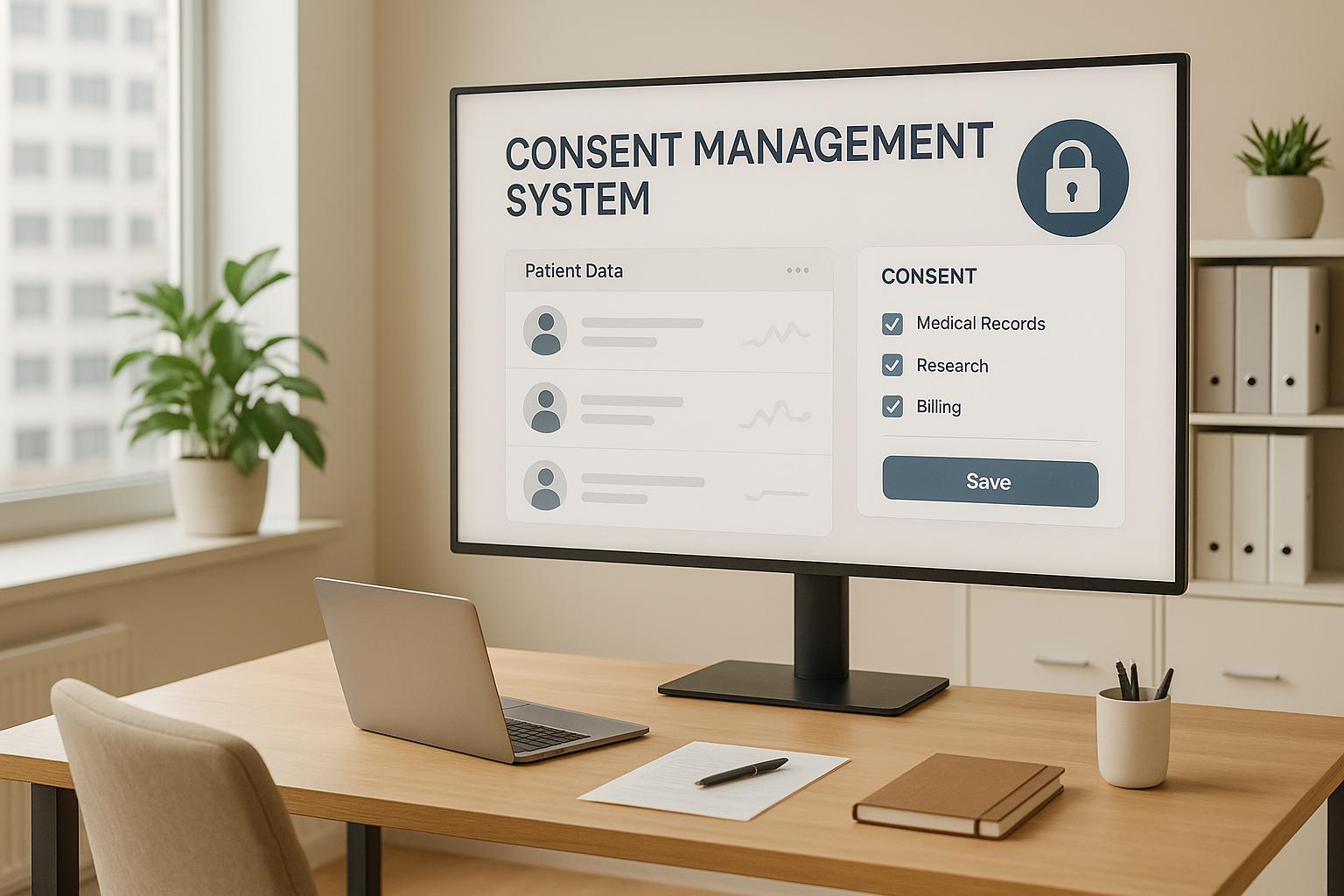
Consent management systems are essential for healthcare platforms to securely handle patient data while complying with regulations like HIPAA. These tools simplify consent collection, protect sensitive information, and ensure transparency, helping healthcare organizations avoid costly data breaches and fines. Here's a quick look at the top systems:
Updox: Trusted by 470,000+ users, offers secure communication, encrypted forms, and real-time tracking.
CareCloud: Integrates with EHRs and telehealth, featuring multilingual forms and compliance tools.
Jotform: Easy-to-use drag-and-drop builder for HIPAA-compliant forms with e-signatures.
Curogram: Mobile-first with secure texting and automated reminders.
Accountable: Focuses on compliance automation and risk management.
MedForward: Customizable online forms with secure storage.
Usercentrics: Supports HIPAA, GDPR, and CCPA compliance, with multi-language options.
OneTrust: Enterprise-level privacy management with extensive integration capabilities.
Concur – Consent Manager: Real-time tracking and audit-ready logs.
HyperTrust: API-based system for managing consent across wearables and EHRs.
Each platform offers distinct features, from real-time tracking to seamless EHR integrations, ensuring secure and compliant consent management for healthcare organizations.
Solve the Puzzle: Consent Management for FHIR®, WSO2 Webinar
How to Choose Health Consent Management Systems
Choosing the right consent management system for your health platform is essential for secure and compliant data sharing. With HIPAA violations carrying fines from $100 to $50,000 per violation - and annual maximums of up to $1.5 million for repeat offenses - ensuring compliance is non-negotiable[7]. Start by focusing on HIPAA compliance as the foundation of your decision.
A reliable system must securely handle, store, and transmit Protected Health Information (PHI) using strong encryption and strict access controls. It should also include a signed Business Associate Agreement (BAA), which guarantees adherence to HIPAA regulations and protects both your organization and patients from data breaches[2][3].
Integration capabilities are another crucial factor. Your consent management system should work seamlessly with existing technologies like Electronic Health Records (EHRs), telehealth platforms, CRMs, and billing systems. This ensures that patient consent statuses are always up-to-date and accessible across the care continuum, reducing administrative burdens and minimizing errors[2][5].
For platforms that handle real-time data from wearables or biometrics, secure remote consent collection is a must. Features like electronic signatures and mobile-friendly interfaces allow patients to provide informed consent from anywhere, a necessity as virtual care becomes more widespread[2][3].
Ease of use is equally important. Systems with intuitive interfaces improve patient satisfaction and streamline workflows for staff, cutting down on training time and reducing the likelihood of errors. A user-friendly design is a win for both patients and healthcare teams[1][2].
Another key feature to look for is detailed audit trails. The system should log all consent-related activities - such as access, modifications, or revocations - with time-stamped records. These logs are invaluable for regulatory compliance and can provide clear documentation during audits or legal reviews[3][5].
As your organization grows, scalability becomes critical. Your system should handle increased patient volumes, new services, or additional locations without requiring a costly overhaul. Platforms like Updox highlight the importance of choosing solutions that can grow with your needs[2].
Customization also plays a role. Look for systems that allow you to tailor forms and banners to meet specific regulatory requirements or reflect your branding. Mobile support and cross-platform compatibility are essential, as patients and providers often use a variety of devices throughout their healthcare journey[5][6].
API-first consent management platforms are gaining traction for their flexibility. These systems make it easier to integrate with evolving technology stacks and adapt to regulatory changes. They’re designed to support dynamic healthcare environments and future-proof your operations[3][6].
Finally, don’t skip the practical tests. Request demos and pilot programs to identify usability issues that might not surface during sales presentations. Reviewing case studies from similar organizations can also give you valuable insights into how the system performs in real-world scenarios[1][2].
1. Updox
Updox is a well-regarded consent management platform, trusted by more than 470,000 users in healthcare settings across the U.S.[2]. It combines tools for electronic consent collection with secure communication features, making it an effective solution for practices managing both in-person and virtual care. It’s designed to align with modern HIPAA standards and patient privacy requirements.
HIPAA Compliance and Data Security
Security is a cornerstone of Updox's consent workflow. The platform employs encrypted document transmission and storage to safeguard patient consent forms and related communications[2]. Even its video chat feature is encrypted, ensuring HIPAA compliance during telehealth visits where consent discussions might take place[2]. Secure messaging further ensures all consent-related communications remain compliant with U.S. privacy laws.
This robust approach to security also supports smooth integration with other systems.
Integration with Health Systems
Although Updox doesn’t specify direct integrations with wearables or health apps, its customizable patient portal - offering 24/7 access to records - demonstrates strong interoperability with EHR systems[2]. This allows for the efficient data flow necessary in today’s healthcare environments. For organizations managing real-time biometric or wearable data, it’s worth exploring Updox’s API capabilities and confirming specific EHR integrations.
Beyond integration, the platform enhances the consent process through intuitive digital workflows.
Streamlined Consent Workflows
Updox simplifies consent management with customizable, HIPAA-compliant electronic forms that patients can complete and sign digitally[2]. This eliminates the need for paper-based processes, speeding up patient onboarding. Providers can also use the secure messaging system to send consent forms, reminders, and follow-ups directly to patients, ensuring a smoother workflow.
Real-Time Tracking and Audit Trails
The platform offers document transmission and receipt tracking, creating detailed audit trails for every consent-related activity[2]. These tracking tools allow healthcare providers to monitor consent statuses in real time, ensuring compliance with HIPAA and other regulations. With reporting tools and a customizable patient portal, providers gain clear oversight of consent workflows across their patient base. These capabilities highlight the platform’s reliability in handling consent data securely and efficiently across various healthcare systems.
2. CareCloud
CareCloud stands out as another strong option for managing consent in digital healthcare. It combines consent management with electronic health records (EHRs), telehealth tools, and patient experience features. By simplifying workflows and meeting strict compliance standards, CareCloud is particularly suited for multi-specialty practices and large health organizations across the U.S.
HIPAA Compliance and Data Security
CareCloud prioritizes HIPAA compliance by employing teams well-versed in state and federal data protection laws. This allows healthcare providers to focus on patient care while relying on secure systems. Features like encryption, controlled access, and regular audits work together to protect sensitive patient information.
Integration Capabilities with Health Systems
The platform integrates smoothly with major EHR systems, creating unified patient records for better care coordination. Its open API design supports custom integrations, making it an excellent choice for handling complex data workflows. CareCloud also ensures interoperability with telehealth solutions and third-party health apps, simplifying consent collection across various digital platforms.
User-Friendly Consent Workflows
CareCloud offers digital consent forms that can be customized for different procedures and patient requirements. Multilingual templates are available to accommodate diverse patient groups, and forms can be completed electronically with legally binding e‑signatures. This reduces paperwork and speeds up the onboarding process. Patients can also easily revoke consent, with all updates tracked in real time to maintain transparency and compliance.
Consent Audit Trails and Real-Time Tracking
The platform keeps a detailed log of all consent activities, including timestamps, user actions, and status changes. Real-time tracking tools allow administrators to monitor consent collection and identify any missing forms before care is provided. Customizable dashboards provide a clear view of consent data across multiple locations, ensuring consistent compliance oversight.
3. Jotform
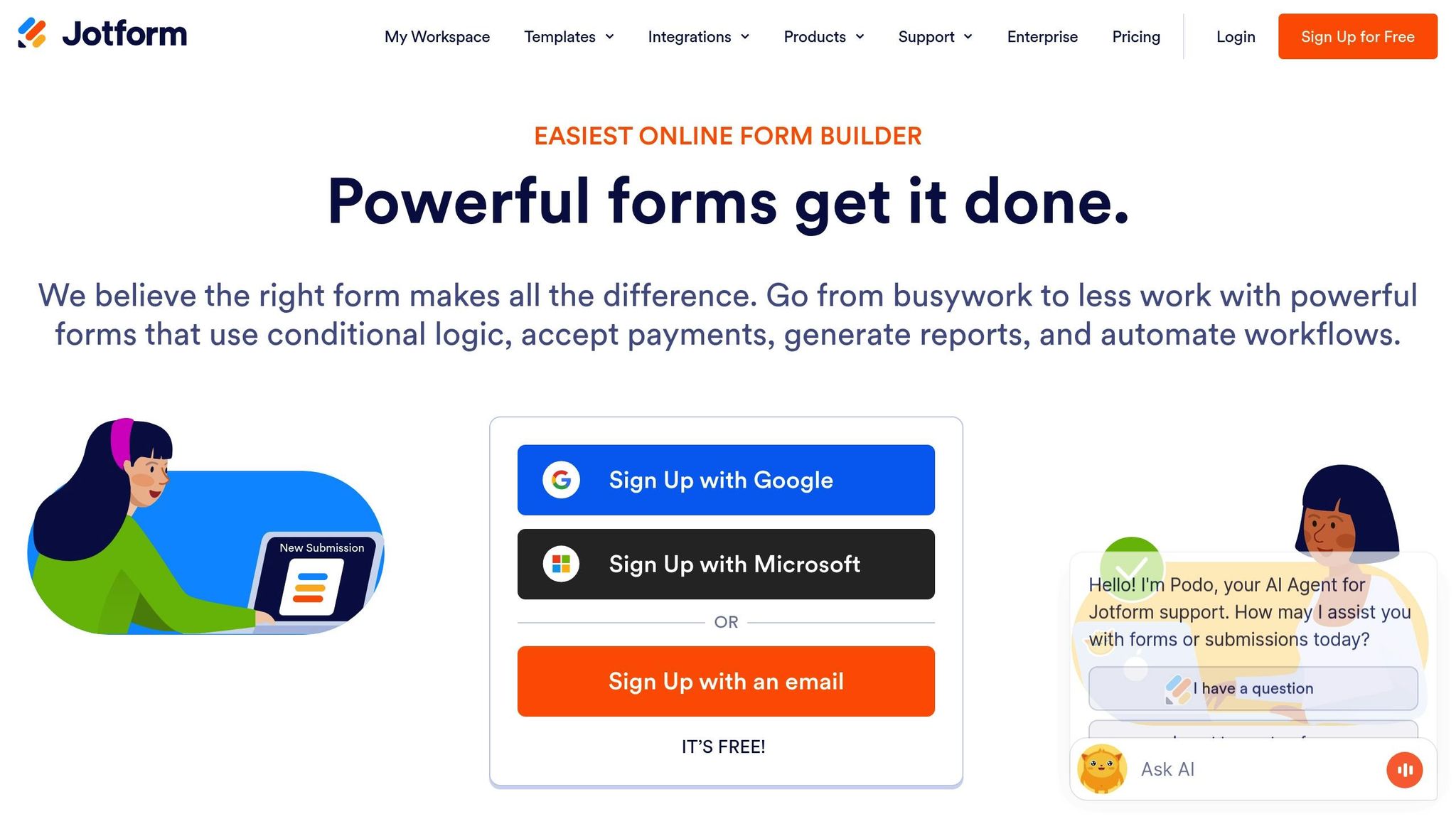
Jotform provides a simple and effective solution for managing healthcare consent, making it a great fit for practices of any size. With its HIPAA-compliant framework and an easy-to-use drag-and-drop interface, healthcare providers can create and manage consent forms without needing technical expertise. Its straightforward design makes the process of collecting digital consent smooth for both staff and patients, aligning well with the secure and efficient workflows found in top-tier consent management tools.
HIPAA Compliance and Data Security
Jotform takes patient data protection seriously, offering HIPAA-compliant forms that adhere to federal regulations. It uses advanced encryption technologies to protect sensitive patient information during both transmission and storage, ensuring data remains secure. This allows healthcare organizations to manage consent documents confidently while staying within legal data protection guidelines. For providers transitioning from paper-based systems to digital ones, this level of security addresses common concerns and lays a strong foundation for efficient and secure workflows.
Easy-to-Use Consent Workflows
Jotform's drag-and-drop form builder makes it easy to customize consent forms with fields for patient names, treatment details, potential risks, and consent options. The platform also integrates with Jotform Sign, enabling healthcare providers to collect legally binding signatures and maintain detailed audit trails with minimal effort.
Organized Records and Real-Time Tracking
Jotform goes beyond just form creation by ensuring that consent records are well-organized and easy to access. Providers are notified instantly when a form is submitted, and the data can be accessed in several ways - through Jotform Tables, secure cloud storage, or even as printed copies for traditional filing systems. This flexibility means Jotform can fit seamlessly into various workflows, whether fully digital or a mix of digital and paper-based systems. With features like audit trails and real-time tracking, healthcare organizations can ensure that consent records are always organized, accessible for audits, and ready to support patient care decisions. Jotform's approach highlights how a balance of security and simplicity can enhance the consent management experience.
4. Curogram
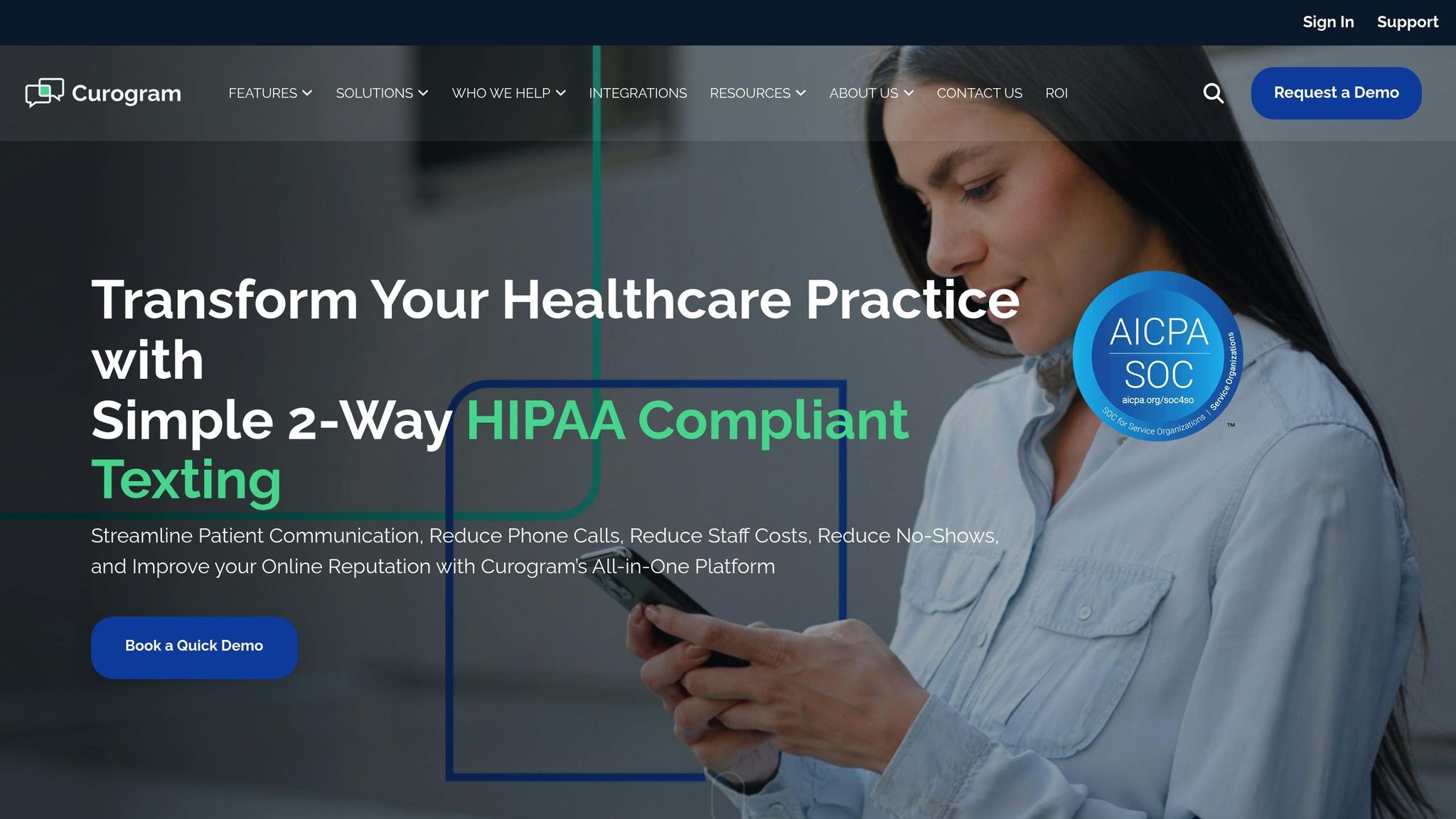
Curogram takes a communication-focused approach to simplify consent management for healthcare practices, particularly those handling large patient volumes. Unlike other platforms like Updox or CareCloud, Curogram emphasizes secure texting and mobile-friendly digital consent tools to reduce administrative tasks and improve patient interaction. Its mobile-first design ensures that busy practices can efficiently manage consent while engaging patients through automated and secure messaging systems.
By offering integrated consent collection, Curogram streamlines workflows, making it a practical choice for practices aiming to cut down on paperwork and no-shows. Automated reminders and digital intake forms encourage patients to complete their consent documentation ahead of appointments, helping to keep operations running smoothly.
HIPAA Compliance and Data Security
Curogram prioritizes data security and complies with HIPAA regulations by using encrypted communication channels for all patient interactions. Whether it’s two-way texting or digital consent forms, patient data is transmitted securely to protect sensitive information. This encryption not only ensures compliance with federal guidelines but also reduces the likelihood of data breaches during consent collection and storage.
Integration with Health Systems
Curogram seamlessly integrates with electronic health record (EHR) systems, automatically syncing patient consent and communication data into clinical workflows. Its API-enabled design supports integration with practice management tools, ensuring that consent forms become a permanent part of the patient’s medical record. While its primary focus is on EHR compatibility, the platform’s flexible architecture allows for custom integrations with other digital health tools if needed. This adaptability ensures that consent data is effortlessly incorporated into the broader clinical ecosystem.
Streamlined Consent Workflows
The platform makes it easy for patients to complete consent forms using their smartphones or other personal devices. These digital forms support legally binding electronic signatures, offering both convenience and compliance. Patients receive secure text links to access and complete the forms, and the system allows them to update or revoke their consent as needed. Every change is tracked, maintaining a complete audit trail for transparency.
Real-Time Tracking and Audit Trails
Curogram provides detailed audit trails by recording exact timestamps for all consent-related actions, such as when consent is granted, updated, or revoked. Real-time tracking features let administrators monitor the consent status of patients, ensuring that data access and sharing remain authorized and compliant.
Practices using Curogram report significant improvements, including a reduction in patient no-shows by up to 75% thanks to its automated workflows and reminders[2]. This not only enhances patient care but also boosts practice revenue, all while keeping consent documentation accurate and up to date.
5. Accountable
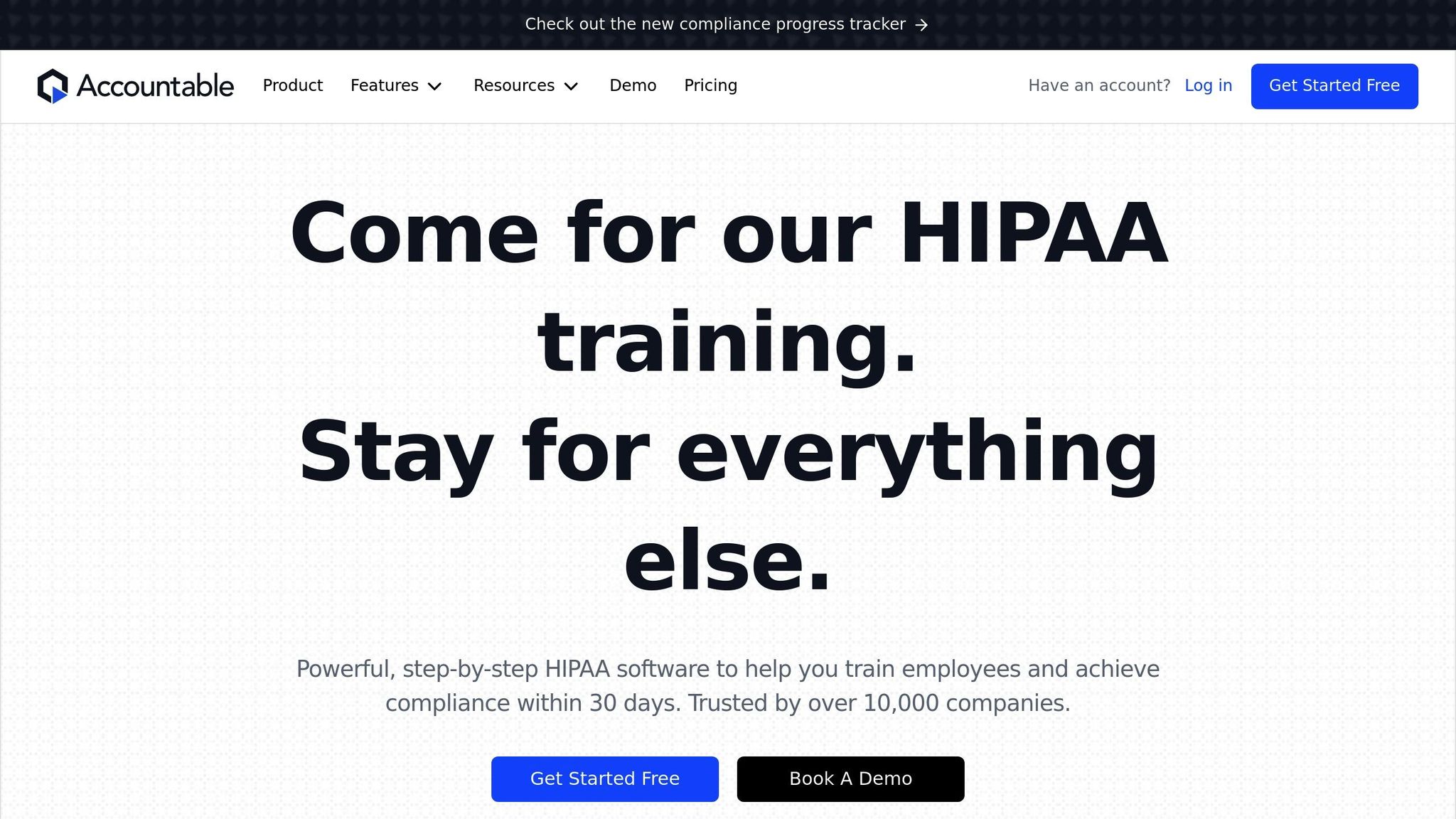
Accountable is a consent management platform tailored for healthcare organizations that require strict compliance while aiming to simplify administrative workflows. By combining robust security features with intuitive processes, it enables both patients and staff to handle consent documentation with ease. Many healthcare providers have noted reduced administrative burdens and quicker consent processing times[2]. Here’s a closer look at how Accountable addresses compliance, integration, user experience, and tracking requirements.
HIPAA Compliance and Data Security
Accountable prioritizes data security with measures like encryption for both data at rest and in transit. It also includes multi-factor authentication, role-based access controls, and regular vulnerability assessments. These features ensure healthcare organizations stay aligned with HIPAA regulations and are prepared for audits whenever needed[2][3].
Integration with Health Systems
The platform integrates smoothly with major EHR systems using secure APIs and data exchange protocols, making it easy to automatically incorporate consent records into patient files. Built with interoperability in mind, Accountable also enables data synchronization across various digital health tools, focusing primarily on compatibility with leading EHR systems[2][3].
Streamlined Consent Workflows
Accountable provides customizable digital consent forms that patients can access, review, and electronically sign from any device. It supports legally binding e-signatures and handles special consent scenarios, such as those requiring parental or guardian signatures for minors. Every action related to these consents is tracked to meet regulatory standards[2].
Real-Time Tracking and Audit Trails
The platform maintains detailed logs of all consent activities, including timestamps and user details. These logs are formatted according to U.S. standards (MM/DD/YYYY, 12-hour clock) and can be exported for compliance reporting. Additionally, real-time dashboards give administrators instant insight into consent statuses, ensuring transparency and readiness for regulatory inspections[2][3].
6. MedForward
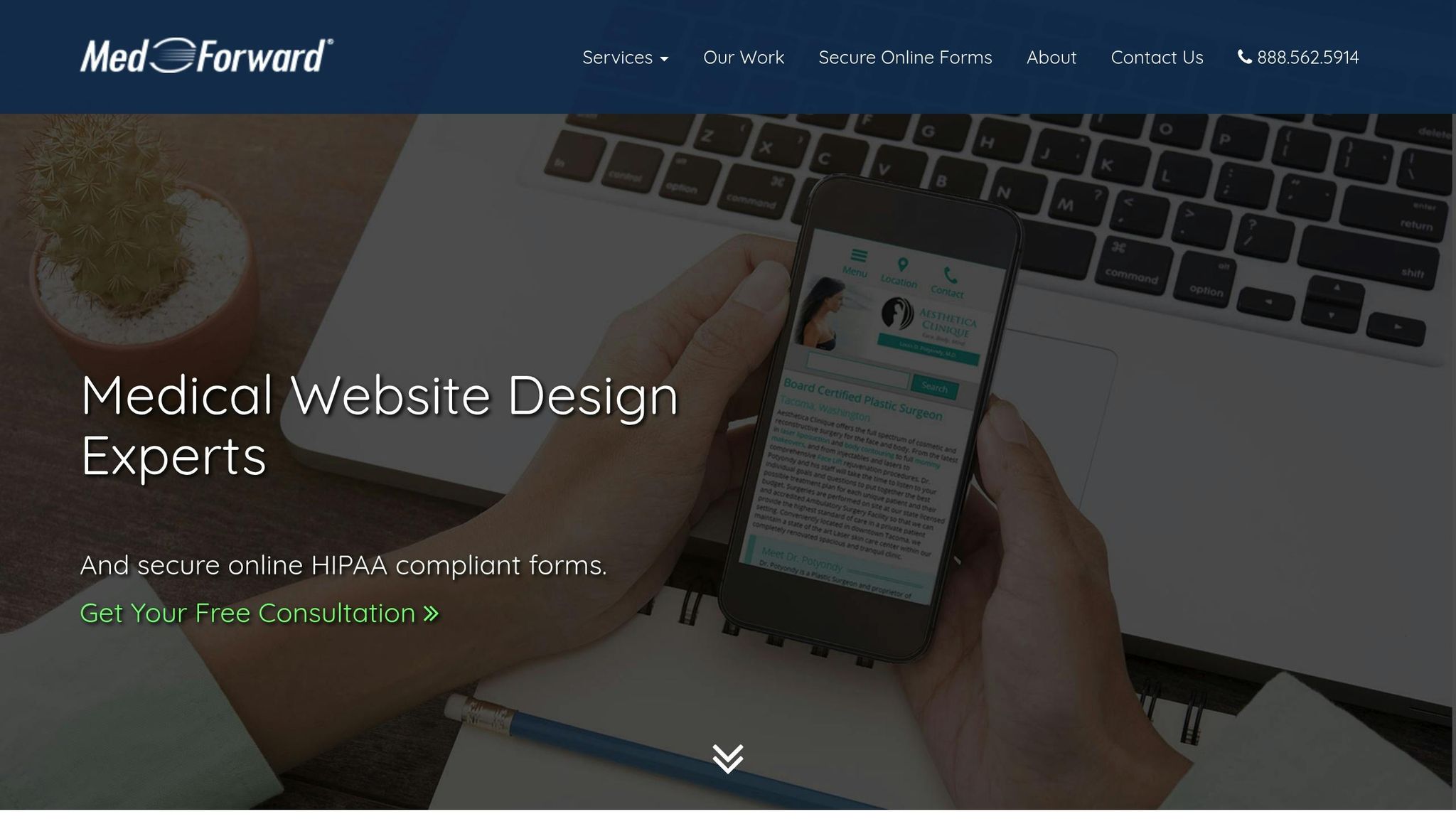
MedForward is a secure online forms platform designed to handle patient intake and consent while adhering to HIPAA regulations. Known for its reliability and strong presence in the electronic consent software market, it’s a popular choice among healthcare providers aiming to streamline processes and bolster data security in patient management[1][2]. Let’s delve into the features that make it stand out.
HIPAA Compliance and Data Security
MedForward takes patient data protection seriously. It offers encrypted, HIPAA-compliant online forms to safeguard sensitive patient information and ensure adherence to federal ePHI standards[2]. Additionally, the platform provides business associate agreements (BAAs), reinforcing its dedication to compliance and data protection. These robust security measures not only protect patient data but also create a more seamless experience for managing patient consent.
Simplified Consent Workflows
MedForward shines in making patient intake more efficient with its customizable forms. These forms can be tailored to meet the specific requirements of various procedures and regulations[1]. The platform supports electronic signatures, enabling a fully paperless process. Patients can quickly complete and submit forms using its intuitive interface, and they retain the ability to revoke consent if needed, ensuring compliance with privacy laws[2]. While providers report reduced administrative workloads, some staff may need time to adjust to the platform[1].
Audit Trails and Real-Time Consent Tracking
To ensure accountability, MedForward offers detailed audit trails for all consent-related activities. These logs include timestamps for when consents are given, modified, or revoked, formatted in the standard U.S. MM/DD/YYYY format[2]. This real-time tracking feature helps healthcare providers monitor consent statuses, ensuring compliance and simplifying regulatory audits. By combining secure workflows with comprehensive logging, MedForward supports transparency and helps organizations meet regulatory requirements with confidence[2].
7. Usercentrics
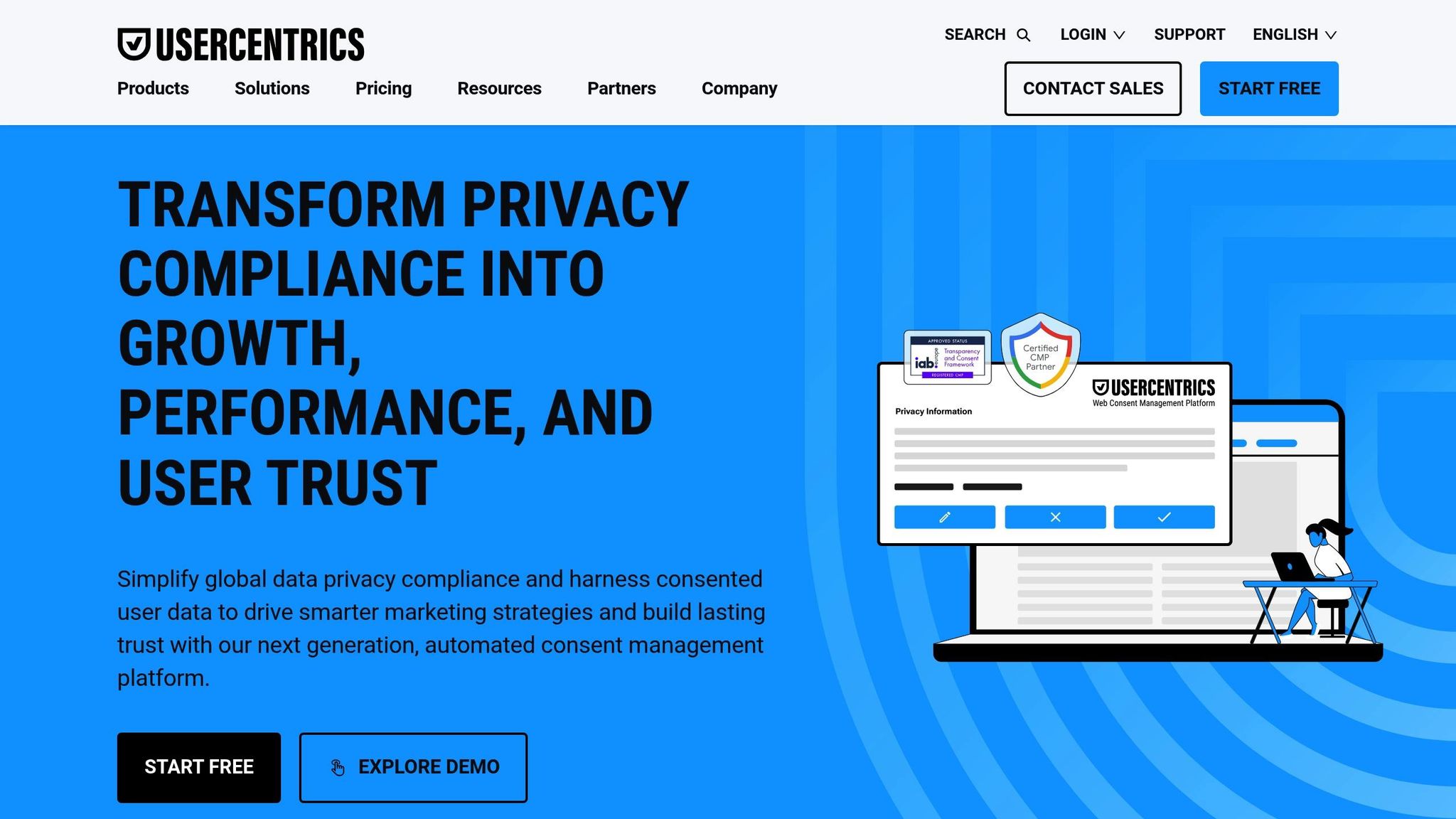
Usercentrics, a platform trusted by over 900,000 websites [8], stands out for its ability to handle complex regulatory requirements while maintaining workflows that are straightforward for both patients and healthcare staff. From meeting HIPAA standards to integrating seamlessly with health systems, it offers a robust solution for healthcare providers.
HIPAA Compliance and Data Security
Usercentrics prioritizes HIPAA compliance with advanced encryption methods and customizable consent workflows [8][3]. Its platform is specifically designed to align with U.S. healthcare regulations, offering Business Associate Agreements (BAAs) and adaptable consent configurations [8][3]. What sets it apart is its multi-language support and the ability to accommodate diverse patient populations - an essential feature for providers serving multicultural communities in the U.S. [8]. Privacy and compliance experts often recommend Usercentrics for its focus on regulatory adherence and HIPAA-specific features [3].
Integration Capabilities with Health Systems
Usercentrics goes beyond compliance by ensuring seamless integration with health systems. It connects consent data effortlessly to Electronic Health Records (EHRs), mobile health apps, and even wearable devices through APIs and SDKs [8]. This functionality allows healthcare providers to collect and synchronize patient consent data from multiple sources, ensuring a unified system. Whether you're running a small clinic or managing a large health network, Usercentrics scales to fit your needs [8]. Its API integrations also enable organizations to link consent management directly with existing patient engagement platforms, ensuring smooth data flow and compliance [8].
User-Friendly Consent Workflows
The platform also shines in its approach to consent workflows. Usercentrics offers digital consent forms that are easy to customize for various healthcare scenarios, complete with legally binding e-signatures [8]. Patients can grant, review, or revoke consent using intuitive interfaces available on both mobile and desktop devices [8]. These workflows are designed to reduce friction for both patients and providers, featuring templates that adapt to changing HIPAA and state privacy laws [8][6]. While users often praise the intuitive dashboard and responsive customer support, some note that the initial setup can be challenging for organizations with highly customized IT environments [8].
Consent Audit Trails and Real-Time Tracking
For transparency and compliance, Usercentrics maintains detailed audit logs for every consent action. These logs include timestamps (MM/DD/YYYY), user identifiers, and status changes [8][6]. Administrators can use real-time tracking dashboards to monitor consent activity, generate compliance reports, and address regulatory inquiries swiftly [8]. The platform even allows clinicians and administrators to access real-time consent statuses, reducing the risk of unauthorized data use [8]. In industry comparisons conducted in 2025, these reporting capabilities were highlighted as critical for maintaining healthcare compliance [6]. By offering comprehensive audit trails, Usercentrics helps healthcare organizations stay transparent and confidently meet regulatory demands.
8. OneTrust
OneTrust has made a name for itself as a leader in enterprise consent management, particularly for large healthcare organizations. It offers advanced tools tailored to meet the rigorous demands of HIPAA compliance and auditing, making it a go-to choice for organizations that prioritize robust privacy and security measures [3].
HIPAA Compliance and Data Security
To ensure compliance with HIPAA, OneTrust includes Business Associate Agreements (BAAs) and a comprehensive suite of security features. These include encryption, strict access controls, and secure data storage. Its customizable workflows allow healthcare providers to adapt consent processes to meet both federal and state privacy laws. This strong security foundation also enables smooth integration with other healthcare technologies [3].
Integration Capabilities with Health Systems
OneTrust stands out for its ability to integrate seamlessly with a wide range of health technology systems. Its APIs and developer tools ensure that any updates to consent - regardless of the channel used - are automatically synchronized across connected platforms like electronic health records (EHRs), wearable devices, and health apps. This ensures that patient data remains consistent and up-to-date across the entire ecosystem [3].
User-Friendly Consent Workflows
The platform gives healthcare organizations the flexibility to create customized consent forms for various needs. It supports electronic signatures and allows consent to be collected through multiple channels, including web portals, mobile SDKs, and in-person check-in systems. This flexibility makes it easy for patients to review, approve, or withdraw consent in a way that fits their preferences [3].
Consent Audit Trails and Real-Time Tracking
OneTrust offers detailed audit logs that document every consent action with accurate timestamps and user information. Its real-time tracking capabilities help organizations stay prepared for audits and respond quickly to compliance inquiries. However, while its extensive features are ideal for meeting stringent regulatory requirements, the platform's configuration process may be more complex for smaller healthcare teams [3].
9. Concur – Consent Manager
Concur – Consent Manager is a platform designed to simplify consent management while ensuring compliance and security. It offers real-time tracking, audit-ready logs, and a user-friendly interface to streamline the consent process.
HIPAA Compliance and Data Protection
To safeguard Protected Health Information (PHI), Concur – Consent Manager employs end-to-end encryption, secure storage, and strict access controls. The platform also undergoes regular security updates to meet HIPAA standards, ensuring sensitive data stays protected.
Simplified Consent Workflows
With customizable digital forms and legally binding e-signatures, this platform makes it easy for patients to provide or withdraw consent. Whether on a desktop or mobile device, the process is straightforward and accessible.
Detailed Audit Trails and Real-Time Insights
Concur – Consent Manager keeps a detailed record of all consent-related activities, complete with timestamps and user actions. Additionally, its real-time dashboards provide instant updates on consent statuses and compliance metrics, making regulatory reviews more efficient.
10. HyperTrust
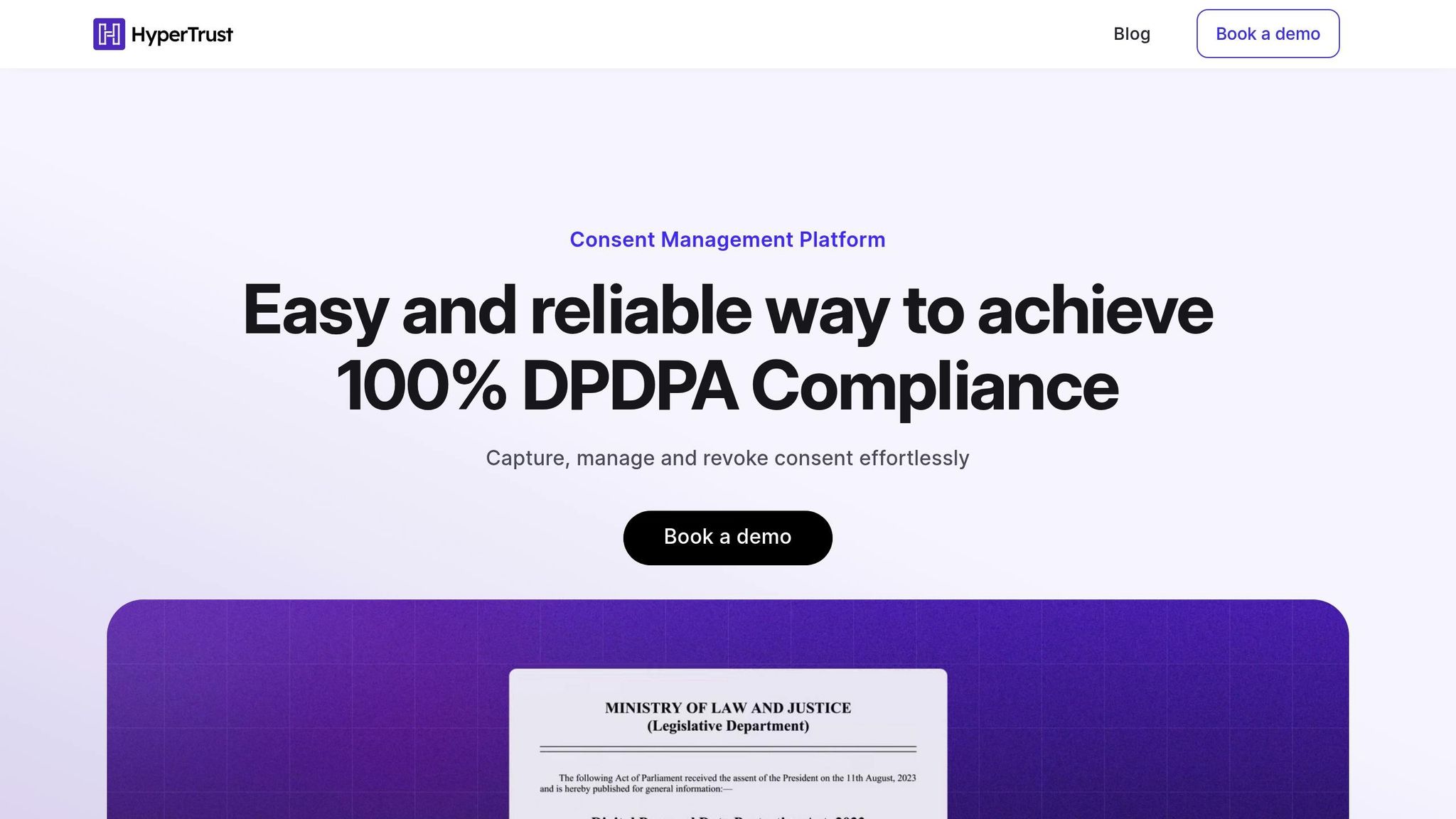
HyperTrust is a consent management platform tailored for healthcare and life sciences organizations. It’s designed to navigate the complexities of managing consent across multi-site healthcare environments while adhering to strict U.S. healthcare regulations.
HIPAA Compliance and Data Security
HyperTrust places a strong emphasis on security, employing end-to-end encryption, secure data storage, and role-based access controls. These measures ensure that patient consent information is protected and align with the technical safeguards outlined by HIPAA.
The platform also facilitates Business Associate Agreements (BAAs), adding another layer of regulatory compliance. Regular security updates and stringent access controls further ensure that Protected Health Information (PHI) remains secure throughout the consent management process.
Seamless Integration with Health Systems
Integration is a major strength of HyperTrust. Through its API-based framework, the platform connects effortlessly with leading EHR systems like Epic and Cerner. It also synchronizes with wearable devices such as Fitbit and Apple Watch, creating a unified approach to data governance.
This integration allows HyperTrust to manage consent for data streams from wearables and mobile health apps. Patients can specify which data - like heart rate, sleep patterns, or activity levels - they wish to share, ensuring a personalized and controlled experience across all systems.
Simplified Consent Workflows
HyperTrust offers customizable digital consent forms that work across smartphones, tablets, and desktops. These forms support legally binding e-signatures, making it easy for patients to grant, deny, or revoke consent whenever they choose.
The platform streamlines the consent revocation process, allowing patients to update their preferences instantly. These changes are automatically reflected across all integrated systems in real-time, eliminating the delays and confusion often associated with traditional paper-based methods. This not only enhances the user experience but also strengthens data security.
Detailed Audit Trails and Real-Time Tracking
Every consent action - whether granted, updated, or revoked - is automatically logged with precise timestamps and user identifiers. These audit trails are accessible to authorized administrators for compliance reporting and can be exported in various formats for regulatory audits.
Real-time dashboards provide an up-to-date view of each patient’s consent status. Administrators can generate detailed reports on consent trends and compliance metrics, filtered by location or department. The platform’s analytics tools also include visualizations of consent rates, revocation patterns, and system integration health, helping healthcare administrators make informed decisions to maintain compliance and enhance operational efficiency.
Moving Consent Data Between Platforms
As healthcare platforms grow and evolve, the ability to transfer patient consent data smoothly between systems becomes essential. This process is not just about convenience - it’s about maintaining trust and adhering to strict regulatory standards. A well-executed data migration process ensures that consent management systems keep up with the rapid pace of healthcare technology advancements.
In the U.S., HIPAA compliance adds another layer of complexity to this process. Every data transfer must safeguard encryption, maintain audit trails, and ensure access is strictly limited to authorized personnel. Failure to meet these standards can lead to hefty legal penalties and erode patient confidence[3].
Standard Export and Import Methods
Most consent management systems rely on common data formats like CSV, XML, or JSON for exporting and importing records. These formats are typically bundled into encrypted file packages to protect data integrity during transfers.
API integrations offer a more streamlined approach. By automatically syncing consent records, APIs reduce the need for manual input and minimize errors. They also make it possible to instantly update multiple systems when patients change their consent preferences[4].
For added security, secure file transfer protocols ensure data remains encrypted during migration, meeting HIPAA’s stringent safeguards.
Platforms with Advanced Migration Features
Some consent management systems stand out for their ability to handle data migration securely and efficiently:
HyperTrust: Known for its identity-verified consent tracking and encrypted storage, HyperTrust ensures that every consent action is traceable even after migration. Its comprehensive audit support makes it a reliable choice for compliance-focused organizations[4].
Concur – Consent Manager: This platform excels in integration capabilities and real-time tracking. It enables seamless data movement while maintaining audit-ready logs to meet regulatory requirements[4].
Jotform and MedForward: Both platforms offer HIPAA-compliant export options tailored for healthcare. Their structured data formats integrate smoothly with electronic health record (EHR) systems, simplifying the transition process[2].
Common Migration Challenges
Migrating consent data comes with its share of hurdles:
Data Structure Differences: Variations in how platforms organize data can lead to loss or corruption if not carefully mapped.
Regulatory Risks: Ensuring HIPAA compliance throughout the migration process is critical. Any security lapse can expose organizations to legal and financial consequences[4].
Audit Trail Preservation: A major challenge is maintaining historical consent records. Without proper logging, compliance gaps can emerge, making it harder to demonstrate adherence during audits. Platforms with robust logging features help mitigate this risk[4].
Best Practices for Secure Migration
To address these challenges, organizations should adopt a few key practices:
Use encrypted transfers with secure authentication to protect patient data during transit.
Perform data integrity checks after migration to ensure all consent records are intact.
Test the migration process in sandbox environments to identify and resolve issues before involving live data.
Keep patients informed about system changes to maintain transparency and trust throughout the transition[4].
Emerging Migration Technologies
New technologies are reshaping how consent data is securely transferred between platforms:
Blockchain: This technology is gaining traction for creating tamper-proof consent records. Blockchain’s immutable nature allows secure sharing of consent data while providing an audit trail that can’t be altered[3].
AI-Driven Mapping Tools: These tools simplify the complex task of matching consent fields across different systems. By automating this process, they reduce manual effort and improve accuracy, particularly in large-scale migrations.
FHIR Standards: The adoption of Fast Healthcare Interoperability Resources (FHIR) is making it easier to exchange structured, secure data between disparate health systems. This standard not only reduces barriers but also enhances patient control over their consent information across multiple providers[3].
Feature Comparison Chart
Here’s a quick overview of how different systems stack up in terms of compliance, integration, data portability, and standout features. This table highlights the core functionalities of each platform, making it easier to evaluate their strengths.
Platform | Compliance | Integration Options | Data Portability | Key Advantages |
|---|---|---|---|---|
Updox | HIPAA-based, BAA | Patient portal, EHR, API | Exportable forms, audit trails | Secure communication, customizable portal, 470K+ users |
CareCloud | HIPAA-based, BAA | EHR, telehealth, dashboard | Data export, reporting tools | Workflow automation, analytics, compliance team |
Jotform | HIPAA-based, e-signatures | API, cloud storage integrations | Form export | Drag-and-drop builder, encrypted forms, e-signatures |
Curogram | HIPAA-based | SMS, telehealth, API | Real-time consent updates | Two-way texting, automated reminders |
Accountable | HIPAA-based, BAA | API, compliance automation tools | Comprehensive audit logs | Compliance automation, risk management focus |
MedForward | HIPAA-based | Web forms, API integration | Exportable patient data | Custom online forms, secure storage, website integration |
Usercentrics | GDPR, CCPA, HIPAA-based | API, SDK, web/mobile support | Consent logs, data export | Multi-jurisdictional compliance, UI customization |
OneTrust | HIPAA-based, GDPR, CCPA | API, SDK, enterprise tools | Audit trails, full portability | Privacy management, automated workflows |
Concur – Consent Manager | DPDPA, HIPAA-based | API, EHR, mobile platforms | Real-time tracking, exportable logs | Real-time consent monitoring, audit-ready documentation |
HyperTrust | HIPAA-based, DPDPA | API, identity verification systems | Encrypted storage, audit logs | Identity-verified consent, tamper-proof records |
This chart builds on earlier discussions around compliance and data portability, offering a detailed snapshot of each system’s capabilities.
All platforms meet HIPAA standards, ensuring they’re suitable for U.S. healthcare organizations. However, some, like OneTrust and Usercentrics, go further by supporting GDPR and CCPA compliance, making them ideal for businesses that operate in multiple regulatory environments[8][9].
Integration options also set these systems apart. Platforms like CareCloud and Updox provide robust EHR/EMR connections, streamlining data exchange within clinical workflows. Meanwhile, Jotform offers flexible API and cloud storage integrations, making it adaptable to various tech stacks.
Data portability is another growing priority, as patients increasingly expect control over their information. HyperTrust excels here with identity-verified consent tracking and encrypted storage, ensuring secure and traceable records. Similarly, Concur – Consent Manager supports real-time consent tracking and exportable audit logs, helping organizations meet compliance requirements while empowering patient rights.
For those focusing on mobile and remote healthcare, platforms like Curogram and HyperTrust shine with telehealth-friendly features and remote consent collection. These tools are invaluable as more healthcare providers shift toward digital solutions and patient self-service options.
Ultimately, each system offers a unique mix of compliance, integration, and patient engagement features. For organizations with complex regulatory requirements, comprehensive platforms like OneTrust are a strong choice. On the other hand, smaller practices might find more focused solutions like Updox or CareCloud better suited to their needs.
Conclusion
Choosing the right consent management system is a key step in ensuring secure, compliant, and user-friendly sharing of health data. The platforms we’ve explored here highlight how well-designed consent workflows can safeguard patient privacy while allowing healthcare providers to deliver tailored care effectively.
Take Healify as an example. This AI-powered health coaching app uses advanced privacy measures to handle sensitive data from wearables, biometrics, and lifestyle inputs. By prioritizing transparency, Healify earns the trust of its users, enabling them to share the detailed health data that AI systems rely on to provide personalized recommendations.
The challenges are real - over 60% of healthcare organizations report difficulties with data privacy and consent management when implementing digital health solutions [3]. Yet, platforms like Updox, which supports over 470,000 users with HIPAA-compliant tools, show how these hurdles can be overcome [2]. When users have clarity about how their data is used and retain control over their consent, they’re more likely to engage with digital health tools. This, in turn, ensures that AI-powered platforms can ethically and legally access the data they need to deliver personalized care.
Whether you’re part of a small clinic or a large healthcare system, the right consent management platform can simplify workflows, cut down on administrative tasks, and - most importantly - build the trust that underpins successful digital health initiatives. For AI-driven platforms managing complex health data, trust and compliance aren’t just added benefits - they’re the foundation for meeting modern patients’ expectations for personalized care.
FAQs
What should healthcare organizations look for in a consent management system to ensure HIPAA compliance?
When choosing a consent management system, healthcare organizations need to focus on HIPAA compliance to ensure patient data remains secure. Key features to look for include strong data encryption, detailed audit trails, and secure storage to protect sensitive information effectively.
It's also important to select a platform that offers customizable consent forms, real-time updates, and seamless integration with existing health systems. These capabilities not only help maintain compliance with legal and regulatory requirements but also improve workflow efficiency. Lastly, a system with an intuitive, user-friendly interface is crucial for simplifying tasks for healthcare providers and making the process easier for patients.
How do consent management systems work with healthcare tools like EHRs and telehealth platforms?
Consent management systems work hand-in-hand with healthcare tools like Electronic Health Records (EHRs) and telehealth platforms to ensure patient data is handled securely and remains compliant with privacy laws such as HIPAA. By leveraging APIs, these systems integrate with existing technologies, allowing for real-time updates and automated tracking of patient consent.
For instance, they can manage and store permissions for sharing medical records or participating in telehealth appointments. This ensures healthcare providers have access to the data they need while honoring patient choices, helping to enhance care delivery and maintain trust between patients and providers.
What are the advantages of using API-based consent management systems for processing real-time data from wearables and biometrics?
API-based consent management systems bring a host of benefits when it comes to managing real-time data from wearables and biometric devices. These systems integrate smoothly with health platforms, ensuring data is handled securely and aligns with privacy regulations - crucial for safeguarding sensitive health information.
With the use of APIs, these systems deliver real-time updates, ensuring that users' consent preferences are consistently upheld. They also support scalability, making it easier for health platforms to grow and handle increasing data volumes. On top of that, API-based solutions streamline data sharing across devices and services, paving the way for a more personalized and efficient user experience.
Related Blog Posts
Consent management systems are essential for healthcare platforms to securely handle patient data while complying with regulations like HIPAA. These tools simplify consent collection, protect sensitive information, and ensure transparency, helping healthcare organizations avoid costly data breaches and fines. Here's a quick look at the top systems:
Updox: Trusted by 470,000+ users, offers secure communication, encrypted forms, and real-time tracking.
CareCloud: Integrates with EHRs and telehealth, featuring multilingual forms and compliance tools.
Jotform: Easy-to-use drag-and-drop builder for HIPAA-compliant forms with e-signatures.
Curogram: Mobile-first with secure texting and automated reminders.
Accountable: Focuses on compliance automation and risk management.
MedForward: Customizable online forms with secure storage.
Usercentrics: Supports HIPAA, GDPR, and CCPA compliance, with multi-language options.
OneTrust: Enterprise-level privacy management with extensive integration capabilities.
Concur – Consent Manager: Real-time tracking and audit-ready logs.
HyperTrust: API-based system for managing consent across wearables and EHRs.
Each platform offers distinct features, from real-time tracking to seamless EHR integrations, ensuring secure and compliant consent management for healthcare organizations.
Solve the Puzzle: Consent Management for FHIR®, WSO2 Webinar
How to Choose Health Consent Management Systems
Choosing the right consent management system for your health platform is essential for secure and compliant data sharing. With HIPAA violations carrying fines from $100 to $50,000 per violation - and annual maximums of up to $1.5 million for repeat offenses - ensuring compliance is non-negotiable[7]. Start by focusing on HIPAA compliance as the foundation of your decision.
A reliable system must securely handle, store, and transmit Protected Health Information (PHI) using strong encryption and strict access controls. It should also include a signed Business Associate Agreement (BAA), which guarantees adherence to HIPAA regulations and protects both your organization and patients from data breaches[2][3].
Integration capabilities are another crucial factor. Your consent management system should work seamlessly with existing technologies like Electronic Health Records (EHRs), telehealth platforms, CRMs, and billing systems. This ensures that patient consent statuses are always up-to-date and accessible across the care continuum, reducing administrative burdens and minimizing errors[2][5].
For platforms that handle real-time data from wearables or biometrics, secure remote consent collection is a must. Features like electronic signatures and mobile-friendly interfaces allow patients to provide informed consent from anywhere, a necessity as virtual care becomes more widespread[2][3].
Ease of use is equally important. Systems with intuitive interfaces improve patient satisfaction and streamline workflows for staff, cutting down on training time and reducing the likelihood of errors. A user-friendly design is a win for both patients and healthcare teams[1][2].
Another key feature to look for is detailed audit trails. The system should log all consent-related activities - such as access, modifications, or revocations - with time-stamped records. These logs are invaluable for regulatory compliance and can provide clear documentation during audits or legal reviews[3][5].
As your organization grows, scalability becomes critical. Your system should handle increased patient volumes, new services, or additional locations without requiring a costly overhaul. Platforms like Updox highlight the importance of choosing solutions that can grow with your needs[2].
Customization also plays a role. Look for systems that allow you to tailor forms and banners to meet specific regulatory requirements or reflect your branding. Mobile support and cross-platform compatibility are essential, as patients and providers often use a variety of devices throughout their healthcare journey[5][6].
API-first consent management platforms are gaining traction for their flexibility. These systems make it easier to integrate with evolving technology stacks and adapt to regulatory changes. They’re designed to support dynamic healthcare environments and future-proof your operations[3][6].
Finally, don’t skip the practical tests. Request demos and pilot programs to identify usability issues that might not surface during sales presentations. Reviewing case studies from similar organizations can also give you valuable insights into how the system performs in real-world scenarios[1][2].
1. Updox
Updox is a well-regarded consent management platform, trusted by more than 470,000 users in healthcare settings across the U.S.[2]. It combines tools for electronic consent collection with secure communication features, making it an effective solution for practices managing both in-person and virtual care. It’s designed to align with modern HIPAA standards and patient privacy requirements.
HIPAA Compliance and Data Security
Security is a cornerstone of Updox's consent workflow. The platform employs encrypted document transmission and storage to safeguard patient consent forms and related communications[2]. Even its video chat feature is encrypted, ensuring HIPAA compliance during telehealth visits where consent discussions might take place[2]. Secure messaging further ensures all consent-related communications remain compliant with U.S. privacy laws.
This robust approach to security also supports smooth integration with other systems.
Integration with Health Systems
Although Updox doesn’t specify direct integrations with wearables or health apps, its customizable patient portal - offering 24/7 access to records - demonstrates strong interoperability with EHR systems[2]. This allows for the efficient data flow necessary in today’s healthcare environments. For organizations managing real-time biometric or wearable data, it’s worth exploring Updox’s API capabilities and confirming specific EHR integrations.
Beyond integration, the platform enhances the consent process through intuitive digital workflows.
Streamlined Consent Workflows
Updox simplifies consent management with customizable, HIPAA-compliant electronic forms that patients can complete and sign digitally[2]. This eliminates the need for paper-based processes, speeding up patient onboarding. Providers can also use the secure messaging system to send consent forms, reminders, and follow-ups directly to patients, ensuring a smoother workflow.
Real-Time Tracking and Audit Trails
The platform offers document transmission and receipt tracking, creating detailed audit trails for every consent-related activity[2]. These tracking tools allow healthcare providers to monitor consent statuses in real time, ensuring compliance with HIPAA and other regulations. With reporting tools and a customizable patient portal, providers gain clear oversight of consent workflows across their patient base. These capabilities highlight the platform’s reliability in handling consent data securely and efficiently across various healthcare systems.
2. CareCloud
CareCloud stands out as another strong option for managing consent in digital healthcare. It combines consent management with electronic health records (EHRs), telehealth tools, and patient experience features. By simplifying workflows and meeting strict compliance standards, CareCloud is particularly suited for multi-specialty practices and large health organizations across the U.S.
HIPAA Compliance and Data Security
CareCloud prioritizes HIPAA compliance by employing teams well-versed in state and federal data protection laws. This allows healthcare providers to focus on patient care while relying on secure systems. Features like encryption, controlled access, and regular audits work together to protect sensitive patient information.
Integration Capabilities with Health Systems
The platform integrates smoothly with major EHR systems, creating unified patient records for better care coordination. Its open API design supports custom integrations, making it an excellent choice for handling complex data workflows. CareCloud also ensures interoperability with telehealth solutions and third-party health apps, simplifying consent collection across various digital platforms.
User-Friendly Consent Workflows
CareCloud offers digital consent forms that can be customized for different procedures and patient requirements. Multilingual templates are available to accommodate diverse patient groups, and forms can be completed electronically with legally binding e‑signatures. This reduces paperwork and speeds up the onboarding process. Patients can also easily revoke consent, with all updates tracked in real time to maintain transparency and compliance.
Consent Audit Trails and Real-Time Tracking
The platform keeps a detailed log of all consent activities, including timestamps, user actions, and status changes. Real-time tracking tools allow administrators to monitor consent collection and identify any missing forms before care is provided. Customizable dashboards provide a clear view of consent data across multiple locations, ensuring consistent compliance oversight.
3. Jotform
Jotform provides a simple and effective solution for managing healthcare consent, making it a great fit for practices of any size. With its HIPAA-compliant framework and an easy-to-use drag-and-drop interface, healthcare providers can create and manage consent forms without needing technical expertise. Its straightforward design makes the process of collecting digital consent smooth for both staff and patients, aligning well with the secure and efficient workflows found in top-tier consent management tools.
HIPAA Compliance and Data Security
Jotform takes patient data protection seriously, offering HIPAA-compliant forms that adhere to federal regulations. It uses advanced encryption technologies to protect sensitive patient information during both transmission and storage, ensuring data remains secure. This allows healthcare organizations to manage consent documents confidently while staying within legal data protection guidelines. For providers transitioning from paper-based systems to digital ones, this level of security addresses common concerns and lays a strong foundation for efficient and secure workflows.
Easy-to-Use Consent Workflows
Jotform's drag-and-drop form builder makes it easy to customize consent forms with fields for patient names, treatment details, potential risks, and consent options. The platform also integrates with Jotform Sign, enabling healthcare providers to collect legally binding signatures and maintain detailed audit trails with minimal effort.
Organized Records and Real-Time Tracking
Jotform goes beyond just form creation by ensuring that consent records are well-organized and easy to access. Providers are notified instantly when a form is submitted, and the data can be accessed in several ways - through Jotform Tables, secure cloud storage, or even as printed copies for traditional filing systems. This flexibility means Jotform can fit seamlessly into various workflows, whether fully digital or a mix of digital and paper-based systems. With features like audit trails and real-time tracking, healthcare organizations can ensure that consent records are always organized, accessible for audits, and ready to support patient care decisions. Jotform's approach highlights how a balance of security and simplicity can enhance the consent management experience.
4. Curogram
Curogram takes a communication-focused approach to simplify consent management for healthcare practices, particularly those handling large patient volumes. Unlike other platforms like Updox or CareCloud, Curogram emphasizes secure texting and mobile-friendly digital consent tools to reduce administrative tasks and improve patient interaction. Its mobile-first design ensures that busy practices can efficiently manage consent while engaging patients through automated and secure messaging systems.
By offering integrated consent collection, Curogram streamlines workflows, making it a practical choice for practices aiming to cut down on paperwork and no-shows. Automated reminders and digital intake forms encourage patients to complete their consent documentation ahead of appointments, helping to keep operations running smoothly.
HIPAA Compliance and Data Security
Curogram prioritizes data security and complies with HIPAA regulations by using encrypted communication channels for all patient interactions. Whether it’s two-way texting or digital consent forms, patient data is transmitted securely to protect sensitive information. This encryption not only ensures compliance with federal guidelines but also reduces the likelihood of data breaches during consent collection and storage.
Integration with Health Systems
Curogram seamlessly integrates with electronic health record (EHR) systems, automatically syncing patient consent and communication data into clinical workflows. Its API-enabled design supports integration with practice management tools, ensuring that consent forms become a permanent part of the patient’s medical record. While its primary focus is on EHR compatibility, the platform’s flexible architecture allows for custom integrations with other digital health tools if needed. This adaptability ensures that consent data is effortlessly incorporated into the broader clinical ecosystem.
Streamlined Consent Workflows
The platform makes it easy for patients to complete consent forms using their smartphones or other personal devices. These digital forms support legally binding electronic signatures, offering both convenience and compliance. Patients receive secure text links to access and complete the forms, and the system allows them to update or revoke their consent as needed. Every change is tracked, maintaining a complete audit trail for transparency.
Real-Time Tracking and Audit Trails
Curogram provides detailed audit trails by recording exact timestamps for all consent-related actions, such as when consent is granted, updated, or revoked. Real-time tracking features let administrators monitor the consent status of patients, ensuring that data access and sharing remain authorized and compliant.
Practices using Curogram report significant improvements, including a reduction in patient no-shows by up to 75% thanks to its automated workflows and reminders[2]. This not only enhances patient care but also boosts practice revenue, all while keeping consent documentation accurate and up to date.
5. Accountable
Accountable is a consent management platform tailored for healthcare organizations that require strict compliance while aiming to simplify administrative workflows. By combining robust security features with intuitive processes, it enables both patients and staff to handle consent documentation with ease. Many healthcare providers have noted reduced administrative burdens and quicker consent processing times[2]. Here’s a closer look at how Accountable addresses compliance, integration, user experience, and tracking requirements.
HIPAA Compliance and Data Security
Accountable prioritizes data security with measures like encryption for both data at rest and in transit. It also includes multi-factor authentication, role-based access controls, and regular vulnerability assessments. These features ensure healthcare organizations stay aligned with HIPAA regulations and are prepared for audits whenever needed[2][3].
Integration with Health Systems
The platform integrates smoothly with major EHR systems using secure APIs and data exchange protocols, making it easy to automatically incorporate consent records into patient files. Built with interoperability in mind, Accountable also enables data synchronization across various digital health tools, focusing primarily on compatibility with leading EHR systems[2][3].
Streamlined Consent Workflows
Accountable provides customizable digital consent forms that patients can access, review, and electronically sign from any device. It supports legally binding e-signatures and handles special consent scenarios, such as those requiring parental or guardian signatures for minors. Every action related to these consents is tracked to meet regulatory standards[2].
Real-Time Tracking and Audit Trails
The platform maintains detailed logs of all consent activities, including timestamps and user details. These logs are formatted according to U.S. standards (MM/DD/YYYY, 12-hour clock) and can be exported for compliance reporting. Additionally, real-time dashboards give administrators instant insight into consent statuses, ensuring transparency and readiness for regulatory inspections[2][3].
6. MedForward
MedForward is a secure online forms platform designed to handle patient intake and consent while adhering to HIPAA regulations. Known for its reliability and strong presence in the electronic consent software market, it’s a popular choice among healthcare providers aiming to streamline processes and bolster data security in patient management[1][2]. Let’s delve into the features that make it stand out.
HIPAA Compliance and Data Security
MedForward takes patient data protection seriously. It offers encrypted, HIPAA-compliant online forms to safeguard sensitive patient information and ensure adherence to federal ePHI standards[2]. Additionally, the platform provides business associate agreements (BAAs), reinforcing its dedication to compliance and data protection. These robust security measures not only protect patient data but also create a more seamless experience for managing patient consent.
Simplified Consent Workflows
MedForward shines in making patient intake more efficient with its customizable forms. These forms can be tailored to meet the specific requirements of various procedures and regulations[1]. The platform supports electronic signatures, enabling a fully paperless process. Patients can quickly complete and submit forms using its intuitive interface, and they retain the ability to revoke consent if needed, ensuring compliance with privacy laws[2]. While providers report reduced administrative workloads, some staff may need time to adjust to the platform[1].
Audit Trails and Real-Time Consent Tracking
To ensure accountability, MedForward offers detailed audit trails for all consent-related activities. These logs include timestamps for when consents are given, modified, or revoked, formatted in the standard U.S. MM/DD/YYYY format[2]. This real-time tracking feature helps healthcare providers monitor consent statuses, ensuring compliance and simplifying regulatory audits. By combining secure workflows with comprehensive logging, MedForward supports transparency and helps organizations meet regulatory requirements with confidence[2].
7. Usercentrics
Usercentrics, a platform trusted by over 900,000 websites [8], stands out for its ability to handle complex regulatory requirements while maintaining workflows that are straightforward for both patients and healthcare staff. From meeting HIPAA standards to integrating seamlessly with health systems, it offers a robust solution for healthcare providers.
HIPAA Compliance and Data Security
Usercentrics prioritizes HIPAA compliance with advanced encryption methods and customizable consent workflows [8][3]. Its platform is specifically designed to align with U.S. healthcare regulations, offering Business Associate Agreements (BAAs) and adaptable consent configurations [8][3]. What sets it apart is its multi-language support and the ability to accommodate diverse patient populations - an essential feature for providers serving multicultural communities in the U.S. [8]. Privacy and compliance experts often recommend Usercentrics for its focus on regulatory adherence and HIPAA-specific features [3].
Integration Capabilities with Health Systems
Usercentrics goes beyond compliance by ensuring seamless integration with health systems. It connects consent data effortlessly to Electronic Health Records (EHRs), mobile health apps, and even wearable devices through APIs and SDKs [8]. This functionality allows healthcare providers to collect and synchronize patient consent data from multiple sources, ensuring a unified system. Whether you're running a small clinic or managing a large health network, Usercentrics scales to fit your needs [8]. Its API integrations also enable organizations to link consent management directly with existing patient engagement platforms, ensuring smooth data flow and compliance [8].
User-Friendly Consent Workflows
The platform also shines in its approach to consent workflows. Usercentrics offers digital consent forms that are easy to customize for various healthcare scenarios, complete with legally binding e-signatures [8]. Patients can grant, review, or revoke consent using intuitive interfaces available on both mobile and desktop devices [8]. These workflows are designed to reduce friction for both patients and providers, featuring templates that adapt to changing HIPAA and state privacy laws [8][6]. While users often praise the intuitive dashboard and responsive customer support, some note that the initial setup can be challenging for organizations with highly customized IT environments [8].
Consent Audit Trails and Real-Time Tracking
For transparency and compliance, Usercentrics maintains detailed audit logs for every consent action. These logs include timestamps (MM/DD/YYYY), user identifiers, and status changes [8][6]. Administrators can use real-time tracking dashboards to monitor consent activity, generate compliance reports, and address regulatory inquiries swiftly [8]. The platform even allows clinicians and administrators to access real-time consent statuses, reducing the risk of unauthorized data use [8]. In industry comparisons conducted in 2025, these reporting capabilities were highlighted as critical for maintaining healthcare compliance [6]. By offering comprehensive audit trails, Usercentrics helps healthcare organizations stay transparent and confidently meet regulatory demands.
8. OneTrust
OneTrust has made a name for itself as a leader in enterprise consent management, particularly for large healthcare organizations. It offers advanced tools tailored to meet the rigorous demands of HIPAA compliance and auditing, making it a go-to choice for organizations that prioritize robust privacy and security measures [3].
HIPAA Compliance and Data Security
To ensure compliance with HIPAA, OneTrust includes Business Associate Agreements (BAAs) and a comprehensive suite of security features. These include encryption, strict access controls, and secure data storage. Its customizable workflows allow healthcare providers to adapt consent processes to meet both federal and state privacy laws. This strong security foundation also enables smooth integration with other healthcare technologies [3].
Integration Capabilities with Health Systems
OneTrust stands out for its ability to integrate seamlessly with a wide range of health technology systems. Its APIs and developer tools ensure that any updates to consent - regardless of the channel used - are automatically synchronized across connected platforms like electronic health records (EHRs), wearable devices, and health apps. This ensures that patient data remains consistent and up-to-date across the entire ecosystem [3].
User-Friendly Consent Workflows
The platform gives healthcare organizations the flexibility to create customized consent forms for various needs. It supports electronic signatures and allows consent to be collected through multiple channels, including web portals, mobile SDKs, and in-person check-in systems. This flexibility makes it easy for patients to review, approve, or withdraw consent in a way that fits their preferences [3].
Consent Audit Trails and Real-Time Tracking
OneTrust offers detailed audit logs that document every consent action with accurate timestamps and user information. Its real-time tracking capabilities help organizations stay prepared for audits and respond quickly to compliance inquiries. However, while its extensive features are ideal for meeting stringent regulatory requirements, the platform's configuration process may be more complex for smaller healthcare teams [3].
9. Concur – Consent Manager
Concur – Consent Manager is a platform designed to simplify consent management while ensuring compliance and security. It offers real-time tracking, audit-ready logs, and a user-friendly interface to streamline the consent process.
HIPAA Compliance and Data Protection
To safeguard Protected Health Information (PHI), Concur – Consent Manager employs end-to-end encryption, secure storage, and strict access controls. The platform also undergoes regular security updates to meet HIPAA standards, ensuring sensitive data stays protected.
Simplified Consent Workflows
With customizable digital forms and legally binding e-signatures, this platform makes it easy for patients to provide or withdraw consent. Whether on a desktop or mobile device, the process is straightforward and accessible.
Detailed Audit Trails and Real-Time Insights
Concur – Consent Manager keeps a detailed record of all consent-related activities, complete with timestamps and user actions. Additionally, its real-time dashboards provide instant updates on consent statuses and compliance metrics, making regulatory reviews more efficient.
10. HyperTrust
HyperTrust is a consent management platform tailored for healthcare and life sciences organizations. It’s designed to navigate the complexities of managing consent across multi-site healthcare environments while adhering to strict U.S. healthcare regulations.
HIPAA Compliance and Data Security
HyperTrust places a strong emphasis on security, employing end-to-end encryption, secure data storage, and role-based access controls. These measures ensure that patient consent information is protected and align with the technical safeguards outlined by HIPAA.
The platform also facilitates Business Associate Agreements (BAAs), adding another layer of regulatory compliance. Regular security updates and stringent access controls further ensure that Protected Health Information (PHI) remains secure throughout the consent management process.
Seamless Integration with Health Systems
Integration is a major strength of HyperTrust. Through its API-based framework, the platform connects effortlessly with leading EHR systems like Epic and Cerner. It also synchronizes with wearable devices such as Fitbit and Apple Watch, creating a unified approach to data governance.
This integration allows HyperTrust to manage consent for data streams from wearables and mobile health apps. Patients can specify which data - like heart rate, sleep patterns, or activity levels - they wish to share, ensuring a personalized and controlled experience across all systems.
Simplified Consent Workflows
HyperTrust offers customizable digital consent forms that work across smartphones, tablets, and desktops. These forms support legally binding e-signatures, making it easy for patients to grant, deny, or revoke consent whenever they choose.
The platform streamlines the consent revocation process, allowing patients to update their preferences instantly. These changes are automatically reflected across all integrated systems in real-time, eliminating the delays and confusion often associated with traditional paper-based methods. This not only enhances the user experience but also strengthens data security.
Detailed Audit Trails and Real-Time Tracking
Every consent action - whether granted, updated, or revoked - is automatically logged with precise timestamps and user identifiers. These audit trails are accessible to authorized administrators for compliance reporting and can be exported in various formats for regulatory audits.
Real-time dashboards provide an up-to-date view of each patient’s consent status. Administrators can generate detailed reports on consent trends and compliance metrics, filtered by location or department. The platform’s analytics tools also include visualizations of consent rates, revocation patterns, and system integration health, helping healthcare administrators make informed decisions to maintain compliance and enhance operational efficiency.
Moving Consent Data Between Platforms
As healthcare platforms grow and evolve, the ability to transfer patient consent data smoothly between systems becomes essential. This process is not just about convenience - it’s about maintaining trust and adhering to strict regulatory standards. A well-executed data migration process ensures that consent management systems keep up with the rapid pace of healthcare technology advancements.
In the U.S., HIPAA compliance adds another layer of complexity to this process. Every data transfer must safeguard encryption, maintain audit trails, and ensure access is strictly limited to authorized personnel. Failure to meet these standards can lead to hefty legal penalties and erode patient confidence[3].
Standard Export and Import Methods
Most consent management systems rely on common data formats like CSV, XML, or JSON for exporting and importing records. These formats are typically bundled into encrypted file packages to protect data integrity during transfers.
API integrations offer a more streamlined approach. By automatically syncing consent records, APIs reduce the need for manual input and minimize errors. They also make it possible to instantly update multiple systems when patients change their consent preferences[4].
For added security, secure file transfer protocols ensure data remains encrypted during migration, meeting HIPAA’s stringent safeguards.
Platforms with Advanced Migration Features
Some consent management systems stand out for their ability to handle data migration securely and efficiently:
HyperTrust: Known for its identity-verified consent tracking and encrypted storage, HyperTrust ensures that every consent action is traceable even after migration. Its comprehensive audit support makes it a reliable choice for compliance-focused organizations[4].
Concur – Consent Manager: This platform excels in integration capabilities and real-time tracking. It enables seamless data movement while maintaining audit-ready logs to meet regulatory requirements[4].
Jotform and MedForward: Both platforms offer HIPAA-compliant export options tailored for healthcare. Their structured data formats integrate smoothly with electronic health record (EHR) systems, simplifying the transition process[2].
Common Migration Challenges
Migrating consent data comes with its share of hurdles:
Data Structure Differences: Variations in how platforms organize data can lead to loss or corruption if not carefully mapped.
Regulatory Risks: Ensuring HIPAA compliance throughout the migration process is critical. Any security lapse can expose organizations to legal and financial consequences[4].
Audit Trail Preservation: A major challenge is maintaining historical consent records. Without proper logging, compliance gaps can emerge, making it harder to demonstrate adherence during audits. Platforms with robust logging features help mitigate this risk[4].
Best Practices for Secure Migration
To address these challenges, organizations should adopt a few key practices:
Use encrypted transfers with secure authentication to protect patient data during transit.
Perform data integrity checks after migration to ensure all consent records are intact.
Test the migration process in sandbox environments to identify and resolve issues before involving live data.
Keep patients informed about system changes to maintain transparency and trust throughout the transition[4].
Emerging Migration Technologies
New technologies are reshaping how consent data is securely transferred between platforms:
Blockchain: This technology is gaining traction for creating tamper-proof consent records. Blockchain’s immutable nature allows secure sharing of consent data while providing an audit trail that can’t be altered[3].
AI-Driven Mapping Tools: These tools simplify the complex task of matching consent fields across different systems. By automating this process, they reduce manual effort and improve accuracy, particularly in large-scale migrations.
FHIR Standards: The adoption of Fast Healthcare Interoperability Resources (FHIR) is making it easier to exchange structured, secure data between disparate health systems. This standard not only reduces barriers but also enhances patient control over their consent information across multiple providers[3].
Feature Comparison Chart
Here’s a quick overview of how different systems stack up in terms of compliance, integration, data portability, and standout features. This table highlights the core functionalities of each platform, making it easier to evaluate their strengths.
Platform | Compliance | Integration Options | Data Portability | Key Advantages |
|---|---|---|---|---|
Updox | HIPAA-based, BAA | Patient portal, EHR, API | Exportable forms, audit trails | Secure communication, customizable portal, 470K+ users |
CareCloud | HIPAA-based, BAA | EHR, telehealth, dashboard | Data export, reporting tools | Workflow automation, analytics, compliance team |
Jotform | HIPAA-based, e-signatures | API, cloud storage integrations | Form export | Drag-and-drop builder, encrypted forms, e-signatures |
Curogram | HIPAA-based | SMS, telehealth, API | Real-time consent updates | Two-way texting, automated reminders |
Accountable | HIPAA-based, BAA | API, compliance automation tools | Comprehensive audit logs | Compliance automation, risk management focus |
MedForward | HIPAA-based | Web forms, API integration | Exportable patient data | Custom online forms, secure storage, website integration |
Usercentrics | GDPR, CCPA, HIPAA-based | API, SDK, web/mobile support | Consent logs, data export | Multi-jurisdictional compliance, UI customization |
OneTrust | HIPAA-based, GDPR, CCPA | API, SDK, enterprise tools | Audit trails, full portability | Privacy management, automated workflows |
Concur – Consent Manager | DPDPA, HIPAA-based | API, EHR, mobile platforms | Real-time tracking, exportable logs | Real-time consent monitoring, audit-ready documentation |
HyperTrust | HIPAA-based, DPDPA | API, identity verification systems | Encrypted storage, audit logs | Identity-verified consent, tamper-proof records |
This chart builds on earlier discussions around compliance and data portability, offering a detailed snapshot of each system’s capabilities.
All platforms meet HIPAA standards, ensuring they’re suitable for U.S. healthcare organizations. However, some, like OneTrust and Usercentrics, go further by supporting GDPR and CCPA compliance, making them ideal for businesses that operate in multiple regulatory environments[8][9].
Integration options also set these systems apart. Platforms like CareCloud and Updox provide robust EHR/EMR connections, streamlining data exchange within clinical workflows. Meanwhile, Jotform offers flexible API and cloud storage integrations, making it adaptable to various tech stacks.
Data portability is another growing priority, as patients increasingly expect control over their information. HyperTrust excels here with identity-verified consent tracking and encrypted storage, ensuring secure and traceable records. Similarly, Concur – Consent Manager supports real-time consent tracking and exportable audit logs, helping organizations meet compliance requirements while empowering patient rights.
For those focusing on mobile and remote healthcare, platforms like Curogram and HyperTrust shine with telehealth-friendly features and remote consent collection. These tools are invaluable as more healthcare providers shift toward digital solutions and patient self-service options.
Ultimately, each system offers a unique mix of compliance, integration, and patient engagement features. For organizations with complex regulatory requirements, comprehensive platforms like OneTrust are a strong choice. On the other hand, smaller practices might find more focused solutions like Updox or CareCloud better suited to their needs.
Conclusion
Choosing the right consent management system is a key step in ensuring secure, compliant, and user-friendly sharing of health data. The platforms we’ve explored here highlight how well-designed consent workflows can safeguard patient privacy while allowing healthcare providers to deliver tailored care effectively.
Take Healify as an example. This AI-powered health coaching app uses advanced privacy measures to handle sensitive data from wearables, biometrics, and lifestyle inputs. By prioritizing transparency, Healify earns the trust of its users, enabling them to share the detailed health data that AI systems rely on to provide personalized recommendations.
The challenges are real - over 60% of healthcare organizations report difficulties with data privacy and consent management when implementing digital health solutions [3]. Yet, platforms like Updox, which supports over 470,000 users with HIPAA-compliant tools, show how these hurdles can be overcome [2]. When users have clarity about how their data is used and retain control over their consent, they’re more likely to engage with digital health tools. This, in turn, ensures that AI-powered platforms can ethically and legally access the data they need to deliver personalized care.
Whether you’re part of a small clinic or a large healthcare system, the right consent management platform can simplify workflows, cut down on administrative tasks, and - most importantly - build the trust that underpins successful digital health initiatives. For AI-driven platforms managing complex health data, trust and compliance aren’t just added benefits - they’re the foundation for meeting modern patients’ expectations for personalized care.
FAQs
What should healthcare organizations look for in a consent management system to ensure HIPAA compliance?
When choosing a consent management system, healthcare organizations need to focus on HIPAA compliance to ensure patient data remains secure. Key features to look for include strong data encryption, detailed audit trails, and secure storage to protect sensitive information effectively.
It's also important to select a platform that offers customizable consent forms, real-time updates, and seamless integration with existing health systems. These capabilities not only help maintain compliance with legal and regulatory requirements but also improve workflow efficiency. Lastly, a system with an intuitive, user-friendly interface is crucial for simplifying tasks for healthcare providers and making the process easier for patients.
How do consent management systems work with healthcare tools like EHRs and telehealth platforms?
Consent management systems work hand-in-hand with healthcare tools like Electronic Health Records (EHRs) and telehealth platforms to ensure patient data is handled securely and remains compliant with privacy laws such as HIPAA. By leveraging APIs, these systems integrate with existing technologies, allowing for real-time updates and automated tracking of patient consent.
For instance, they can manage and store permissions for sharing medical records or participating in telehealth appointments. This ensures healthcare providers have access to the data they need while honoring patient choices, helping to enhance care delivery and maintain trust between patients and providers.
What are the advantages of using API-based consent management systems for processing real-time data from wearables and biometrics?
API-based consent management systems bring a host of benefits when it comes to managing real-time data from wearables and biometric devices. These systems integrate smoothly with health platforms, ensuring data is handled securely and aligns with privacy regulations - crucial for safeguarding sensitive health information.
With the use of APIs, these systems deliver real-time updates, ensuring that users' consent preferences are consistently upheld. They also support scalability, making it easier for health platforms to grow and handle increasing data volumes. On top of that, API-based solutions streamline data sharing across devices and services, paving the way for a more personalized and efficient user experience.
Related Blog Posts





Endlich die Kontrolle über Ihre Gesundheit übernehmen

Endlich die Kontrolle über Ihre Gesundheit übernehmen
Endlich die Kontrolle über Ihre Gesundheit übernehmen