
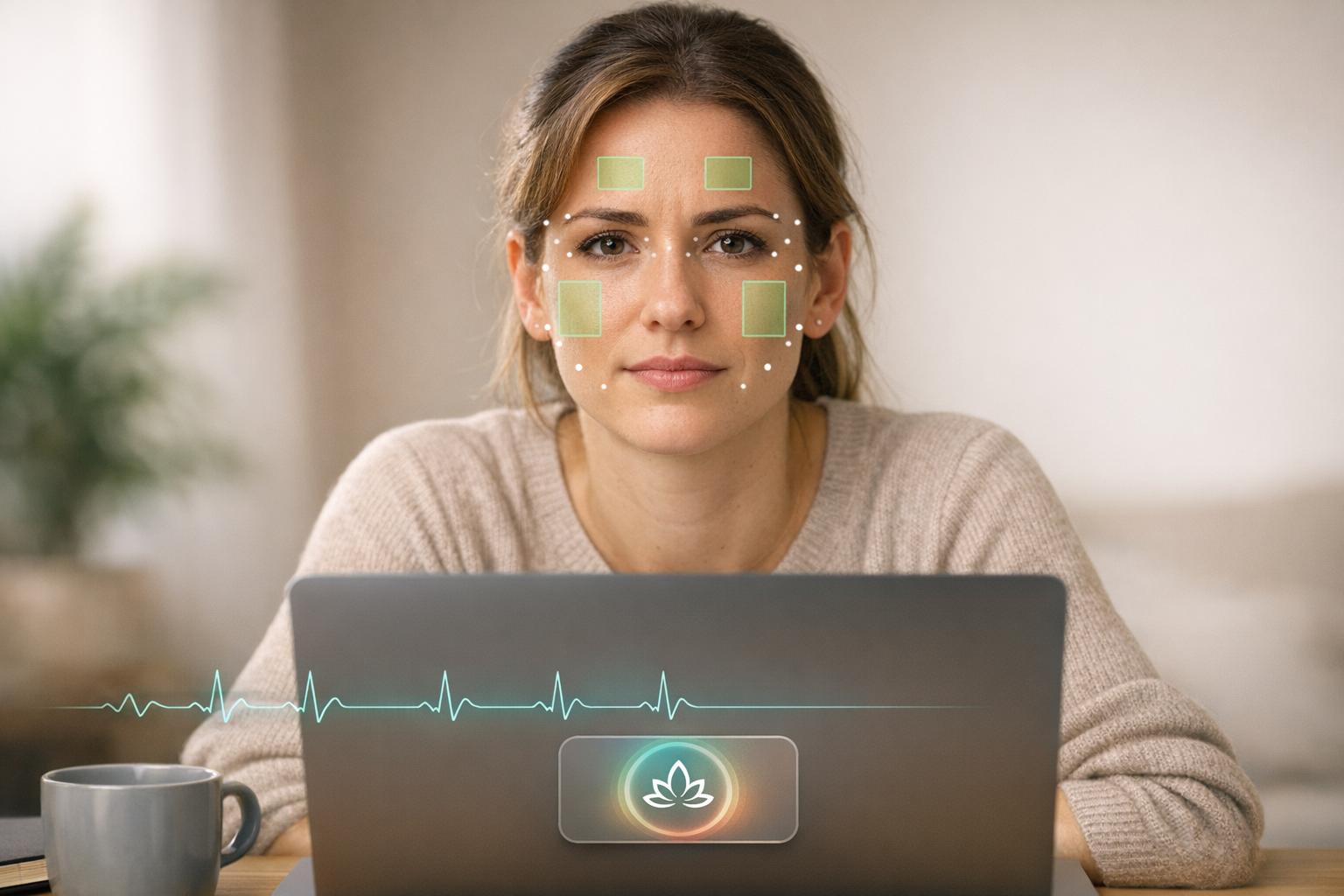
Stress is a silent disruptor, impacting health and productivity. Emotion AI offers a new way to detect stress as it happens by analyzing physiological and behavioral signals - like heart rate variability (HRV), skin response, and facial expressions. Unlike self-reports, this technology provides objective, real-time insights into your stress levels.
Here’s what you need to know:
- What it tracks: Heart rate, HRV, pupil size, blink rate, and even typing speed.
- How it works: Combines machine learning models with data from wearables for stress and sleep tracking, apps, or cameras.
- Why it matters: Early stress detection can help prevent long-term health issues like cardiovascular disease.
- Challenges: Accuracy can be affected by physical activity or other factors, and privacy concerns need to be addressed.
Platforms like Healify integrate this technology into everyday devices, offering tailored recommendations for stress management. With Emotion AI, you can better understand your stress and take action before it escalates.
Startup: Moment real-time stress detection from voice + HRV | NLP, wearables, just-in-time prompts
sbb-itb-f5765c6
How Emotion AI Detects Stress
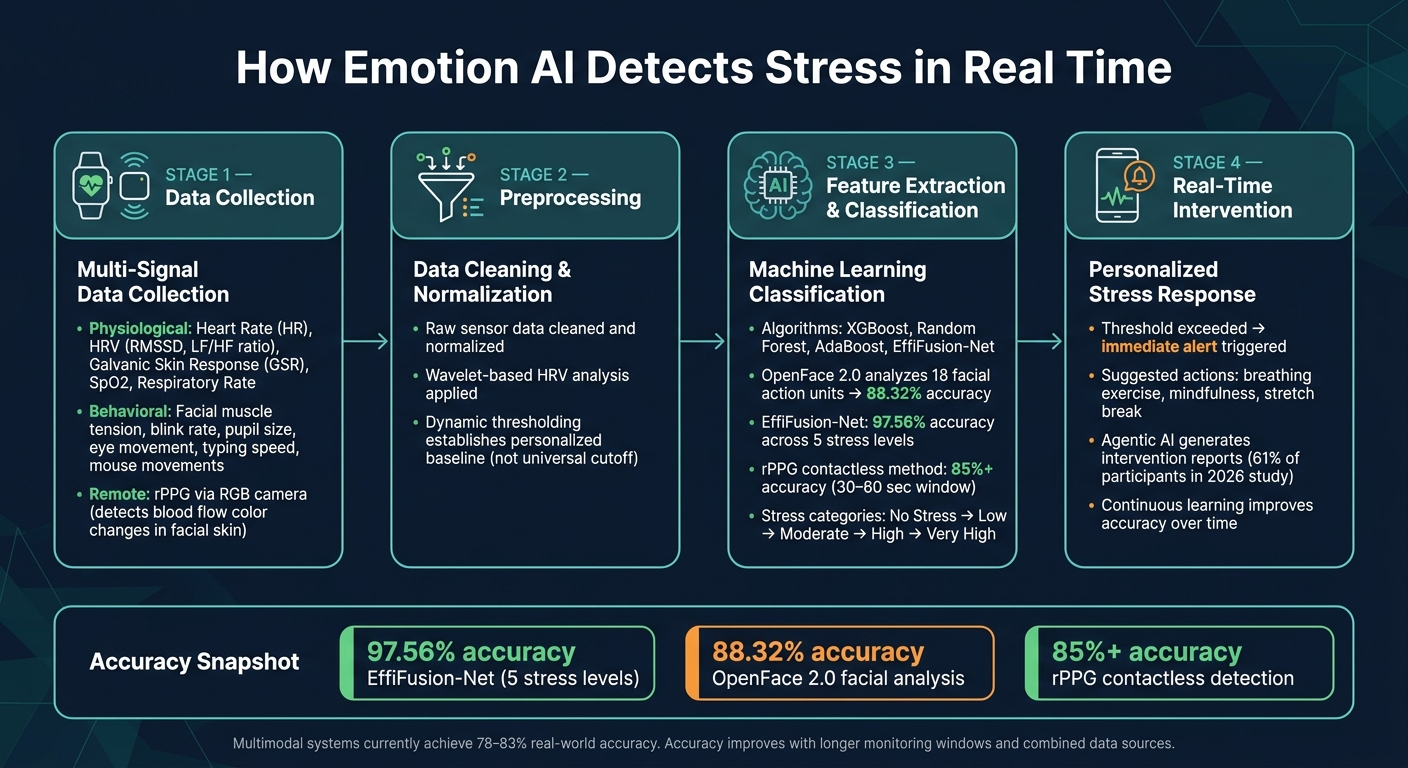
How Emotion AI Detects Stress in Real Time: A Step-by-Step Breakdown
What Data Emotion AI Uses to Spot Stress
Emotion AI doesn’t rely on just one type of data to identify stress - it examines multiple signals at the same time. Physiological data plays a central role, including heart rate (HR), heart rate variability (HRV), galvanic skin response (GSR), respiratory rate, and blood oxygen saturation (SpO2) [4]. Within HRV, specific metrics like RMSSD and the LF/HF ratio are particularly useful, as they help quantify the body’s fight-or-flight response with precision.
But it’s not just about what’s happening inside the body. Behavioral signals also come into play. Changes in facial muscle tension, blink rates, pupil size, and eye movement patterns can all indicate stress. For instance, tools like OpenFace 2.0 analyze 18 different facial action units associated with anxiety and stress, achieving classification accuracies as high as 88.32% [2]. Some systems even track digital behaviors, such as typing speed or mouse movements, to pick up on subtle stress-related changes. By combining these diverse data points, Emotion AI creates a comprehensive picture of stress levels.
"The body doesn't lie about stress. The autonomic nervous system responds to stressors with a cascade of measurable physiological changes... detectable through rPPG." - Circadify Research Team [4]
The Technology Behind Real-Time Stress Detection
Once the data is collected, Emotion AI uses advanced methods to process and interpret it in real time. This involves four key steps: data collection, preprocessing, feature extraction, and classification. Raw sensor data is cleaned and normalized before undergoing specialized processing - like wavelet-based HRV analysis - so machine learning models can accurately classify stress levels [5].
Algorithms such as XGBoost, Random Forest, and deep learning frameworks like EffiFusion-Net are commonly used to sort stress into categories ranging from "No Stress" to "Very High." For example, in May 2025, researchers at Marwadi University introduced the EffiFusion-Net model, which combined facial analysis with physiological data through a weighted ensemble classifier. This approach achieved an impressive 97.56% accuracy across five different stress levels [5].
Another exciting development is the use of remote photoplethysmography (rPPG), a contactless method that employs an RGB camera to detect tiny color changes in facial skin caused by blood flow. This technique can differentiate between stress and relaxation states with over 85% accuracy, though it usually requires a 30–60 second window to provide reliable results [4].
How Emotion AI Learns and Improves Over Time
What sets Emotion AI apart is its ability to learn and adapt over time. It doesn’t rely on a fixed standard for stress detection; instead, it adjusts to each person’s unique physiological baseline. Since everyone’s HRV and other metrics vary, modern systems use dynamic thresholding to establish a personalized baseline rather than applying a universal cutoff [6].
In February 2026, researchers tested an agentic AI system with 35 participants. By combining Random Forest and AdaBoost classifiers with a language model to generate clinical summaries, the system distinguished acute stress from chronic stress using dynamic thresholding. It successfully created personalized reports for 61% of participants [6].
"Unlike static pipelines, agentic architectures facilitate ongoing adaptation and self-improvement, which are essential for personalised digital health solutions." - International Journal of Computational Intelligence Systems [6]
As these systems collect more data from individual users - a process known as individual evaluation - they become better at recognizing unique patterns. This continuous learning ensures that stress detection remains accurate and allows for tailored interventions that meet each user’s specific needs.
Challenges and Risks of Using Emotion AI for Stress Detection
Accuracy and Technical Limitations
While Emotion AI has made strides, it’s far from perfect. A key issue lies in how the body’s physical responses can overlap with stress indicators. For example, a quick walk or even vacuuming can elevate heart rate and HRV (heart rate variability) in ways that closely resemble stress when analyzed by a single ECG sensor. Studies confirm this challenge, with AI models achieving specificity scores between 0.418 and 0.444 when attempting to differentiate mental stress from moderate physical activity using ECG data alone [8].
Other factors - like caffeine intake, illness, or even excitement - can also mimic stress signals, increasing the likelihood of misclassification. Although a 30-second analysis offers near real-time feedback, extending the monitoring window to 60 seconds improves accuracy. Still, multimodal systems currently only reach an accuracy range of 78%–83% [8][1].
"Generalization to novel stressors was stressor-dependent... our results highlight challenges in distinguishing stress-related cardiac responses from those caused by physical exertion." - Buelent Uendes, MSc, Vrije Universiteit Amsterdam [8]
Privacy and Ethical Concerns
The collection and use of biometric and emotional data raise significant privacy concerns. When systems monitor sensitive metrics like heart rate, skin conductance, or facial expressions, it’s crucial to have clear consent protocols and secure data storage. This is especially critical for gamified stress management apps that process biometric data to maintain user engagement. Without these safeguards, the potential for misuse extends well beyond applications like AI health coaching.
Bias is another major issue. Many AI models are trained on limited demographic groups - often younger, educated adults - which can lead to poor performance for individuals outside these groups. As one research summary emphasizes:
"Fairness, accountability, and transparency must always be adhered to. To find and correct bias, interpretable models must be used so that harm to the vulnerable groups can be avoided." - Springer Nature [1]
Additionally, relying solely on AI conclusions without human oversight can be risky. A stress score is only meaningful if interpreted correctly, which often requires input from a trained professional.
Steps to Address These Challenges
Efforts are underway to tackle these issues. For instance, integrating accelerometer data with cardiovascular and facial metrics helps reduce false positives caused by physical movement [8][4]. On the privacy front, tools like SHAP (SHapley Additive exPlanations) make AI decisions more transparent, helping users and clinicians understand why a system flagged a specific moment as stressful [1]. To address bias, frameworks like NeuroStrainSense use Variational Autoencoders (VAEs) to create more balanced training datasets, achieving a statistical parity score of at least 0.85 across diverse demographic groups [7].
How Emotion AI Is Used in Stress Management
Real-Time Actions to Reduce Stress
Detecting stress is just the first step - what truly matters is responding effectively and quickly. Emotion AI goes beyond identifying stress by initiating immediate interventions and creating strategies for long-term wellness. When your physiological signals, like heart rate or skin temperature, exceed a personalized threshold, the system springs into action. It might prompt you to take a deep breath, practice mindfulness, or even suggest a quick stretch break. These actions are guided by a constantly updating baseline tailored to your unique patterns, ensuring that any unusual spikes are flagged.
"Agentic AI represents a paradigm shift by integrating autonomous decision-making, dynamic planning, and adaptive reasoning to operate with minimal human intervention." - Springer Nature [6]
A study in 2026 demonstrated the power of this approach, with the system autonomously generating intervention reports for 61% of participants. It effectively distinguished between acute and chronic stress in real time, showcasing its ability to address stress as it happens [6]. By tackling stress in the moment, this technology sets the stage for deeper understanding and better management of long-term stress patterns.
Personalized Guidance for Long-Term Well-Being
While real-time interventions are crucial, the real game-changer lies in uncovering patterns over time. Emotion AI doesn’t just help you manage stress in the moment - it also identifies recurring trends that might be affecting your overall well-being.
"Continuous stress monitoring... empowers individuals with actionable insights that can lead to improved well-being and enhanced quality of life." - Springer Nature [6]
For example, if your heart rate variability consistently dips on Sunday evenings, the system might recommend adjusting your sleep schedule or creating a calming bedtime routine to ease the transition into the workweek. These insights shift the focus from reacting to stress to preventing it, which is vital for improving long-term health. Considering that stress contributes to major health issues like hypertension, diabetes, and cardiovascular disease - linked to six of the leading causes of death globally - proactive management is more important than ever [6].
By turning complex data into clear, actionable advice, Emotion AI helps users take control of their stress and, ultimately, their health.
How Healify Uses Emotion AI for Stress Management
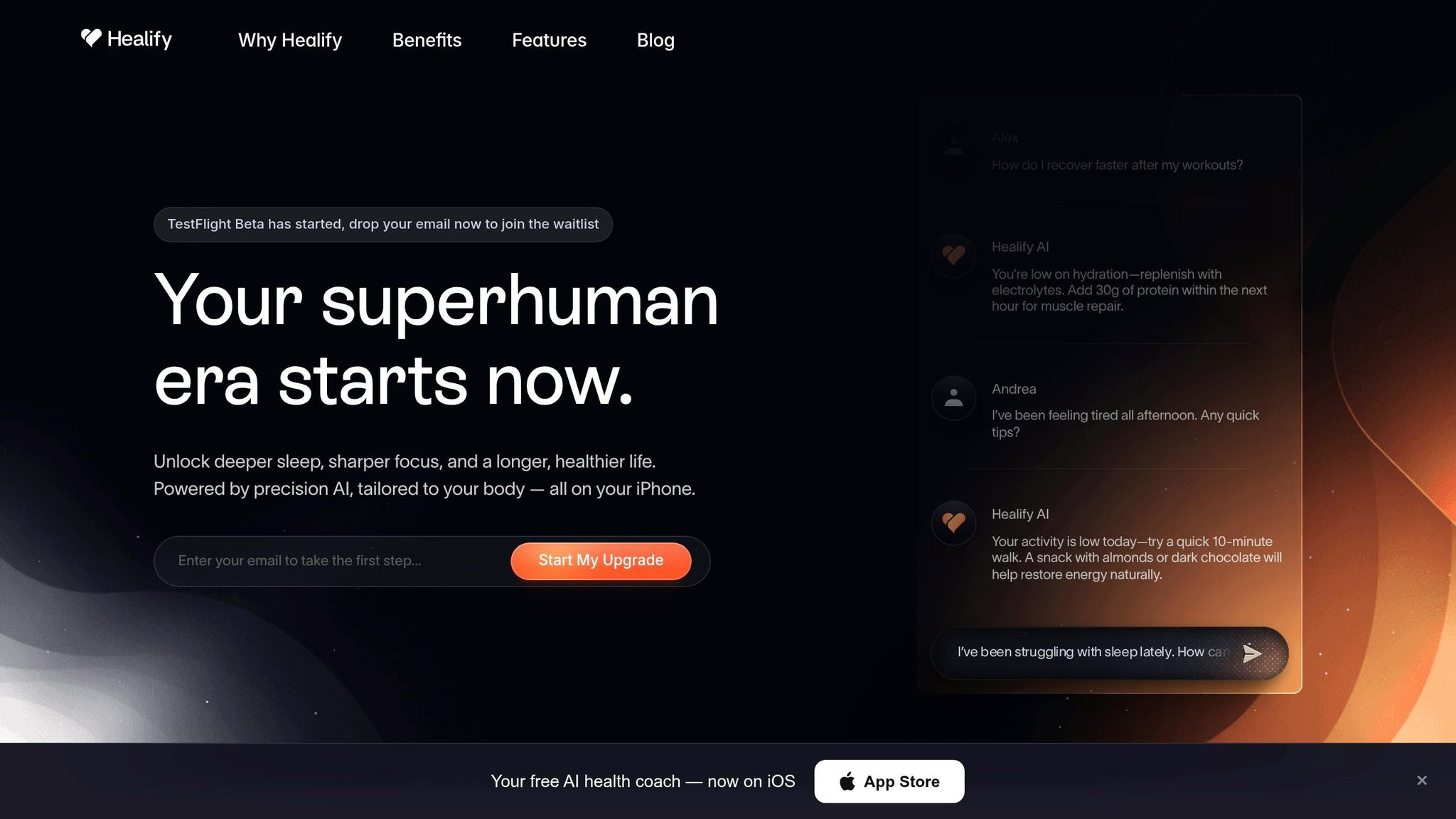
Healify is a prime example of how Emotion AI can be applied to everyday stress management. Through its 24/7 AI health coach, Anna, Healify integrates data from wearables, biometrics, and lifestyle habits to deliver personalized insights. Instead of overwhelming you with raw data, Anna breaks it down into simple, actionable steps.
If your stress levels spike, Anna provides recovery strategies tailored to your specific needs. For instance, she might suggest a breathing exercise or a quick walk based on your current state. The app doesn’t stop there - it also tracks your sleep quality alongside stress, recognizing how deeply connected the two are. Poor sleep can make you more reactive to stress, while high stress can disrupt your sleep. By monitoring both, Healify adapts its recommendations to support your overall well-being.
This seamless integration means you don’t have to be a health expert to benefit. Healify handles the complexity, analyzing data from wearables, bloodwork, and biometrics to give you clear, actionable advice - without the clutter of confusing dashboards. It’s like having a personal health coach in your pocket, guiding you toward better health every step of the way.
Conclusion: Using Emotion AI to Manage Stress Better
Stress is one of the most common health challenges in America today - and for years, managing it has relied heavily on subjective self-assessments. Emotion AI is changing the game by offering an objective, real-time view of what your body is going through. By analyzing physiological markers, this technology detects stress early, often before you even notice it, similar to how wearables track stress levels in real time.
Today’s advanced models boast over 98% accuracy [3], and researchers are working on systems that combine multiple data sources to make these tools even more dependable [1].
As Rabah Al Abdi, a researcher at Abu Dhabi University, points out:
"Early detection of stress can help mitigate it and prevent the consequences of diseases." [3]
This level of precision not only improves stress detection but also ensures that the insights provided are actionable in real-world situations. According to research published by Springer Nature, "real-world uptake is determined not only by accuracy but also by explanations that practitioners trust and will act upon." [1] In other words, it’s not just about identifying stress - it’s about delivering advice people can actually use.
Platforms like Healify are putting these advancements into practice. By integrating wearable data, biometrics, and lifestyle habits, Healify’s AI coach, Anna, creates a clear, comprehensive picture of your health. Whether it’s suggesting changes to your sleep routine or helping you manage a mid-afternoon stress spike, Anna provides practical, easy-to-follow guidance tailored to you.
Emotion AI marks a major shift in how we understand and handle stress. With its growing accuracy and real-time insights, it’s now possible to take a proactive, personalized approach to stress management - and that’s a step toward better well-being for everyone.
FAQs
How can Emotion AI tell stress from exercise?
Emotion AI can distinguish between stress and exercise by analyzing a combination of physiological signals and movement patterns. For instance, both stress and exercise cause an increase in heart rate. However, the AI cross-checks this with accelerometer data to identify if physical activity is involved. By integrating metrics such as heart rate variability (HRV) and skin conductance, it creates a personalized baseline. This ensures that stress alerts are triggered by actual emotional responses rather than physical exertion.
Can Emotion AI work without a wearable?
Yes, Emotion AI can work without requiring a wearable device. It relies on non-invasive inputs such as facial expressions, voice tone, and text patterns to gauge emotions. For example, smartphone cameras can analyze subtle facial cues to detect stress levels, while AI models evaluate voice features like pitch and rhythm to interpret emotional states. These techniques allow for real-time emotional monitoring, which apps like Healify use to deliver tailored insights and actionable health plans.
How is my stress data kept private?
Your stress data is protected with encryption while being transmitted from your wearable device to your iPhone. Healify employs strong security protocols to keep your information safe. Additionally, the platform provides clear details on how your data is handled to generate tailored health insights and practical stress management strategies, ensuring your privacy remains a key focus.