
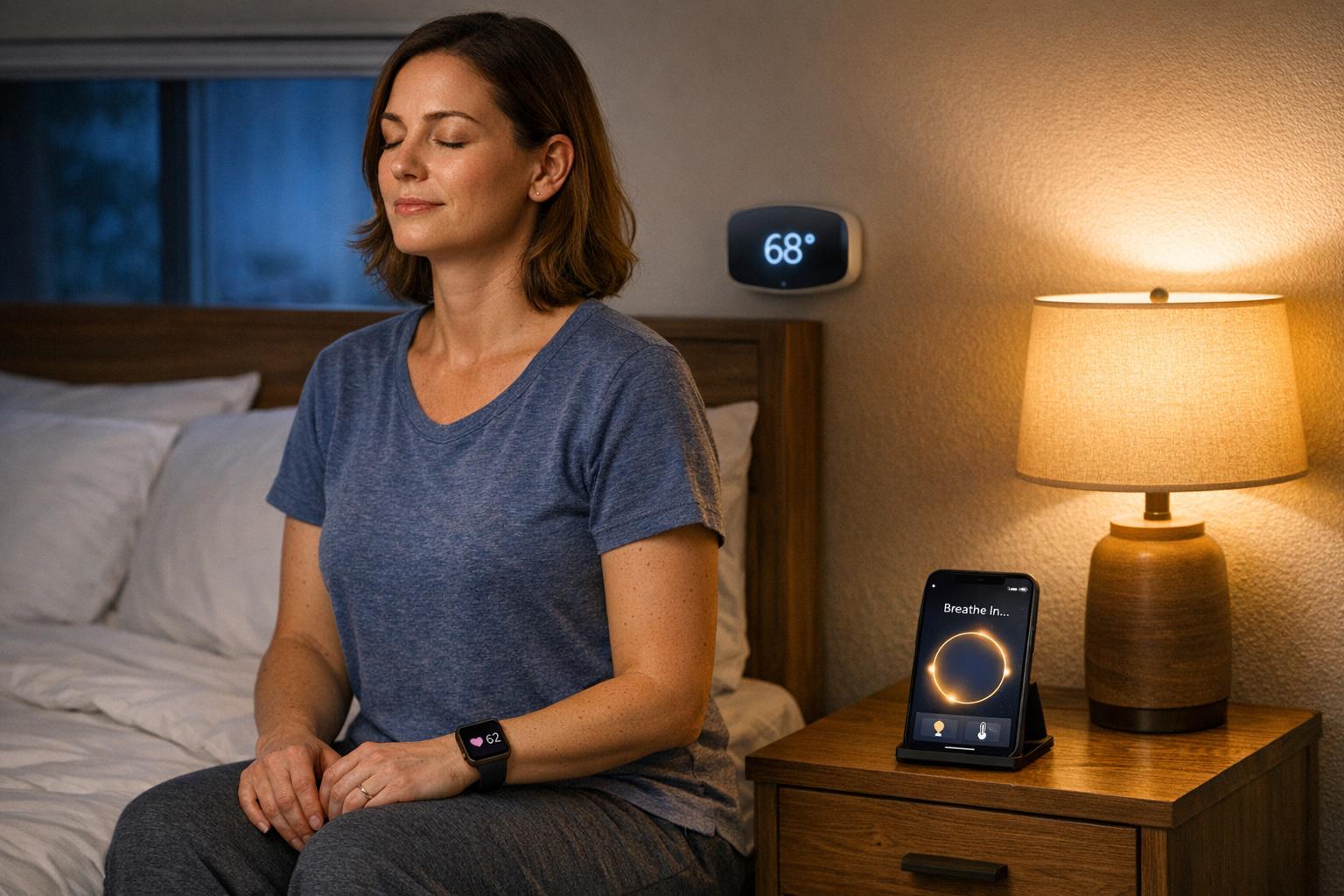
Struggling with sleep or stress? AI is here to help. Millions of adults in the U.S. face poor sleep and chronic stress, which can lead to serious health risks like high blood pressure and weight gain. Traditional advice often falls short because it’s not tailored to individual needs. That’s where AI steps in.
AI tools analyze your sleep patterns, stress triggers, and daily habits to create personalized solutions. From tracking your sleep disruptions to recommending the perfect room temperature, AI offers practical, data-driven tips to improve your well-being. Here’s how AI is changing the game:
- Sleep Monitoring: Advanced trackers assess heart rate, breathing, and even detect health risks like sleep apnea.
- Sleep Coaching: AI-powered CBT-I techniques tackle insomnia by addressing bad habits and anxious thoughts.
- Smart Environments: AI adjusts mattress temperature, lighting, and noise for better sleep.
- Stress Management: Real-time monitoring identifies stress triggers and suggests immediate relief techniques like breathing exercises.
- Meditation Apps: Customized sessions help reduce anxiety and improve focus, syncing with wearables for real-time feedback.
Apps like Healify combine all these features into one platform, making it easier to manage your sleep and stress. With AI, better sleep and lower stress are within reach.
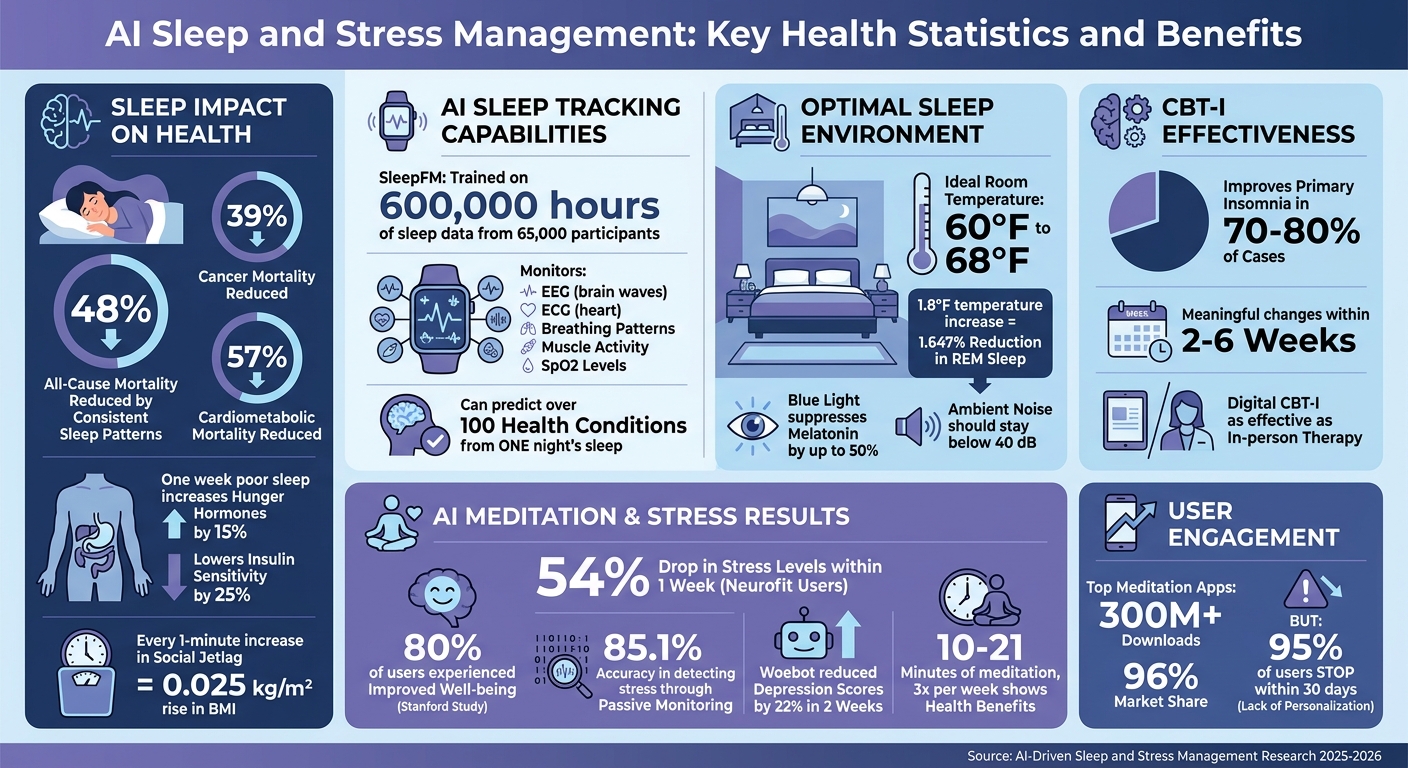
AI Sleep and Stress Management: Key Health Statistics and Benefits
AI Sleep Tracking and Monitoring
What AI Sleep Trackers Can Do
Today's AI sleep trackers do more than just monitor how long you sleep - they dive deep into your physiological signals. These include EEG (brain activity), ECG (heart activity), breathing patterns, muscle activity, and SpO2 levels to create a detailed picture of your sleep [2][3]. They also keep tabs on snoring, movements, how long it takes you to fall asleep, and whether your sleep schedule remains consistent [3][4]. Beyond nighttime data, many devices factor in your daytime activities, such as step counts and exercise intensity, and even environmental factors like room temperature and noise, which can significantly impact your deep and REM sleep cycles [3][4].
One standout example is the SleepFM AI model, which was trained using an impressive 600,000 hours of sleep data from 65,000 participants [2]. James Zou, PhD, Associate Professor of Biomedical Data Science at Stanford Medicine, describes it as:
"SleepFM is essentially learning the language of sleep" [2].
This extensive training allows the AI to predict over 100 health conditions from a single night's sleep. These include serious concerns like Parkinson's disease, dementia, and heart attack risk [2]. With this level of insight, AI can pinpoint critical sleep-related health issues that might otherwise go unnoticed.
How AI Processes Your Sleep Data
AI goes beyond just collecting data - it analyzes it to uncover hidden sleep disruptions. By examining patterns in heart rate, breathing irregularities, and nighttime movements, these systems can detect potential problems like sleep apnea or irregular heart rhythms before they become noticeable symptoms [4]. For example, a case published in the New England Journal of Medicine (April 2026) highlighted how a Sleeptracker-AI–powered smart bed identified a patient’s complete heart block while they were asleep [4].
The insights don’t stop at detection. AI uses this data to offer tailored recommendations and health nudges. Say your bedroom temperature is too warm - AI might suggest lowering it to somewhere between 60°F and 68°F. This is backed by research showing that even a modest 1.8°F increase in room temperature can reduce REM sleep by about 1.647% [4]. Similarly, if your sleep schedule is inconsistent, the system might flag it as a concern. Studies show that every hour of variability in bedtime increases the risk of metabolic issues by 27% [4].
sbb-itb-f5765c6
AI Sleep Coaching and CBT-I Methods
Benefits of AI Sleep Coaching
AI sleep coaching brings Cognitive Behavioral Therapy for Insomnia (CBT-I) straight to your smartphone. CBT-I is recommended by the American Academy of Sleep Medicine as the go-to treatment for chronic insomnia in adults. Studies even show that digital CBT-I can be just as effective as in-person therapy[7]. In fact, programs that include multiple CBT-I techniques have been shown to improve primary insomnia in 70% to 80% of cases[5].
What makes AI sleep coaching stand out is its ability to customize the experience. By analyzing health data from your sleep diary and wearable devices, the AI pinpoints specific sleep challenges like irregular bedtimes, poor sleep efficiency, or frequent awakenings during the night[6]. Based on this information, the AI develops a personalized sleep plan that evolves weekly as you make progress. Most people notice meaningful changes in their sleep within 2 to 6 weeks of consistent effort[6]. This personalized guidance works hand-in-hand with earlier AI-driven sleep monitoring for a comprehensive approach.
Dr. Yoshinori Abe from Ubie Health sums it up perfectly:
"Sleep improves when fear around it decreases"[6].
AI coaching not only addresses habits that disrupt sleep but also tackles the anxious thoughts that keep you awake. This dual focus creates the perfect foundation for effective CBT-I methods.
CBT-I Techniques Explained
CBT-I helps you rebuild healthy sleep patterns without relying on medication, breaking the process into manageable daily steps.
One of the most effective techniques is Sleep Restriction Therapy. By analyzing how much time you actually spend sleeping versus lying awake, the AI sets a strict "sleep window" tailored to your actual sleep duration. This method strengthens your natural sleep drive and promotes deeper, more consolidated sleep[6].
Another key strategy is Stimulus Control, which helps rewire the connection between your bed and wakefulness. If you’re awake for more than 20 to 30 minutes, the app recommends getting out of bed and doing a calming activity in dim light until you feel sleepy again[6]. This approach helps break the frustrating cycle of tossing and turning.
Lastly, Cognitive Restructuring and Relaxation Training focus on calming the anxious thoughts that fuel insomnia. Thoughts like "I’ll never fix my sleep" or "Tomorrow will be a disaster if I don’t sleep tonight" are challenged and replaced with more balanced perspectives through AI-guided exercises[6]. These programs also include relaxation techniques like guided breathing, Progressive Muscle Relaxation (PMR), and meditation to ease physical tension and quiet your mind[5]. Many apps use a milestone-based system, unlocking new techniques as you advance to keep the CBT-I process structured and engaging[7].
AI-Controlled Sleep Environments
Here’s how AI can transform your bedroom into the perfect sleep sanctuary.
Adjusting Sleep Settings with AI
AI-powered devices are revolutionizing the way we manage our sleep environment by tailoring conditions to our specific needs. For instance, systems like Eight Sleep's Autopilot adjust the temperature of your mattress in real time, ensuring it stays within the ideal range of 60°F to 67°F for REM sleep. A study analyzing over 1,750,000 nights of sleep revealed that even a single degree Kelvin above this range can decrease sleep efficiency by 1.036% and reduce REM sleep by 1.647% [9][10][11].
Smart lighting systems play their part by automatically dimming and shifting to warmer tones as bedtime approaches. This reduces blue light exposure, which can suppress melatonin levels by up to 50% [8][12]. Devices like the Pod 5 Ultra go even further, adjusting bed elevation to minimize snoring and improve breathing [10]. To top it off, AI can generate soothing white noise or nature sounds to keep ambient noise below 40 dB, helping you stay undisturbed throughout the night [10][12].
Smart Home Integration for Sleep
AI doesn’t just optimize individual devices - it connects your entire home for a seamless sleep experience.
Imagine your smart thermostat lowering the room temperature to the ideal 60–67°F about 30 minutes before bed, while your smart lights dim and switch to warm tones 45 minutes prior. This synchronization supports your body’s natural cooling process, which involves a 1–2°F drop in temperature to signal it’s time to sleep [12].
For couples, dual-zone settings add another layer of customization, allowing each partner to control their side of the bed independently [8][10]. Ryan Hurley, founder of Lagoon, highlights the potential of these innovations:
"Creating a smart sleep environment, where personalized, AI-enabled devices control room temperature, lighting, and noise levels, can further enhance sleep quality" [11].
Lagoon has even applied AI to improve pillow selection. In March 2025, they analyzed over 100,000 data points to refine their matching algorithm, achieving a 95% accuracy rate in pairing users with the ideal pillow for better sleep [11]. These advancements are part of a larger push to use AI for building healthier sleep habits and managing stress more effectively.
AI Meditation and Relaxation Apps
AI meditation apps have come a long way, moving beyond generic content to deliver tailored stress relief. While the top meditation apps dominate 96% of the market with over 300 million downloads, there's a surprising twist - 95% of users stop using these apps within 30 days [13]. This drop-off often comes down to one thing: personalization. The apps that succeed are the ones that adapt to individual needs instead of just offering pre-recorded sessions.
Customized Meditation Sessions
Modern AI meditation apps are designed to adapt to your unique mood, goals, and experience level. Want a "5-minute reset for anxiety" or a "pre-bed relaxation session"? These apps can create custom guided meditations on the spot [15][16].
Take StillMind, for example. This app uses natural language processing (NLP) to analyze your inputs, identify negative thought patterns, and recommend exercises to help with emotional regulation [15]. Beyond content, you can tweak sensory elements to suit your preferences - choose a narrator voice (calm or ethereal), pick background sounds (nature, music, or silence), and set the session length [16]. As J. David Creswell, a health psychologist at Carnegie Mellon University, puts it:
"AI, such as meditation-guiding chatbots, will only become more common, and this will offer the option of even more personalization" [13].
The real innovation lies in apps that go beyond suggesting pre-recorded content. Generative AI creates truly unique sessions tailored to your specific needs. Studies suggest that just 10 to 21 minutes of meditation, three times a week, can deliver noticeable health benefits [13]. These apps also integrate dynamic stress tracking, making the experience even more interactive.
Tracking Stress in Real Time
AI meditation apps are now syncing with wearables to monitor stress in real time. They use metrics like heart rate variability (HRV) and breathing patterns to adjust session intensity on the fly [15]. If your stress levels spike, the app can step in with immediate interventions.
For instance, Neurofit tracks your nervous system state and suggests targeted relaxation techniques when needed. Users of this app have reported a 54% drop in stress levels within just one week [17]. Features like "Breathe Bubbles" or "Panic SOS" provide quick ways to calm down and lower your heart rate [14].
Kevin Menear highlights the benefits of this real-time feedback:
"AI can provide real-time feedback on the body's physiological response to meditation, such as heart rate and breathing patterns. This can help meditators better understand their own practice and make adjustments as needed" [15].
The impact of these tools is clear. A Stanford study found that 80% of Youper users experienced improved well-being, while 74% of parents using Calm Kids reported less stress related to parenting [14][17]. By helping users shift from a "fight or flight" state to a calmer parasympathetic state, these apps are proving to be effective tools for building long-term stress management habits. Real-time physiological monitoring is a game-changer in making meditation more effective and accessible.
AI Stress Management Methods
Advanced AI tools are stepping up to help manage stress by addressing warning signs before they become overwhelming. Stress often sneaks up on us, only becoming obvious when physical symptoms appear. AI is changing the game by turning those subtle, hard-to-define feelings into measurable, actionable data. As Thryve.health explains:
"Physiological stress, once a vague, subjective experience, is becoming a quantifiable metric" [18].
This transformation allows users to identify and address stress early, building on the same personalized approach AI brings to sleep solutions.
Finding Stress Triggers with AI
AI uses data from wearables - such as heart rate variability (HRV), electrodermal activity (EDA), and skin temperature - alongside contextual information like GPS, calendar events, and time of day to pinpoint stress triggers. HRV, in particular, is a key biomarker. If HRV consistently drops during certain activities, it might indicate a hidden stressor. AI goes further by analyzing patterns in HRV, EDA, and breathing to predict mood and monitor long-term well-being.
For instance, AI can connect a spike in stress biomarkers to specific events, such as a recurring meeting or a particular location. Thryve's API supports this by normalizing data from over 500 wearable and mobile sources, enabling real-time stress analytics. Devices equipped with EDA sensors also track "skin conductance peaks", which signal heightened emotional responses. This level of analysis allows AI to provide targeted, real-time interventions.
Instant Stress Relief Recommendations
When AI detects stress, it acts quickly by offering evidence-based solutions. These might include a two-minute breathing exercise, a short walk, or a guided mindfulness session. Many of these interventions are rooted in established therapeutic frameworks like Cognitive Behavioral Therapy (CBT) or Dialectical Behavior Therapy (DBT), helping users shift from awareness to action.
A November 2025 meta-analysis involving 29,637 participants highlighted the effectiveness of AI in reducing stress, anxiety, and depression. In one example, the AI chatbot Woebot reduced depression scores by 22% in just two weeks. Additionally, mobile biofeedback apps that combine physiological and behavioral data achieved an impressive 85.1% accuracy in detecting stress. Some tools even use biofeedback, delivering calming sounds or vibrations during breathing exercises. These real-time responses, such as watching your heart rate slow, strengthen the connection between mind and body.
As Sarah Johnson, MD, a psychiatrist, puts it:
"AI for stress can become your personalized calm coach, offering data-driven ways to relax before burnout hits" [19].
These AI-driven stress management tools work hand-in-hand with sleep and meditation technologies, creating a more comprehensive approach to well-being.
Using Healify for Sleep and Stress Management
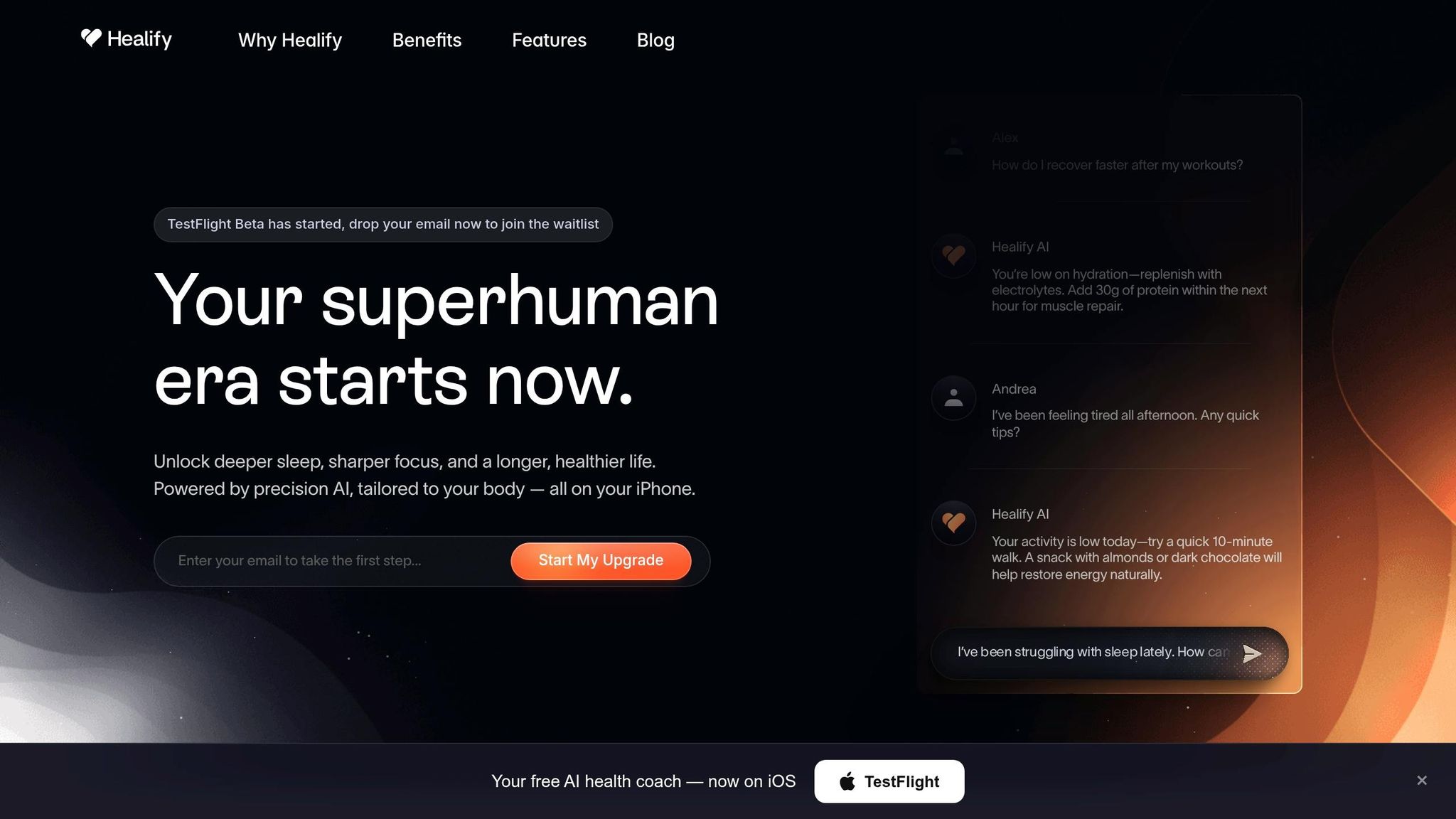
Healify takes AI-powered insights about sleep and stress and combines them into one app, making health management simpler and more effective.
By syncing with your wearables and health apps - like the Apple Watch and iPhone - Healify creates a complete picture of your well-being. Instead of dealing with scattered data across multiple apps, it organizes everything into clear, actionable advice. This means you can focus on improving your sleep and managing stress without feeling overwhelmed by information.
Healify's Main Features
Healify offers round-the-clock AI coaching through Anna, a virtual assistant focused on helping you manage sleep, energy, and stress. The app keeps an eye on key biometrics like cortisol levels, blood oxygen, heart rate variability (HRV), and sleep patterns in real time, alerting you before potential issues arise [20].
Anna translates data from wearables, blood tests, and lifestyle habits into practical tips. For instance, it might recommend a short walk to boost your energy, suggest changes to your evening routine for better sleep, or provide tailored nutritional advice. The app also includes a meal planner and recipe generator that calculates macros, aligning your diet with your sleep and stress management goals [20].
How Healify Improves Sleep and Reduces Stress
Healify starts with Motivational Interviewing, a technique that helps you define your health goals and commit to lasting changes. Whether you’re aiming for better sleep, improved focus, or reduced stress, the AI personalizes its recommendations to match your priorities.
During a Quick Health Setup, Healify syncs with your devices to analyze patterns in your sleep and activity. Real-time tracking identifies stress triggers using metrics like HRV and skin temperature, while detailed sleep analysis highlights areas for improvement. If you need advice, you can ask Anna questions like, “How can I sleep better tonight?” and receive immediate, data-driven suggestions.
Daily check-ins help you stay on track and build habits that stick. Developed in partnership with healthcare experts, Healify ensures its advice is safe and grounded in science. The app is free to use and will soon be available on the Apple App Store. Those on the waitlist will get early access to premium features after its private beta launch.
Conclusion
This checklist of AI strategies showcases the move from broad advice to solutions tailored to individual needs. AI is changing how we approach sleep and stress management by offering recommendations based on personal data. Instead of relying on guesswork, these tools analyze factors like your circadian rhythms and stress triggers to provide insights that align with your specific patterns.
The role of quality sleep in overall health is massive. Studies show that consistent sleep patterns can reduce the risk of all-cause mortality by up to 48%, cancer mortality by 39%, and cardiometabolic mortality by 57%. On the flip side, just one week of poor sleep can increase hunger hormones by 15% and lower insulin sensitivity by 25% [1]. Regular wake times are also key - every one-minute increase in "social jetlag" (the mismatch between your biological clock and your schedule) is linked to a 0.025 kg/m² rise in BMI [1].
Dr. Elie Gottlieb, Head of Applied Sleep Science at Sleep.ai, offers this advice:
"Use your sleep tracker as a rearview mirror, not a steering wheel. Look for trends without obsessing over nightly grades." [1]
Healify simplifies these AI-driven insights by consolidating data from wearables and offering 24/7 coaching through its virtual assistant, Anna. The app translates complex biometrics into easy-to-follow steps, making it less overwhelming to take charge of your health. It’s free to use and will soon launch on the Apple App Store, with waitlist members gaining early access to premium features. With tools like Healify, improving sleep and managing stress become guided, manageable processes.
Building better sleep and stress habits takes effort, but AI provides the personalized support needed to create meaningful, lasting changes.
FAQs
How accurate are AI sleep trackers, and what can they miss?
AI sleep trackers are around 65% accurate but can sometimes misread sleep stages, such as deep sleep or REM. This happens because they primarily use movement and heart rate data, which don’t fully reflect brain activity during sleep. While they’re helpful for identifying general sleep patterns, they may not provide a complete view of your overall sleep quality.
What should I do if AI sleep or stress insights make me more anxious?
If insights from AI about sleep or stress leave you feeling uneasy, try to approach them with mindfulness and self-kindness. Acknowledge your emotions without criticism and explore calming practices like meditation to help manage those worries. If the information feels too much to handle, it’s okay to step back and limit your interaction with it. Instead, shift your focus to relaxation techniques that work for you. Platforms like Healify can offer balanced advice, but if the distress continues, reaching out to a mental health professional might be a good step for extra support.
When should sleep or stress data be shared with a doctor?
If your sleep or stress data reveals consistently high stress levels or ongoing sleep issues, consider sharing it with your doctor. This information can be crucial in uncovering potential underlying problems and determining the best course of action for treatment or support.