
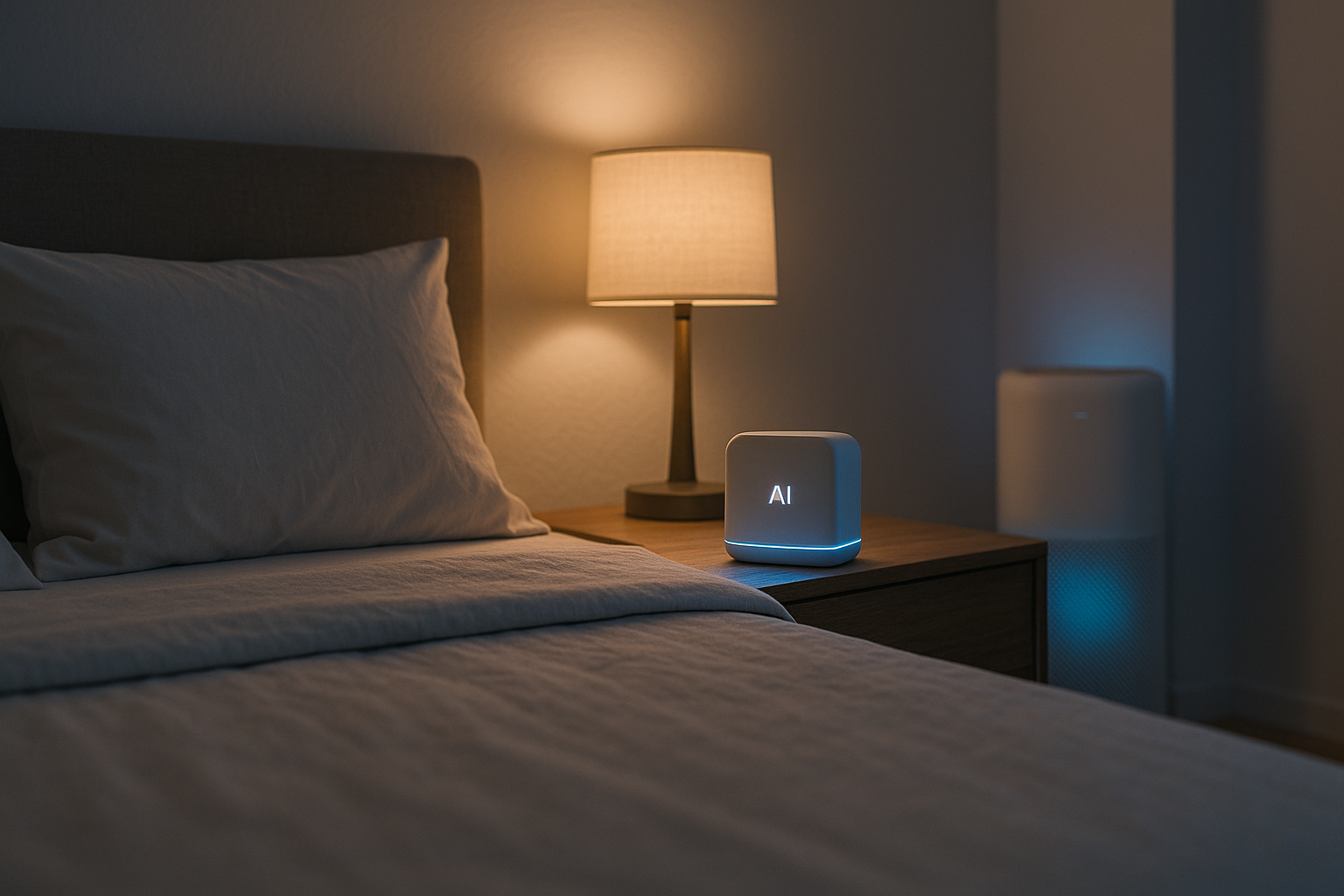
AI is reshaping how we understand and improve sleep. By analyzing data from wearables, smart devices, and environmental sensors, AI creates personalized insights and real-time adjustments to optimize rest. These systems monitor everything from heart rate variability to room temperature, identifying patterns and making tailored recommendations to improve sleep quality.
Here’s what you need to know:
- Data Collection: AI tracks heart rate, breathing, movement, temperature, and light exposure using wearables and sensors.
- Machine Learning: Advanced models, like Mount Sinai’s PFTSleep AI, analyze millions of hours of sleep data to detect patterns and improve accuracy.
- Environmental Adjustments: AI integrates with smart home devices to adjust temperature, lighting, noise, and humidity in real time.
- Personalized Recommendations: Apps like Healify provide tailored advice based on your sleep habits, syncing with devices like iPhones and Apple Watches.
- Continuous Learning: Feedback from nightly data and user input helps AI refine its guidance over time.
AI doesn’t just track your sleep - it helps create the ideal conditions for better rest. By combining advanced analysis with actionable steps, these tools turn complex data into practical solutions for improving your health and energy levels.
Sleepease:An AI-Integrated Mobile and Hardware System for Personalized Sleep Monitoring and Adaptive
How AI Tracks Sleep Patterns
AI systems rely on advanced sensors to gather detailed sleep data, ensuring that sleep analysis is based on hard facts rather than assumptions.
Types of Sleep Data Collected
Modern AI-driven sleep tracking captures a range of physiological and behavioral signals, including heart rate variability, breathing patterns, body movements, muscle activity, and even your sleeping position throughout the night [2][4]. Some systems go a step further, using EEG technology to monitor brain waves. This allows them to differentiate between light sleep, deep sleep, and REM stages with precision similar to clinical tools. High-tech wearables can even capture over 140 unique signals related to breathing, heart rhythms, and movement, creating an incredibly detailed picture of your sleep [4].
Environmental factors like room temperature, noise levels, and light exposure are also monitored to fine-tune your sleep setup [2][4]. Additionally, some devices track changes in your core body temperature, which can reveal disruptions in your sleep cycles and point to possible underlying health issues.
Non-invasive devices, such as wearables that attach to the skin, offer more precise measurements of respiratory and cardiac activity compared to traditional wrist trackers. These newer designs are comfortable enough for nightly use and, in some cases, include small patches that attach to the neck, capturing data that wrist-based devices might miss [7].
All of this rich data becomes meaningful through the power of machine learning.
The Role of Machine Learning
Machine learning transforms raw sleep data into actionable insights by identifying patterns across entire nights of sleep rather than isolated moments [2]. This approach leads to more accurate and thorough sleep analysis.
For example, researchers at Mount Sinai developed a transformer-based AI model that analyzed over 1 million hours of sleep data - one of the largest datasets ever used for sleep research [2]. This model can detect subtle patterns that would be nearly impossible for humans to recognize manually.
Some AI systems take things a step further with explainable models. These can pinpoint the exact moment snoring begins or detect irregular breathing patterns. In some cases, they even trigger real-time interventions, like gentle vibrations, to encourage you to shift positions and improve airflow [4]. Over time, these systems adapt and refine their recommendations, becoming more tailored to your needs.
Rather than just flagging poor sleep quality, AI dives deeper to identify specific factors - such as a room that's too warm or too much screen time before bed - that might be interfering with your rest. As more data is gathered, these insights become even sharper.
AI's ability to integrate with other devices also adds value. For instance, Healify syncs with iPhones and Apple Watches to combine sleep data with other health metrics like daily activity levels and stress. This creates a more complete picture of your health, far beyond simply tracking how long you sleep [1].
Next, we’ll look at how AI uses these insights to adjust your sleep environment in real time.
Factors That Affect Sleep Quality
The quality of your sleep hinges on a combination of environmental and physiological factors that interact throughout the night. Recognizing these elements helps explain why AI systems monitor a variety of signals to create an environment that supports restful sleep.
Key Factors AI Monitors
Temperature plays a critical role in sleep quality. As you wind down for the night, your body naturally lowers its core temperature. The ideal bedroom temperature typically falls between 60–67°F. AI systems equipped with smart thermostats can adjust the room temperature to align with your sleep stages, often lowering it during deep sleep to complement your body’s natural cooling process [3][4].
Humidity is another factor that influences sleep comfort. Low moisture levels can make breathing more challenging and interrupt sleep. AI-powered humidifiers track relative humidity in real time and make adjustments to maintain optimal moisture levels throughout the night [3][4].
Lighting is essential for regulating your circadian rhythm. AI-controlled smart lighting systems analyze your sleep patterns to fine-tune evening dimming and morning brightness. This helps trigger melatonin production at the right time. These systems can also detect when ambient light disrupts your sleep and make automatic corrections [3][4].
Noise can fragment sleep, making it harder to stay in deep, restorative stages. By monitoring ambient sound levels, AI systems can activate white noise machines or noise-canceling devices when background noise exceeds certain thresholds. This creates a consistent auditory environment for uninterrupted rest [3][4].
In addition to these environmental factors, AI tracks physiological signals like heart rate variability, breathing patterns, and core body temperature changes. These insights provide a detailed picture of your sleep stages and overall sleep health [2][4].
Together, these monitored elements allow for adjustments tailored to your specific needs, creating a sleep environment that promotes better rest.
Personalized Adjustments
AI systems aren’t just reactive - they learn from you. Over time, they analyze your unique sleep patterns and preferences using machine learning. By examining historical sleep and environmental data, AI identifies the most effective adjustments for your sleep environment [2][3].
Take temperature, for instance. While the general recommendation might be 60–67°F, AI could determine that you sleep best starting at 64°F and dropping to 62°F during REM sleep. These insights come from tracking how your sleep quality responds to different settings over time [3][4].
Personalization goes beyond temperature. Some people find background noise soothing, while others need complete silence. AI builds a profile tailored to your preferences and adjusts the environment accordingly [2][3].
Feedback loops enhance this personalization even further. AI systems incorporate objective data from sensors and subjective input from morning surveys to refine their recommendations. This continuous learning process helps the system improve both its accuracy and effectiveness [3][4].
Apps like Healify take this to the next level by integrating sleep data with other health metrics from devices like your iPhone or wearables. These apps consider factors such as daily activity, stress levels, and even diet to offer tailored recommendations. By addressing both environmental conditions and lifestyle habits, the AI provides a comprehensive approach to improving your rest [1].
"Finally, my health data makes sense. I know exactly what to do to feel better." - Sarah L, Founder [1]
The standout feature of AI-driven personalization is its ability to move beyond generic advice. Instead, it adapts to your unique data, ensuring adjustments evolve as your sleep patterns and needs change.
This personalized framework sets the stage for how AI actively optimizes your sleep conditions.
How AI Optimizes Sleep Conditions
AI has evolved from simply collecting sleep data to actively managing your sleep environment. By communicating with connected devices in real time, it creates a dynamic system that adapts throughout the night to ensure optimal rest.
Automated Adjustments
When wearables detect signs of restlessness or an increase in body temperature, AI steps in to make immediate adjustments. It might lower the thermostat, dim the lights, adjust window shades, or activate air purifiers to create a more comfortable environment. If snoring patterns are detected, the AI could activate a white noise machine to help mask disruptive sounds.
A great example of this technology in action is the Sleeptracker-AI platform. This system monitors over 30 sleep and environmental factors and has analyzed more than 2 billion hours of sleep data. It works seamlessly with devices like Apple Health, Apple Watch, and Android Health Connect, allowing for coordinated adjustments across your smart home. These real-time, contactless adjustments ensure your sleep environment stays optimized throughout the night [8].
Feedback Loops and Continuous Learning
AI systems don’t just react - they learn. By analyzing nightly data, they refine their interventions over time. For instance, if lowering the temperature to 62°F during REM sleep consistently results in better rest, the AI will remember this preference for future adjustments. On the flip side, if certain changes disrupt your sleep, the system will adapt to avoid them.
User input also plays a role in this learning process. Many systems combine sensor data with feedback from morning surveys or sleep quality ratings. The PFTSleep AI model, developed by Mount Sinai researchers, is a prime example. It’s trained on over 1 million hours of sleep recordings and uses this data to analyze full-night sleep signals, offering more precise interventions than traditional methods [2]. Modern AI systems can process over 140 sleep-related signals, enabling increasingly sophisticated adjustments tailored to your unique patterns [4].
Real Examples of AI in Action
AI’s ability to adjust temperature and lighting highlights its practical benefits. For example, if your wearable detects increased movement - a sign of restlessness - the AI might cool the room from 65°F to 62°F and dim the lights to their lowest setting, helping you transition into REM sleep.
If sensors pick up elevated CO₂ levels or poor air quality, the system could activate air purifiers, adjust fan speeds, or even open smart vents to improve circulation.
In 2025, the Sleep and Brain Clinic implemented the Sleeptracker-AI platform to monitor sleep and environmental data in real time. This system not only adjusted conditions automatically but also provided clinicians with valuable insights. By detecting sleep disturbances early, it reduced the need for in-person visits while maintaining clinical accuracy, as validated by experts at Stanford Sleep Medicine and UCSF [8].
Healify offers another glimpse into how AI optimizes sleep. By analyzing data from iPhones and connected wearables, it provides recommendations for improving your sleep environment. If the AI identifies issues, it coordinates with smart home devices to adjust lighting, temperature, and other factors, while also offering personalized tips for better sleep habits [1].
This seamless integration of data analysis and environmental control signals a future where AI not only understands your sleep patterns but actively works to create the ideal conditions for rest.
sbb-itb-f5765c6
Benefits and Challenges of AI Sleep Optimization
AI-driven sleep optimization is reshaping how we approach rest and recovery. While the technology offers exciting possibilities, it also comes with certain limitations that users need to be aware of.
Advantages of AI in Sleep Optimization
One standout benefit of AI in sleep optimization is its ability to enhance sleep quality through constant, intelligent monitoring. These systems analyze sleep patterns and make adjustments in real time. For example, if your wearable detects restlessness, the AI might adjust environmental factors, like room temperature or lighting, to help you achieve deeper sleep.
Another major advantage is the personalized recommendations these systems provide. AI tailors its insights to your unique sleep habits. Let’s say you tend to sleep better in a cooler room during specific sleep stages - AI learns this and adjusts accordingly. A great example is Mount Sinai's PFTSleep model, which has analyzed over 1,011,192 hours of sleep data to offer highly customized insights [2].
AI also plays a critical role in identifying potential sleep disorders early. By processing over 140 physiological signals - such as breathing patterns, heart rhythms, and movement - it can detect subtle anomalies that might indicate conditions like sleep apnea or restless leg syndrome [4]. This early detection allows for timely medical intervention.
On top of that, AI brings sophisticated sleep analysis tools right to your home. Devices like Healify simplify complex health data from wearables and smartphones, providing actionable advice without the need for costly and time-consuming sleep lab studies [1].
While these benefits highlight the potential of AI to revolutionize sleep health, there are still challenges to address.
Challenges and Limitations
One of the main hurdles is sensor accuracy. Consumer-grade wearables often fall short of the precision offered by clinical-grade devices, which means they might miss critical physiological signals. Additionally, compatibility issues between devices and platforms can result in incomplete data, limiting the effectiveness of the AI system.
Privacy is another significant concern. Sleep data is deeply personal, and ensuring its security is crucial to prevent data breaches or unauthorized access.
Lastly, there’s the risk of becoming too dependent on automation. While AI offers valuable insights, it’s not a substitute for professional medical advice, especially for complex sleep disorders. The best results often come from combining AI insights with clinical expertise [2][3].
| Benefits | Challenges |
|---|---|
| Real-time adjustments for better sleep quality | Consumer-grade sensor accuracy issues |
| Personalized insights tailored to individual habits | Compatibility problems across devices and platforms |
| Early detection of sleep disorders | Privacy and data security concerns |
| Accessible analysis without expensive lab studies | Over-reliance on automated recommendations |
| Continuous monitoring and instant feedback | Need for professional evaluation in serious cases |
Recognizing both the advantages and limitations of AI sleep optimization is key to understanding how tools like Healify are advancing sleep health while addressing these challenges.
How Healify Improves Sleep Quality
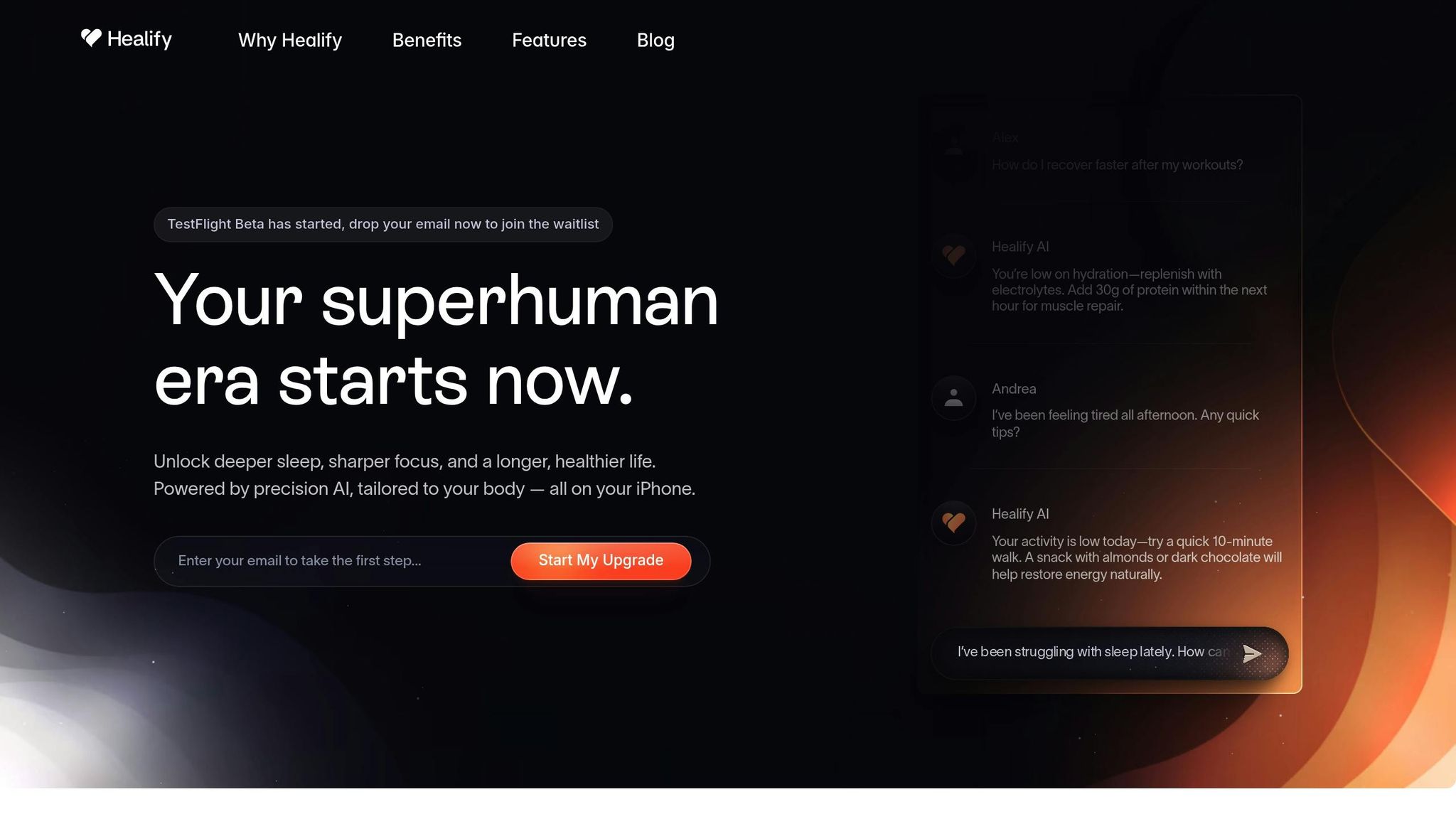
Healify takes sleep improvement to a new level by turning complex data into practical, easy-to-follow advice. Unlike standard sleep trackers that simply log your sleep stages, Healify's AI health coach, Anna, offers tailored coaching based on your specific sleep habits and lifestyle.
By combining advanced tracking with personalized recommendations, Healify helps refine your sleep conditions for better rest.
Key Sleep Features of Healify
Healify goes beyond just tracking your sleep. It gathers detailed information like sleep duration, stages, heart rate variability, breathing patterns, temperature, and movement to create a comprehensive profile of your sleep habits [4][5][6]. This data is then used to suggest adjustments to your environment and routines, making it easier to achieve restful sleep.
What makes Healify stand out is its ability to translate this data into real-time, actionable advice. Anna, the AI coach, provides guidance tailored to your needs - whether it’s setting a consistent bedtime, cutting down on screen time before sleep, or even suggesting supplements like magnesium. Anna continuously monitors your sleep and biometrics to offer tips for improving your sleep hygiene, such as refining your bedtime routine, managing stress, or tweaking your sleep environment [3].
Stress and sleep are closely linked, and Healify addresses both. By analyzing your sleep data, the app can spot subtle patterns that may indicate potential sleep issues. While it’s not a substitute for a medical diagnosis, Healify can notify you of concerning trends and suggest seeking professional advice for early intervention [2][3][4].
Integration with iPhones and Wearables
Healify’s advanced analysis works seamlessly with your devices, ensuring up-to-date recommendations and real-time adjustments. Its integration with Apple devices, including iPhones and Apple Watches, allows for automatic syncing through Apple Health. This eliminates the need for manual input, making sleep tracking and adjustments effortless [3][4].
Users often report feeling more energized and gaining clearer health insights thanks to this streamlined approach. Healify acts as your personal health assistant, constantly analyzing data from your wearables, sleep metrics, and nutrition to provide instant, actionable feedback [1].
For the best results, it’s important to wear compatible devices regularly and keep them synced with the app. Following Anna’s personalized action plans, making suggested changes to your sleep environment, and providing feedback can lead to noticeable improvements over time [3][4].
Healify also prioritizes your privacy. It complies with HIPAA standards to safeguard your health data. All information is encrypted during transmission and storage, and you have full control over what’s shared. This ensures your sensitive sleep and health information remains secure while you benefit from personalized coaching [3].
Conclusion: Transforming Sleep with AI
AI is changing the way we approach sleep by offering tailored, data-driven solutions that align with individual sleep habits and surroundings. This shift is making sleep optimization more accessible and effective for everyone.
Take recent advancements as an example. Mount Sinai's PFTSleep AI model processed over 1 million hours of sleep data to refine sleep stage classification and enhance clinical detection tools. Meanwhile, Vanderbilt University developed a wireless wearable that improves the detection of sleep disorders by monitoring respiratory and cardiac activity directly[2][7]. These innovations highlight how AI can provide precise monitoring and make adjustments that improve sleep quality consistently.
What’s exciting is how AI brings clinical-level insights straight to your home. Instead of relying on costly lab tests or wearables, smartphone apps now offer continuous, adaptive monitoring. One user shared their experience with Healify:
"I used to feel overwhelmed by health data on my iPhone and Apple Watch. Healify changed that, giving me clear guidance. My energy has improved, and I now know exactly what steps to take for better health." - Sophie, Fitness Enthusiast[1]
Healify is a prime example of how AI translates complex sleep data into simple, actionable advice. By shifting sleep management from a reactive process to a proactive one, AI makes it possible to create a smarter, more effective sleep routine.
With AI-powered personalization, every night’s rest can be fine-tuned to support better health and sharper focus, offering a glimpse into a future where sleep is optimized for each individual’s unique needs.
FAQs
How does AI recognize different sleep stages like light sleep, deep sleep, and REM using wearables and sensors?
AI has the ability to recognize different sleep stages by examining data collected from wearables and sensors. These devices track metrics like heart rate, movement, and breathing patterns. For instance, during light sleep, both heart rate and breathing slow down slightly. Deep sleep, however, is marked by very steady, slow breathing and minimal movement. REM sleep stands out with irregular heart rate and breathing, paired with little physical activity.
By analyzing this data, AI systems can identify patterns and accurately classify various sleep stages. These insights can then be used to improve sleep conditions, such as adjusting room temperature or lighting, to promote more restful and restorative sleep.
What privacy concerns come with AI-driven sleep tracking, and how is my data kept secure?
AI-powered sleep tracking comes with understandable concerns about privacy and data security. These tools gather sensitive details like your sleep patterns, surrounding conditions, and health metrics. To tackle these issues, reliable platforms use strong encryption to protect your data both during transmission and while it’s stored.
Apps like Healify go a step further by emphasizing user consent, giving you control over what information is shared and how it’s used. It’s always a good idea to carefully review an app’s privacy policy to make sure your data is managed responsibly and aligns with regulations such as HIPAA or GDPR, when applicable.
How does AI monitor my sleep and adjust things like temperature and lighting to help me sleep better?
AI leverages cutting-edge sensors and data analysis to track various aspects of your sleep, including duration, nighttime movements, and even heart rate. With this data, it can fine-tune your surroundings in real time to enhance the quality of your rest.
For instance, AI can adjust your bedroom's temperature to encourage deeper sleep or gently dim the lights to ease you into slumber. These tailored changes are designed to suit your specific needs, creating a sleep environment that helps you wake up feeling rejuvenated and ready to take on the day.