Improve your health
Improve your health
Improve your health
5 de noviembre de 2025
Perspectivas de Comportamiento en Coaching Nutricional con IA
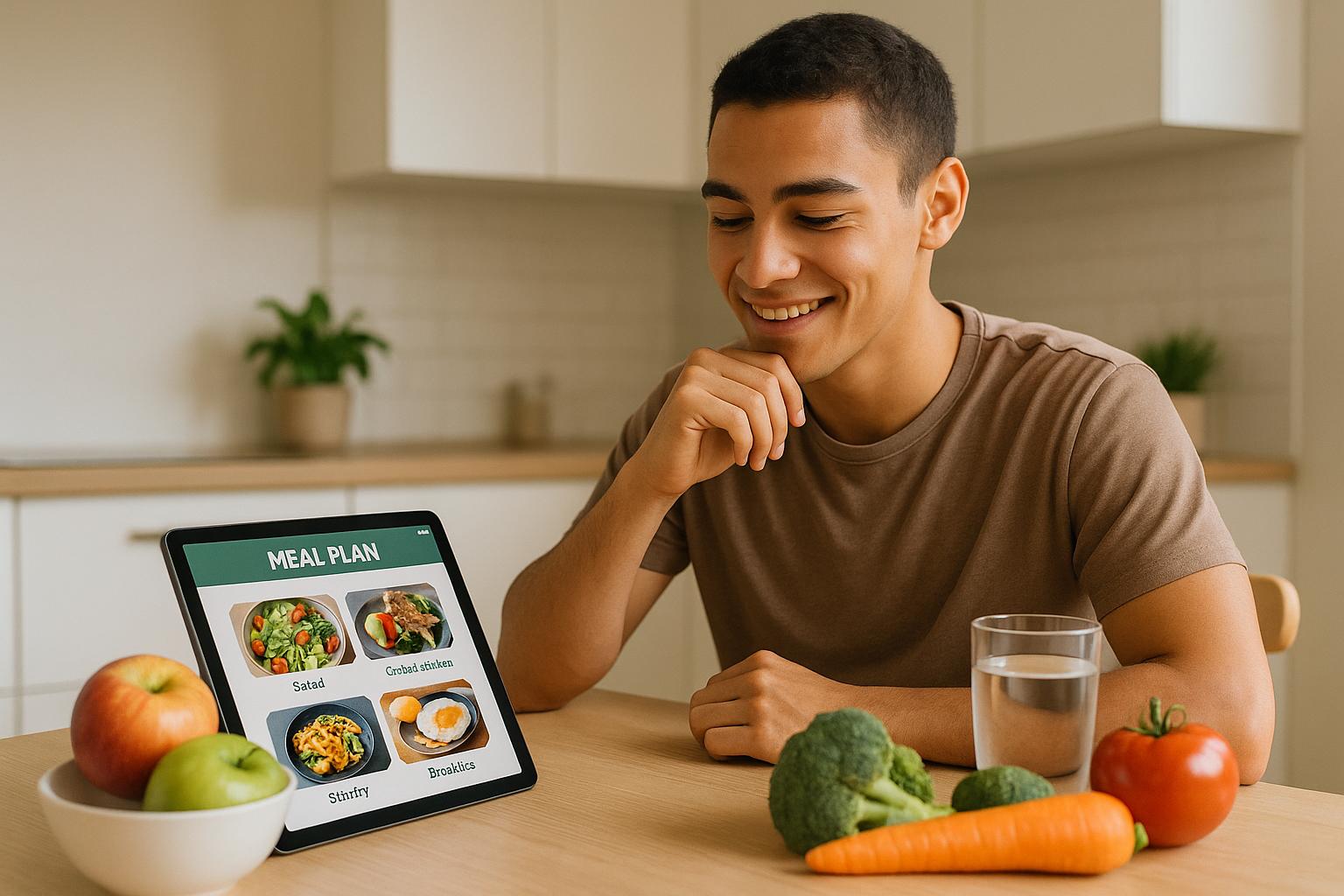
Coaching nutricional basado en IA está transformando cómo las personas abordan la dieta y la salud. Analizando datos de comportamiento, como el momento de las comidas, el tamaño de las porciones, y los desencadenantes emocionales, ayuda a los usuarios a entender por qué comen de la manera en que lo hacen. Herramientas como registros de alimentos, dispositivos portátiles y biometría brindan información en tiempo real, permitiendo que la IA ofrezca recomendaciones dietéticas personalizadas y flexibles adaptadas a los hábitos individuales.
Puntos clave:
La IA utiliza datos de dispositivos portátiles, registros de alimentos y biometría para seguir hábitos.
Los conocimientos sobre comportamiento revelan patrones como comer por estrés o saltarse comidas.
Recomendaciones en tiempo real se ajustan a la actividad diaria, el sueño y los niveles de estrés.
Estudios muestran que la IA mejora la adherencia a los planes nutricionales en un 32%.
Plataformas como Healify integran múltiples fuentes de datos para una orientación precisa.
Plataformas de nutrición basadas en IA están ayudando a los usuarios a tomar decisiones informadas al abordar las causas raíz de los comportamientos alimenticios, ofreciendo soluciones prácticas y promocionando hábitos más saludables. Sin embargo, desafíos como la privacidad de los datos y la transparencia de los algoritmos son críticos para asegurar la confianza y el éxito a largo plazo.
Cómo la IA está dominando la industria de la nutrición
Cómo la IA recopila y analiza datos de comportamiento
Las plataformas de nutrición basadas en IA recopilan e interpretan datos de comportamiento, desde la actividad física hasta los hábitos alimenticios, para crear una imagen detallada de tus rutinas diarias. Echémosle un vistazo más cercano a las fuentes que impulsan estos conocimientos.
Fuentes de datos clave para el análisis de comportamiento
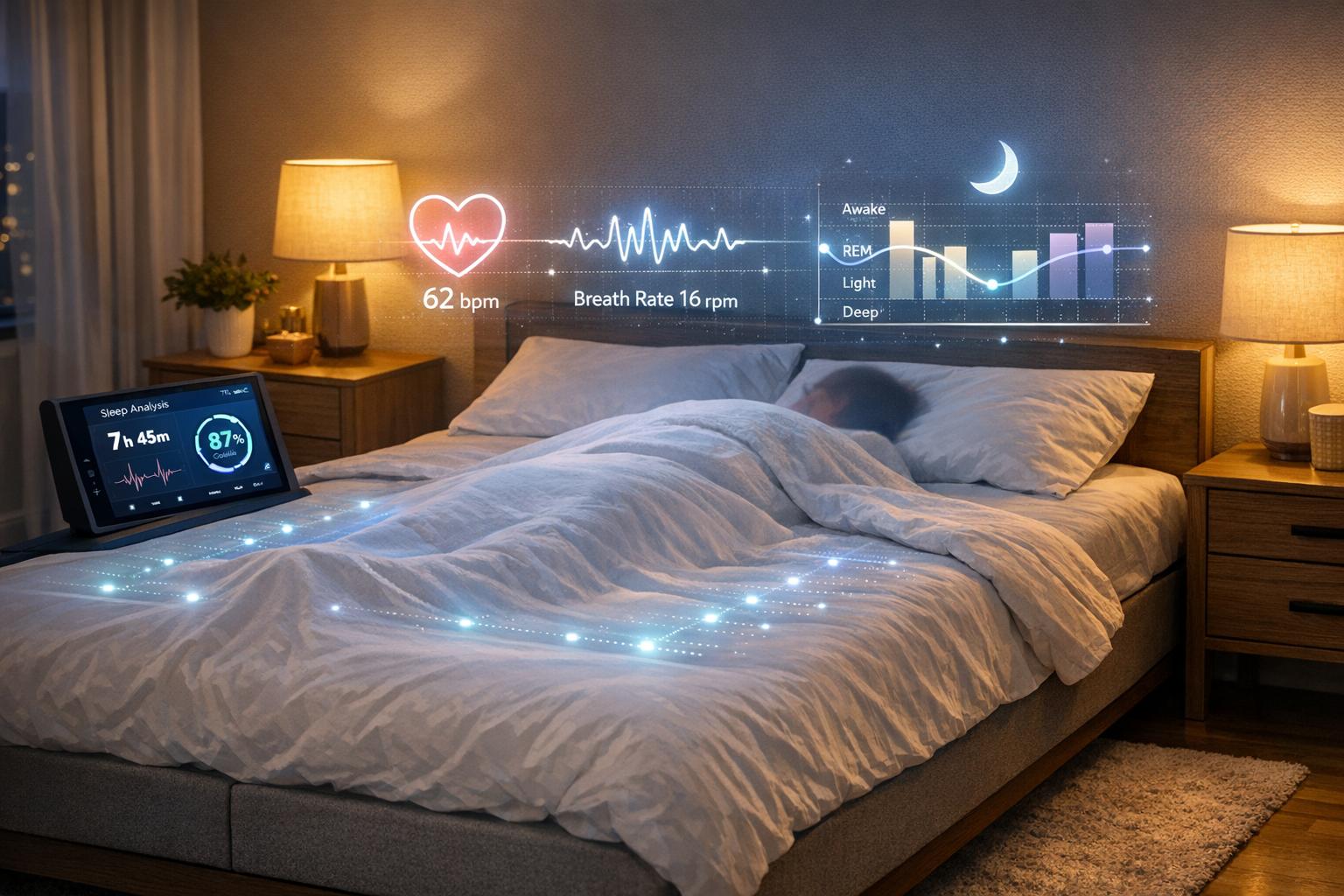
Dispositivos portátiles son una de las herramientas principales para recopilar datos de comportamiento. Gadgets como el Apple Watch o Fitbit monitorizan continuamente métricas como pasos, ritmo cardíaco, calidad del sueño y niveles de actividad, a menudo usando unidades de medida de EE.UU. Por ejemplo, si tu nivel de actividad cae por debajo de tu promedio típico, la IA puede reconocer esto y ofrecer sugerencias para ayudarte a mantener el rumbo.
Diarios de alimentos y registros de comidas proporcionan un desglose de lo que comes. Los usuarios registran las comidas utilizando medidas familiares como tazas, onzas o cucharadas, y la plataforma calcula detalles nutricionales clave, como calorías, proteínas, grasas y más. Sistemas avanzados incluso pueden convertir diversas entradas de alimentos en datos nutricionales precisos para una mejor exactitud.
Mediciones biométricas añaden otra capa de conocimiento. Datos de resultados de laboratorio - como glucosa en sangre (mg/dL), colesterol, HbA1c, presión arterial (mmHg) y peso (libras) - ayudan a la IA a entender cómo tu cuerpo responde a tus elecciones de dieta y estilo de vida.
Registros de estilo de vida capturan el contexto detrás de tus hábitos alimenticios. Información sobre la duración del sueño, niveles de estrés, horarios de trabajo y actividades sociales ayuda a la IA a detectar patrones y desencadenantes que influyen en tus necesidades nutricionales.
Plataformas como Healify integran datos de Apple Health y otros dispositivos conectados, asegurando un perfil de usuario constantemente actualizado.
Técnicas de la IA para la interpretación de datos de comportamiento
Una vez que estos datos se recopilan, la IA utiliza métodos avanzados para darles sentido.
Procesamiento del Lenguaje Natural (NLP) ayuda a analizar entradas de texto como registros de alimentos y diarios de estilo de vida. Por ejemplo, si ingresas, "Tuve un día estresante, compré comida rápida en el camino a casa", los algoritmos de NLP pueden detectar el desencadenante emocional (estrés) y el comportamiento resultante (comida rápida). Modelos basados en transformadores como BERT y GPT son particularmente efectivos en captar estos patrones sutiles, ayudando a la IA a identificar hábitos como comer emocionalmente o saltarse comidas.
Algoritmos de visión por computadora entran en juego al analizar fotos de alimentos. Modelos de aprendizaje profundo pueden reconocer diferentes alimentos y estimar tamaños de porciones en unidades familiares como tazas u onzas. Aunque estas herramientas están mejorando para manejar diversas situaciones, aún pueden tener dificultades con platos mezclados o mala iluminación.
Análisis de datos de sensores interpreta flujos continuos de dispositivos portátiles y conectados. Algoritmos de IA analizan métricas como la variabilidad de la frecuencia cardíaca y las etapas del sueño para descubrir cómo los factores del estilo de vida impactan tus necesidades nutricionales. Por ejemplo, si tus datos de frecuencia cardíaca señalan estrés elevado, la IA podría sugerir intervenciones específicas para manejarlo.
Combinación de múltiples tipos de datos para mejores conocimientos
La verdadera fuerza de la IA radica en combinar estos diferentes tipos de datos para crear una imagen más completa de tus hábitos. Al integrar múltiples fuentes, la IA puede proporcionar conocimientos que van más allá de lo que cualquier flujo de datos único podría revelar.
Tome como ejemplo al coach de IA de Healify, Anna. Si tu portátil indica una mala calidad de sueño, tu registro de alimentos muestra un desayuno saltado y reportas sentirte cansado, la IA conecta estos puntos. En lugar de consejos genéricos, podría sugerir una caminata rápida de 10 minutos y un bocadillo como almendras o chocolate oscuro para aumentar tu energía naturalmente.
Este enfoque descubre conexiones sutiles entre comportamientos. Por ejemplo, la IA podría notar que la mala calidad del sueño a menudo conduce a cambios en tus hábitos alimenticios o de hidratación, permitiéndole ofrecer recomendaciones más precisas y personalizadas.
Tipo de Dato | Conocimiento | Acción |
|---|---|---|
Sensores portátiles | Actividad reducida y sueño deficiente | Sugerir una rutina de relajación a las 10:30 PM |
Imágenes de alimentos | Tamaños de porciones inconsistentes | Proporcionar orientación más clara sobre tamaños de porciones |
Registros de texto | Patrones de alimentación relacionados con el estrés | Ofrecer consejos personalizados para el manejo del estrés |
Biometría | Picos de azúcar en sangre después de ciertas comidas | Ajustar el momento y la composición de las comidas |
La IA también mejora su precisión revisando los datos. Por ejemplo, puede conciliar diferencias entre una entrada de diario de alimentos y una foto de una comida para refinar sus cálculos nutricionales. En un estudio de 12 semanas, los participantes usando un sistema de IA que integraba múltiples flujos de datos mostraron mejoras medibles en la ingesta de frutas y verduras, así como una mejor adherencia a los objetivos de actividad física[2][3].
Personalizando metas nutricionales con conocimientos de comportamiento
Las plataformas de nutrición basadas en IA están llevando la personalización al siguiente nivel utilizando tus hábitos y comportamientos diarios para adaptar las metas nutricionales en tiempo real. Quedaron atrás los días de recomendaciones de talla única. Estos sistemas analizan tus patrones únicos y ajustan tus objetivos para adaptarse a tu estilo de vida y necesidades a medida que evolucionan.
Establecimiento dinámico de objetivos basado en datos en tiempo real
Los planes nutricionales tradicionales a menudo se basan en objetivos fijos basados en pautas generales. La IA, por otro lado, adapta constantemente estos objetivos considerando tus niveles de actividad actuales y datos fisiológicos. Por ejemplo, si tu dispositivo portátil muestra un aumento en la actividad física, como entrenar para un evento de resistencia, la IA recalcula tus necesidades de calorías, macronutrientes y proteínas para impulsar tus esfuerzos. En días más tranquilos, podría reducir tus objetivos calóricos para alinearse con el uso reducido de energía.
Tome como ejemplo al coach de IA de Healify, Anna. Anna analiza múltiples flujos de datos simultáneamente. Si reportas sentirte fatigado, el sistema revisa tus datos de actividad y sugiere soluciones accionables, como una caminata corta acompañada de un bocadillo nutritivo para aumentar tu energía. Del mismo modo, si tus datos biométricos muestran un aumento en la glucosa en sangre después de una comida, la IA podría recomendar reducir los carbohidratos e incorporar más proteína o fibra para ayudar a estabilizar tus niveles de azúcar.
Mejorando la adherencia a través de ajustes conscientes del contexto
Como discutimos anteriormente, entender lo que impulsa tus hábitos alimenticios es clave. La IA utiliza esta comprensión para afinar sus recomendaciones y ayudarte a cumplir tus objetivos. Usando el Procesamiento del Lenguaje Natural, estos sistemas pueden interpretar el contexto emocional detrás de tus entradas. Por ejemplo, si notas un día estresante lleno de opciones de comida rápida, la IA identifica el estrés como un desencadenante y sugiere suavemente maneras de manejarlo, ofreciendo alternativas saludables y fáciles de llevar.
Healify también ilustra esto con su orientación para la recuperación post-entrenamiento. Si buscas recuperarte más rápido, la IA examina tus datos de hidratación y actividad. Luego podría recomendar reponer electrolitos y aumentar la ingesta de proteínas para apoyar la reparación muscular.
El sistema no se detiene en retroalimentación en tiempo real: aprende de tus hábitos. Si los bocadillos nocturnos se convierten en un patrón, la IA podría sugerir una cena más satisfactoria o una divertida actividad nocturna para ayudarte a evitar esos antojos. Del mismo modo, si tu horario de sueño es inconsistente, podría recomendar una rutina relajante antes de dormir y menos tiempo frente a la pantalla, sabiendo que el mal sueño a menudo puede llevar al hambre y a los antojos al día siguiente.
Resultados e Implicaciones respaldados por la investigación
Los estudios respaldan la efectividad del coaching nutricional guiado por IA. En un ensayo controlado aleatorio de 12 semanas, los participantes que utilizaron un coach de salud impulsado por IA mejoraron significativamente su ingesta de frutas y verduras y respetaron mejor los objetivos de actividad física que aquellos en el grupo de control[3]. Otro estudio piloto que involucró a familias utilizando una aplicación de nutrición impulsada por IA vio un aumento en el consumo de agua y una disminución en el consumo de bebidas azucaradas durante tres meses[3].
Integrar datos de registros de alimentos, dispositivos portátiles y seguimiento emocional ha demostrado mejorar los resultados. Al ofrecer retroalimentación en tiempo real, ajustada al contexto, la IA ayuda a los usuarios a sentirse apoyados y comprendidos, lo que fomenta cambios de comportamiento duraderos. Una característica sobresaliente es la capacidad de la IA para predecir posibles contratiempos. Analizando patrones en el sueño, el estrés y las rutinas diarias, puede recomendar ajustes para ayudar a mantenerte en camino antes de que ocurra un desliz.
La evidencia es clara: los sistemas de IA que utilizan conocimientos de comportamiento no solo ofrecen consejos personalizados, sino que empoderan a los usuarios para realizar cambios duraderos al adaptarse a sus desafíos y circunstancias únicas. A continuación, profundizaremos en los desafíos y tendencias que están dando forma al futuro del coaching nutricional basado en IA.
Aplicaciones prácticas de conocimientos conductuales en coaching nutricional basado en IA
Las plataformas de IA transforman los datos en bruto en planes de nutrición precisos y accionables. Al integrar conocimientos conductuales, estas herramientas brindan coaching nutricional preciso y dinámico.
Cómo Healify utiliza datos conductuales para la nutrición personalizada
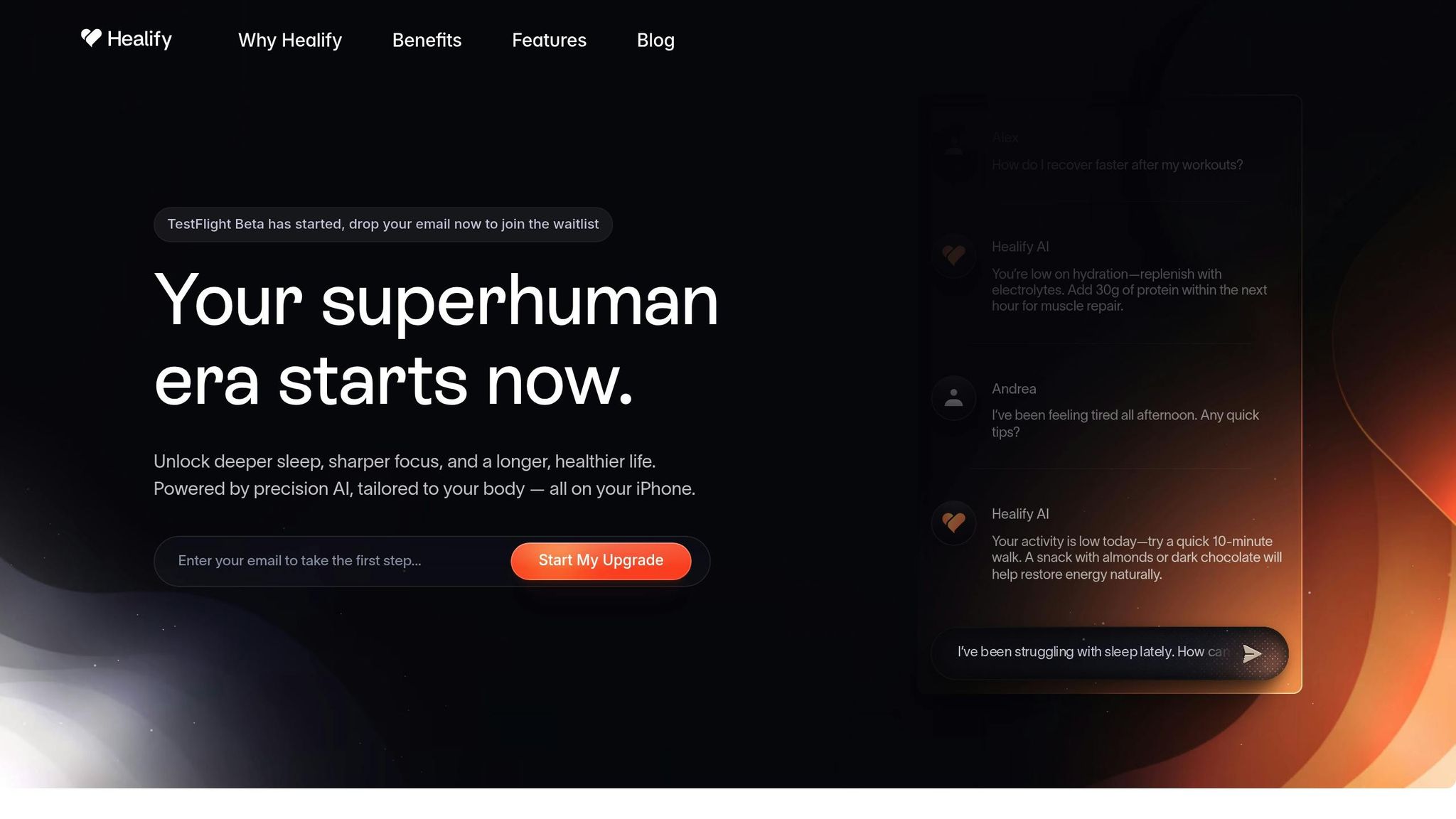
El entrenador de IA de Healify, Anna, recopila datos de dispositivos portátiles (como pasos, ritmo cardíaco y sueño) y biometría (como glucosa en sangre, colesterol y peso), todos medidos en unidades estándar de EE.UU. Esto permite a los usuarios seguir su progreso con facilidad.
Anna no solo interpreta números; mira el panorama general. Por ejemplo, si tu dispositivo portátil muestra frecuentes interrupciones del sueño, Anna no solo sugerirá dormir más. En cambio, analiza tus hábitos nocturnos y ofrece consejos personalizados para mejorar la calidad del sueño. Del mismo modo, si una comida provoca un aumento en la glucosa en sangre, Anna examina factores como el momento de la comida y los niveles de estrés. Basado en esto, podría recomendar ejercicio ligero o ajustes en tus bocadillos.
Lo que distingue a Anna es su capacidad de proporcionar apoyo en tiempo real y las 24 horas. Ya sea que estés navegando por los pasillos de supermercado o planificando una comida, Anna ofrece consejos basados en tus hábitos alimenticios recientes y niveles de actividad. Si los bocadillos nocturnos se relacionan con el estrés, ella identifica el patrón y sugiere estrategias para manejar la alimentación emocional. Este enfoque se desplaza de planes de dieta rígidos a un sistema que se adapta a tu estilo de vida.
Estudios de caso: conocimientos conductuales en acción
La efectividad del coaching nutricional personalizado basado en IA está respaldada por varios estudios:
En un ensayo de 12 semanas, Maher et al. (2020) encontró que el coaching basado en IA aumentó significativamente la ingesta de frutas y verduras y mejoró la adherencia a la actividad física en comparación con un grupo de control. El sistema de IA utilizó aprendizaje automático para proporcionar orientación dietética y de ejercicio personalizada, llevando a cambios conductuales notorios[3].
Un estudio piloto de 3 meses por Lewis et al. (2023) reveló que las familias que utilizaron una aplicación de nutrición impulsada por IA bebieron más agua y redujeron el consumo de bebidas azucaradas. Los padres informaron que las sugerencias personalizadas de la aplicación les ayudaron a tomar decisiones más saludables para toda la familia[3].
La investigación de Fadhil y Gabrielli (2022) mostró que los usuarios de un chatbot dietético impulsado por IA mejoraron su adherencia a los planes nutricionales en un 32% en comparación con aquellos que recibieron asesoramiento tradicional. Este éxito se atribuyó a la capacidad del chatbot para brindar retroalimentación continua y ajustada al contexto. Se adaptó a las respuestas de los usuarios, ofreciendo mensajes alentadores a aquellos que prosperaban con el refuerzo positivo y consejos directos a los demás[2].
Estos estudios subrayan que el coaching nutricional basado en IA prospera cuando combina múltiples puntos de datos de comportamiento. Los sistemas más efectivos no solo se centran en métricas aisladas como el conteo de calorías o los totales de pasos. En cambio, analizan una variedad de factores - sueño, estrés, momento de las comidas, estados emocionales y contextos sociales - para ofrecer una orientación bien equilibrada. Este enfoque integral ayuda a los usuarios a desarrollar hábitos que se alinean con sus comportamientos naturales, haciéndolos más sostenibles a lo largo del tiempo.
Desafíos y direcciones futuras en el coaching nutricional basado en IA
El coaching nutricional basado en IA tiene un gran potencial, pero no está exento de obstáculos. El campo enfrenta desafíos técnicos, regulatorios y éticos que necesitan ser abordados para asegurar que estas herramientas sean tanto efectivas como confiables. Aunque estos obstáculos son significativos, las soluciones emergentes están comenzando a allanar el camino para el progreso.
Abordar cuestiones de privacidad y transparencia de los datos
El coaching nutricional basado en IA depende en gran medida de los datos de dispositivos portátiles, biometría y registros de estilo de vida, algunos de los datos más sensibles que los usuarios pueden compartir. Esto plantea serias preocupaciones sobre la privacidad y seguridad.
En los Estados Unidos, las plataformas deben cumplir con las regulaciones de HIPAA al manejar datos de salud. Esto significa implementar estrictas medidas de seguridad, como encriptación, almacenamiento seguro y protocolos de consentimiento claros. A los usuarios a menudo les preocupa quién tiene acceso a sus datos, cómo se almacenan y si pueden eliminarlo si así lo eligen[2].
"Healify valora tu privacidad. Priorizamos tu privacidad y estamos comprometidos a proteger tu información personal." - Healify [1]
Healify aborda estas preocupaciones ofreciendo protecciones de privacidad robustas y dando a los usuarios control sobre sus datos. Por ejemplo, requiere un consentimiento explícito para cada tipo de dato recopilado, asegurando transparencia y autonomía del usuario.
Otro desafío importante es la falta de transparencia en los algoritmos de IA. Muchos sistemas, especialmente aquellos impulsados por aprendizaje profundo, funcionan como "cajas negras". Los usuarios y proveedores de atención médica a menudo no tienen una comprensión clara de cómo se generan las recomendaciones[2][4]. Esto puede erosionar la confianza, particularmente cuando el consejo parece inusual o contradice las expectativas. El procesamiento centralizado de datos también introduce vulnerabilidades, haciendo a los sistemas más susceptibles a brechas de seguridad.
Tendencias prometedoras: IA que preserva la privacidad y modelos híbridos
Una solución prometedora a las preocupaciones sobre la privacidad es el aprendizaje federado. Este enfoque permite a los sistemas de IA aprender directamente en los dispositivos de los usuarios sin transferir datos en bruto[2]. Al mantener la información personal local, las plataformas pueden beneficiarse de conocimientos colectivos al mismo tiempo que mejoran significativamente la seguridad de los datos.
Los modelos híbridos que combinan IA con entrenadores humanos también están ganando impulso. La investigación indica que los usuarios logran mejores resultados, como mejor adherencia y pérdida de peso, cuando los entrenadores humanos complementan el consejo impulsado por IA[6][7]. Estos modelos aprovechan la eficiencia de la IA y las capacidades de manejo de datos mientras incorporan la empatía y la comprensión matizada que solo los entrenadores humanos pueden proporcionar. Juntos, pueden abordar desafíos emocionales y de comportamiento que la IA por sí sola podría pasar por alto.
La IA explicable también se está convirtiendo en una prioridad. Los usuarios y proveedores de atención médica demandan cada vez más sistemas que puedan explicar claramente sus recomendaciones[4]. Las plataformas futuras deberán mostrar no solo lo que los usuarios deberían hacer, sino por qué ciertas sugerencias se alinean con sus necesidades individuales.
Desafíos éticos en el uso de datos de comportamiento
Incluso mientras las soluciones técnicas como el aprendizaje federado y los modelos híbridos abordan la privacidad y la funcionalidad, introducen nuevos dilemas éticos. El uso de datos de comportamiento en el coaching nutricional basado en IA plantea preocupaciones sobre la equidad y el sesgo. Por ejemplo, los algoritmos deben ser diseñados cuidadosamente para evitar desventajas a grupos específicos o reforzar desigualdades de salud existentes[2][3]. El monitoreo y los ajustes regulares son esenciales para asegurar un tratamiento equitativo para todos los usuarios.
La sensibilidad cultural es otra consideración vital. Una recomendación que funcione bien para un grupo podría no ser adecuada, o incluso podría ser perjudicial, para otro. Los sistemas de IA deben ser entrenados en conjuntos de datos diversos para respetar los diversos enfoques a la alimentación, la salud y el bienestar.
También existe el riesgo de manipulación o estigmatización. La retroalimentación de la IA no debería hacer que los usuarios se sientan culpables o avergonzados por sus elecciones. En cambio, debería permanecer constructiva y de apoyo, fomentando el cambio positivo sin juicio.
El consentimiento informado se vuelve especialmente complicado cuando se trata de datos de comportamiento. Los usuarios pueden no comprender completamente cómo sus patrones revelan conocimientos sobre su salud, preferencias y estilo de vida. Las plataformas necesitan comunicar claramente qué datos se están analizando, qué conocimientos se están extrayendo, y cómo se utilizará esta información.
Para avanzar responsablemente, el campo debe adoptar estándares claros para minimizar la recopilación de datos, asegurar el control del usuario y responsabilizar a los algoritmos.
El futuro del coaching nutricional basado en IA depende de abordar estos desafíos mientras se mantiene la personalización y efectividad que hacen que estas herramientas sean tan atractivas. Las plataformas que priorizan la privacidad, abrazan la transparencia y se comprometen con prácticas éticas estarán mejor posicionadas para ganar la confianza del usuario y brindar beneficios significativos para la salud.
Conclusión: Cómo los conocimientos conductuales dan forma al coaching nutricional basado en IA
Los conocimientos conductuales están transformando la forma en que las plataformas de coaching nutricional basadas en IA ofrecen consejos de salud. Al examinar patrones en los hábitos alimenticios, el sueño, la actividad y el estrés, estos sistemas van más allá de las recomendaciones de talla única. En cambio, ofrecen orientación personalizada que se alinea con los comportamientos y necesidades únicas de los individuos.
Los estudios muestran que los chatbots de IA pueden aumentar la adherencia a las recomendaciones de salud en un 32% en comparación con los métodos de asesoramiento tradicionales. Los usuarios informan mejoras notables en áreas como el consumo de frutas y verduras y la actividad física[2][3]. Plataformas como Healify ponen esta investigación en acción, utilizando datos para entregar sugerencias personalizadas y en tiempo real.
El secreto radica en cómo estas plataformas integran diversas fuentes de datos. Healify, por ejemplo, combina información de dispositivos portátiles, biometría, análisis de sangre y hábitos de vida a través de su coach de IA, Anna. Esto permite al sistema proporcionar consejos específicos del contexto que abordan tanto las preocupaciones inmediatas como los objetivos de bienestar a largo plazo.
A pesar de los avances tecnológicos, el aspecto humano sigue siendo vital. Los usuarios frecuentemente describen a los coaches de IA como "amigables" y "parecidos a humanos", lo que fomenta la confianza y anima a discusiones abiertas sobre salud y nutrición[5]. Esta conexión emocional es clave para impulsar cambios de comportamiento significativos y duraderos.
Para los estadounidenses que buscan navegar el abrumador volumen de datos de salud disponibles hoy, las herramientas de coaching impulsadas por IA ofrecen una solución práctica. Estas plataformas transforman información compleja, como lecturas biométricas y tendencias dietéticas, en pasos claros y accionables que se ajustan a vidas ocupadas.
Las mejores herramientas son aquellas que mantienen la transparencia sobre cómo usan los datos de comportamiento mientras protegen la privacidad del usuario. Healify es un fuerte ejemplo de cómo el coaching nutricional basado en IA puede combinar con éxito un análisis minucioso de los datos con un apoyo personalizado y empático que respeta las preferencias individuales y la diversidad cultural.
A medida que la tecnología avanza, el papel de los conocimientos conductuales continuará expandiéndose, habilitando estrategias aún más precisas y efectivas para mejorar la nutrición. Al combinar la ciencia con datos del mundo real, el coaching nutricional basado en IA no solo ayuda a establecer metas alcanzables, sino que también apoya hábitos saludables duraderos. El futuro de la nutrición está aquí, centrado no solo en lo que comemos, sino en comprender las elecciones detrás de ello.
Preguntas frecuentes
¿Cómo protege el coaching nutricional basado en IA mis datos personales y asegura la privacidad al usar dispositivos portátiles y biometría?
Las plataformas de coaching nutricional impulsadas por IA priorizan tu privacidad y seguridad de datos empleando medidas sólidas para proteger tu información personal. Por ejemplo, muchas de estas plataformas utilizan protocolos de encriptación para asegurar los datos tanto durante la transmisión como el almacenamiento. Esto asegura que detalles sensibles, como los recopilados de dispositivos portátiles, biometría y entradas de estilo de vida, permanezcan protegidos contra accesos no autorizados.
Plataformas como Healify también cumplen con estrictas regulaciones de privacidad, incluyendo el cumplimiento con HIPAA, para proteger los datos relacionados con la salud. Tu información se utiliza exclusivamente para ofrecer recomendaciones personalizadas y nunca se comparte con terceros sin tu consentimiento explícito. Este enfoque mantiene tu información de salud privada y firmemente bajo tu control.
¿Cómo utiliza Healify los conocimientos conductuales para crear planes de nutrición personalizados?
Healify crea planes de nutrición personalizados sumergiéndose en tus datos únicos, incluyendo actividad de dispositivos portátiles, biometría, análisis de sangre y hábitos diarios. Al analizar estos detalles, ofrece recomendaciones dietéticas que se adaptan naturalmente a tu vida diaria.
Este método mejora la consistencia al alinear tus metas nutricionales con tus preferencias, rutinas y requisitos de salud, haciéndolo más manejable para seguir el plan y ver el éxito a largo plazo.
¿Qué consideraciones éticas acompañan al uso de datos de comportamiento en el coaching nutricional impulsado por IA, y cómo se gestionan?
El uso de datos de comportamiento en el coaching nutricional impulsado por IA plantea varias preocupaciones éticas, incluyendo privacidad, seguridad de datos y transparencia. Es esencial manejar la información personal de los usuarios de manera responsable, asegurando que se recopile, almacene y utilice solo con su consentimiento claro e informado.
Plataformas como Healify abordan estas preocupaciones empleando fuertes protocolos de protección de datos, cumpliendo con leyes de privacidad y ofreciendo a los usuarios detalles claros sobre cómo se utiliza su información. Al enfocarse en la apertura y brindar a los usuarios control sobre sus datos, estos desafíos éticos pueden ser abordados mientras se proporcionan recomendaciones de salud personalizadas y significativas.
Entradas de blog relacionadas
Coaching nutricional basado en IA está transformando cómo las personas abordan la dieta y la salud. Analizando datos de comportamiento, como el momento de las comidas, el tamaño de las porciones, y los desencadenantes emocionales, ayuda a los usuarios a entender por qué comen de la manera en que lo hacen. Herramientas como registros de alimentos, dispositivos portátiles y biometría brindan información en tiempo real, permitiendo que la IA ofrezca recomendaciones dietéticas personalizadas y flexibles adaptadas a los hábitos individuales.
Puntos clave:
La IA utiliza datos de dispositivos portátiles, registros de alimentos y biometría para seguir hábitos.
Los conocimientos sobre comportamiento revelan patrones como comer por estrés o saltarse comidas.
Recomendaciones en tiempo real se ajustan a la actividad diaria, el sueño y los niveles de estrés.
Estudios muestran que la IA mejora la adherencia a los planes nutricionales en un 32%.
Plataformas como Healify integran múltiples fuentes de datos para una orientación precisa.
Plataformas de nutrición basadas en IA están ayudando a los usuarios a tomar decisiones informadas al abordar las causas raíz de los comportamientos alimenticios, ofreciendo soluciones prácticas y promocionando hábitos más saludables. Sin embargo, desafíos como la privacidad de los datos y la transparencia de los algoritmos son críticos para asegurar la confianza y el éxito a largo plazo.
Cómo la IA está dominando la industria de la nutrición
Cómo la IA recopila y analiza datos de comportamiento
Las plataformas de nutrición basadas en IA recopilan e interpretan datos de comportamiento, desde la actividad física hasta los hábitos alimenticios, para crear una imagen detallada de tus rutinas diarias. Echémosle un vistazo más cercano a las fuentes que impulsan estos conocimientos.
Fuentes de datos clave para el análisis de comportamiento
Dispositivos portátiles son una de las herramientas principales para recopilar datos de comportamiento. Gadgets como el Apple Watch o Fitbit monitorizan continuamente métricas como pasos, ritmo cardíaco, calidad del sueño y niveles de actividad, a menudo usando unidades de medida de EE.UU. Por ejemplo, si tu nivel de actividad cae por debajo de tu promedio típico, la IA puede reconocer esto y ofrecer sugerencias para ayudarte a mantener el rumbo.
Diarios de alimentos y registros de comidas proporcionan un desglose de lo que comes. Los usuarios registran las comidas utilizando medidas familiares como tazas, onzas o cucharadas, y la plataforma calcula detalles nutricionales clave, como calorías, proteínas, grasas y más. Sistemas avanzados incluso pueden convertir diversas entradas de alimentos en datos nutricionales precisos para una mejor exactitud.
Mediciones biométricas añaden otra capa de conocimiento. Datos de resultados de laboratorio - como glucosa en sangre (mg/dL), colesterol, HbA1c, presión arterial (mmHg) y peso (libras) - ayudan a la IA a entender cómo tu cuerpo responde a tus elecciones de dieta y estilo de vida.
Registros de estilo de vida capturan el contexto detrás de tus hábitos alimenticios. Información sobre la duración del sueño, niveles de estrés, horarios de trabajo y actividades sociales ayuda a la IA a detectar patrones y desencadenantes que influyen en tus necesidades nutricionales.
Plataformas como Healify integran datos de Apple Health y otros dispositivos conectados, asegurando un perfil de usuario constantemente actualizado.
Técnicas de la IA para la interpretación de datos de comportamiento
Una vez que estos datos se recopilan, la IA utiliza métodos avanzados para darles sentido.
Procesamiento del Lenguaje Natural (NLP) ayuda a analizar entradas de texto como registros de alimentos y diarios de estilo de vida. Por ejemplo, si ingresas, "Tuve un día estresante, compré comida rápida en el camino a casa", los algoritmos de NLP pueden detectar el desencadenante emocional (estrés) y el comportamiento resultante (comida rápida). Modelos basados en transformadores como BERT y GPT son particularmente efectivos en captar estos patrones sutiles, ayudando a la IA a identificar hábitos como comer emocionalmente o saltarse comidas.
Algoritmos de visión por computadora entran en juego al analizar fotos de alimentos. Modelos de aprendizaje profundo pueden reconocer diferentes alimentos y estimar tamaños de porciones en unidades familiares como tazas u onzas. Aunque estas herramientas están mejorando para manejar diversas situaciones, aún pueden tener dificultades con platos mezclados o mala iluminación.
Análisis de datos de sensores interpreta flujos continuos de dispositivos portátiles y conectados. Algoritmos de IA analizan métricas como la variabilidad de la frecuencia cardíaca y las etapas del sueño para descubrir cómo los factores del estilo de vida impactan tus necesidades nutricionales. Por ejemplo, si tus datos de frecuencia cardíaca señalan estrés elevado, la IA podría sugerir intervenciones específicas para manejarlo.
Combinación de múltiples tipos de datos para mejores conocimientos
La verdadera fuerza de la IA radica en combinar estos diferentes tipos de datos para crear una imagen más completa de tus hábitos. Al integrar múltiples fuentes, la IA puede proporcionar conocimientos que van más allá de lo que cualquier flujo de datos único podría revelar.
Tome como ejemplo al coach de IA de Healify, Anna. Si tu portátil indica una mala calidad de sueño, tu registro de alimentos muestra un desayuno saltado y reportas sentirte cansado, la IA conecta estos puntos. En lugar de consejos genéricos, podría sugerir una caminata rápida de 10 minutos y un bocadillo como almendras o chocolate oscuro para aumentar tu energía naturalmente.
Este enfoque descubre conexiones sutiles entre comportamientos. Por ejemplo, la IA podría notar que la mala calidad del sueño a menudo conduce a cambios en tus hábitos alimenticios o de hidratación, permitiéndole ofrecer recomendaciones más precisas y personalizadas.
Tipo de Dato | Conocimiento | Acción |
|---|---|---|
Sensores portátiles | Actividad reducida y sueño deficiente | Sugerir una rutina de relajación a las 10:30 PM |
Imágenes de alimentos | Tamaños de porciones inconsistentes | Proporcionar orientación más clara sobre tamaños de porciones |
Registros de texto | Patrones de alimentación relacionados con el estrés | Ofrecer consejos personalizados para el manejo del estrés |
Biometría | Picos de azúcar en sangre después de ciertas comidas | Ajustar el momento y la composición de las comidas |
La IA también mejora su precisión revisando los datos. Por ejemplo, puede conciliar diferencias entre una entrada de diario de alimentos y una foto de una comida para refinar sus cálculos nutricionales. En un estudio de 12 semanas, los participantes usando un sistema de IA que integraba múltiples flujos de datos mostraron mejoras medibles en la ingesta de frutas y verduras, así como una mejor adherencia a los objetivos de actividad física[2][3].
Personalizando metas nutricionales con conocimientos de comportamiento
Las plataformas de nutrición basadas en IA están llevando la personalización al siguiente nivel utilizando tus hábitos y comportamientos diarios para adaptar las metas nutricionales en tiempo real. Quedaron atrás los días de recomendaciones de talla única. Estos sistemas analizan tus patrones únicos y ajustan tus objetivos para adaptarse a tu estilo de vida y necesidades a medida que evolucionan.
Establecimiento dinámico de objetivos basado en datos en tiempo real
Los planes nutricionales tradicionales a menudo se basan en objetivos fijos basados en pautas generales. La IA, por otro lado, adapta constantemente estos objetivos considerando tus niveles de actividad actuales y datos fisiológicos. Por ejemplo, si tu dispositivo portátil muestra un aumento en la actividad física, como entrenar para un evento de resistencia, la IA recalcula tus necesidades de calorías, macronutrientes y proteínas para impulsar tus esfuerzos. En días más tranquilos, podría reducir tus objetivos calóricos para alinearse con el uso reducido de energía.
Tome como ejemplo al coach de IA de Healify, Anna. Anna analiza múltiples flujos de datos simultáneamente. Si reportas sentirte fatigado, el sistema revisa tus datos de actividad y sugiere soluciones accionables, como una caminata corta acompañada de un bocadillo nutritivo para aumentar tu energía. Del mismo modo, si tus datos biométricos muestran un aumento en la glucosa en sangre después de una comida, la IA podría recomendar reducir los carbohidratos e incorporar más proteína o fibra para ayudar a estabilizar tus niveles de azúcar.
Mejorando la adherencia a través de ajustes conscientes del contexto
Como discutimos anteriormente, entender lo que impulsa tus hábitos alimenticios es clave. La IA utiliza esta comprensión para afinar sus recomendaciones y ayudarte a cumplir tus objetivos. Usando el Procesamiento del Lenguaje Natural, estos sistemas pueden interpretar el contexto emocional detrás de tus entradas. Por ejemplo, si notas un día estresante lleno de opciones de comida rápida, la IA identifica el estrés como un desencadenante y sugiere suavemente maneras de manejarlo, ofreciendo alternativas saludables y fáciles de llevar.
Healify también ilustra esto con su orientación para la recuperación post-entrenamiento. Si buscas recuperarte más rápido, la IA examina tus datos de hidratación y actividad. Luego podría recomendar reponer electrolitos y aumentar la ingesta de proteínas para apoyar la reparación muscular.
El sistema no se detiene en retroalimentación en tiempo real: aprende de tus hábitos. Si los bocadillos nocturnos se convierten en un patrón, la IA podría sugerir una cena más satisfactoria o una divertida actividad nocturna para ayudarte a evitar esos antojos. Del mismo modo, si tu horario de sueño es inconsistente, podría recomendar una rutina relajante antes de dormir y menos tiempo frente a la pantalla, sabiendo que el mal sueño a menudo puede llevar al hambre y a los antojos al día siguiente.
Resultados e Implicaciones respaldados por la investigación
Los estudios respaldan la efectividad del coaching nutricional guiado por IA. En un ensayo controlado aleatorio de 12 semanas, los participantes que utilizaron un coach de salud impulsado por IA mejoraron significativamente su ingesta de frutas y verduras y respetaron mejor los objetivos de actividad física que aquellos en el grupo de control[3]. Otro estudio piloto que involucró a familias utilizando una aplicación de nutrición impulsada por IA vio un aumento en el consumo de agua y una disminución en el consumo de bebidas azucaradas durante tres meses[3].
Integrar datos de registros de alimentos, dispositivos portátiles y seguimiento emocional ha demostrado mejorar los resultados. Al ofrecer retroalimentación en tiempo real, ajustada al contexto, la IA ayuda a los usuarios a sentirse apoyados y comprendidos, lo que fomenta cambios de comportamiento duraderos. Una característica sobresaliente es la capacidad de la IA para predecir posibles contratiempos. Analizando patrones en el sueño, el estrés y las rutinas diarias, puede recomendar ajustes para ayudar a mantenerte en camino antes de que ocurra un desliz.
La evidencia es clara: los sistemas de IA que utilizan conocimientos de comportamiento no solo ofrecen consejos personalizados, sino que empoderan a los usuarios para realizar cambios duraderos al adaptarse a sus desafíos y circunstancias únicas. A continuación, profundizaremos en los desafíos y tendencias que están dando forma al futuro del coaching nutricional basado en IA.
Aplicaciones prácticas de conocimientos conductuales en coaching nutricional basado en IA
Las plataformas de IA transforman los datos en bruto en planes de nutrición precisos y accionables. Al integrar conocimientos conductuales, estas herramientas brindan coaching nutricional preciso y dinámico.
Cómo Healify utiliza datos conductuales para la nutrición personalizada
El entrenador de IA de Healify, Anna, recopila datos de dispositivos portátiles (como pasos, ritmo cardíaco y sueño) y biometría (como glucosa en sangre, colesterol y peso), todos medidos en unidades estándar de EE.UU. Esto permite a los usuarios seguir su progreso con facilidad.
Anna no solo interpreta números; mira el panorama general. Por ejemplo, si tu dispositivo portátil muestra frecuentes interrupciones del sueño, Anna no solo sugerirá dormir más. En cambio, analiza tus hábitos nocturnos y ofrece consejos personalizados para mejorar la calidad del sueño. Del mismo modo, si una comida provoca un aumento en la glucosa en sangre, Anna examina factores como el momento de la comida y los niveles de estrés. Basado en esto, podría recomendar ejercicio ligero o ajustes en tus bocadillos.
Lo que distingue a Anna es su capacidad de proporcionar apoyo en tiempo real y las 24 horas. Ya sea que estés navegando por los pasillos de supermercado o planificando una comida, Anna ofrece consejos basados en tus hábitos alimenticios recientes y niveles de actividad. Si los bocadillos nocturnos se relacionan con el estrés, ella identifica el patrón y sugiere estrategias para manejar la alimentación emocional. Este enfoque se desplaza de planes de dieta rígidos a un sistema que se adapta a tu estilo de vida.
Estudios de caso: conocimientos conductuales en acción
La efectividad del coaching nutricional personalizado basado en IA está respaldada por varios estudios:
En un ensayo de 12 semanas, Maher et al. (2020) encontró que el coaching basado en IA aumentó significativamente la ingesta de frutas y verduras y mejoró la adherencia a la actividad física en comparación con un grupo de control. El sistema de IA utilizó aprendizaje automático para proporcionar orientación dietética y de ejercicio personalizada, llevando a cambios conductuales notorios[3].
Un estudio piloto de 3 meses por Lewis et al. (2023) reveló que las familias que utilizaron una aplicación de nutrición impulsada por IA bebieron más agua y redujeron el consumo de bebidas azucaradas. Los padres informaron que las sugerencias personalizadas de la aplicación les ayudaron a tomar decisiones más saludables para toda la familia[3].
La investigación de Fadhil y Gabrielli (2022) mostró que los usuarios de un chatbot dietético impulsado por IA mejoraron su adherencia a los planes nutricionales en un 32% en comparación con aquellos que recibieron asesoramiento tradicional. Este éxito se atribuyó a la capacidad del chatbot para brindar retroalimentación continua y ajustada al contexto. Se adaptó a las respuestas de los usuarios, ofreciendo mensajes alentadores a aquellos que prosperaban con el refuerzo positivo y consejos directos a los demás[2].
Estos estudios subrayan que el coaching nutricional basado en IA prospera cuando combina múltiples puntos de datos de comportamiento. Los sistemas más efectivos no solo se centran en métricas aisladas como el conteo de calorías o los totales de pasos. En cambio, analizan una variedad de factores - sueño, estrés, momento de las comidas, estados emocionales y contextos sociales - para ofrecer una orientación bien equilibrada. Este enfoque integral ayuda a los usuarios a desarrollar hábitos que se alinean con sus comportamientos naturales, haciéndolos más sostenibles a lo largo del tiempo.
Desafíos y direcciones futuras en el coaching nutricional basado en IA
El coaching nutricional basado en IA tiene un gran potencial, pero no está exento de obstáculos. El campo enfrenta desafíos técnicos, regulatorios y éticos que necesitan ser abordados para asegurar que estas herramientas sean tanto efectivas como confiables. Aunque estos obstáculos son significativos, las soluciones emergentes están comenzando a allanar el camino para el progreso.
Abordar cuestiones de privacidad y transparencia de los datos
El coaching nutricional basado en IA depende en gran medida de los datos de dispositivos portátiles, biometría y registros de estilo de vida, algunos de los datos más sensibles que los usuarios pueden compartir. Esto plantea serias preocupaciones sobre la privacidad y seguridad.
En los Estados Unidos, las plataformas deben cumplir con las regulaciones de HIPAA al manejar datos de salud. Esto significa implementar estrictas medidas de seguridad, como encriptación, almacenamiento seguro y protocolos de consentimiento claros. A los usuarios a menudo les preocupa quién tiene acceso a sus datos, cómo se almacenan y si pueden eliminarlo si así lo eligen[2].
"Healify valora tu privacidad. Priorizamos tu privacidad y estamos comprometidos a proteger tu información personal." - Healify [1]
Healify aborda estas preocupaciones ofreciendo protecciones de privacidad robustas y dando a los usuarios control sobre sus datos. Por ejemplo, requiere un consentimiento explícito para cada tipo de dato recopilado, asegurando transparencia y autonomía del usuario.
Otro desafío importante es la falta de transparencia en los algoritmos de IA. Muchos sistemas, especialmente aquellos impulsados por aprendizaje profundo, funcionan como "cajas negras". Los usuarios y proveedores de atención médica a menudo no tienen una comprensión clara de cómo se generan las recomendaciones[2][4]. Esto puede erosionar la confianza, particularmente cuando el consejo parece inusual o contradice las expectativas. El procesamiento centralizado de datos también introduce vulnerabilidades, haciendo a los sistemas más susceptibles a brechas de seguridad.
Tendencias prometedoras: IA que preserva la privacidad y modelos híbridos
Una solución prometedora a las preocupaciones sobre la privacidad es el aprendizaje federado. Este enfoque permite a los sistemas de IA aprender directamente en los dispositivos de los usuarios sin transferir datos en bruto[2]. Al mantener la información personal local, las plataformas pueden beneficiarse de conocimientos colectivos al mismo tiempo que mejoran significativamente la seguridad de los datos.
Los modelos híbridos que combinan IA con entrenadores humanos también están ganando impulso. La investigación indica que los usuarios logran mejores resultados, como mejor adherencia y pérdida de peso, cuando los entrenadores humanos complementan el consejo impulsado por IA[6][7]. Estos modelos aprovechan la eficiencia de la IA y las capacidades de manejo de datos mientras incorporan la empatía y la comprensión matizada que solo los entrenadores humanos pueden proporcionar. Juntos, pueden abordar desafíos emocionales y de comportamiento que la IA por sí sola podría pasar por alto.
La IA explicable también se está convirtiendo en una prioridad. Los usuarios y proveedores de atención médica demandan cada vez más sistemas que puedan explicar claramente sus recomendaciones[4]. Las plataformas futuras deberán mostrar no solo lo que los usuarios deberían hacer, sino por qué ciertas sugerencias se alinean con sus necesidades individuales.
Desafíos éticos en el uso de datos de comportamiento
Incluso mientras las soluciones técnicas como el aprendizaje federado y los modelos híbridos abordan la privacidad y la funcionalidad, introducen nuevos dilemas éticos. El uso de datos de comportamiento en el coaching nutricional basado en IA plantea preocupaciones sobre la equidad y el sesgo. Por ejemplo, los algoritmos deben ser diseñados cuidadosamente para evitar desventajas a grupos específicos o reforzar desigualdades de salud existentes[2][3]. El monitoreo y los ajustes regulares son esenciales para asegurar un tratamiento equitativo para todos los usuarios.
La sensibilidad cultural es otra consideración vital. Una recomendación que funcione bien para un grupo podría no ser adecuada, o incluso podría ser perjudicial, para otro. Los sistemas de IA deben ser entrenados en conjuntos de datos diversos para respetar los diversos enfoques a la alimentación, la salud y el bienestar.
También existe el riesgo de manipulación o estigmatización. La retroalimentación de la IA no debería hacer que los usuarios se sientan culpables o avergonzados por sus elecciones. En cambio, debería permanecer constructiva y de apoyo, fomentando el cambio positivo sin juicio.
El consentimiento informado se vuelve especialmente complicado cuando se trata de datos de comportamiento. Los usuarios pueden no comprender completamente cómo sus patrones revelan conocimientos sobre su salud, preferencias y estilo de vida. Las plataformas necesitan comunicar claramente qué datos se están analizando, qué conocimientos se están extrayendo, y cómo se utilizará esta información.
Para avanzar responsablemente, el campo debe adoptar estándares claros para minimizar la recopilación de datos, asegurar el control del usuario y responsabilizar a los algoritmos.
El futuro del coaching nutricional basado en IA depende de abordar estos desafíos mientras se mantiene la personalización y efectividad que hacen que estas herramientas sean tan atractivas. Las plataformas que priorizan la privacidad, abrazan la transparencia y se comprometen con prácticas éticas estarán mejor posicionadas para ganar la confianza del usuario y brindar beneficios significativos para la salud.
Conclusión: Cómo los conocimientos conductuales dan forma al coaching nutricional basado en IA
Los conocimientos conductuales están transformando la forma en que las plataformas de coaching nutricional basadas en IA ofrecen consejos de salud. Al examinar patrones en los hábitos alimenticios, el sueño, la actividad y el estrés, estos sistemas van más allá de las recomendaciones de talla única. En cambio, ofrecen orientación personalizada que se alinea con los comportamientos y necesidades únicas de los individuos.
Los estudios muestran que los chatbots de IA pueden aumentar la adherencia a las recomendaciones de salud en un 32% en comparación con los métodos de asesoramiento tradicionales. Los usuarios informan mejoras notables en áreas como el consumo de frutas y verduras y la actividad física[2][3]. Plataformas como Healify ponen esta investigación en acción, utilizando datos para entregar sugerencias personalizadas y en tiempo real.
El secreto radica en cómo estas plataformas integran diversas fuentes de datos. Healify, por ejemplo, combina información de dispositivos portátiles, biometría, análisis de sangre y hábitos de vida a través de su coach de IA, Anna. Esto permite al sistema proporcionar consejos específicos del contexto que abordan tanto las preocupaciones inmediatas como los objetivos de bienestar a largo plazo.
A pesar de los avances tecnológicos, el aspecto humano sigue siendo vital. Los usuarios frecuentemente describen a los coaches de IA como "amigables" y "parecidos a humanos", lo que fomenta la confianza y anima a discusiones abiertas sobre salud y nutrición[5]. Esta conexión emocional es clave para impulsar cambios de comportamiento significativos y duraderos.
Para los estadounidenses que buscan navegar el abrumador volumen de datos de salud disponibles hoy, las herramientas de coaching impulsadas por IA ofrecen una solución práctica. Estas plataformas transforman información compleja, como lecturas biométricas y tendencias dietéticas, en pasos claros y accionables que se ajustan a vidas ocupadas.
Las mejores herramientas son aquellas que mantienen la transparencia sobre cómo usan los datos de comportamiento mientras protegen la privacidad del usuario. Healify es un fuerte ejemplo de cómo el coaching nutricional basado en IA puede combinar con éxito un análisis minucioso de los datos con un apoyo personalizado y empático que respeta las preferencias individuales y la diversidad cultural.
A medida que la tecnología avanza, el papel de los conocimientos conductuales continuará expandiéndose, habilitando estrategias aún más precisas y efectivas para mejorar la nutrición. Al combinar la ciencia con datos del mundo real, el coaching nutricional basado en IA no solo ayuda a establecer metas alcanzables, sino que también apoya hábitos saludables duraderos. El futuro de la nutrición está aquí, centrado no solo en lo que comemos, sino en comprender las elecciones detrás de ello.
Preguntas frecuentes
¿Cómo protege el coaching nutricional basado en IA mis datos personales y asegura la privacidad al usar dispositivos portátiles y biometría?
Las plataformas de coaching nutricional impulsadas por IA priorizan tu privacidad y seguridad de datos empleando medidas sólidas para proteger tu información personal. Por ejemplo, muchas de estas plataformas utilizan protocolos de encriptación para asegurar los datos tanto durante la transmisión como el almacenamiento. Esto asegura que detalles sensibles, como los recopilados de dispositivos portátiles, biometría y entradas de estilo de vida, permanezcan protegidos contra accesos no autorizados.
Plataformas como Healify también cumplen con estrictas regulaciones de privacidad, incluyendo el cumplimiento con HIPAA, para proteger los datos relacionados con la salud. Tu información se utiliza exclusivamente para ofrecer recomendaciones personalizadas y nunca se comparte con terceros sin tu consentimiento explícito. Este enfoque mantiene tu información de salud privada y firmemente bajo tu control.
¿Cómo utiliza Healify los conocimientos conductuales para crear planes de nutrición personalizados?
Healify crea planes de nutrición personalizados sumergiéndose en tus datos únicos, incluyendo actividad de dispositivos portátiles, biometría, análisis de sangre y hábitos diarios. Al analizar estos detalles, ofrece recomendaciones dietéticas que se adaptan naturalmente a tu vida diaria.
Este método mejora la consistencia al alinear tus metas nutricionales con tus preferencias, rutinas y requisitos de salud, haciéndolo más manejable para seguir el plan y ver el éxito a largo plazo.
¿Qué consideraciones éticas acompañan al uso de datos de comportamiento en el coaching nutricional impulsado por IA, y cómo se gestionan?
El uso de datos de comportamiento en el coaching nutricional impulsado por IA plantea varias preocupaciones éticas, incluyendo privacidad, seguridad de datos y transparencia. Es esencial manejar la información personal de los usuarios de manera responsable, asegurando que se recopile, almacene y utilice solo con su consentimiento claro e informado.
Plataformas como Healify abordan estas preocupaciones empleando fuertes protocolos de protección de datos, cumpliendo con leyes de privacidad y ofreciendo a los usuarios detalles claros sobre cómo se utiliza su información. Al enfocarse en la apertura y brindar a los usuarios control sobre sus datos, estos desafíos éticos pueden ser abordados mientras se proporcionan recomendaciones de salud personalizadas y significativas.
Entradas de blog relacionadas


Finalmente toma el control de tu salud

Finalmente toma el control de tu salud
Finalmente toma el control de tu salud