
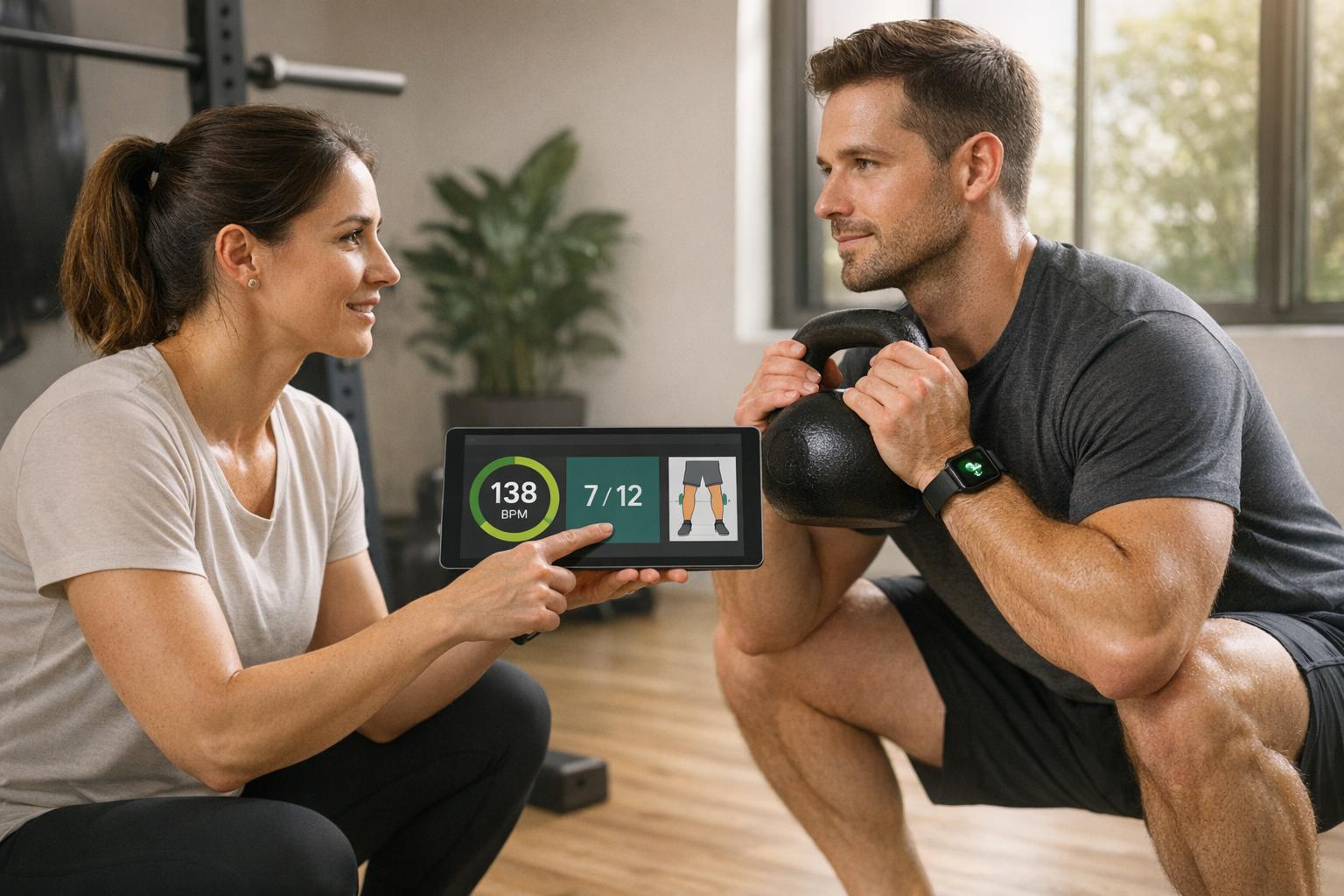
AI is transforming fitness coaching by making it smarter, more personalized, and data-driven. Here's what you need to know:
- 71% of fitness app users quit within 3 months, but AI-powered apps retain 50% more users by tailoring plans to individual needs.
- AI-driven programs deliver 28% greater strength gains compared to generic plans by analyzing wearables, biometrics, and lifestyle data.
- Apps like Healify use AI to adjust workouts based on recovery, prevent injuries, and provide real-time feedback on form.
- The AI personal trainer market is projected to reach $8.3 billion in 2026, growing at over 14% annually.
AI simplifies complex health data into actionable steps, ensuring your fitness routine fits your life while improving results.
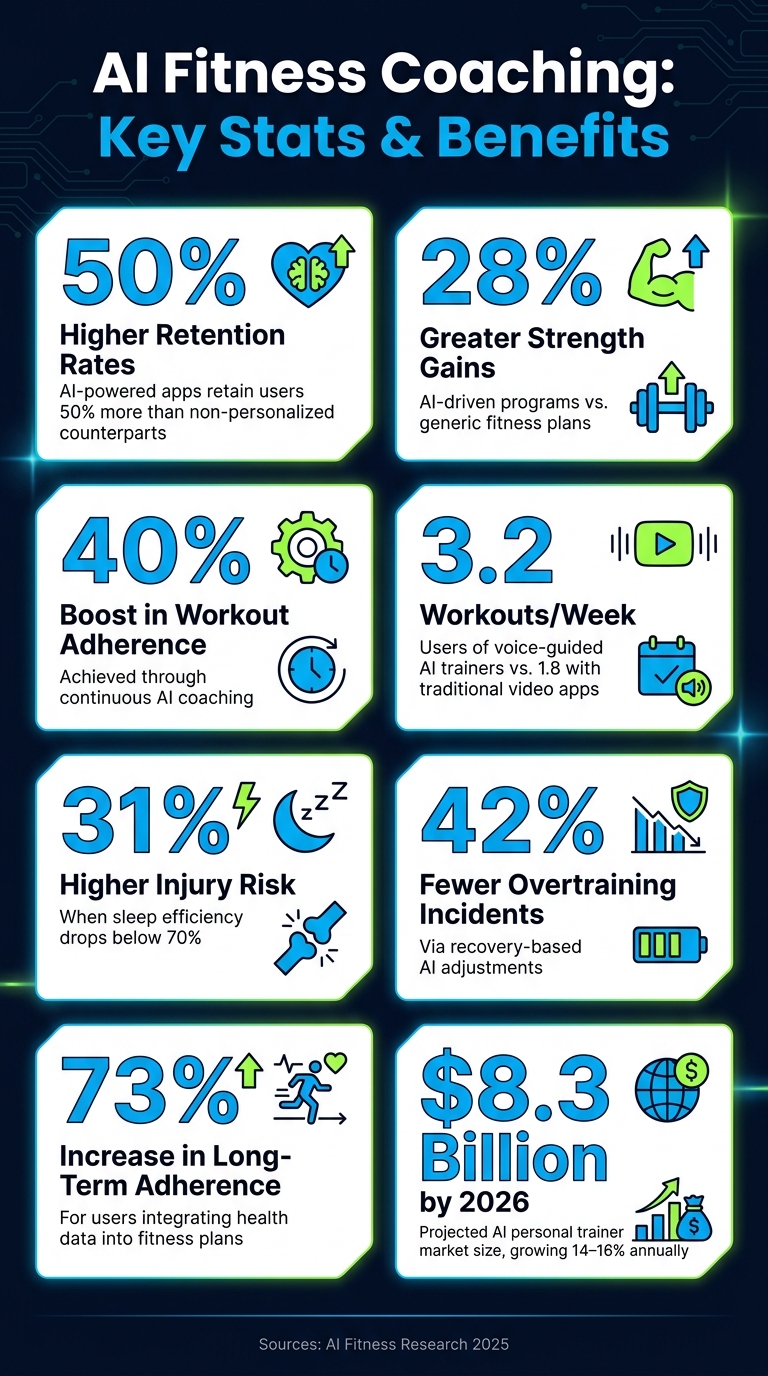
AI Fitness Coaching: Key Stats & Benefits
AI Workout Apps Tested: Fitbit Gemini vs Peloton IQ vs WHOOP (2026)
sbb-itb-f5765c6
Common Fitness Coaching Problems and How AI Solves Them
Fitness challenges often arise not from a lack of information but from inconsistency and underutilized data. AI tackles these issues in direct and measurable ways.
Staying Motivated and Accountable
One major reason people abandon their fitness routines is that generic programs fail to fit into real life. AI steps in by learning your habits - like when you're most likely to work out - and sending reminders at the perfect time. If your schedule gets tight, it can adapt a 60-minute workout into an effective 20-minute session, ensuring you stay on track.
While traditional fitness apps often lose users after a few months, AI-powered platforms achieve 50% higher retention rates than their non-personalized counterparts [1].
Breaking Through Fitness Plateaus
Plateaus happen when your body adapts to repetitive exercises, leaving static programs unable to drive further progress. AI solves this by analyzing trends like stalled weight increases, slower rep speeds, or changes in heart rate recovery. It identifies plateaus early and adjusts your program automatically, using techniques like progressive overload, periodization, and recovery phases. This approach has been shown to deliver 28% greater strength gains compared to generic plans [1].
For particularly stubborn plateaus, AI might suggest strategies like drop sets, which research shows can boost muscle activation by up to 39% [3].
Reducing Injury Risk and Improving Form
AI also plays a key role in keeping you safe. Using computer vision and motion tracking through your smartphone or 3D sensors, it can detect and correct poor form in real time. A 2025 study comparing GPT-4-generated fitness plans with those created by professional trainers found no significant differences in safety outcomes [1].
Additionally, AI uses wearable data - like Heart Rate Variability (HRV) and sleep quality - to assess your recovery before a workout. If your recovery metrics are low, it adjusts the session's intensity to reduce injury risk. This personalized approach ensures you're training smart, not just hard.
Making Sense of Health Data
Wearables generate a flood of information - steps, sleep patterns, resting heart rate, and calories burned - but many users struggle to make sense of it. AI simplifies this by connecting the dots across multiple data streams and turning them into actionable plans.
Apps like Healify take it a step further, combining wearable data with bloodwork and lifestyle habits. Through its AI coach Anna, Healify provides tailored recommendations, helping you make better decisions without feeling overwhelmed by the data. AI ensures your health metrics are not just numbers but tools for meaningful progress.
How AI Personalizes and Adapts Fitness Coaching
AI fitness coaching stands apart by tailoring its approach to your specific biology and adapting to your ever-changing lifestyle. It doesn’t just follow a one-size-fits-all formula - it evolves with you.
Building Plans from Multiple Data Points
AI-driven fitness plans pull from a wealth of data that traditional programs often overlook. Factors like your age, weight, sleep habits, resting heart rate, activity history, and even bloodwork are taken into account. The result? A fitness plan that’s not just a schedule but a reflection of your unique biology and daily life.
Take Healify, for example. Its AI coach, Anna, combines bloodwork, wearable data, and biometrics into a seamless strategy. This technology transforms raw data into actionable insights, such as adjusting your workout intensity, focusing on recovery, or tweaking your nutrition on demanding days. These custom plans are designed to adapt dynamically, ensuring they stay relevant even when life throws curveballs.
Adjusting Plans When Life Gets in the Way
Let’s face it - life rarely sticks to a perfect training schedule. Missed workouts, restless nights, or high-stress days are bound to happen. AI steps in by monitoring recovery metrics like Heart Rate Variability (HRV) and sleep quality, recalibrating your plan as needed. If your body shows signs of strain, it automatically dials down the intensity to help you avoid overtraining or burnout.
Real-Time Feedback During Workouts
AI doesn’t just stop at planning - it’s there during your workouts too. Using computer vision and motion tracking, it analyzes your movements in real time. If your form slips, it provides immediate feedback with voice cues like, “Straighten your back” or “Keep your core engaged.” [4]
"A fitness coach's primary responsibility is to ensure safety and efficacy in every movement." - Ekemini Samuel, Computer Vision Developer [4]
Beyond correcting form, these systems can count your reps, adjust resistance mid-set if you’re struggling, or respond to verbal cues about discomfort [5]. The results speak for themselves: continuous coaching boosts workout adherence by 40%, and users of voice-guided AI trainers average 3.2 workouts per week, nearly double the 1.8 sessions logged by those using traditional video-based apps [5].
How AI Connects Fitness to Overall Health
AI-powered coaching bridges the gap between fitness routines and overall health by considering factors like sleep quality, stress levels, and recovery. These elements directly influence how well your body performs during workouts. By analyzing this data, AI creates training plans that align with your overall health and well-being.
Using Health Metrics to Guide Fitness
AI takes real-time data from wearables and builds a detailed health profile that goes beyond just tracking workouts. Metrics like heart rate variability (HRV), sleep stages, stress levels, and readiness scores are all incorporated. For example, athletes who monitor HRV data experience 6–10% greater improvements in VO2 max, while poor sleep efficiency (below 70%) increases the risk of injury by 31% [6].
One standout example is Healify's AI coach, Anna, which combines wearable data, biometrics, and lifestyle inputs to create a holistic view of your health. It connects the dots between, say, the quality of sleep you had on Tuesday and how intense your workout should be on Wednesday. This level of monitoring not only fine-tunes workout intensity but also signals when it's time to prioritize recovery.
"AI takes all those tiny pieces of information you generate every single day, from your sleep tracker, food logs, heart rate, and even your mood, and finds patterns no human could ever process instantly. It sees the whole picture." - Delicia Guild, Coach [2]
Avoiding Burnout and Injury Through Smarter Training
AI also plays a crucial role in preventing overtraining by tailoring workouts based on recovery metrics. If your recovery scores drop due to poor sleep or heightened stress, the AI might recommend lighter activities like yoga or a recovery walk instead of a high-intensity workout. This helps maintain balance and reduces the risk of burnout or injury.
"If the AI sees you had poor rest or high stress, it might suggest a lighter workout, a recovery walk, or yoga instead of HIIT. It helps you train smarter, not just harder." - Delicia Guild, Coach [2]
This approach promotes consistency in the long run. Recovery-based adjustments lead to 42% fewer overtraining incidents, a 28% boost in training consistency, and a 73% increase in long-term adherence for those who integrate health data into their fitness plans [6].
Conclusion: What AI Means for the Future of Fitness Coaching
The future of fitness coaching is no longer a distant concept - it’s already here, driven by the capabilities of AI. These tools are shifting coaching from rigid plans to dynamic, personalized systems that respond to your unique needs. Among the advancements discussed, one finding stands out: individualized AI-driven programs result in 28% greater strength gains compared to generic approaches [1].
This evolution is significant because it transforms raw data into practical, everyday guidance. The exciting part isn’t just what AI currently achieves but what’s on the horizon: smarter ways to prevent injuries, deeper integration with overall health data, and even more tailored personalization. These advancements simplify decision-making and pave the way for new possibilities in fitness.
As Marcus Hale puts it:
"AI should make the next rep easier to start, not harder to understand. If a tool creates more confusion than clarity, it is a poor coaching system." [7]
Healify is a great example of this clarity-first philosophy. By combining wearable data, biometrics, bloodwork, and lifestyle habits, Healify’s AI coach Anna provides a holistic view of your health. It doesn’t just focus on workouts - it translates complex health data into simple, actionable steps. That’s the key difference between simply collecting data and actually using it to improve lives.
The growing demand for such solutions is reflected in the AI personal trainer market, which is projected to reach $8.3 billion by 2026, with annual growth rates between 14–16% [1]. This surge highlights a shift toward coaching that fits into your life rather than forcing you to fit into a rigid system. While AI can’t replace the human touch - the motivation, hands-on corrections, and personal connection - it makes high-quality, tailored fitness guidance available to more people than ever before.
FAQs
What data do I need for AI coaching to work well?
AI coaching thrives on having precise and detailed data about your health and lifestyle. This can include information from wearables, such as sleep patterns, heart rate, activity levels, and stress markers. Biometric data, like bloodwork results, and workout stats - think reps, sets, and intensity - also play a key role. Additionally, behavioral cues like adherence to routines, mood shifts, and motivation levels allow the AI to fine-tune its guidance. The more comprehensive your data, the better the AI can customize its recommendations to align with your specific goals.
How does AI decide when to push harder vs. scale back?
AI fine-tunes workout intensity by examining real-time data such as recovery levels, fatigue, and performance metrics. This approach helps create workouts tailored to deliver better results while reducing the risk of overtraining. It constantly adjusts to match your progress and physical condition, ensuring each session aligns with your readiness.
Can AI coaching replace a human trainer for beginners?
AI coaching brings a lot to the table for beginners. It can create personalized workout plans, provide real-time feedback, and adjust programs based on progress. These features make it a handy tool for those just starting out.
That said, it’s not a perfect substitute for human trainers. Humans bring something AI can’t: empathy, the ability to make nuanced judgments, and the kind of motivation that comes from genuine connection. For example, a trainer can pick up on subtle body language or emotional cues and offer encouragement when it’s needed most.
Research shows that AI works best when combined with human interaction. A trainer’s ability to adapt on the fly and offer reassurance complements the precision and structure AI provides. While AI can be a helpful guide, many beginners still benefit greatly from the human touch when starting their fitness journey.