
If you use your phone, tablet, or laptop right before bed, you may be pushing sleep later without noticing it. Evening screen light can delay melatonin, keep body temperature and alertness too high, and make it harder for me to fall asleep on time.
Here’s the short version:
- Blue light at night delays my body clock
- The last 30–60 minutes before bed matter most
- Phones used close to my face hit harder than TVs across the room
- Interactive use like gaming, texting, email, and social media can keep my brain too active
- A fixed cutoff, dimmer screens, warmer color settings, and a short device-free routine can help
A few numbers stand out:
- 2 hours of evening tablet use can cut melatonin by about 55%
- That same kind of use can delay melatonin onset by about 1.5 hours
- In one study, each extra 10 minutes of interactive screen use in bed delayed sleep onset by about 10 minutes
- Pre-sleep screen use was linked to 48 fewer minutes of sleep per week in one large adult study
What I take from this is simple: timing beats hacks. Night mode and blue-light filters may help a little, but they do not fix long, late, bright screen use. If I want better sleep, the first move is to stop using screens before bed and give my brain time to slow down.
The rest of this article breaks down why screens shift sleep later, which habits cause the most trouble, and what I can change tonight.
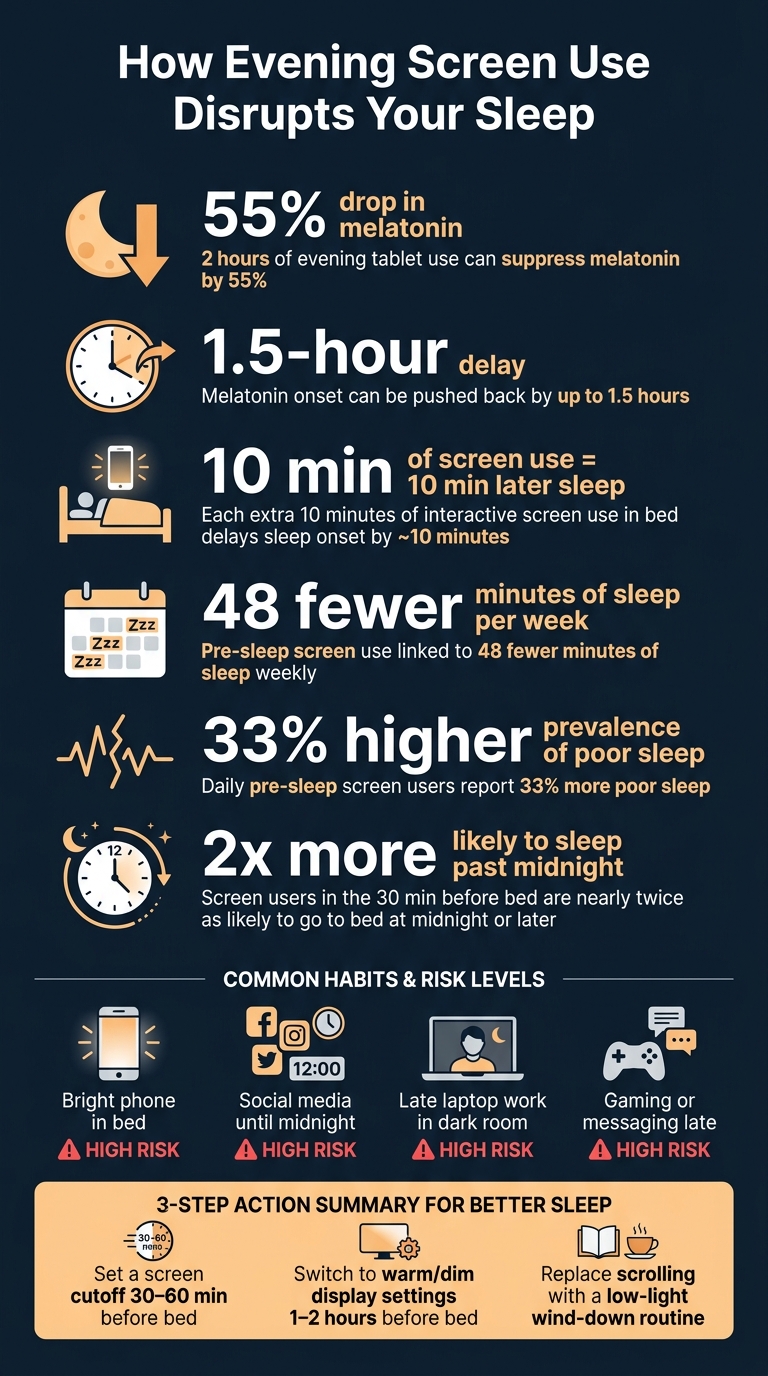
How Evening Screen Use Disrupts Your Sleep: Key Stats
Why screen use delays sleep
Blue light, melatonin suppression, and later sleep onset
Screens give off blue light, which sits in the 400–500 nm range. At night, that light hits light-sensitive cells at the back of the eye and sends a message to the brain’s master clock: it’s still daytime. When that happens, melatonin release gets pushed back.
That shift isn’t small. Two hours of evening exposure to an LED tablet can cut melatonin levels by about 55% and delay melatonin onset by about 1.5 hours compared with reading a printed book under dim light.[1][10]
The setup matters too. A screen held close to your face in a dark room has a stronger effect because the light signal stands out more against the rest of the room.[1][7][8]
How screens affect body temperature and alertness at night
Melatonin is only part of the story. As bedtime gets closer, core body temperature usually starts to drop. That drop helps the body move toward sleep. Evening screen use can weaken or delay it.
In lab studies, two hours of short-wavelength light exposure late in the evening was linked to a higher heart rate and higher core body temperature - both signs that the body is still more “switched on” than it should be at night.[8] If your body stays warmer at bedtime, falling asleep tends to take longer.
Then there’s the mental side. Interactive screen use - like gaming, social media, or checking email - can keep your brain active and emotionally keyed up. In one repeated-measures study, every extra 10 minutes of interactive screen use in bed delayed sleep onset by about 10 minutes and cut total sleep time by about 9 minutes.[15]
So even with a dim screen, the activity itself can still keep you awake. A tense game, doomscrolling, or reading work email at 11:30 p.m. can pull your mind in the opposite direction of sleep.
What research shows about sleep duration and quality
The pattern in the research is pretty clear: more screen time before bed is tied to less sleep and poorer sleep quality.
In one large cross-sectional study of U.S. adults, daily pre-sleep screen use was linked to 48 fewer minutes of sleep per week and a 33% higher prevalence of poor sleep compared with no pre-sleep screen use.[2][6][14] Adults who used a screen in the 30 minutes before sleep were also nearly twice as likely to go to bed at midnight or later.[13]
People with higher evening screen exposure also report more trouble falling asleep, more nighttime awakenings, and feeling less rested in the morning.[9][11] That lines up with what researchers see in the body: later melatonin release, more alertness at night, and shorter sleep time can make sleep feel lighter and less restorative.
sbb-itb-f5765c6
Screen habits most likely to disrupt your circadian rhythm
Using phones or laptops in the hour before bed
The biggest problems usually come from screen use that happens late, up close, and right before sleep. That last hour before bed matters most because it stacks a few things together: late timing, short viewing distance, and bright light.
A phone held a few inches from your face in a dark bedroom sends a stronger light signal than a TV across the room, even if both are on for the same amount of time. So even if late-night phone use in bed feels short or harmless, it can be one of the most disruptive habits. Using AI nudges for better health habits can help break these cycles by reminding you to put devices away.
Long evening screen use in dim rooms
A bright screen in a dim room is a rough combo. If you do that for long stretches at night - watching shows, gaming, doomscrolling, or wrapping up laptop work - it can delay your body clock over time.
When that pattern repeats night after night, bedtime can drift later and sleep can get cut short, requiring strategies to reset a disrupted sleep-wake cycle.[17][3][5]
Habits that worsen sleep vs. habits that reduce disruption
Not all screen habits hit the same way. The risk goes up even more when screen light comes with mental stimulation. Things like social media, competitive gaming, late-night messaging, and checking work email don't just expose you to light. They also keep your brain switched on, which makes it harder to settle down than passive viewing.[16][18]
| Habit | Risk level | Why it matters |
|---|---|---|
| Bright phone use in bed | High | Close screen in a dark room creates a strong light cue |
| Social media scrolling until midnight | High | Combines light exposure with emotional stimulation and unpredictable content |
| Late laptop work in a dark room | High | Bright screen in low ambient light delays circadian timing |
| Gaming or messaging late at night | High | Interactive screen use is both stimulating and time-consuming |
Practical steps to reduce screen-related sleep disruption
Set a screen cutoff and add a device-free wind-down
If screens keep stretching your bedtime later, start with a fixed cutoff 30–60 minutes before bed. For a lot of people, 60 minutes works better because it gives your mind a more dependable buffer to slow down.[23][24] If 30 minutes doesn’t do the job, move it to 60.
That cutoff gets much easier to follow when you pair it with a simple wind-down routine. Keep it short and predictable: dim the lights, take a quick shower, do 5–10 minutes of light stretching, then read in bed. Over time, your brain starts linking those steps with sleep.[24][25]
Adjust screen brightness, color temperature, and room lighting
If you still need to use a screen at night, make it less harsh. Turn brightness down to the lowest comfortable level, and switch on night mode or a warm color setting 1–2 hours before bed. That shifts the screen toward warmer tones and cuts down on short-wavelength blue light, which suppresses melatonin the most.[4]
Blue-light filters can help a bit, but they don’t wipe out the effects of heavy bedtime screen use.[20] Time still matters. So does timing. Cutting back on how long you use screens at night - and how close that use gets to bedtime - does more than any filter setting.
The room itself matters too. Use a dim table lamp or floor lamp instead of bright overhead lighting 1–2 hours before bed, and pick warm-toned bulbs in the 2,700–3,000 K range for spaces you use at night.[19][22] In the bedroom, keep things as dark as you can. Even small light sources, like streetlights slipping through the window or tiny device LEDs, can reduce melatonin and break up sleep.[28]
Replace late-night scrolling with low-light evening habits
After the cutoff, it helps to have a backup plan. Otherwise, it’s way too easy to drift back to scrolling. Good low-light options include:
- a paper book by the bed
- a journal for a quick brain dump of tomorrow’s tasks
- 5–10 minutes of gentle stretching
These are low-stimulation swaps that work well in dim light and don’t come with the emotional pull of a social feed.[26][27] One simple trick: attach the new habit to something you already do, like brushing your teeth.
If your schedule shifts a lot or tends to be irregular, wake time matters too. Try to keep it within about ±1 hour every day, including weekends, to limit social jet lag.[21][24]
Tailor the plan to your schedule and track what changes
Why later chronotypes and irregular schedules need extra attention
If a fixed cutoff isn’t doing enough, match the plan to your body clock. People don’t respond to light the same way at night. The exact same screen habit can shift circadian timing more for one person than another.[29][30]
This matters even more for later chronotypes. If you already tend to fall asleep late, evening screen light can push bedtime even later. Shift workers and frequent travelers run into a similar issue because their timing cues keep moving.
If that sounds like you, it helps to be stricter. Set your screen cutoff 60–90 minutes before your actual target bedtime, not the bedtime you wish you kept. Then switch to warmer color settings from sunset onward. The point is simple: stop stacking more delay onto a clock that’s already running late.
Using wearable data and apps to refine your routine
Track a few basics for better sleep quality:
- bedtime consistency
- sleep onset
- total sleep time
- sleep efficiency
Wearables aren’t perfect, but they’re good at showing patterns over time. Start with sleep onset. That’s the clearest sign that evening screens may be pushing your clock later.[31]
Pick one change and stick with it for a week. Then look at what happened. Did your average sleep onset move earlier? Did total sleep time go up? Did resting heart rate or HRV improve?
If 60 minutes off-screen helped but you’re still lying awake, extend the cutoff to 75–90 minutes. If nothing changed, check brightness and color temperature, or add a calmer wind-down. Those trends can show whether your cutoff should move earlier.
For iPhone users, Healify can turn sleep and lifestyle data into one weekly action step. Its AI health coach, Anna, can flag nights when screen use delays sleep and suggest the next adjustment - whether that’s moving your cutoff earlier, changing your Night Shift schedule, or lining up screen habits with your chronotype and work schedule.
Key takeaways
Evening screens delay melatonin and push your circadian clock later, especially when the screen is bright, close to your face, and used in the hour before bed.[4][12] The best place to start is practical: lower brightness, switch to warmer display settings, and build a steady device-free wind-down around a fixed cutoff time.
Later chronotypes, shift workers, and frequent travelers tend to be hit harder, so they often do better with stricter light rules and closer tracking. Check your trends each week, then adjust your cutoff time, brightness, or wind-down length based on what changes sleep onset and sleep duration.
Blue Light and Melatonin: Why Screen Time is Ruining Your Sleep
FAQs
Can blue-light glasses help at night?
They can help. But the best way to protect your circadian rhythm is simple: cut down on bright light before bed.
If you need to use your phone, laptop, or TV, switch on night mode or a screen filter about 90 minutes before you plan to sleep. It also helps to dim the lights at home and use warmer light tones. That can lower melatonin suppression and make it easier for your body to wind down.
How long before bed should I stop using my phone?
To help limit circadian rhythm disruption and sleep better, stop using your phone about 30 minutes before bed.
That short buffer gives your brain time to settle down and move away from the stimulation that comes with screen use. Healify can also offer personal guidance based on your wearable data and lifestyle habits.
Is watching TV at night as disruptive as using a phone?
Yes. Watching TV at night can throw off your circadian rhythm just as much as using a phone. In both cases, screen light can suppress melatonin and keep your body more alert when it should be easing into sleep.
That’s the main issue: both devices give off light that can interfere with your body’s natural wind-down process. So if you spend too much time in front of screens in the evening, sleep can take a hit.