
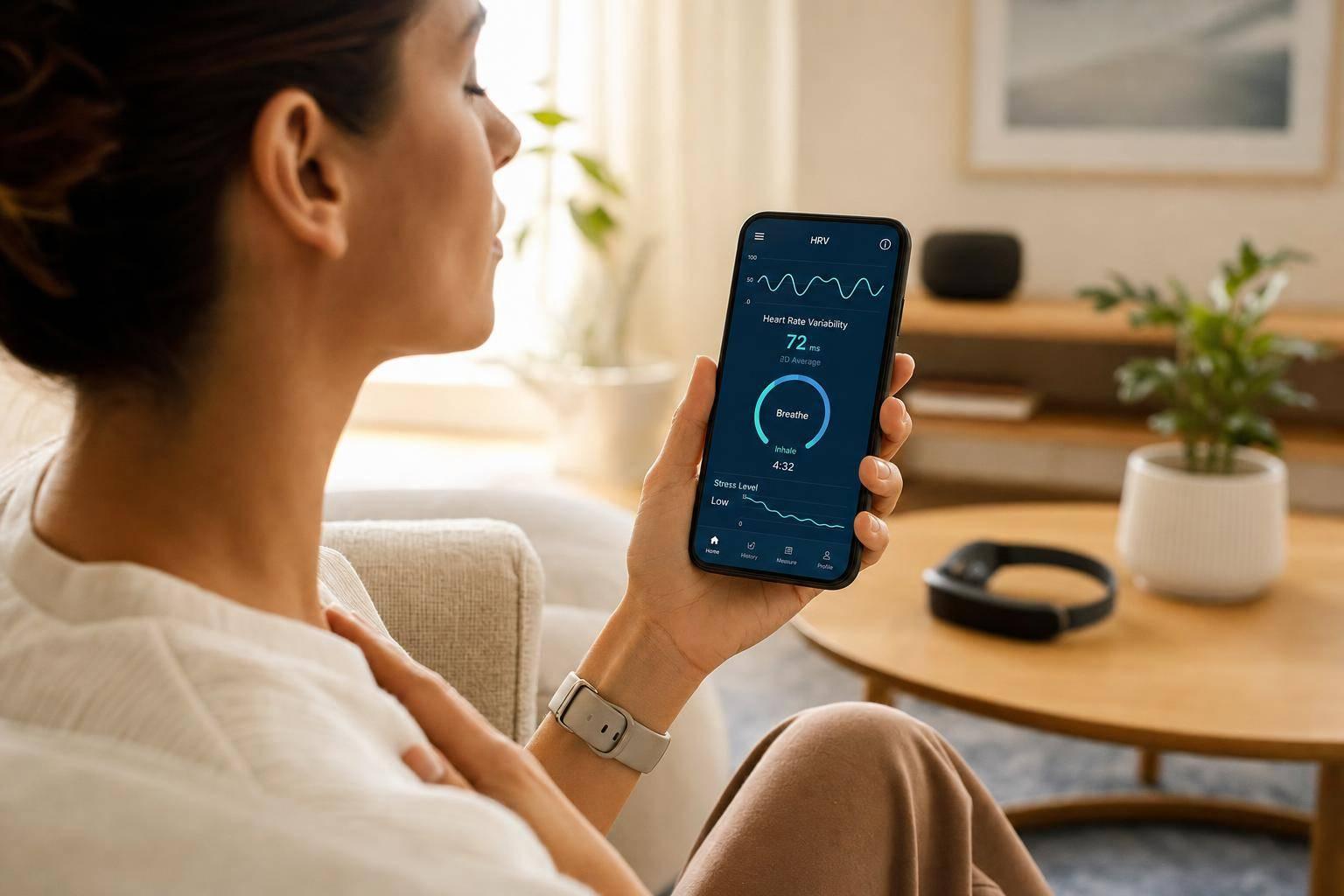
If I had to boil this down to one takeaway, it’s this: HRV biofeedback is the best-supported option for mental health, while EEG tools, stress wearables, home devices, and AI coaching apps mostly work best as add-ons.
If you’re comparing these tools, I’d focus on 3 things first:
- How strong the research is
- How accurate the signal is
- How much clinician support the tool needs
Here’s the short version:
- HRV biofeedback has the strongest results for anxiety, stress, and depression, with meta-analytic effects around g = 0.83 for anxiety/stress and g = 0.38 for depression.
- EEG neurofeedback shows promise for attention and depression, but results are less steady and device setup is often more complex.
- Multimodal stress wearables are better for tracking patterns than for treating symptoms on their own.
- Portable home-use devices can help as structured practice between sessions, especially when a clinician reviews progress.
- Healify-style AI coaching can turn wearable and habit data into daily next steps, but there are no direct mental health trials for Healify itself yet.
A few numbers stand out. A 2024 review found symptom improvement in 70% of included studies across anxiety, depression, panic disorder, and PTSD. And a 2026 review of 71 studies said multimodal sensing tools show promise, though much of the field is still early.
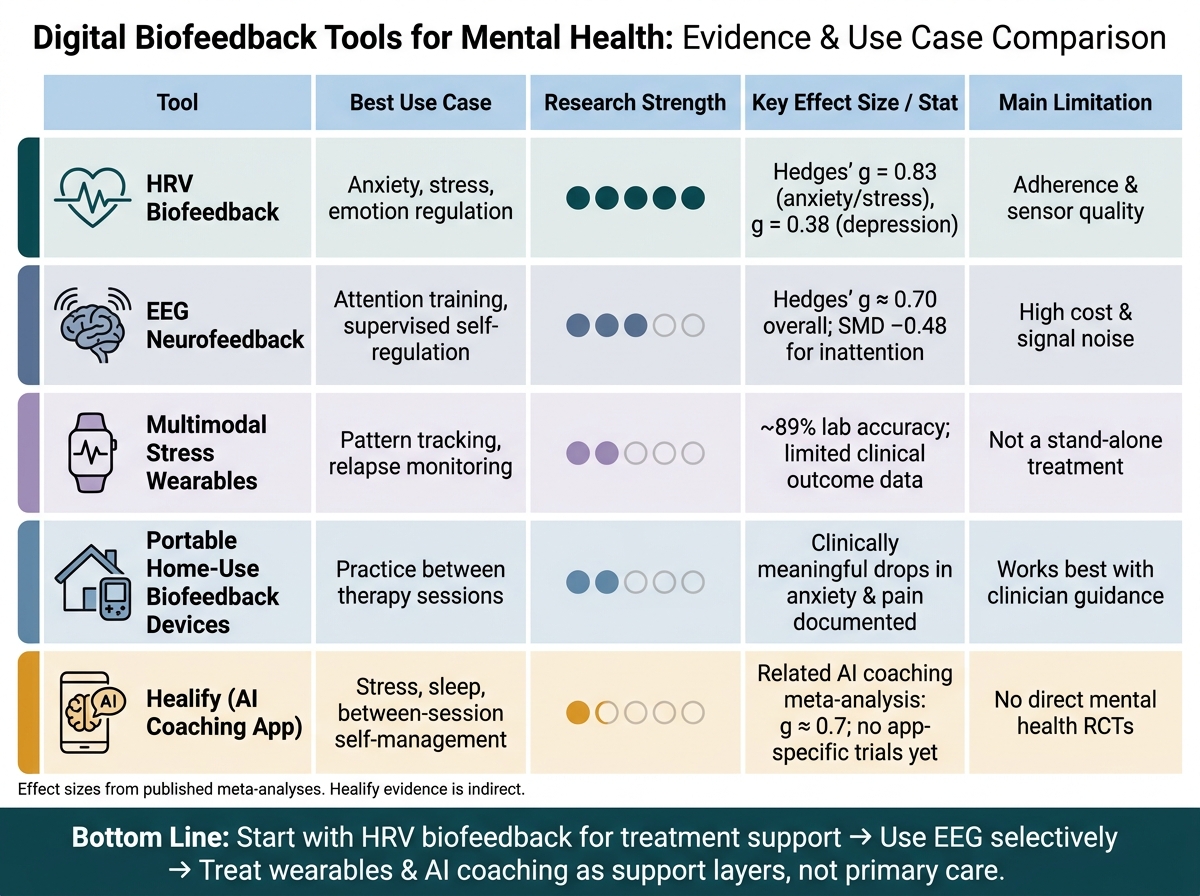
Digital Biofeedback Tools for Mental Health: Evidence & Use Case Comparison
Meru Talks: Using Biofeedback to Improve Mental Health
sbb-itb-f5765c6
Quick Comparison
| Tool | Best use | Research strength | Main limit |
|---|---|---|---|
| Healify | Stress, sleep, day-to-day self-management | Indirect | No app-specific mental health trials |
| HRV biofeedback | Anxiety, stress, emotion regulation | Strongest | Adherence and sensor quality |
| EEG neurofeedback | Attention training, supervised self-regulation work | Mixed to moderate | Cost and signal noise |
| Stress-sensing wearables | Pattern tracking, relapse watch, session prep | Early | Not a stand-alone treatment |
| Home-use biofeedback devices | Practice between sessions | Mixed | Works best with guidance |
So if you want the plain answer: start with HRV biofeedback for treatment support, use EEG more selectively, and treat wearables or AI coaching as support layers rather than primary care.
1. Healify
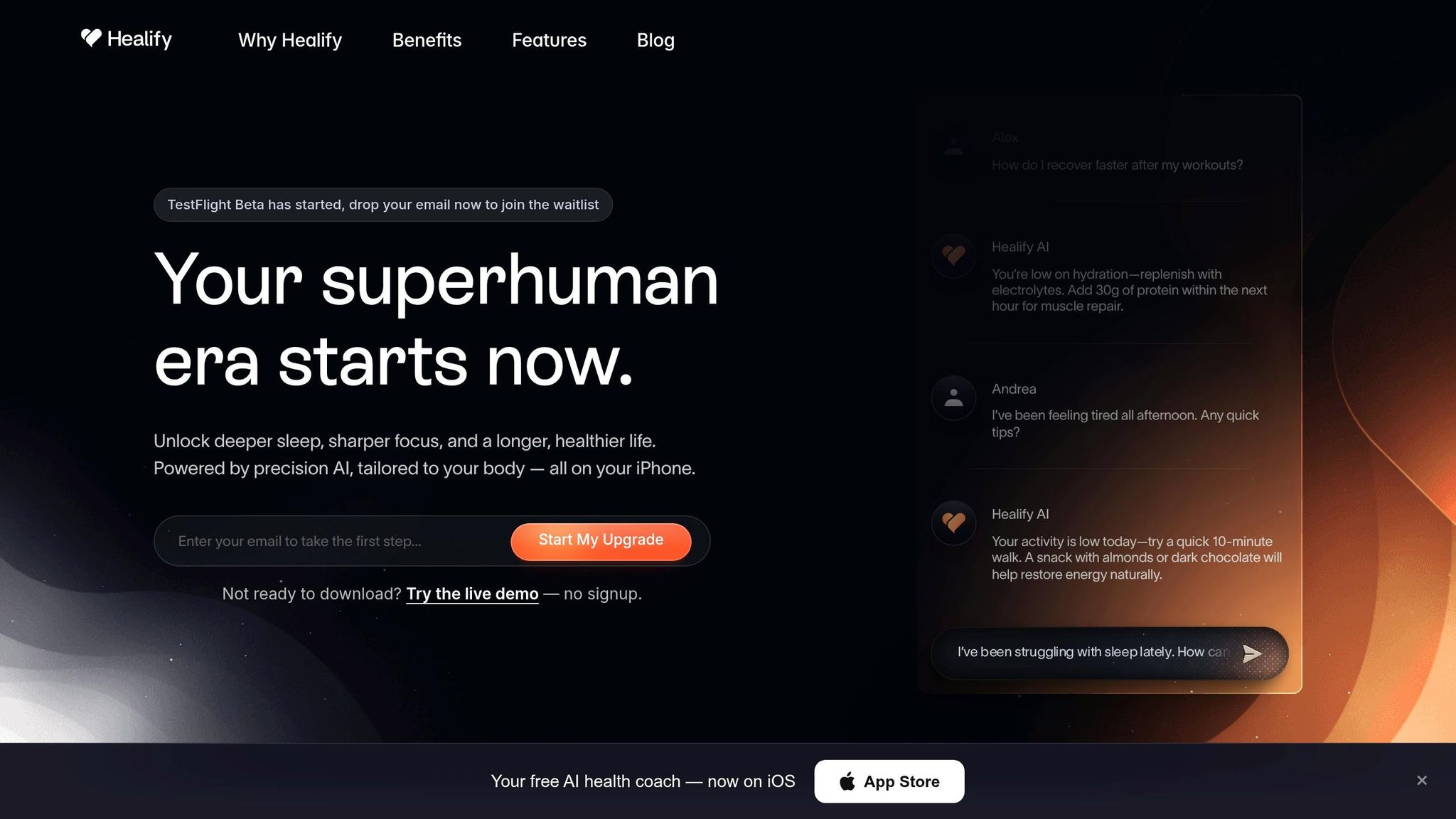
Healify is an AI health coaching app that pulls together data from wearables like Apple Watch, biometrics, bloodwork, and daily habits. It then uses its 24/7 AI coach, Anna, to turn all of that into a clear day-to-day action plan built around stress, sleep, and daily regulation. For mental health, the big draw is simple: it turns passive tracking into steps patients can use right away.
Clinical Evidence
Healify doesn't have direct mental health trials yet. So for now, the case for it comes from related findings, not app-specific studies.
A 2023 meta-analysis of AI coaching agents found lower psychological distress, with an effect size of g ≈ 0.7 [12][10]. A mobile HRV biofeedback study also found large gains in sleep quality (Cohen's d ≈ 0.99) and perceived stress after a 4-week intervention [7].
That means Healify's output makes the most sense as trend-based guidance. It can help users spot patterns and respond to them, but it shouldn't be treated like a diagnostic result.
Signal Validity
Anna builds a personal baseline from connected data. So if resting heart rate shifts, sleep gets disrupted, or activity drops, those changes are read against the user's own pattern instead of a population average [5][6].
The app also uses Instant Alerts to flag early changes in these metrics before they escalate [3]. In plain terms, it treats biomarkers as useful context for behavior change. That's closely tied to the core biofeedback idea: personalized, real-time self-regulation.
Therapy Integration
This is where Healify can fit well between sessions. Patients often don't need more charts or raw numbers. They need help making sense of what changed and what to bring up in therapy.
Used that way, Healify can help patients show up with clearer observations for clinical discussions, especially when paired with structured care such as CBT for insomnia or anxiety treatment [11][12].
Remote Monitoring
For longer-term care, the main upside is seeing trends over time. Healify combines sleep, movement, heart metrics, nutrition, bloodwork, and habits into a single daily health score, which gives patients a simple biofeedback snapshot [13].
When stress spikes, the app also offers immediate calming exercises, giving users something they can do in the moment instead of just watching the numbers climb [4].
2. Heart Rate Variability (HRV) Biofeedback Apps and Sensor Systems
Among the tools covered here, HRV biofeedback has the strongest track record for stress and anxiety support. Most setups combine paced breathing at about 6 breaths per minute with live HRV feedback from a chest strap, ear clip, or finger sensor. The goal is to improve parasympathetic activity, which is tied to stress resilience and emotion regulation. [14]
Clinical Evidence
HRV biofeedback has one of the stronger evidence bases in digital mental health. A meta-analysis of 14 RCTs found moderate effects on depressive symptoms (Hedges' g = 0.38) and larger effects on anxiety and perceived stress (Hedges' g = 0.83). [23][21]
A postpartum RCT also found significant drops in stress and anxiety, with especially strong results among participants with mild to severe depressive symptoms. [22] Even one session has shown a meaningful anxiety-lowering effect, whether or not the person had used HRV biofeedback before. [15]
Signal Validity
Medical-grade ECG and high-quality chest strap sensors are still the most reliable options for HRV measurement. Finger and ear clip PPG sensors can work well at rest, but their accuracy tends to fall with movement or poor circulation. Smartwatches can help track trends over time, but they are not a good fit for clinical decisions. [18][19][8]
For therapy, perfect rest-state accuracy often matters less than steady session-to-session use and whether the patient sticks with the process. In practice, that makes sensor choice a clinical matter, not just a shopper's choice.
Therapy Integration
In outpatient care, clinicians often ask patients to wear a sensor during sessions, follow guided breathing through an app, and watch HRV shift in real time while working through stress or anxiety triggers. [14][16] That live feedback can make the body’s stress response feel less abstract. You can see change happening as it happens.
HeartMath devices, including Inner Balance and emWave, are among the most used tools in this area. A systematic review found psychological benefits in about 70% of the included studies across anxiety, depression, PTSD, and stress. [17]
That said, PTSD findings were mixed. One RCT using emWave found increased parasympathetic responses during stress tasks, but no change in tonic HRV, HRV recovery, or self-reported symptoms. [20]
Remote Monitoring
Remote delivery holds up well. A meta-analysis focused on app-based HRV biofeedback found medium effect sizes for both depressive symptoms and HRV indices compared with control conditions. [8] In a head-to-head comparison of telemedicine versus in-person HRV biofeedback with frontline health care workers, both groups showed significant drops in depression, anxiety, and stress during a 10-day intervention, with no meaningful difference between delivery formats. [24]
The big sticking point is adherence. Benefits depend on steady practice over weeks, and people often fall off when the feedback feels vague or results take time to show up. [2] Even so, sessions as short as 15 minutes can reduce anxiety, which makes home-based use much more doable. [1]
The main weak spots are sensor quality and adherence, and both issues tend to stand out even more in tools built to track broader stress patterns.
3. EEG Neurofeedback Wearables
Where HRV biofeedback trains breathing and autonomic control, EEG neurofeedback works on attention and self-regulation through brainwave feedback. It gives people real-time input on their brain activity. Consumer headbands have made this type of training far easier to access, although research-grade systems still produce cleaner, more stable signals.
Clinical Evidence
The clinical picture looks promising, but it’s still a bit uneven depending on the condition. In ADHD, a pilot meta-analysis of scalp EEG neurofeedback for adolescents and adults found that inattention improved versus treatment-as-usual or waitlist controls, with a standardized mean difference of −0.48 (p = 0.03) [39].
For major depressive disorder, frontal-alpha protocols have the strongest support so far. Meta-analytic effect sizes are around 0.6, and a double-blind RCT of 60 patients found a 7.2-point drop on the Hamilton Depression Rating Scale in the active group, compared with 3.1 points in the sham group [32].
That said, most studies still involve modest sample sizes. Bigger multi-site RCTs are still needed.
Signal Validity
A key issue is signal quality. Can consumer devices record data clean enough for clinical use? In some cases, yes - but there are limits.
Consumer EEG devices can work for structured neurofeedback training, but research-grade systems tend to be more stable and less prone to artifacts, especially during tasks that involve eye movement or muscle tension [29][30][33]. In plain English: if someone blinks a lot, clenches their jaw, or shifts around, lower-end hardware may struggle more.
Consumer wearables can still support structured neurofeedback when signal quality is checked and artifact control is handled well [27][31]. But they should not be used for diagnostic decisions unless they have formal regulatory clearance [34].
Therapy Integration
This is where home use starts to make sense. If someone needs repeated sessions between therapy visits, using EEG training at home can be practical.
Platforms like Myndlift pair consumer EEG headsets with remote quantitative EEG mapping, individualized protocols, and clinician progress reviews [37][38]. Session length also matters. Meta-analyses suggest that sessions lasting more than 30 minutes are linked to better cognitive outcomes [26]. Frequency matters too, with many effective protocols using 2–5 sessions per week over several weeks [25][28].
The tradeoff is cost. EEG neurofeedback usually costs more than app-based tools, especially when clinician oversight is part of the setup.
Remote Monitoring
Home-based EEG neurofeedback is becoming more workable. Cloud-connected apps, wireless headsets, and clinician dashboards now let patients train at home while still being monitored remotely. That can improve access and lower cost compared with fully in-clinic systems [35][36][37].
For remote use to be safe, a few pieces matter most:
- Automated signal quality checks
- Encrypted data transmission
- Regular telehealth check-ins
These steps help reduce risk and keep the training process on track [31][33].
4. Multimodal Stress-Sensing Wearables
Multimodal wearables fill in gaps that single-signal tools often miss. Instead of relying on just one input, they combine two or more body signals - usually electrodermal activity (EDA), heart rate variability (HRV), skin temperature, respiration, and motion - to build a clearer view of stress. That extra context can cut down on false alarms and make the stress picture less one-dimensional. The main role here is detection and monitoring, not treatment.
Clinical Evidence
The strongest evidence points to stress detection and self-awareness, not stand-alone therapy. Research suggests that pairing EDA with HRV or heart rate is one of the strongest combinations for stress monitoring [40][45][46][48]. In one study, a flexible multimodal device using ECG, GSR, temperature, and motion sensors reached about 89% accuracy when classifying exercise, rest, and mental tasks in healthy volunteers, not clinical populations [44].
That sounds strong on paper. But lab performance and day-to-day performance are not the same thing.
Clinical outcome data are still thin. A 2024 double-blind RCT found no durable differences in stress hormones or qEEG between device and control groups [9]. So the safest way to talk about these wearables is simple: they may support therapy by helping people notice patterns sooner and step in earlier, but they should not be sold as stand-alone therapy. That puts the spotlight on validation, not flashy accuracy claims.
Signal Validity
EDA is one of the most useful signals in consumer wearable stress research because it reflects sympathetic nervous system activity [41][42][49]. But it also has a catch. It can shift with skin dryness, temperature swings, and movement.
HRV adds context, which helps. Still, HRV is affected by plenty of other factors too, including:
- caffeine
- illness
- posture
- sleep
- breathing patterns
This is where motion data earns its keep. Accelerometer data can help tell the difference between a hard workout and a stress response, which is a pretty big deal if you want fewer false readings.
It makes sense to use devices that have been validated against lab stress tasks and also tested in free-living settings. Research-grade platforms such as the Empatica E4 and EmbracePlus are among the most widely validated wrist-worn options [40][47][48]. Consumer wellness trackers, by contrast, vary a lot in how much they show about testing and performance.
Therapy Integration
These wearables tend to help most when they sit inside a clear care workflow. Clinicians can look at longitudinal wearable data - HRV trends, EDA patterns, sleep, and activity - next to self-report scales to support psychoeducation, CBT for stress, or HRV biofeedback protocols.
The most useful outputs are not giant data dumps. They’re practical summaries, such as:
- weekly stress trends
- likely triggers
- pre-session flags
That matters for therapist use. If a dashboard is stuffed with raw physiological data, it can become noise fast. A simple summary that shows whether a patient’s arousal patterns have worsened over the past two weeks is often much more useful.
Remote Monitoring
In remote care, the goal is usually pattern detection over time, not chasing single alerts. Newer approaches combine wearable data with smartphone sensors and ecological momentary assessment (EMA) for digital phenotyping. The idea is to build a behavioral baseline, then watch for meaningful change over time [41][43][47][49].
There’s one practical risk worth calling out: badly timed alerts can make people more anxious instead of less. Remote monitoring tends to work better when onboarding is easy, privacy controls are clear, and patients know what the data can and cannot say.
For patients who need active practice between sessions, the next category moves from sensing into home-use devices.
5. Portable Home-Use Biofeedback Devices for Remote Care
Portable home-use biofeedback devices - like finger pulse sensors, respiration belts, and compact EEG headbands - give patients a way to practice between therapy sessions. And that’s the big difference here: unlike basic sensing tools, these devices support active self-regulation, not just observation.
Clinical Evidence
The research looks promising, but it’s not evenly strong across the board. Results tend to be better when people use these devices in structured, repeated sessions tied to a clear treatment target.
For example, one revised anxiety protocol for people with chronic spinal cord injury used the Mindfield eSense Pulse, a commercial HRV finger sensor, for 20-minute sessions twice a week over 4 weeks, with data sent through a mobile app for remote monitoring [55]. Another home-use program paired portable pulse and temperature biofeedback devices with chronic pain patients and found clinically meaningful drops in both anxiety and pain during the intervention period [52].
That points to a practical takeaway: these devices work best as guided homework, not as stand-alone care.
Signal Validity
Most home devices measure HRV, respiration, electrodermal activity, or EEG. Those signals all matter in treatment. The main issue is simpler: Is the sensor accurate enough to trust at home?
HRV is the most practical place to start for home use, while consumer EEG still needs stronger clinical validation [57][27]. Manufacturer accuracy claims also need a close look, especially when devices haven’t been tested against reference-grade equipment in day-to-day conditions.
Therapy Integration
These devices fit best inside a patient-centered treatment plans, not as passive tracking tools sitting in the background. They tend to help most when linked to a specific goal, such as:
- paced breathing for panic symptoms
- relaxation training for insomnia
- HRV coherence practice for generalized stress
A portable respiration-based hip-worn device that vibrates and sends app alerts when breathing becomes erratic , similar to how AI nudges encourage habit formation showed feasibility for weaving biofeedback into mindfulness training during daily life [50]. For clinicians, progress reports or session logs reviewed before appointments can make the data far more useful in treatment.
Remote Monitoring
In remote care, the focus shifts from simply spotting stress to documenting practice. Connected app-cloud systems let clinicians follow progress and adjust treatment plans without an in-person visit [53][54][56][58].
For U.S.-based care teams, it makes sense to confirm whether a device is FDA-cleared and whether it can fit U.S. remote monitoring workflows, especially in telehealth settings [54][58]. Simpler setups, such as HRV chest straps or finger sensors, often do better than more complex systems, which can help with adherence [51][55].
Pros and Cons by Tool Category
No single category fits every use case. The table below turns the earlier review into a quicker side-by-side view, so the trade-offs are easier to scan.
| Tool Category | Main Pros | Main Cons | Strongest Use Cases | Biggest Adoption Barriers |
|---|---|---|---|---|
| Healify (AI multimodal coaching) | Brings HRV, sleep, biometrics, and lifestyle data into one action plan; offers 24/7 AI coaching through Anna; supports stress and sleep | iPhone-only; not a substitute for professional care in moderate-to-severe conditions; app-specific clinical trial data are still limited | Stress management, sleep support, and between-session coaching | Needs compatible wearables; tracking can become tiring; privacy and workflow integration are still being worked out |
| HRV Biofeedback Apps & Sensors | Moderate effects on depression and large effects on anxiety and perceived stress: Hedges' g ≈ 0.38 for depression and g ≈ 0.83 for anxiety and perceived stress [14]. Remote delivery can perform similarly to in-person training [62]. | Study designs vary; protocols are inconsistent; long-term data in diverse U.S. populations are limited | Adjunctive therapy for adult depression, anxiety, PTSD, and stress, especially in healthcare and emergency services | Limited clinician awareness, unclear U.S. reimbursement pathways, and adherence issues without coaching support |
| EEG Neurofeedback Wearables | Meta-analysis across 22 comparisons found overall Hedges' g ≈ 0.70 [60]. Reviews rate it promising for attention and weaker for mood and relaxation [63]. | Evidence remains mixed for ADHD, depression, and anxiety [59]; high device cost; often needs expert setup | ADHD symptom management; early supervised use for PTSD and anxiety | High cost; limited insurance coverage; mixed views among clinicians on evidence quality |
| Multimodal Stress-Sensing Wearables | Continuous monitoring of HRV, sleep, and stress patterns can help with early detection and more personal feedback; useful for research-grade data collection | Stress-feedback effects on perceived stress were small and not significant in one study [61]; consumer-grade sensor accuracy varies; continuous monitoring can increase health anxiety | Ongoing stress monitoring, relapse prevention, mood tracking, and sending data into therapy sessions | Privacy and data security concerns; weak interoperability with clinical systems; not validated as treatments on their own |
| Portable Home-Use Biofeedback Devices | Reductions in anxiety and pain have been documented in chronic-condition populations [52]; supports structured homework between sessions | Remote HRV studies show high heterogeneity [8]; adherence can vary without clinician guidance; digital literacy can limit access | Telehealth-integrated care, remote stress management programs, and follow-up support after intensive therapy | Broadband access gaps; risk of misuse without supervision; uneven availability across devices |
What matters most here? Three things: evidence strength, signal reliability, and the amount of supervision required.
That’s the basic filter. Some tools are better suited for light-touch support between sessions. Others make more sense in supervised care, where setup, coaching, and interpretation are part of the process. And some look good on paper but become harder to use when adherence drops or data quality gets shaky.
The practical takeaway is simple: the best choice depends on the clinical goal, the level of supervision available, and how much day-to-day tracking a person can stick with.
Conclusion
HRV biofeedback has the strongest evidence for mental health use. It shows moderate gains for anxiety, stress, and depression. EEG neurofeedback looks promising too, but the results are less steady across conditions and treatment setups.
Multimodal wearables and portable home-use devices are better seen as support tools, not proven treatments for reducing symptoms.
So what should therapists use, and when? In most cases, HRV biofeedback is the best first pick for stress, anxiety, and emotion regulation, especially when paired with psychotherapy or mindfulness-based work. EEG neurofeedback fits better in supervised settings where attention or self-regulation training is the clear goal. Home-use and multimodal tools make the most sense in structured telehealth programs, where clinicians can review trends and help clients practice between visits.
For clients who already use consumer wearables, the issue isn’t sensing. It’s interpretation. Healify works best as a coordination layer, helping turn wearables, biomarkers, and lifestyle data into guidance people can actually use for stress prevention, sleep, and between-session self-management. That matters when the clinical goal is already set and the main gap is making the data useful.
Consumer-facing features like real-time alerts, sleep coaching, and habit nudges may improve engagement and self-awareness. But they shouldn’t be mistaken for validated treatment effects.
FAQs
Which biofeedback tool should I start with?
Start with an app that works well with data from your wearable devices. Healify stands out because it turns complex biometric data into a personal, easy-to-follow action plan.
It looks at HRV, sleep patterns, and lifestyle habits, then gives you real-time guidance and 24/7 AI-powered coaching. That means you can get help with stress management and mental well-being without piecing things together through manual tracking.
Do I need a clinician to use these tools safely?
Not usually. Digital biofeedback tools and AI-driven platforms can help with day-to-day stress relief, habit building, and early support for mental wellness. But they’re meant to work alongside professional mental health care, not take its place.
They may be useful for mild to moderate concerns. They are not a substitute for care when someone is dealing with severe mental health issues or a crisis. If stress starts to feel overwhelming, or if emotional struggles are more complex, seek help from a licensed provider.
How accurate are wearables for mental health tracking?
Wearables can help with mental health tracking by measuring signals like heart rate variability, skin temperature, sleep patterns, and electrodermal activity.
Some specialized devices can reach 98.28% accuracy for stress detection. Consumer smartwatches, on the other hand, often land closer to 70% accuracy for mood tracking.
That gap matters. A medical-grade device built for one job will usually do better than a general smartwatch trying to do many things at once.
Where wearables shine is in spotting long-term patterns and giving you day-to-day clues. They can show how your sleep shifts during a rough week, or how stress signals change over time. That kind of data can be useful.
Still, they work best alongside clinical evaluation, not in place of it.