
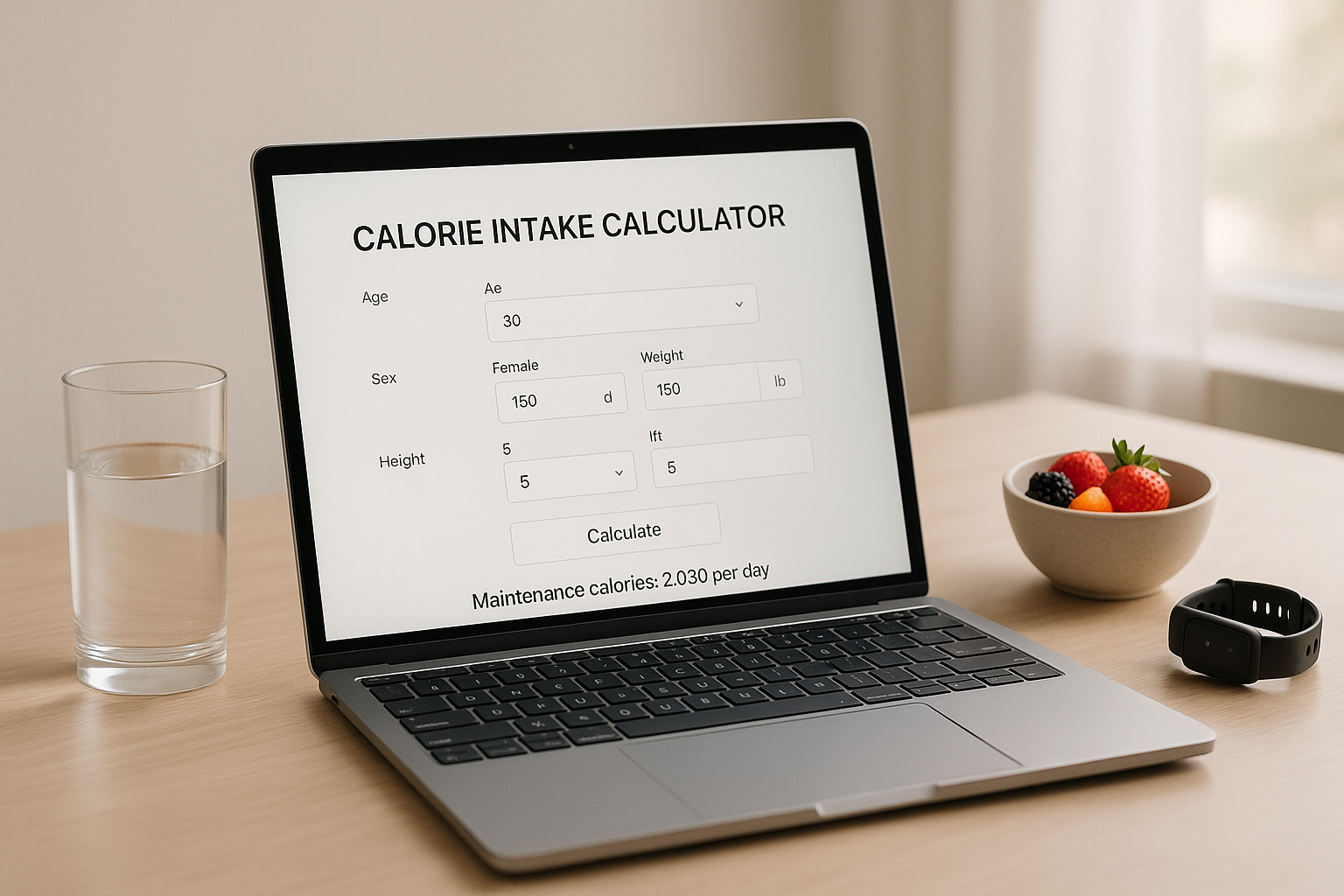
<iframe class="wrapifai-iframe" src="https://app.wrapifai.com/embed/cb440a" frameborder="0" loading="lazy" id="wrapifai-iframe" width="100%" height="400px" marginheight="0" marginwidth="0" bgcolor="white" style="padding: 12px 0; border-radius: 12px" allow="clipboard-read;clipboard-write;" title="Embedded media"></iframe><h2 id="understanding-your-daily-caloric-needs" tabindex="-1" class="sb h2-sbb-cls">Understanding Your Daily Caloric Needs</h2> <p>Figuring out how much energy your body needs each day is a game-changer for achieving health goals. A tool like a personalized calorie estimator can simplify this by crunching the numbers based on your age, weight, height, and activity level. It’s not just about a number—it’s about understanding what fuels your unique lifestyle.</p> <h2 id="why-caloric-awareness-matters" tabindex="-1" class="sb h2-sbb-cls">Why Caloric Awareness Matters</h2> <p>Whether you’re trying to shed a few pounds, build muscle, or just maintain your current weight, knowing your baseline is key. Your body burns a certain amount of energy just to keep things running (that’s your Basal Metabolic Rate), and then extra based on how active you are. A daily energy needs calculator helps map this out, giving you a clear target to work with. From there, you can decide if you need a surplus for growth or a deficit for trimming down. Pair this insight with mindful eating and movement, and you’ve got a solid foundation. Remember, it’s a starting point—listen to your body and tweak as needed. Small, consistent steps often lead to the biggest changes over time, so don’t rush the process.</p> <h2 id="faqs" tabindex="-1" class="sb h2-sbb-cls">FAQs</h2> <h3 id="how-accurate-is-this-calorie-intake-calculator" tabindex="-1" data-faq-q>How accurate is this Calorie Intake Calculator?</h3> <p>Our tool uses the Mifflin-St Jeor Equation, which is widely regarded as one of the most accurate ways to estimate Basal Metabolic Rate (BMR). While it provides a solid starting point, remember that individual factors like muscle mass or metabolism variations can slightly affect the results. Use this as a guide and adjust based on how your body responds over time.</p> <h3 id="what-do-the-activity-levels-mean" tabindex="-1" data-faq-q>What do the activity levels mean?</h3> <p>Activity levels help adjust your calorie needs based on how much you move. Sedentary means little to no exercise, like a desk job. Lightly active includes light walks or chores. Moderately active covers regular workouts a few times a week. Very active is for intense daily exercise, and extremely active applies to athletes or physically demanding jobs. Pick the one that fits your routine best!</p> <h3 id="how-can-i-use-this-to-lose-or-gain-weight" tabindex="-1" data-faq-q>How can I use this to lose or gain weight?</h3> <p>Once you know your daily calorie needs, you can tweak your intake. To lose weight, aim for a deficit of about 500 calories per day through diet or exercise—that’s roughly a pound a week. To gain weight, add 250-500 calories for slow, sustainable growth. Always pair this with balanced nutrition and consult a professional if you’re unsure.</p>
<script src='https://app.wrapifai.com/embed/index.js'></script><script type="application/ld+json">{"@context":"https://schema.org","@type":"FAQPage","mainEntity":[{"@type":"Question","name":"How accurate is this Calorie Intake Calculator?","acceptedAnswer":{"@type":"Answer","text":"<p>Our tool uses the Mifflin-St Jeor Equation, which is widely regarded as one of the most accurate ways to estimate Basal Metabolic Rate (BMR). While it provides a solid starting point, remember that individual factors like muscle mass or metabolism variations can slightly affect the results. Use this as a guide and adjust based on how your body responds over time.</p>"}},{"@type":"Question","name":"What do the activity levels mean?","acceptedAnswer":{"@type":"Answer","text":"<p>Activity levels help adjust your calorie needs based on how much you move. Sedentary means little to no exercise, like a desk job. Lightly active includes light walks or chores. Moderately active covers regular workouts a few times a week. Very active is for intense daily exercise, and extremely active applies to athletes or physically demanding jobs. Pick the one that fits your routine best!</p>"}},{"@type":"Question","name":"How can I use this to lose or gain weight?","acceptedAnswer":{"@type":"Answer","text":"<p>Once you know your daily calorie needs, you can tweak your intake. To lose weight, aim for a deficit of about 500 calories per day through diet or exercise—that’s roughly a pound a week. To gain weight, add 250-500 calories for slow, sustainable growth. Always pair this with balanced nutrition and consult a professional if you’re unsure.</p>"}}]}</script>