Improve your health
Improve your health
Improve your health
November 30, 2025
AI's Role in Reducing Wearable Data Latency


Your wearable devices are now faster, smarter, and safer thanks to AI. By shifting from cloud-based processing to on-device AI, wearables like smartwatches and fitness trackers have drastically reduced data delays. Here's what you need to know:
Latency reduced by 96%: AI slashes delays from 500 milliseconds to under 20 milliseconds, ensuring faster alerts for emergencies like falls or irregular heartbeats.
More accurate insights: AI-powered devices process up to 12 health metrics simultaneously, cutting false alarms by 30–50%.
Improved privacy: On-device processing keeps sensitive health data secure by eliminating the need for constant cloud uploads.
Energy efficiency: AI reduces power consumption by 95%, extending battery life from days to weeks.
This leap in performance makes wearables essential tools for real-time health monitoring, offering immediate feedback and actionable insights. Platforms like Healify exemplify this shift, delivering fast, personalized health recommendations directly on your device. AI is transforming wearables into reliable, instant health companions.
What is Wearable Data Latency?
Defining Data Latency in Wearables
Wearable data latency refers to the delay between when a sensor captures a signal from your body and when the device processes and analyzes that information. In other words, it’s the time it takes for your wearable to turn raw data into actionable insights.
This delay is measured in milliseconds (ms) - a thousandth of a second. While these tiny timeframes might seem trivial, they can have serious implications for real-time health monitoring. For example, traditional wearables relying on cloud-based processing often experience latency of around 500 ms. That’s the time it takes for your device to send data to a remote server, have it processed, and receive the results.
Thanks to advancements like on-device processing powered by TinyML models, this delay has been slashed to less than 20 ms - making these systems approximately 25 times faster. For critical health applications, edge computing systems aim to keep latency under 100 ms, ensuring that alerts reach you almost instantly when they’re needed most.
Why does this matter? Imagine your wearable detecting an irregular heartbeat, a fall, or a sudden spike in stress hormones. A delay of 500 ms means your device is reacting to outdated data instead of what’s happening right now - potentially costing precious moments in an emergency.
The main culprit behind high latency is cloud dependency. When your wearable sends data to external servers for processing, delays occur at multiple points: transmitting the data, processing it on the server, and sending the results back. Poor network connections and heavy data loads can make these delays even worse. In areas with spotty connectivity, cloud-reliant wearables may struggle to function effectively.
Wearables track a range of biomarkers, such as heart rate, oxygen levels, and movement patterns. Processing this flood of data quickly and accurately requires advanced cleaning algorithms and fast computational power. Traditional cloud-based systems weren’t designed to handle the near-instant response times that modern health monitoring demands.
Here’s a breakdown of how key metrics compare between cloud-dependent systems and on-device edge AI:
Metric | Cloud-Dependent | On-Device Edge AI | Improvement |
|---|---|---|---|
Latency | ~500 ms | <20 ms | 25× faster |
Prediction Response Time | 2.1 s (±0.3 s) | 0.4 s (±0.1 s) | 5.2× faster |
Power Consumption | 100 mW | <5 mW | 95% reduction |
False Alarms | Baseline | 30–50% fewer | Noticeable drop |
These metrics highlight why reducing latency is so crucial for effective health monitoring.
Why Latency Matters for Health Monitoring
The advancements in reducing data latency go beyond technical achievements - they can have life-saving implications. Low latency is critical when every millisecond counts. The difference between a 500 ms delay and a 20 ms reaction can determine whether help arrives in time.
Take fall detection, for instance. Wearables with on-device processing can trigger alerts within milliseconds, ensuring timely intervention. In contrast, cloud-dependent systems can lag by up to 500 ms, delaying critical responses.
Similarly, arrhythmia detection demands latency under 100 ms for immediate action. When a wearable identifies an irregular heartbeat, rapid analysis allows users to respond before a life-threatening situation escalates. Modern smartwatches equipped with on-device ECG analysis not only provide quicker alerts but also reduce false alarms by 30–50%, ensuring the warnings are accurate and actionable.
Stress monitoring is another area where minimal latency makes a big difference. By analyzing heart rate variability, wearables can detect rising cortisol levels or other stress indicators in real time. This enables users to take preventive steps - like practicing deep breathing or stepping away for a moment - before stress levels peak. Such interventions are only possible with near-instant processing.
When wearables process data too slowly, they shift from being proactive tools to reactive ones. Instead of preventing issues, they end up responding after the fact. Reducing latency from seconds to milliseconds transforms wearables into active health management tools. Modern devices can now monitor 9–12 biomarkers simultaneously, compared to the previous limit of 3–5, providing a much more comprehensive picture of your health.
AI Takes OVER Edge Computing for FASTER Real-Time Tech!
How AI Reduces Wearable Data Latency
The move from cloud-based processing to on-device AI has transformed wearable technology. Today’s wearables process data directly on the device, cutting out the delays caused by sending information back and forth to the cloud. This shift has completely changed how quickly and efficiently health data can be analyzed.
Edge AI for Real-Time Data Processing
Edge AI brings processing power straight to your wearable device. It’s like having a tiny supercomputer built into your smartwatch instead of relying on a distant server. When your heart rate spikes or stress levels rise, the device analyzes the data instantly and adjusts accordingly.
This local processing eliminates network delays, with most tasks completed in under 20 milliseconds - faster than the blink of an eye. Beyond speed, edge AI ensures your wearable functions even without internet access. Whether you're hiking in the wilderness or in a building with poor Wi-Fi, your device keeps monitoring your health seamlessly. Plus, processing data locally helps extend battery life, allowing wearables to last for weeks instead of requiring daily recharges.
Another key to edge AI’s effectiveness is sensor fusion. By combining data from multiple sensors - like accelerometers, gyroscopes, and heart rate monitors - your wearable creates a more accurate picture of your activity. For example, a fall detection system can tell the difference between a real fall and a quick sit-down by analyzing acceleration and rotational movement together.
Local processing also keeps your sensitive health data secure, as it stays on the device. Only summarized insights are shared when you sync with other devices, giving you more control over your information.
On-Device Machine Learning Frameworks
Running AI on small wearable devices requires specialized software frameworks designed to be lightweight and efficient. Traditional machine learning models are too bulky and power-hungry for wearables, but frameworks like TensorFlow Lite and TinyML make it possible. These tools work alongside edge AI to reduce latency and energy consumption.
These frameworks use compact convolutional neural network (CNN) architectures to cut down on the computational load. Instead of performing millions of calculations, optimized models achieve the same results with fewer resources by reducing parameters and streamlining data flow.
The energy savings are impressive. Edge AI can reduce power consumption from around 100 mW to less than 5 mW - a 95% reduction. This is achieved through techniques like selectively activating sensors, processing data in batches, and using specialized AI chips that are far more efficient than standard processors.
Developers face tight constraints when creating these systems. Wearables often have limited memory and slower processors compared to smartphones. To work within these limits, the software must manage data efficiently, execute AI tasks quickly, and sync securely with minimal battery drain. For example, the device might store only the most relevant data and discard redundant information early in the process to save energy and keep performance smooth.
Power-aware scheduling also helps balance speed and energy use. The device’s operating system adjusts how often it runs intensive AI tasks. If you’re inactive, it might scale back monitoring, but it ramps up processing instantly when it detects activity changes.
Efficient memory use is another critical factor. Since reading and writing data consumes energy, optimized systems minimize unnecessary memory operations, storing only essential information. This approach keeps the device responsive while conserving resources.
Real-World Applications of Latency Optimization
These advancements in AI have turned wearables into tools that provide life-saving alerts and actionable health insights. For example, ECG analysis in smartwatches can detect irregular heartbeats in real time. By analyzing patterns within a critical 100-millisecond window, these devices can identify arrhythmias accurately. Compared to older cloud-based systems, modern wearables reduce false alarms by 30–50%, ensuring users receive reliable alerts.
Fall detection systems also benefit from ultra-low latency. When a fall occurs, every second matters. Edge AI processes data from accelerometers and gyroscopes instantly, triggering alerts and even contacting emergency services within seconds. Sensor fusion helps distinguish between genuine falls and everyday movements like sitting down quickly, minimizing false alarms.
Stress monitoring has become more proactive thanks to real-time processing. By analyzing heart rate variability on the device, wearables can detect rising stress levels as they happen. This allows users to take preventive steps before stress escalates.
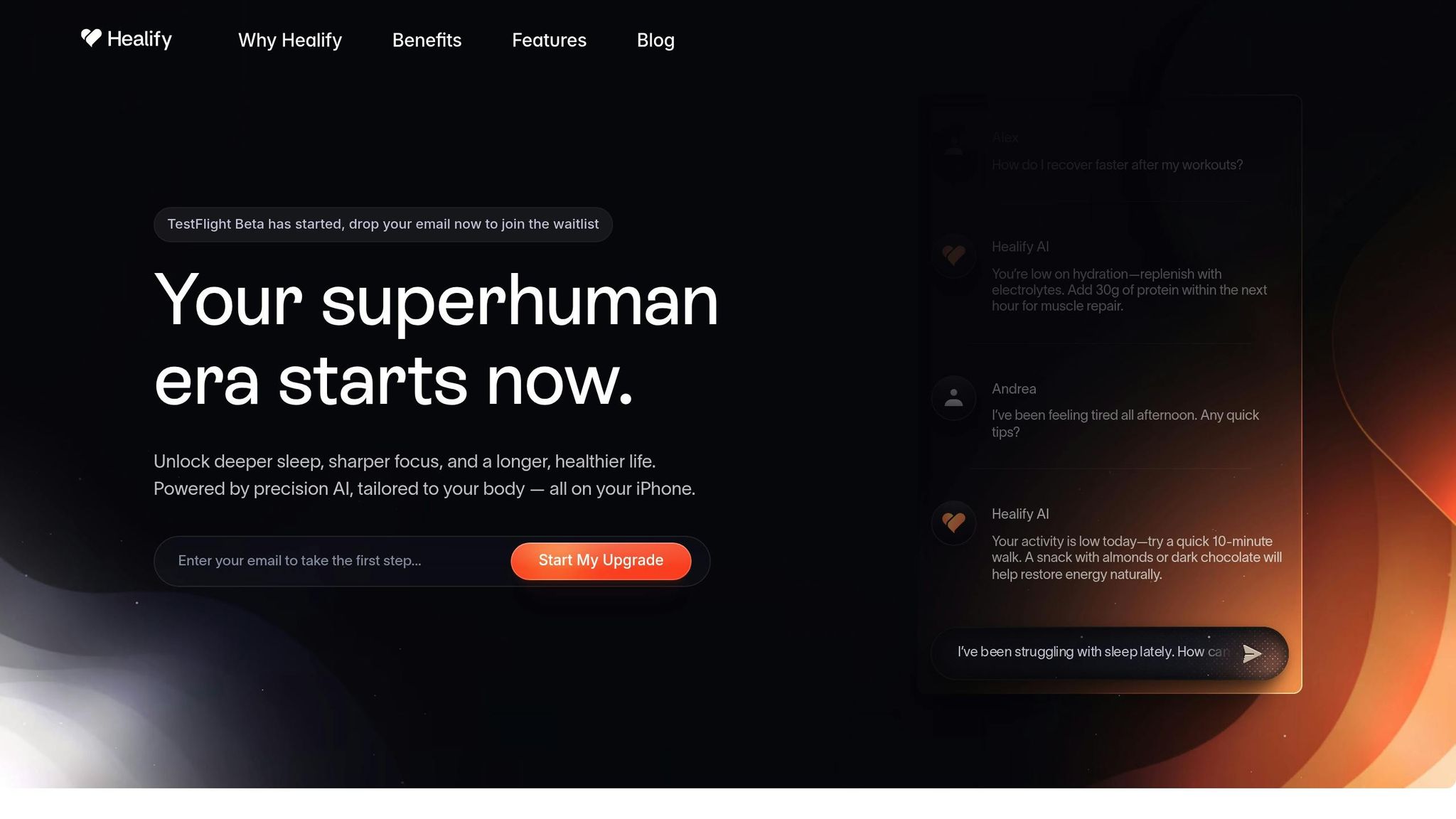
In November 2025, Healify showcased the power of on-device AI processing. The platform, which works directly on your iPhone, deciphers signals from wearables in real time and provides immediate, personalized advice. For instance, if your hydration drops, you might get an alert saying, "You're low on hydration - replenish with electrolytes." Or, if your activity level is low, it might suggest, "Take a 10-minute walk to boost your energy." This instant feedback turns health monitoring into an interactive coaching experience that adapts to your needs.
Edge AI also scales efficiently. Each wearable processes its own data independently, so adding millions of devices doesn’t strain centralized servers. This decentralized approach ensures smooth performance as wearable adoption grows.
Modern wearables now monitor 9–12 biomarkers simultaneously, compared to just 3–5 in earlier models. This expanded capability is thanks to edge processing, which handles multiple data streams at once without draining the battery. From heart rate and blood oxygen levels to sleep stages and stress indicators, wearables now offer comprehensive, real-time monitoring that keeps up with your body’s needs.
Other Benefits of AI-Driven Latency Reduction
AI does more than just cut down latency - it also improves energy efficiency and strengthens privacy. These advancements translate to longer battery life and better protection for your personal health data.
Energy Efficiency and Battery Optimization
When your device processes data locally instead of constantly relying on cloud servers, it significantly reduces energy consumption. This is made possible by neural network designs tailored for small processors. Instead of running resource-heavy algorithms designed for data centers, wearables use streamlined models that achieve the same results with far fewer resources.
For instance, selective sensor activation and optimized convolutional neural networks (CNNs) allow wearables to process data on-device while conserving battery life. Your device intelligently adjusts its monitoring - scaling back when you're at rest and ramping up when it detects movement or changes in vital signs. This smart resource allocation enables edge-optimized devices to last weeks on a single charge, compared to just a few days for devices that depend on constant cloud connectivity.
By managing power and memory efficiently, these devices stay responsive while offering extended battery performance.
Privacy and Security with Edge Processing
Local processing doesn’t just save energy - it also bolsters your data privacy. By keeping your health data on your device instead of sending it to remote servers, the risk of exposing sensitive information is greatly reduced. With on-device AI, raw physiological data like heart rates, steps, or sleep cycles never leaves your device. Instead, your wearable processes this data locally, only transmitting summarized insights during syncs. This approach minimizes the chances of interception or unauthorized access.
The security advantages extend beyond reducing data transmission. Local AI systems often use ACID-compliant architectures, ensuring your data remains secure even during unexpected disruptions like power outages or system crashes. For example, if your smartwatch detects an irregular heartbeat, it analyzes your ECG locally and alerts you without sending raw data to external servers. You remain in full control, sharing information with healthcare providers only if and when you choose.
By reducing reliance on cloud servers, edge AI also minimizes potential vulnerabilities. With selective data transmission, only relevant, summarized insights are uploaded, which lowers bandwidth usage and further protects your privacy. Plus, localized processing ensures your device can function seamlessly even in areas with limited or no connectivity, offering secure and uninterrupted health monitoring.
As of November 2025, platforms like Healify have shown how edge processing enhances secure health monitoring. By analyzing wearable data directly on your iPhone, Healify delivers personalized health insights without exposing raw data to external systems. This approach provides immediate, actionable feedback while giving you full control over your sensitive information. The result is a secure, efficient, and reliable health monitoring experience that you can trust.
Healify: AI-Powered Health Monitoring in Action
Healify takes the advancements in AI processing speed and applies them to wearable technology, transforming raw data into immediate, actionable health insights. This real-time capability powers its health monitoring features, making it easier to make informed decisions about your well-being.
How Healify Uses Real-Time AI Insights
Healify pulls data from wearables, biometrics, lifestyle inputs, and even bloodwork, processing it directly on your iPhone with lightning-fast AI. The app analyzes this information in less than 20 milliseconds.
Why does this matter? Because when you need answers, you need them now. For instance, if you ask, “How should I recover after my workout?” Healify might instantly suggest, “Replenish electrolytes and consume 30 grams of protein within the next hour.” Or, if it detects signs of fatigue, it could recommend a quick walk and a healthy snack to recharge.
By combining data from multiple sources, Healify provides real-time alerts and coaching to address potential health concerns before they escalate. The app identifies patterns - like high cortisol levels, low blood oxygen, or elevated stress - and sends instant notifications with practical advice. Unlike systems that focus on a single metric, Healify analyzes multiple biomarkers simultaneously, such as heart rate variability, sleep patterns, and stress indicators, to give you a broader view of your health. And all of this happens instantly, right on your device.
Sophie shares: "I used to feel lost trying to interpret all the health data from my iPhone and Apple Watch. Healify changed everything. Now I have clear guidance, and my energy levels have never been better."
Personalized Coaching for Better Health Outcomes
Healify doesn’t stop at delivering insights - it also provides ongoing, personalized coaching through its AI assistant, Anna. Anna uses your real-time health data to offer guidance tailored to your current physiological state, ensuring that the advice is always relevant.
Available anytime you need it, Anna evaluates factors like stress levels, sleep quality, and activity patterns to give you coaching that feels timely and responsive. Unlike advice based on outdated or delayed data, Healify’s on-device AI ensures that Anna reacts to what’s happening in your body right now.
Take the stress management feature, for example. By analyzing heart rate variability in real time, Healify detects stress as it begins to build and offers immediate techniques to help you stay calm. Similarly, the sleep optimization feature reviews your current sleep data and provides actionable tips to improve your rest before poor sleep becomes a recurring issue.
Sarah L., a startup founder, says: "Finally, my health data makes sense. I know exactly what steps to take to feel better."
Healify also integrates seamlessly with your existing apps and wearables, consolidating data from various platforms into one easy-to-understand framework. Instead of puzzling over what your heart rate variability or sleep score means, you get clear, actionable recommendations tailored to your needs.
This streamlined approach not only saves battery life but also reduces false alerts. For critical health monitoring, like detecting arrhythmias, Healify operates with a latency of under 100 milliseconds, enabling real-time intervention. Its on-device processing also cuts false alarms by 30–50% compared to cloud-based systems, ensuring that you receive accurate alerts only when they’re truly necessary.
As of November 2025, Healify is free for everyone and will be available in the Apple App Store following an exclusive private beta. By leveraging edge AI and on-device processing, Healify turns technical advancements into practical tools, making health monitoring faster, smarter, and more effective.
Conclusion
AI has reshaped how wearable devices process data, moving away from cloud dependency to edge AI. This shift has drastically reduced delays and false alarms, enabling near-instant, potentially life-saving responses [1]. It’s not just about speed - this approach also cuts down energy consumption and expands the ability of wearables to monitor up to 12 biomarkers in real time [1].
The benefits are tangible: faster predictions and more accurate measurements lead to better health outcomes. These advancements make daily health management more effective, ensuring wearables provide timely and reliable alerts when they’re needed most.
Healify is a prime example of this transformation. By analyzing data from wearables, biometrics, and lifestyle inputs in under 20 milliseconds, it turns raw information into immediate, personalized health insights. This empowers users with actionable guidance right when they need it, highlighting how AI is revolutionizing modern health monitoring.
As AI technology progresses, the gap between gathering health data and delivering meaningful insights continues to shrink. For anyone using wearables to monitor their well-being, these advancements mark a game-changing leap forward.
FAQs
How does on-device AI make wearable health monitoring more accurate and reliable?
On-device AI processing transforms wearable health monitoring by handling data analysis directly on the device. This eliminates the need to send information to external servers, cutting down on delays and delivering real-time insights. The result? Faster responses to changes in your health metrics.
Beyond speed, this approach boosts privacy by keeping sensitive health data stored locally. It also enhances reliability and allows wearables to offer more precise and tailored feedback, elevating the quality of your health tracking experience.
How does on-device AI in wearables compare to cloud-based processing when it comes to privacy?
On-device AI brings clear privacy benefits when compared to cloud-based processing. By handling data directly on your wearable device, it eliminates the need to send sensitive information to external servers. This approach significantly lowers the chances of data breaches and keeps your personal health information more secure.
On the other hand, cloud-based processing requires transferring data to remote servers, which can introduce vulnerabilities during both transmission and storage. While each method has its strengths, on-device AI is often the preferred choice for users who place a high value on privacy when it comes to managing wearable data.
How does AI improve energy efficiency in wearables, and what does that mean for battery life and user experience?
AI significantly improves energy efficiency in wearable devices by smartly managing resource usage. For instance, AI algorithms can decide which data processing tasks should be handled directly on the device and which ones can be offloaded to the cloud. This clever distribution of tasks helps reduce battery usage.
The benefits? Extended battery life, meaning users can enjoy their devices longer without constantly needing to recharge. Plus, it ensures a smoother experience, as wearables can function consistently without interruptions. This is particularly crucial for devices tracking real-time health metrics, where reliable performance is essential for providing meaningful insights.
Related Blog Posts
Your wearable devices are now faster, smarter, and safer thanks to AI. By shifting from cloud-based processing to on-device AI, wearables like smartwatches and fitness trackers have drastically reduced data delays. Here's what you need to know:
Latency reduced by 96%: AI slashes delays from 500 milliseconds to under 20 milliseconds, ensuring faster alerts for emergencies like falls or irregular heartbeats.
More accurate insights: AI-powered devices process up to 12 health metrics simultaneously, cutting false alarms by 30–50%.
Improved privacy: On-device processing keeps sensitive health data secure by eliminating the need for constant cloud uploads.
Energy efficiency: AI reduces power consumption by 95%, extending battery life from days to weeks.
This leap in performance makes wearables essential tools for real-time health monitoring, offering immediate feedback and actionable insights. Platforms like Healify exemplify this shift, delivering fast, personalized health recommendations directly on your device. AI is transforming wearables into reliable, instant health companions.
What is Wearable Data Latency?
Defining Data Latency in Wearables
Wearable data latency refers to the delay between when a sensor captures a signal from your body and when the device processes and analyzes that information. In other words, it’s the time it takes for your wearable to turn raw data into actionable insights.
This delay is measured in milliseconds (ms) - a thousandth of a second. While these tiny timeframes might seem trivial, they can have serious implications for real-time health monitoring. For example, traditional wearables relying on cloud-based processing often experience latency of around 500 ms. That’s the time it takes for your device to send data to a remote server, have it processed, and receive the results.
Thanks to advancements like on-device processing powered by TinyML models, this delay has been slashed to less than 20 ms - making these systems approximately 25 times faster. For critical health applications, edge computing systems aim to keep latency under 100 ms, ensuring that alerts reach you almost instantly when they’re needed most.
Why does this matter? Imagine your wearable detecting an irregular heartbeat, a fall, or a sudden spike in stress hormones. A delay of 500 ms means your device is reacting to outdated data instead of what’s happening right now - potentially costing precious moments in an emergency.
The main culprit behind high latency is cloud dependency. When your wearable sends data to external servers for processing, delays occur at multiple points: transmitting the data, processing it on the server, and sending the results back. Poor network connections and heavy data loads can make these delays even worse. In areas with spotty connectivity, cloud-reliant wearables may struggle to function effectively.
Wearables track a range of biomarkers, such as heart rate, oxygen levels, and movement patterns. Processing this flood of data quickly and accurately requires advanced cleaning algorithms and fast computational power. Traditional cloud-based systems weren’t designed to handle the near-instant response times that modern health monitoring demands.
Here’s a breakdown of how key metrics compare between cloud-dependent systems and on-device edge AI:
Metric | Cloud-Dependent | On-Device Edge AI | Improvement |
|---|---|---|---|
Latency | ~500 ms | <20 ms | 25× faster |
Prediction Response Time | 2.1 s (±0.3 s) | 0.4 s (±0.1 s) | 5.2× faster |
Power Consumption | 100 mW | <5 mW | 95% reduction |
False Alarms | Baseline | 30–50% fewer | Noticeable drop |
These metrics highlight why reducing latency is so crucial for effective health monitoring.
Why Latency Matters for Health Monitoring
The advancements in reducing data latency go beyond technical achievements - they can have life-saving implications. Low latency is critical when every millisecond counts. The difference between a 500 ms delay and a 20 ms reaction can determine whether help arrives in time.
Take fall detection, for instance. Wearables with on-device processing can trigger alerts within milliseconds, ensuring timely intervention. In contrast, cloud-dependent systems can lag by up to 500 ms, delaying critical responses.
Similarly, arrhythmia detection demands latency under 100 ms for immediate action. When a wearable identifies an irregular heartbeat, rapid analysis allows users to respond before a life-threatening situation escalates. Modern smartwatches equipped with on-device ECG analysis not only provide quicker alerts but also reduce false alarms by 30–50%, ensuring the warnings are accurate and actionable.
Stress monitoring is another area where minimal latency makes a big difference. By analyzing heart rate variability, wearables can detect rising cortisol levels or other stress indicators in real time. This enables users to take preventive steps - like practicing deep breathing or stepping away for a moment - before stress levels peak. Such interventions are only possible with near-instant processing.
When wearables process data too slowly, they shift from being proactive tools to reactive ones. Instead of preventing issues, they end up responding after the fact. Reducing latency from seconds to milliseconds transforms wearables into active health management tools. Modern devices can now monitor 9–12 biomarkers simultaneously, compared to the previous limit of 3–5, providing a much more comprehensive picture of your health.
AI Takes OVER Edge Computing for FASTER Real-Time Tech!
How AI Reduces Wearable Data Latency
The move from cloud-based processing to on-device AI has transformed wearable technology. Today’s wearables process data directly on the device, cutting out the delays caused by sending information back and forth to the cloud. This shift has completely changed how quickly and efficiently health data can be analyzed.
Edge AI for Real-Time Data Processing
Edge AI brings processing power straight to your wearable device. It’s like having a tiny supercomputer built into your smartwatch instead of relying on a distant server. When your heart rate spikes or stress levels rise, the device analyzes the data instantly and adjusts accordingly.
This local processing eliminates network delays, with most tasks completed in under 20 milliseconds - faster than the blink of an eye. Beyond speed, edge AI ensures your wearable functions even without internet access. Whether you're hiking in the wilderness or in a building with poor Wi-Fi, your device keeps monitoring your health seamlessly. Plus, processing data locally helps extend battery life, allowing wearables to last for weeks instead of requiring daily recharges.
Another key to edge AI’s effectiveness is sensor fusion. By combining data from multiple sensors - like accelerometers, gyroscopes, and heart rate monitors - your wearable creates a more accurate picture of your activity. For example, a fall detection system can tell the difference between a real fall and a quick sit-down by analyzing acceleration and rotational movement together.
Local processing also keeps your sensitive health data secure, as it stays on the device. Only summarized insights are shared when you sync with other devices, giving you more control over your information.
On-Device Machine Learning Frameworks
Running AI on small wearable devices requires specialized software frameworks designed to be lightweight and efficient. Traditional machine learning models are too bulky and power-hungry for wearables, but frameworks like TensorFlow Lite and TinyML make it possible. These tools work alongside edge AI to reduce latency and energy consumption.
These frameworks use compact convolutional neural network (CNN) architectures to cut down on the computational load. Instead of performing millions of calculations, optimized models achieve the same results with fewer resources by reducing parameters and streamlining data flow.
The energy savings are impressive. Edge AI can reduce power consumption from around 100 mW to less than 5 mW - a 95% reduction. This is achieved through techniques like selectively activating sensors, processing data in batches, and using specialized AI chips that are far more efficient than standard processors.
Developers face tight constraints when creating these systems. Wearables often have limited memory and slower processors compared to smartphones. To work within these limits, the software must manage data efficiently, execute AI tasks quickly, and sync securely with minimal battery drain. For example, the device might store only the most relevant data and discard redundant information early in the process to save energy and keep performance smooth.
Power-aware scheduling also helps balance speed and energy use. The device’s operating system adjusts how often it runs intensive AI tasks. If you’re inactive, it might scale back monitoring, but it ramps up processing instantly when it detects activity changes.
Efficient memory use is another critical factor. Since reading and writing data consumes energy, optimized systems minimize unnecessary memory operations, storing only essential information. This approach keeps the device responsive while conserving resources.
Real-World Applications of Latency Optimization
These advancements in AI have turned wearables into tools that provide life-saving alerts and actionable health insights. For example, ECG analysis in smartwatches can detect irregular heartbeats in real time. By analyzing patterns within a critical 100-millisecond window, these devices can identify arrhythmias accurately. Compared to older cloud-based systems, modern wearables reduce false alarms by 30–50%, ensuring users receive reliable alerts.
Fall detection systems also benefit from ultra-low latency. When a fall occurs, every second matters. Edge AI processes data from accelerometers and gyroscopes instantly, triggering alerts and even contacting emergency services within seconds. Sensor fusion helps distinguish between genuine falls and everyday movements like sitting down quickly, minimizing false alarms.
Stress monitoring has become more proactive thanks to real-time processing. By analyzing heart rate variability on the device, wearables can detect rising stress levels as they happen. This allows users to take preventive steps before stress escalates.
In November 2025, Healify showcased the power of on-device AI processing. The platform, which works directly on your iPhone, deciphers signals from wearables in real time and provides immediate, personalized advice. For instance, if your hydration drops, you might get an alert saying, "You're low on hydration - replenish with electrolytes." Or, if your activity level is low, it might suggest, "Take a 10-minute walk to boost your energy." This instant feedback turns health monitoring into an interactive coaching experience that adapts to your needs.
Edge AI also scales efficiently. Each wearable processes its own data independently, so adding millions of devices doesn’t strain centralized servers. This decentralized approach ensures smooth performance as wearable adoption grows.
Modern wearables now monitor 9–12 biomarkers simultaneously, compared to just 3–5 in earlier models. This expanded capability is thanks to edge processing, which handles multiple data streams at once without draining the battery. From heart rate and blood oxygen levels to sleep stages and stress indicators, wearables now offer comprehensive, real-time monitoring that keeps up with your body’s needs.
Other Benefits of AI-Driven Latency Reduction
AI does more than just cut down latency - it also improves energy efficiency and strengthens privacy. These advancements translate to longer battery life and better protection for your personal health data.
Energy Efficiency and Battery Optimization
When your device processes data locally instead of constantly relying on cloud servers, it significantly reduces energy consumption. This is made possible by neural network designs tailored for small processors. Instead of running resource-heavy algorithms designed for data centers, wearables use streamlined models that achieve the same results with far fewer resources.
For instance, selective sensor activation and optimized convolutional neural networks (CNNs) allow wearables to process data on-device while conserving battery life. Your device intelligently adjusts its monitoring - scaling back when you're at rest and ramping up when it detects movement or changes in vital signs. This smart resource allocation enables edge-optimized devices to last weeks on a single charge, compared to just a few days for devices that depend on constant cloud connectivity.
By managing power and memory efficiently, these devices stay responsive while offering extended battery performance.
Privacy and Security with Edge Processing
Local processing doesn’t just save energy - it also bolsters your data privacy. By keeping your health data on your device instead of sending it to remote servers, the risk of exposing sensitive information is greatly reduced. With on-device AI, raw physiological data like heart rates, steps, or sleep cycles never leaves your device. Instead, your wearable processes this data locally, only transmitting summarized insights during syncs. This approach minimizes the chances of interception or unauthorized access.
The security advantages extend beyond reducing data transmission. Local AI systems often use ACID-compliant architectures, ensuring your data remains secure even during unexpected disruptions like power outages or system crashes. For example, if your smartwatch detects an irregular heartbeat, it analyzes your ECG locally and alerts you without sending raw data to external servers. You remain in full control, sharing information with healthcare providers only if and when you choose.
By reducing reliance on cloud servers, edge AI also minimizes potential vulnerabilities. With selective data transmission, only relevant, summarized insights are uploaded, which lowers bandwidth usage and further protects your privacy. Plus, localized processing ensures your device can function seamlessly even in areas with limited or no connectivity, offering secure and uninterrupted health monitoring.
As of November 2025, platforms like Healify have shown how edge processing enhances secure health monitoring. By analyzing wearable data directly on your iPhone, Healify delivers personalized health insights without exposing raw data to external systems. This approach provides immediate, actionable feedback while giving you full control over your sensitive information. The result is a secure, efficient, and reliable health monitoring experience that you can trust.
Healify: AI-Powered Health Monitoring in Action

Healify takes the advancements in AI processing speed and applies them to wearable technology, transforming raw data into immediate, actionable health insights. This real-time capability powers its health monitoring features, making it easier to make informed decisions about your well-being.
How Healify Uses Real-Time AI Insights
Healify pulls data from wearables, biometrics, lifestyle inputs, and even bloodwork, processing it directly on your iPhone with lightning-fast AI. The app analyzes this information in less than 20 milliseconds.
Why does this matter? Because when you need answers, you need them now. For instance, if you ask, “How should I recover after my workout?” Healify might instantly suggest, “Replenish electrolytes and consume 30 grams of protein within the next hour.” Or, if it detects signs of fatigue, it could recommend a quick walk and a healthy snack to recharge.
By combining data from multiple sources, Healify provides real-time alerts and coaching to address potential health concerns before they escalate. The app identifies patterns - like high cortisol levels, low blood oxygen, or elevated stress - and sends instant notifications with practical advice. Unlike systems that focus on a single metric, Healify analyzes multiple biomarkers simultaneously, such as heart rate variability, sleep patterns, and stress indicators, to give you a broader view of your health. And all of this happens instantly, right on your device.
Sophie shares: "I used to feel lost trying to interpret all the health data from my iPhone and Apple Watch. Healify changed everything. Now I have clear guidance, and my energy levels have never been better."
Personalized Coaching for Better Health Outcomes
Healify doesn’t stop at delivering insights - it also provides ongoing, personalized coaching through its AI assistant, Anna. Anna uses your real-time health data to offer guidance tailored to your current physiological state, ensuring that the advice is always relevant.
Available anytime you need it, Anna evaluates factors like stress levels, sleep quality, and activity patterns to give you coaching that feels timely and responsive. Unlike advice based on outdated or delayed data, Healify’s on-device AI ensures that Anna reacts to what’s happening in your body right now.
Take the stress management feature, for example. By analyzing heart rate variability in real time, Healify detects stress as it begins to build and offers immediate techniques to help you stay calm. Similarly, the sleep optimization feature reviews your current sleep data and provides actionable tips to improve your rest before poor sleep becomes a recurring issue.
Sarah L., a startup founder, says: "Finally, my health data makes sense. I know exactly what steps to take to feel better."
Healify also integrates seamlessly with your existing apps and wearables, consolidating data from various platforms into one easy-to-understand framework. Instead of puzzling over what your heart rate variability or sleep score means, you get clear, actionable recommendations tailored to your needs.
This streamlined approach not only saves battery life but also reduces false alerts. For critical health monitoring, like detecting arrhythmias, Healify operates with a latency of under 100 milliseconds, enabling real-time intervention. Its on-device processing also cuts false alarms by 30–50% compared to cloud-based systems, ensuring that you receive accurate alerts only when they’re truly necessary.
As of November 2025, Healify is free for everyone and will be available in the Apple App Store following an exclusive private beta. By leveraging edge AI and on-device processing, Healify turns technical advancements into practical tools, making health monitoring faster, smarter, and more effective.
Conclusion
AI has reshaped how wearable devices process data, moving away from cloud dependency to edge AI. This shift has drastically reduced delays and false alarms, enabling near-instant, potentially life-saving responses [1]. It’s not just about speed - this approach also cuts down energy consumption and expands the ability of wearables to monitor up to 12 biomarkers in real time [1].
The benefits are tangible: faster predictions and more accurate measurements lead to better health outcomes. These advancements make daily health management more effective, ensuring wearables provide timely and reliable alerts when they’re needed most.
Healify is a prime example of this transformation. By analyzing data from wearables, biometrics, and lifestyle inputs in under 20 milliseconds, it turns raw information into immediate, personalized health insights. This empowers users with actionable guidance right when they need it, highlighting how AI is revolutionizing modern health monitoring.
As AI technology progresses, the gap between gathering health data and delivering meaningful insights continues to shrink. For anyone using wearables to monitor their well-being, these advancements mark a game-changing leap forward.
FAQs
How does on-device AI make wearable health monitoring more accurate and reliable?
On-device AI processing transforms wearable health monitoring by handling data analysis directly on the device. This eliminates the need to send information to external servers, cutting down on delays and delivering real-time insights. The result? Faster responses to changes in your health metrics.
Beyond speed, this approach boosts privacy by keeping sensitive health data stored locally. It also enhances reliability and allows wearables to offer more precise and tailored feedback, elevating the quality of your health tracking experience.
How does on-device AI in wearables compare to cloud-based processing when it comes to privacy?
On-device AI brings clear privacy benefits when compared to cloud-based processing. By handling data directly on your wearable device, it eliminates the need to send sensitive information to external servers. This approach significantly lowers the chances of data breaches and keeps your personal health information more secure.
On the other hand, cloud-based processing requires transferring data to remote servers, which can introduce vulnerabilities during both transmission and storage. While each method has its strengths, on-device AI is often the preferred choice for users who place a high value on privacy when it comes to managing wearable data.
How does AI improve energy efficiency in wearables, and what does that mean for battery life and user experience?
AI significantly improves energy efficiency in wearable devices by smartly managing resource usage. For instance, AI algorithms can decide which data processing tasks should be handled directly on the device and which ones can be offloaded to the cloud. This clever distribution of tasks helps reduce battery usage.
The benefits? Extended battery life, meaning users can enjoy their devices longer without constantly needing to recharge. Plus, it ensures a smoother experience, as wearables can function consistently without interruptions. This is particularly crucial for devices tracking real-time health metrics, where reliable performance is essential for providing meaningful insights.
Related Blog Posts
Load More


