
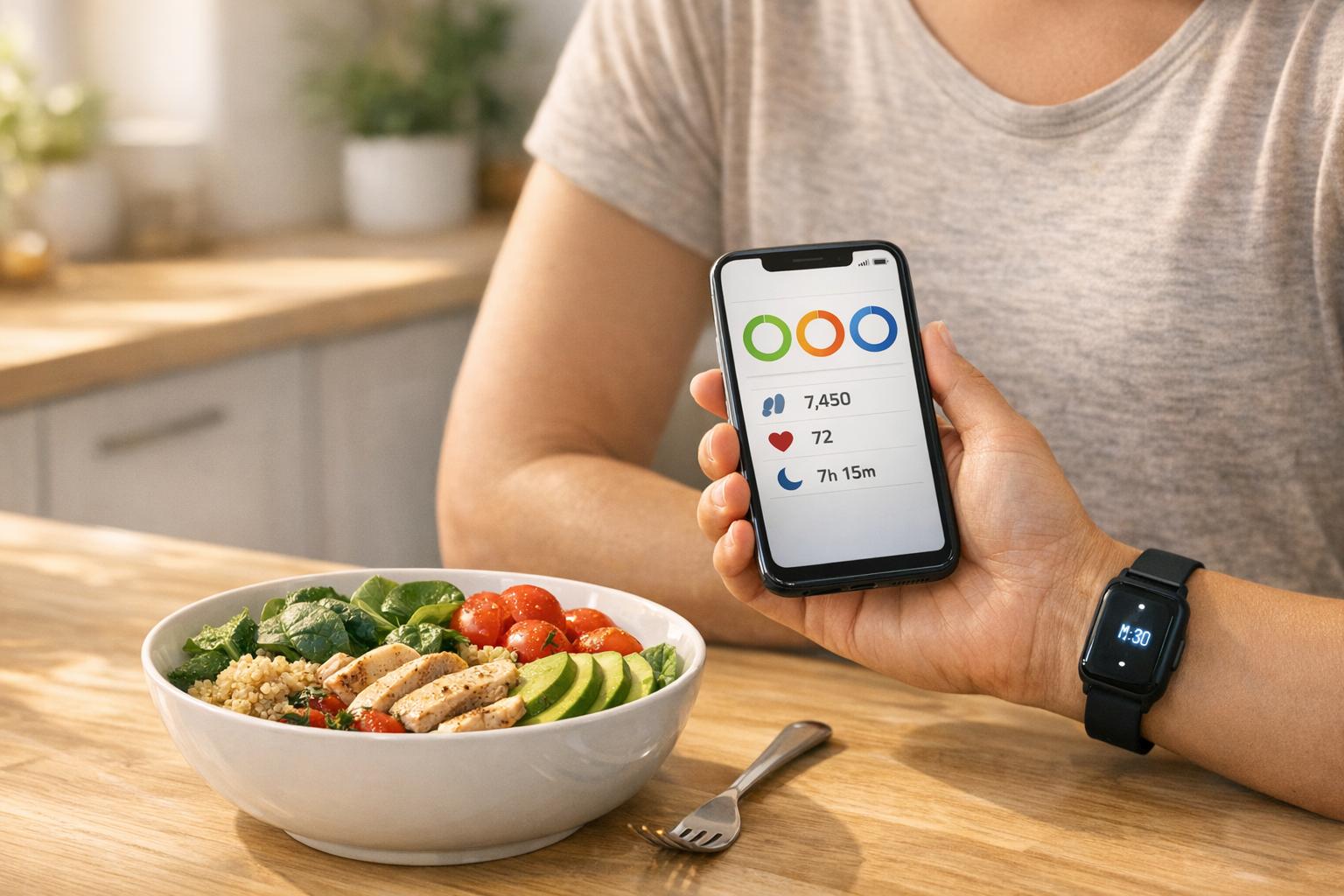
AI is transforming how we approach nutrition by moving away from generic diets and focusing on personalized plans tailored to your body and lifestyle. Here's how:
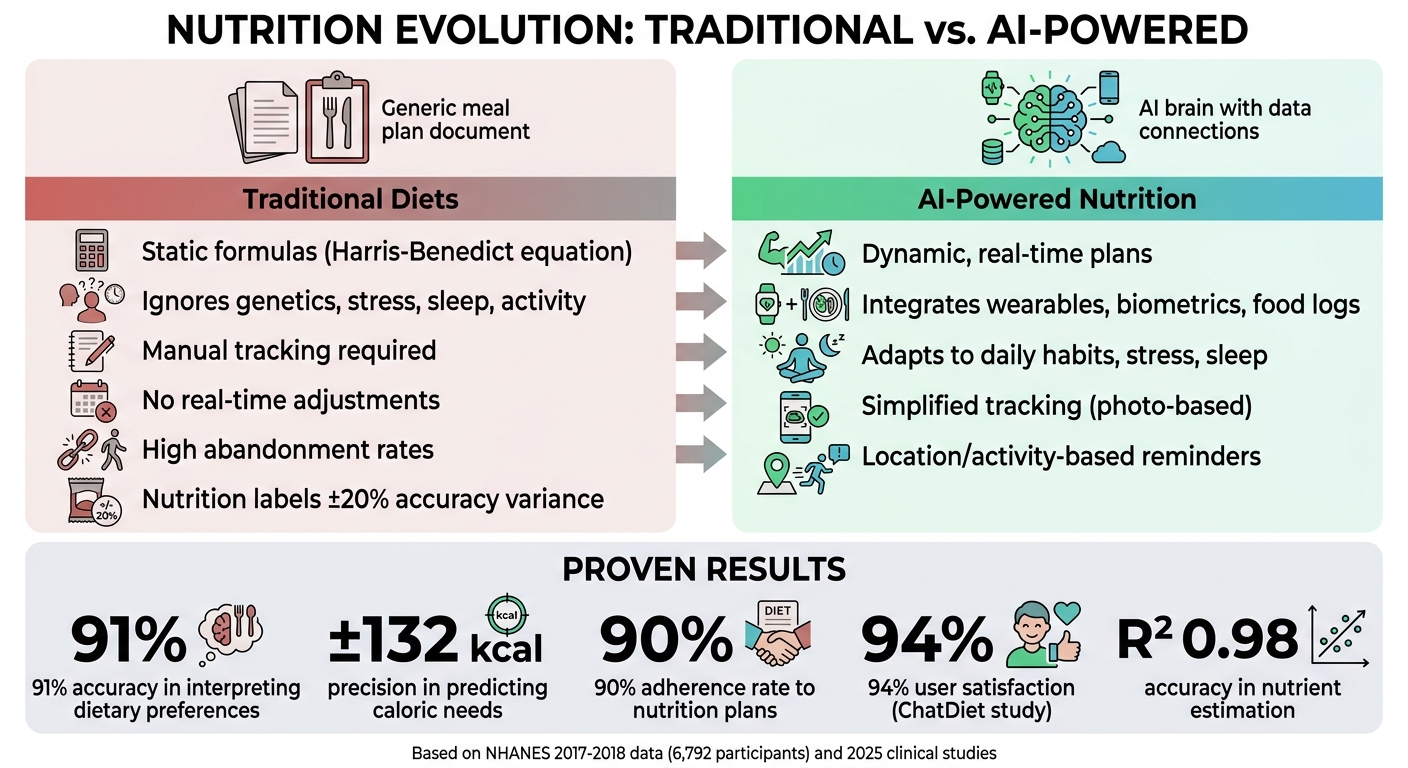
- Why Diets Fail: Traditional diets often overlook critical factors like genetics, stress, sleep, and activity levels. They also rely on outdated formulas and require tedious manual tracking, leading to frustration and abandonment.
- AI's Role: AI uses data from wearables, food logs, and biometrics to create dynamic, real-time nutrition plans. It adjusts based on your daily habits, stress levels, and sleep patterns, making it easier to stick to your goals.
- Behavioral Insights: AI addresses challenges like decision fatigue and tracking fatigue by simplifying meal logging (e.g., using food photos) and sending timely reminders based on your location or activity.
- Results: Studies show AI can predict caloric needs with high accuracy (±132 kcal) and improve adherence to nutrition plans by up to 90%.
AI-powered platforms like Healify combine this data with behavioral science to provide practical, personalized guidance that evolves with your needs. The future of nutrition is smarter, simpler, and more aligned with how you live.
Traditional Diets vs AI-Powered Nutrition: Key Differences and Results
I Turned ChatGPT Into My Nutrition Coach (It Beat EVERY Paid App)
sbb-itb-f5765c6
Behavioral Barriers That Prevent Nutrition Success
AI can create personalized meal plans, but addressing behavioral obstacles is essential for long-term success.
Common Behavioral Challenges
Our modern food environment presents several hurdles that make sticking to nutrition goals difficult. Marina Hoover puts it well:
"We don't fail because we don't know what healthy is. We fail because our brains weren't designed for a world that offers too many choices simultaneously." [4]
As the day progresses, decision fatigue kicks in, making it harder to stick to thoughtful choices. By evening, it’s much easier to grab takeout or reach for processed snacks. The overwhelming variety of options - like countless saved recipes or trending food ideas on social media - adds to this mental strain. Instead of cooking, we spend energy comparing choices, which often leads to frustration and a higher chance of abandoning our goals [4].
Even when healthy options are available, tracking them can feel like a chore. The need for precise logging adds another layer of mental effort, especially when compounded by the fact that U.S. nutrition labels can legally vary by up to 20% from actual values. This uncertainty makes even basic tracking feel unreliable, adding to the cognitive load and making long-term adherence harder, especially for those less familiar with nutrition or digital tools [2][4].
How Lifestyle Factors Affect Eating Habits
Beyond cognitive struggles, everyday lifestyle factors - like sleep, stress, and routines - play a huge role in shaping eating habits. Unfortunately, traditional diet plans often fail to account for these influences. For example, static formulas like the Harris-Benedict equation can't reflect how a high-stress job, poor sleep (say, only five hours), or irregular work shifts impact how your body processes food [2]. Time constraints also lead to rushed decisions, making it easier to drift away from nutrition goals [4].
Stress and lack of sleep not only affect food processing but also weaken willpower, making manual, static plans feel impractical. Tools that simplify the process - like automated grocery lists or meal substitution suggestions - tend to yield better outcomes [4]. Without real-time feedback to adjust for changing activity levels, travel, or health priorities, sticking to a plan becomes even tougher [2].
AI-driven solutions tackle these challenges by integrating data from wearables, tracking factors like sleep patterns, stress levels, and physical activity. This allows nutrition plans to adapt dynamically to real-life conditions rather than relying on static assumptions. By addressing these behavioral barriers, AI makes it easier to stay on track and achieve lasting results.
How AI Creates Personalized Nutrition Goals from Behavioral Data
AI takes health data and turns it into tailored nutrition plans by analyzing connections that traditional methods often overlook. Instead of sticking to generic formulas, these systems gather input from wearables like the Apple Watch or Oura, lab results, and daily food logs to create a detailed view of your metabolic health [5]. This comprehensive perspective helps AI identify patterns between your diet and how your body responds. Let’s dive into how AI's technical methods drive these personalized plans.
AI Pattern Recognition and Behavior Prediction
Through tools like Variational Autoencoders (VAEs) and Contextual Trigger Analysis, AI maps your eating habits, linking food logs with symptom tracking to uncover hidden dietary triggers [3][5]. This allows the system to recommend meals that have worked for people with similar metabolic profiles and lifestyles. Neura Health provides a great example:
"Neura's AI model doesn't just look at what you ate, but when and how it affected you... identifying hidden dietary triggers that a standard diet meal plan generator would miss." – Neura Health [5]
Consider a study published in August 2025, which analyzed data from 6,792 participants in the NHANES 2017–2018 dataset. This study used a Mistral 7B LLM to interpret dietary constraints with 91% accuracy and a gradient boosting model that predicted caloric needs with a Mean Absolute Error (MAE) of just 132 kcal [2].
AI also uses Recurrent Neural Networks (RNNs) and Gated Recurrent Units (GRUs) to model the timing of meals, generating sequences from breakfast to dinner that align with your natural eating patterns [3]. Meanwhile, Natural Language Processing (NLP) turns your preferences into actionable filters that guide the system [2].
Real-Time Goal Adjustments
AI doesn’t just set nutrition goals - it continuously updates them in real time. Unlike static meal plans, these AI-driven strategies adapt throughout the day. For example, if your wearable device reports poor sleep or a tough workout, the system instantly recalculates your hydration and calorie needs [5].
If your biometrics show stress or blood sugar spikes, the system adjusts portion sizes and ingredient recommendations on the spot, keeping your plan aligned with your body’s needs [5]. There’s no waiting for a weekly check-in; the system reacts to your signals almost immediately.
A July 2025 pilot study on "ChatDiet", an LLM-powered nutrition assistant, highlighted how effective this approach can be. Over 14 days, participants adhered to dietary constraints 90% of the time and reported 94% satisfaction [2]. Even if you slip up mid-week, the system recalculates the rest of your plan to help you stay on track - avoiding the dreaded "all-or-nothing" mindset [5].
Applying Behavioral Science Principles
AI also tackles behavioral barriers by using principles from behavioral science to improve adherence. For instance, it sends timely nudges during key moments - like when your GPS shows you’re at the grocery store or right after a workout [1]. These well-timed prompts make it easier to stick to your goals.
To simplify meal tracking, AI uses image recognition and NLP, making logging as easy as snapping a photo or typing a quick description. Deep learning models for food nutrition estimation have achieved R² scores as high as 0.98, demonstrating impressive accuracy in analyzing nutrient content [2].
Beyond tracking, these systems create feedback loops that learn your preferences over time. This transforms the experience into a collaborative process - more like working with a coach who understands your needs than following a rigid set of rules.
AI Nutrition Coaching in Practice
Platforms like Healify showcase how advanced technology can transform data into practical, personalized nutrition guidance. These systems take the technical concepts of AI and apply them to real-world scenarios, offering tailored, behavior-driven coaching that adapts to individual needs.
How Healify Uses Behavioral Insights
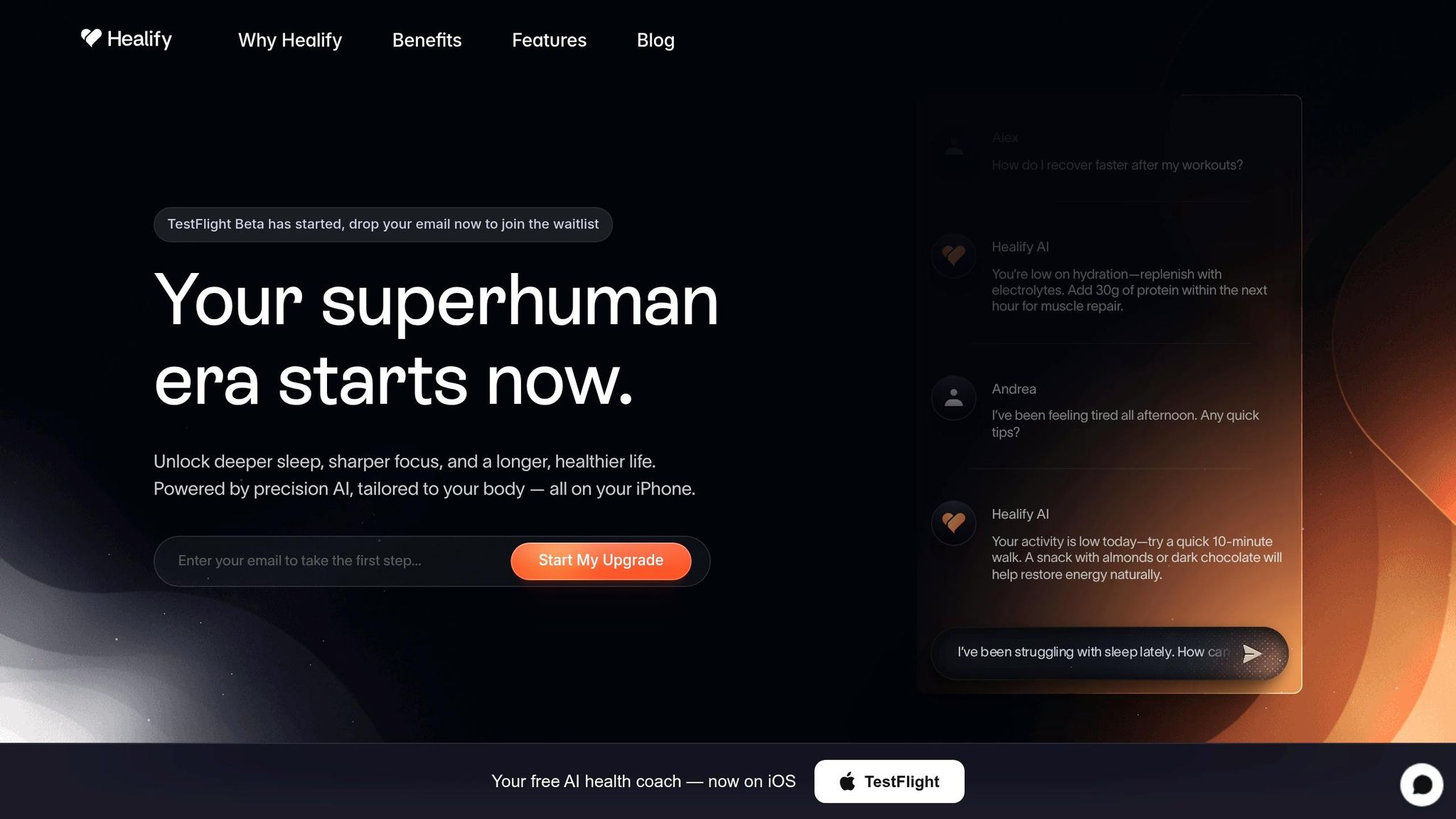
Healify’s AI health coach, Anna, is a prime example of how behavioral data can shape personalized nutrition strategies. By gathering information from wearables, biometrics, bloodwork, and lifestyle habits, the platform creates a detailed health profile. This allows Anna to uncover patterns that might go unnoticed with traditional methods.
For example, the system tracks sleep quality, identifying disruptions like nighttime awakenings and adjusting nutrition goals to support recovery. It also monitors daily activity levels, providing real-time suggestions - such as recommending 30g of protein after a workout - based on heart rate and movement data. Elevated cortisol or stress markers trigger immediate "Stress Defense" tips to help manage these spikes effectively.
"Healify makes [numbers] make sense and gives me clear next steps. My energy is better and I know what to do." – Andrea, Beta tester
The platform’s real-time Health Score evolves constantly. For instance, a sudden increase in stress might prompt specific dietary adjustments to mitigate its effects [6].
Benefits of AI-Powered Nutrition Platforms
Healify’s approach highlights the advantages of using behavioral data to deliver timely, customized nutrition advice. These platforms go beyond traditional meal planning by simplifying the process and offering solutions tailored to daily life.
-
Better adherence: By eliminating the mental effort of planning, the built-in meal planner and recipe generator handle macro calculations for you. As Personal Trainer Taylor puts it:
"Healify's meal plan and recipe generator calculate macros and provide easy recipes, helping my clients reach their fitness goals faster."
- Improved health outcomes: Timing is everything. Instead of vague advice like "eat more protein", users get precise guidance, such as consuming protein within an hour post-workout to optimize muscle recovery. Similarly, hydration and recovery are fine-tuned, with the system recommending exact electrolyte amounts based on workout intensity.
What sets these platforms apart is their adaptability. They learn your preferences, adjust to your schedule, and recalibrate goals when unexpected events - like poor sleep, stress, or missed meals - occur. This creates a collaborative and flexible experience that feels more like working with a dedicated health team than following rigid, one-size-fits-all rules.
What's Next for AI in Personalized Nutrition
AI is making strides in real-time nutritional adjustments, but the future holds even more promise. The next wave of advancements aims to combine behavioral insights with health data to create a more holistic approach to personalized nutrition. Let’s take a closer look at how multi-agent systems and integrated health data are shaping this evolution.
Multi-Agent AI Systems for Nutrition
Instead of relying on a single AI to handle everything, new systems are leveraging specialized health agents to perform distinct tasks like nutrient estimation, intake tracking, and personalized coaching. For instance, in January 2026, Muqing Xu introduced a mobile nutrition assistant that combines vision, dialogue, and state management agents. This system can estimate nutrients from meal photos and adjust intake in real time [7]. Similarly, research from Verily Life Sciences in September 2025 demonstrated that separate agents could identify behavioral challenges, such as decision fatigue, with over 90% accuracy. These systems also delivered targeted strategies, earning expert ratings as high as 4.79 out of 5 [8]. In studies involving patients with cardiometabolic conditions, every participant strongly agreed that the coaching felt tailored to their needs [8].
This multi-agent approach is especially effective at addressing behavioral obstacles. By mapping over 100 behavioral strategies to individual challenges, these systems provide highly specific guidance. For example, if decision fatigue is a problem, the AI might suggest simple rules like filling one-third of your plate with lean protein. If you struggle with present bias, it might guide you through mental exercises to help focus on long-term goals [8].
But this is just one piece of the puzzle. The future lies in combining these strategies with deeper health data for even more precise personalization.
Deeper Integration with Health Technologies
Building on multi-agent systems, the next step is integrating diverse health data into a seamless, closed-loop system. These systems will pull information from wearables, sensors, and meal photos to create a real-time health profile that adapts dynamically.
For example, a 2025 study used gradient boosting models and localized AI to predict individual caloric needs with a margin of error as low as 132 calories [2]. The same system could interpret dietary restrictions (like "lactose intolerant and reducing sodium") with 91% accuracy [2].
This integration is also making an impact in clinical settings. NutriOrion, an advanced framework introduced in February 2026, connects directly with Electronic Health Records to manage complex cases, including drug-food interactions. In a trial with 330 stroke patients managing multiple conditions, NutriOrion reduced sodium intake by 9% and sugar by 12%, while increasing fiber consumption by an impressive 167% [9]. It also achieved a low 12.1% rate of drug-food interaction violations, outperforming single-agent models [9].
Another game-changer is image-based meal logging, which removes much of the hassle associated with traditional tracking methods. Vision agents can now estimate portion sizes and nutrients from a simple photo, eliminating the need for manual entry [7]. Paired with continuous glucose monitors and activity trackers, these systems provide instant feedback, creating a personalized experience that adjusts to your lifestyle in real time.
Conclusion: Better Nutrition Through AI and Behavioral Data
AI is reshaping nutrition by moving away from rigid, one-size-fits-all diets and embracing flexible, behavior-focused models. Traditional diet plans often rely on outdated formulas that fail to account for how people actually live and eat. In contrast, AI uses behavioral patterns, lifestyle choices, and real-time data to create nutrition plans that fit seamlessly into your daily life.
The numbers back up this approach. AI systems have shown the ability to interpret dietary preferences with an impressive 91% accuracy while also making the tracking process easier for users [2].
"Integrating AI into nutrition presents a transformative opportunity to overcome [static] limitations by providing intelligent, individualized, and context-aware dietary support."
- Sena Karamanlı Aydın, Department of Business, University of Europe for Applied Sciences [2]
Healify takes this concept further by combining AI-powered insights with data from wearable technology, biometrics, and lifestyle habits. Instead of sticking to static plans, Healify adapts in real time, adjusting to factors like increased physical activity, stress fluctuations, or changes in sleep patterns. Its AI health coach, Anna, simplifies complex health information into practical steps that are easy to follow and integrate into your routine.
FAQs
What data does AI need to personalize my nutrition goals?
AI customizes your nutrition goals by examining various behavioral data points, including your eating habits, biometrics, activity levels, hydration, and overall lifestyle. This approach ensures a plan that's aligned with your specific needs and daily routines.
How does AI adjust my plan when I’m stressed, sleep-deprived, or traveling?
AI fine-tunes your nutrition plan on the go by analyzing data like your activity levels, biometrics, and daily habits. It tailors recommendations to match your current needs - whether that means suggesting foods to help manage stress, offering hydration tips, or adjusting nutrients to aid recovery. This flexible approach keeps your plan relevant and helpful, even when life throws in challenges like stress, poor sleep, or travel.
How accurate is photo-based meal logging compared to manual tracking?
Photo-based meal logging that uses AI-driven image recognition offers a much higher level of accuracy compared to manual tracking. Research indicates it can achieve a mean absolute percentage error (MAPE) as low as 1.2%, while manual tracking typically falls between 12.4% and 31.7%. This demonstrates its capability to deliver far more precise and dependable dietary insights.