
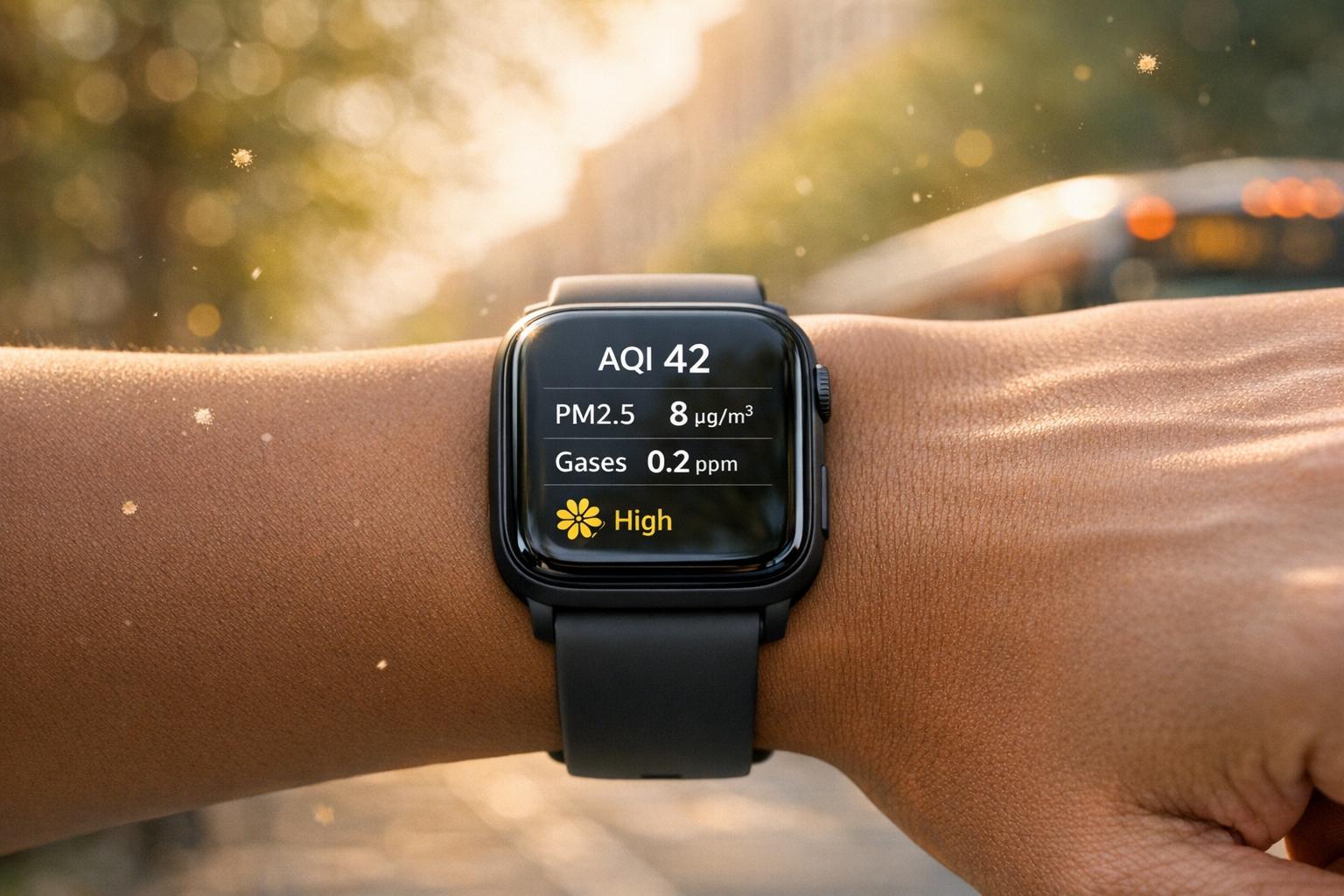
Wearable air monitors are changing how we understand air quality by providing real-time, personal data on pollutants and allergens. Unlike fixed government monitors that give general readings, wearables track the air you’re breathing throughout your day - whether you’re at home, exercising, or commuting. They combine advanced sensors with AI to help you identify pollution sources, link exposure to health symptoms, and take actionable steps to improve your well-being.
Key Takeaways:
- Why It Matters: Fixed monitors miss localized pollution spikes (e.g., traffic, construction). Wearables offer personalized data.
- What They Track: Pollutants like PM2.5, VOCs, and ozone; allergens like pollen and mold.
- How It Works: Sensors measure particles, gases, and environmental factors like humidity and motion.
- Benefits: Helps you understand your exposure, identify triggers, and make informed decisions to reduce health risks.
- Tech Example: AI tools like Healify analyze your data and provide tailored health recommendations.
Wearables are not just gadgets - they’re tools that empower you to breathe safer, healthier air every day.
Could The Atmotube Pro Be The Best Portable, Wearable Air Quality Sensor Out There?!
sbb-itb-f5765c6
The Core Technologies Inside Wearable Air Monitors
Knowing how your wearable's sensors work helps you trust the data it provides. Accurate sensor readings are the backbone of the personalized insights these devices offer. Most wearables use three main types of sensors, each designed to detect specific airborne threats.
Optical Particle Sensors for Dust and Allergens
These sensors are used to identify particles like dust, pollen, mold spores, and smoke. They work by shining a laser beam through an air sample. When particles scatter the light, a photodiode measures the scattered signal and converts it into particle counts and mass (measured in μg/m³) [3].
Modern optical sensors go a step further by categorizing particles based on their size. This process, called size binning, helps distinguish between PM2.5 (particles 2.5 micrometers or smaller, such as smoke from combustion) and PM10 (particles up to 10 micrometers, like pollen or household dust) [3]. The distinction is important because different particle sizes impact the body in unique ways, as previously discussed.
"The World Health Organization (WHO) reports airborne particulate matter as a Group 1 carcinogen and as the biggest environmental risk to health, with responsibility for about one in every nine deaths annually." - Livio Lattanzio, PhD Product Manager, Sensirion [3]
Gas Sensors for Invisible Pollutants
Pollutants like VOCs, ozone, and carbon monoxide are invisible and often odorless, even at harmful levels. This makes sensor-based detection crucial. Wearables typically rely on two types of gas sensors: electrochemical sensors (ECS) and metal oxide semiconductor (MOS) sensors [4].
Electrochemical sensors detect gases by triggering a chemical reaction - oxidation or reduction - when the target gas interacts with an electrode. This reaction produces an electrical current proportional to the gas concentration [4]. These sensors are favored for wearables because they are compact, energy-efficient, and highly sensitive. In contrast, MOS sensors detect gases through changes in conductivity but require high operating temperatures (392°F to 752°F), which can drain batteries faster [4].
"Electrochemical gas sensors uniquely combine miniaturization, low energy demand, and direct signal transduction, making them particularly advantageous for healthcare-related applications." - RSC Publishing [4]
However, consumer-grade gas sensors aren't perfect. They may react to non-target gases or experience calibration drift over time, making regular recalibration essential for consistent accuracy [1].
Temperature, Humidity, and Motion Sensors
These sensors play a supporting role by calibrating and validating pollutant readings. For instance, temperature and humidity sensors adjust gas and particle readings to account for environmental changes. Without these corrections, conditions like a foggy morning or steam from cooking could trigger false pollution alerts [1][2].
Motion sensors, such as accelerometers, add another layer of context. They help differentiate between pollution in the environment and exposure caused by the user's activities. A 2023 study by Colorado State University researchers tested a wearable monitor called the AirPen, which included PM and VOC sensors alongside temperature, humidity, and motion sensors. By combining accelerometer and GPS data, researchers identified that the highest PM2.5 exposures (up to 82 μg/m³) occurred during specific tasks like mowing, without requiring manual activity logs [5].
| Sensor Type | What It Does | Why It Matters |
|---|---|---|
| Temperature | Calibrates gas sensor resistance | Prevents data drift in MOS and electrochemical sensors |
| Humidity | Corrects light-scattering interference | Avoids false "high pollution" alerts caused by fog or mist |
| Motion | Tracks user activity (e.g., running, cleaning) | Differentiates between environmental air quality and self-generated exposure |
| GPS/Location | Maps pollution to specific locations | Pinpoints pollution sources and reduces errors |
These technologies work together to transform raw data into actionable biomarker insights about your exposure to pollutants.
How Wearables Turn Raw Data Into Useful Insights
Wearable devices collect raw sensor data - like electrical signals, resistance changes, or light scattering - but on its own, this information doesn’t mean much. The real magic happens when that data is processed and interpreted.
Building a Personal Exposure Profile
Wearables equipped with optical particle, gas, and environmental sensors can create something called a Personal Exposure Profile. These devices combine pollutant concentration data with information from built-in tools like GPS (to track location), accelerometers (to measure activity), and heart rate monitors (to estimate breathing rate) [2].
Here’s why this matters: How wearables track air quality tells you what’s in the air around you, but it doesn’t account for how much of it you’re actually inhaling. For instance, when you’re running, your breathing rate increases, which means you take in more pollutants. A November 2022 pilot study at the Politecnico di Milano demonstrated this. Twenty participants walked 4.5 kilometers (about 2.8 miles) through various urban settings. The wearable system estimated their inhaled PM2.5 dose to be 22.3% higher (16.27 μg compared to 13.31 μg) than what fixed monitoring stations predicted. Why? Because the wearables accounted for each person’s unique breathing patterns and exposure to pollution peaks [6].
"A wearable system following the person everywhere, monitoring both indoor and outdoor environments and the cardio-respiratory activity of the person, can represent a robust solution for the accurate assessment of PAPE [Personal Air Pollution Exposure]." - Sara Bernasconi et al., Politecnico di Milano [6]
Once your personalized exposure profile is built, AI steps in to identify trends and problem areas.
AI-Driven Pattern Recognition
After a few days of data collection, AI algorithms analyze the information to uncover hidden trends. By processing GPS locations, activity levels, and pollutant readings, these systems can pinpoint when and where your exposure levels are highest [2].
This is especially useful for identifying urban "street canyons" - areas where tall buildings trap pollution at street level, creating hotspots that traditional monitoring stations might miss [6]. AI also improves the accuracy of sensor readings by addressing issues like drift or interference from other substances, giving you a clearer view of your surroundings [2].
Linking Pollution Data to Symptoms
Turning data into actionable insights means connecting pollution exposure to your health. Once exposure patterns are clear, the next step is linking them to symptoms. For example, if you log an asthma flare-up, itchy eyes, or a headache, the app can match these symptoms to the environmental data from that specific time and place. Over time, patterns emerge - like noticing that your symptoms spike during your commute or while cooking indoors.
For people with asthma or allergies, having a detailed, timestamped record of symptoms alongside exposure levels can be life-changing. Apps like Healify go even further by combining wearable data with biometrics and health history. Using an AI health coach, these tools help you connect the dots between environmental triggers and your body’s reactions, turning complex data into a straightforward action plan.
How to Choose the Right Wearable Air Monitor
Start With Your Health Goals
The first step in picking the right air monitor is understanding your health priorities. For example, someone managing asthma will need a different device than someone focused on improving concentration in poorly ventilated spaces.
| Health Goal | Primary Sensor Needed | Key Metric to Watch |
|---|---|---|
| Asthma/Allergy Management | PM2.5, PM10 | < 12 μg/m³ (Good) [1] |
| Indoor Ventilation/Focus | CO2 | < 800 ppm (Excellent) [1] |
| Chemical Sensitivity | VOCs | Relative spikes from baseline [1] |
| Exercise Optimization | PM2.5 + Heart/Resp Rate | Personal inhaled dose (PAPE) [6] |
Since most people spend up to 90% of their time indoors, CO2 and VOC sensors often provide the most immediate benefits. However, if you frequently commute through traffic or exercise outdoors, PM2.5 becomes a critical metric - especially if you have a respiratory condition.
Once your health goals are clear, focus on finding a device with accurate and reliable sensors. You can also use AI-driven health apps to integrate this data into a personalized wellness plan.
Check Sensor Capabilities
After identifying your priorities, examine the device's sensor capabilities. For instance:
- PM2.5 sensors are essential for identifying asthma triggers, wildfire smoke, and even cardiovascular risks.
- CO2 sensors (preferably NDIR types) are excellent for monitoring air quality related to sleep and concentration. These sensors are more stable and less prone to errors compared to cheaper alternatives [8].
- VOC sensors are useful for tracking exposure to chemicals from items like fresh paint, new furniture, or cleaning products.
For athletes or active individuals, consider monitors that combine air quality data with physiological metrics like heart rate, respiratory rate, and stress levels. As Sara Bernasconi, PhD, from the Politecnico di Milano, explains:
"Personal air pollution exposure (PAPE), the product of pollutant concentration and minute ventilation (V'm), is a crucial measure for understanding individual health risks." [6]
While consumer-grade sensors may not match the precision of professional monitors, they usually fall within a 20–30% accuracy range - enough to alert you when conditions take a turn for the worse.
Next, think about how the monitor fits into your everyday life.
Practical Factors for Everyday Use
A device's design and usability are just as important as its sensors. Lightweight monitors (under 20 grams) with versatile mounting options - like wristbands, carabiners, or belt clips - are much easier to incorporate into your routine [7].
If you need quick updates, prioritize devices with glanceable displays, such as lock-screen widgets or smartwatch integration. These features make it easy to check air quality without unnecessary hassle. For quieter settings, like meetings or public spaces, vibration alerts provide a subtle alternative to loud notifications. And when it comes to charging, USB-C compatibility keeps things simple and reduces cable clutter.
In terms of cost, reliable indoor and outdoor air monitors generally range from $200 to $400. If you're on a tighter budget, entry-level options start at around $100 [1].
How to Use Wearable Data to Cut Your Exposure
Wearable Air Monitor Alert Thresholds & Actions: PM2.5, CO2 & VOCs
Set Up and Calibrate Your Device
Most consumer air monitors come pre-calibrated from the factory, so you usually don’t need to make any manual adjustments. However, proper placement of the sensor is key. Indoors, position the device within your breathing zone - about 3 to 6 feet off the ground. Avoid placing it near HVAC vents, air purifier outlets, or open windows, as these spots can give skewed readings due to artificially clean or turbulent air [1].
For personal exposure tracking, wear the sensor on your wrist or arm to ensure it measures the air you’re actually breathing [9]. Once the sensor is correctly positioned, let it run for 3–5 days to establish a baseline. This baseline helps define what "normal" air quality looks like in your home, workplace, or even during your daily commute.
"Understanding normal patterns helps you recognize abnormal conditions requiring action." - US Air Quality Team [1]
Once your device is set up and you’ve established a baseline, it’s time to incorporate it into your everyday routine.
Build a Daily Monitoring Routine
Having a baseline makes your air quality decisions more informed. For example, before heading out for a morning run, check the PM2.5 levels. If they’re above 35.4 μg/m³, it might be better to reschedule your run or move it indoors [1].
Integrating your monitor with a smartphone or smartwatch can make this process even easier, allowing for real-time health adjustments. Use widgets or lock-screen displays to quickly check real-time data. This can help you keep an eye on CO2 levels before starting long work sessions or track air quality throughout the day [7].
Building a habit of regular monitoring ensures you’re ready to act when conditions change.
Acting on Real-Time Alerts
When your device sends an alert, don’t panic. First, verify if the spike is persistent. A quick rise could just be a passing truck or a brief burst of smoke from cooking. If the elevated reading lasts longer, treat it as a real hazard [1].
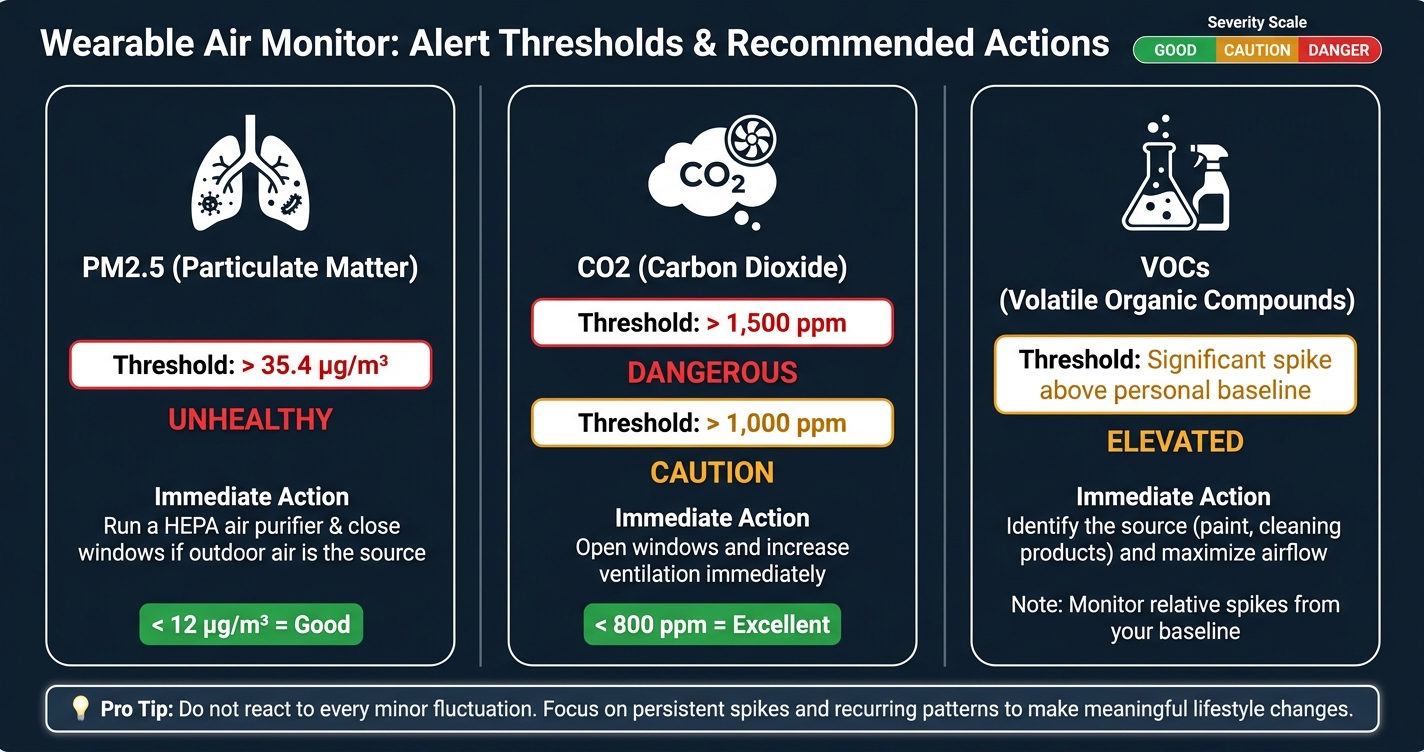
Your response will depend on the type of pollutant. For instance, if CO2 levels go over 1,500 ppm, open a window or improve ventilation [1]. A PM2.5 spike indoors might suggest pollution from cooking or outdoor air sneaking in - run a HEPA air purifier and shut the windows. If there’s a sudden rise in VOC levels, identify the source, like fresh paint or cleaning products, and boost airflow immediately [1].
Here’s a quick reference guide for common alerts and their recommended actions:
| Alert Type | Threshold | Immediate Action |
|---|---|---|
| PM2.5 spike | > 35.4 μg/m³ | Run an air purifier and close windows if outdoor air is the source [1] |
| CO2 buildup | > 1,500 ppm | Open windows and increase ventilation [1] |
| VOC spike | Significant rise | Identify the source and maximize airflow [1] |
The key is not to overreact to every minor fluctuation. Instead, focus on identifying patterns. Over time, you’ll notice activities or times of day that consistently lead to poor air quality. This insight allows you to make proactive changes to your routine. By turning sensor data into actionable steps, you can use wearable technology to improve your health and well-being every single day.
Conclusion: Putting Your Data to Work
Wearable air monitors offer a new way to understand personal exposure. Unlike stationary monitors that measure air quality in a fixed location, wearable devices provide insight into the air you’re breathing in real time - whether you’re stuck in traffic during your morning commute, hitting the gym, or cooking dinner. This matters because most people spend 80% to 90% of their time indoors [2], where hidden pollution sources can often go unnoticed.
The real power of these devices lies in how you use the data they provide. For example, if your PM2.5 levels spike above 35.4 μg/m³ during an evening jog or CO₂ levels in your home office regularly exceed 1,000 ppm, these patterns give you a reason to make small but meaningful changes. It could be as simple as taking a different jogging route or cracking open a window to improve ventilation.
This is where platforms like Healify step in to make sense of the data. Instead of leaving you to figure out what those numbers mean, Healify’s AI health coach, Anna, integrates your wearable data with other health factors like sleep, stress, and activity. The result? Clear, actionable recommendations tailored to your unique lifestyle.
"These metrics are giving consumers and their physicians an increasingly nuanced awareness of general health and well-being, compelling users to make wearables an integral part of their everyday lives." - Springer Nature [10]
While wearable air monitors are both accessible and precise, their true value comes from consistent and thoughtful use. By monitoring regularly, identifying trends in your exposure, and acting on the insights, you can make smarter choices to protect your health. Small adjustments in your daily routine can lead to big improvements in your overall well-being.
FAQs
How accurate are wearable air monitors?
Wearable air monitors usually have an accuracy of around 10% within their measurement range, which is often 0–60 ppm for VOC sensors. If you need higher precision, models with nondispersive infrared sensors are a better option, though they tend to come with a higher price tag. When selecting a device, think about your priorities - whether it's pinpoint accuracy or staying within your budget - and choose accordingly.
Can a wearable really detect pollen and mold?
Wearable devices are now capable of monitoring allergens such as pollen and mold in the air. Equipped with advanced sensors, some can detect over 98% of airborne particles, including mold spores and pollen, in real time. This allows users to stay aware of their surroundings and take steps to minimize exposure to allergens.
How do I know if a spike is real or a false alarm?
To determine if a sudden rise in air pollutants or allergens is genuine or just a false alarm, follow these steps:
- Examine data consistency: Look for patterns or repeated readings over time to rule out one-off anomalies.
- Compare to normal levels: Check if the spike surpasses the usual environmental levels in your area.
- Verify device accuracy: Ensure your sensor is properly calibrated and working as it should.
Unexpected, unverified spikes could point to a false alarm. Make it a habit to monitor trends and double-check your device's performance.