
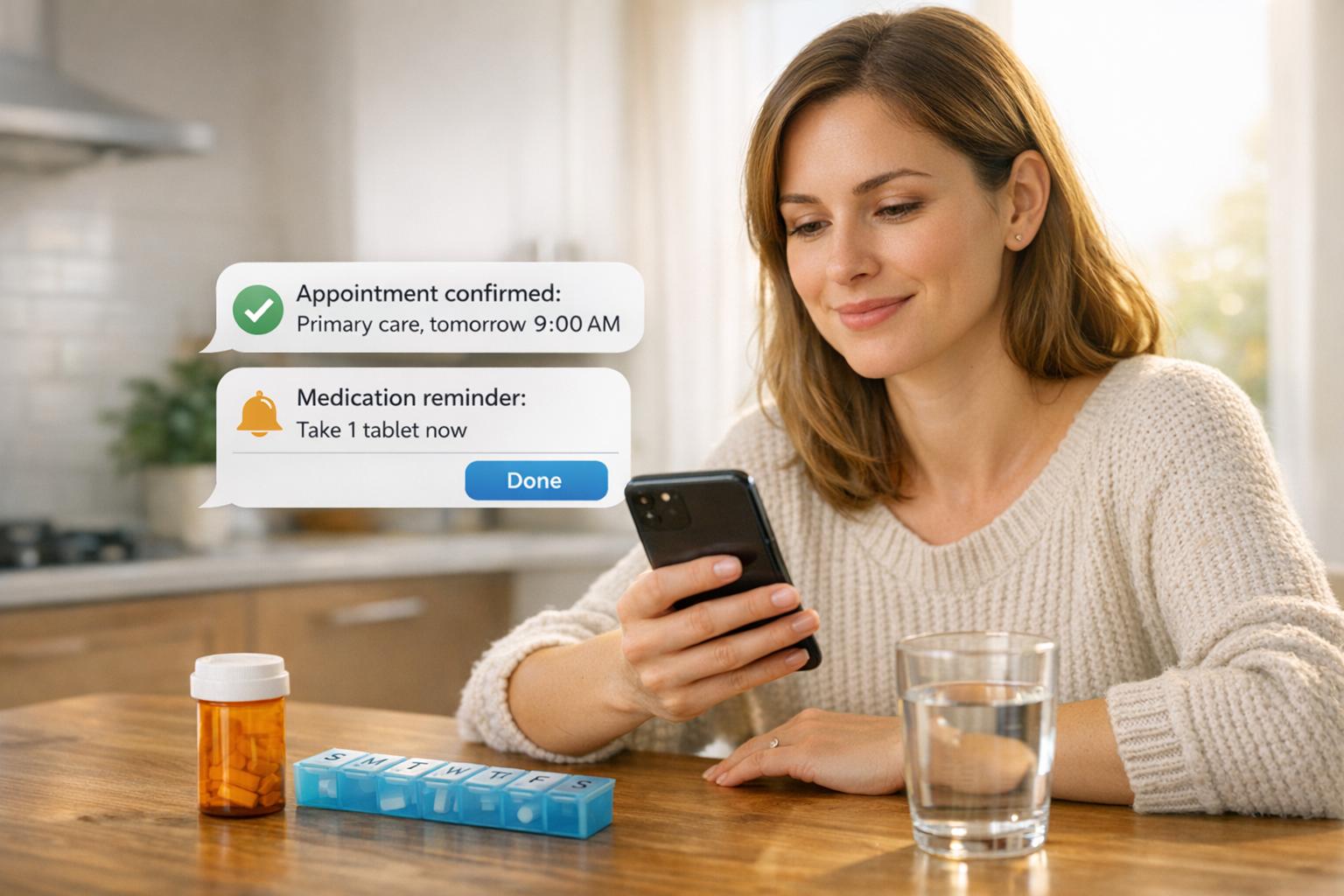
Virtual assistants are changing how patients interact with healthcare. By simplifying communication, they help patients stay on top of appointments, medications, and care plans. These tools reduce missed appointments, improve medication adherence, and lower administrative burdens for providers. Here's how they make a difference:
- Appointment No-Shows: Reduce rates by 25–38% with two-way reminders.
- Medication Adherence: Boost adherence for chronic conditions by offering real-time, personalized reminders.
- Administrative Efficiency: Save 8–12 minutes per scheduling interaction and improve form completion rates by 255%.
- Patient Communication: Provide 24/7 support, answer questions, and offer tailored advice based on individual health data.
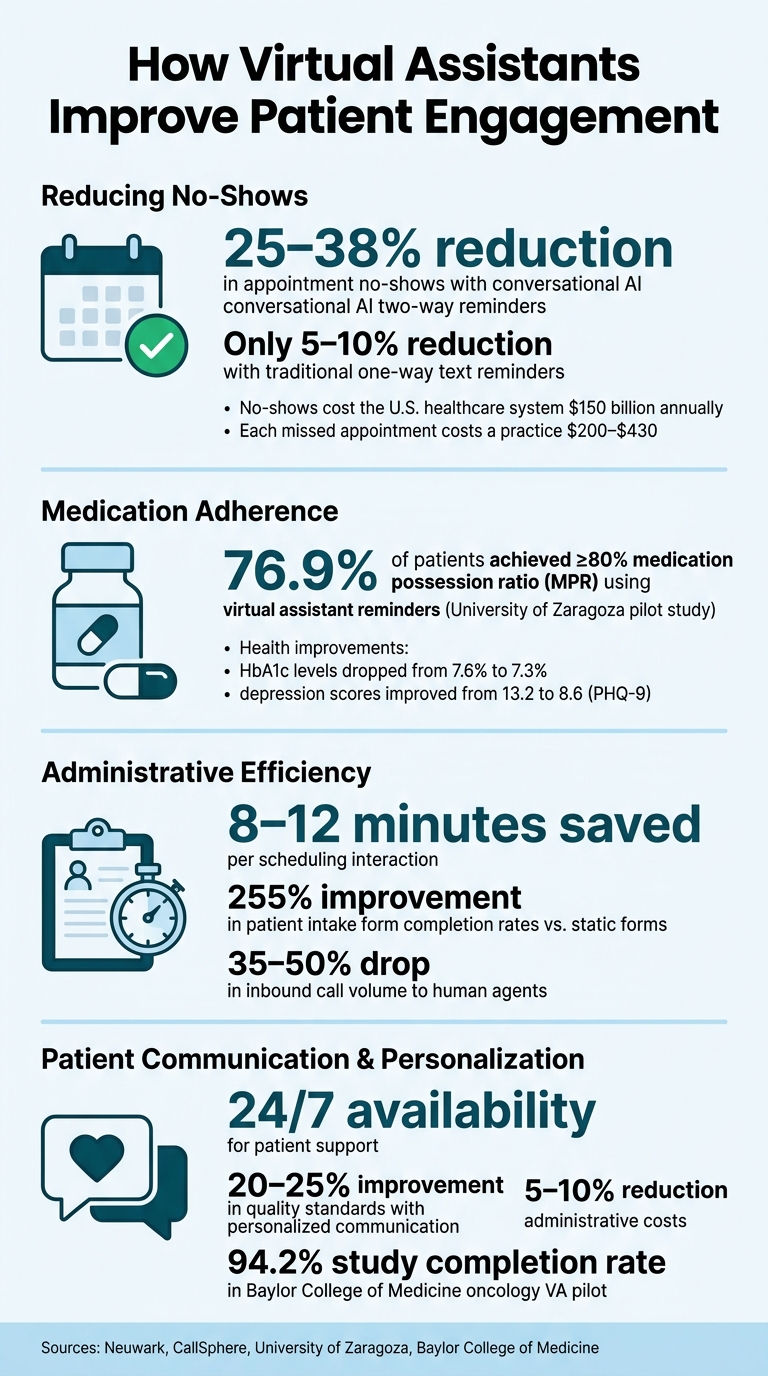
How Virtual Assistants Improve Patient Engagement: Key Stats
AI Agent-Powered Digital Patient Engagement: Transforming Healthcare Experience & Branding
sbb-itb-f5765c6
Setting Patient Engagement Goals and Spotting Key Challenges
To make any meaningful progress in patient engagement, you first need to establish a 12-month baseline. Track no-show rates, call volumes, and patient satisfaction over the course of a year. This data serves as your foundation - without it, gauging improvement becomes nearly impossible.
Missed appointments, for example, are a massive financial drain on the U.S. healthcare system, costing an estimated $150 billion annually. For individual practices, each missed appointment can result in a loss of $200 to $430, depending on the specialty [4]. For a solo physician, this adds up to approximately $150,000 in lost revenue every year [4].
"Patient no-shows are not just an inconvenience. They are a systemic revenue drain that quietly erodes the financial health of medical practices across the United States." - Mosharof Sabu, Researcher and Strategic Writer, Neuwark [4]
Common Barriers to Patient Engagement
Patients disengage for a variety of reasons, and they’re not always straightforward. Forgetfulness alone accounts for 38% of missed appointments, while 22% stem from transportation issues, and 12% result from administrative confusion [4]. Compounding the problem, 68% of appointment-related inquiries occur outside standard business hours [4]. For patients trying to reschedule or ask a question late at night, traditional systems often leave them without options.
Medication adherence also remains a challenge - not because patients don’t care, but because existing systems often create unnecessary hurdles instead of smoothing the process.
These obstacles highlight the critical need for systems that are more responsive and interactive.
How Virtual Assistants Address These Challenges
Virtual assistants step in to address these barriers by offering help exactly when patients need it. For example, conversational AI can cut no-show rates by 25% to 38% [1][4], far outperforming traditional one-way text reminders, which only reduce no-shows by 5–10% [4]. The key difference? Two-way communication. Instead of ignoring a static reminder, patients can respond to reschedule in seconds - no phone calls required.
On the administrative side, automating scheduling interactions eliminates the 8–12 minutes typically spent on each interaction [1]. This allows staff to focus on more complex tasks that require human expertise. For patient intake, conversational AI can boost form completion rates by an impressive 255% compared to traditional static forms [4], streamlining operations before patients even arrive.
The goal isn’t to replace human care but to enhance it. As Harveer Parmar from Vital Virtuals explains: "The integration of virtual assistants into clinical settings is not about replacing human interaction but augmenting it." [5]. Starting with high-volume, low-complexity tasks like scheduling builds trust in these tools and sets the stage for broader applications.
Building Personalized Patient Communication Flows
Virtual assistants in healthcare have shifted from generic messaging to creating meaningful, tailored engagement. Why? Because patients expect communication that reflects their unique conditions, schedules, and preferences. These tools achieve this by compiling a comprehensive view of each patient, pulling data from sources like EHRs, wearables, and CRMs. The result? Interactions that feel personal and relevant, not like a one-size-fits-all script [6][2].
This personalized approach doesn't just feel better - it works better. It has been shown to improve quality standards by 20–25% while cutting administrative costs by 5–10% [8].
Key Communication Workflows
Personalization comes to life through structured workflows, which guide patient interactions across different phases of care. Here’s how these workflows function:
| Workflow Phase | Key Virtual Assistant Tasks | Impact on Engagement |
|---|---|---|
| Pre-Visit | Sends appointment reminders, verifies insurance, gathers necessary data | Reduces no-shows and lowers administrative workload [3] |
| In-Visit/Recovery | Handles real-time symptom triage, medication reminders, and exercise coaching | Boosts treatment adherence and patient safety [7][3] |
| Post-Visit | Provides follow-up surveys, wound care instructions, and educational resources | Improves health literacy and minimizes readmissions [7][8] |
Take the example of a collaboration between Baylor College of Medicine and Smartek21 from November 2022 to October 2023. They developed a Personal Virtual Assistant (PVA) for 17 oncology patients, focusing on workflows for wound care, drain management, and symptom tracking. The results were impressive: a 94.2% study completion rate, with patients achieving 81% exercise adherence and 78% medication adherence [7].
Using Real-Time Support to Help Patients
Round-the-clock virtual assistants offer immediate help through natural, conversational interactions. Whether patients need advice on self-care, guidance for contacting a primary care provider, or a recommendation to visit the ER, these assistants provide answers without frustrating delays [1]. When situations exceed the assistant's capacity, a smooth handoff to a human agent - complete with the conversation's full context - ensures patients don’t have to repeat themselves. This seamless transition builds trust and reduces stress.
Communication Considerations for U.S. Patients
In the U.S., compliance with HIPAA is a mandatory baseline. Virtual assistants managing sensitive patient data must use end-to-end encryption, secure AI health management tools and API integrations with EHR systems, and strict access controls [1][3]. But security alone isn’t enough - how messages are crafted is just as critical.
Clear, plain-language messaging is essential. AI models should be refined with input from clinical professionals, such as registered nurses, to ensure responses are easy to understand, culturally sensitive, and free of awkward or overly formal tones [8]. This is especially vital for addressing disparities in care, as minorities and low-income individuals are twice as likely to report that their preferences are overlooked [8]. Thoughtfully designed virtual assistants can help bridge this gap.
"Patients deserve care that meets them where they are and accounts for their motivations, environment, preferences, and beliefs." - Akash Chaurasia, Product Research Scientist, Hippocratic AI [8]
To make communication accessible to all, offering multiple engagement options - like voice commands, SMS, web chat, or in-app messaging - ensures inclusivity, especially for those with mobility or vision challenges [7]. timing and reinforcing these communications with AI-driven health nudges are equally crucial, setting the stage for the next focus: creating effective reminder and follow-up systems.
Setting Up Reminder and Follow-Up Systems
Timely reminders can make a big difference in health management. A nine-month pilot study conducted at the University of Zaragoza (May 2019 – February 2020) followed 13 patients dealing with both type 2 diabetes and depression. These patients used a virtual assistant via the Signal messaging platform. At the start, none of them were sticking to their medication schedules. By the end, 76.9% of participants achieved a medication possession ratio (MPR) of 80% or higher. On top of that, their average HbA1c levels dropped from 7.6% to 7.3%, and depression severity scores (PHQ-9) improved significantly, going from 13.2 to 8.6 [9].
Types of Reminders and Follow-Ups
The best reminder systems adapt to patient needs by combining different outreach methods:
| Reminder Type | Function | Impact |
|---|---|---|
| Medication Adherence | Prompts specific doses with a "Yes/No" reply | Boosted MPR to ≥80% for 76.9% of study participants [9] |
| Appointment Notifications | Sends alerts 24–48 hours before visits with rescheduling options | Reduced no-show rates and kept clinic schedules running smoothly [10] |
| Biometric Check-ins | Requests vital sign data like blood glucose readings | Helped monitor chronic conditions in real-time [2] |
| Post-Visit Follow-Ups | Checks in within 24–72 hours after discharge | Ensured medication adherence and recovery progress [10] |
For medication reminders specifically, if a patient doesn’t respond, the system sends up to three follow-ups at 10-minute intervals before involving a human provider [9]. This balance between persistence and non-intrusiveness is key to keeping patients engaged without overwhelming them.
Integrating Wearables, Apps, and EHR Systems
Reminders work best when they’re backed by real-time patient data. By linking virtual assistants to EHR systems through FHIR-compliant APIs, reminders can reflect a patient’s most up-to-date clinical information. This means they can flag overdue screenings, medication refills, or specialist referrals [2][9]. Wearable devices add another layer, enabling reminders triggered by biometric changes - like a sudden increase in resting heart rate or missed activity goals.
"Advanced virtual health assistants can tailor their interactions based on individual patient profiles, preferences, and medical histories." - AIVeda [2]
This kind of integration also helps close care gaps. For instance, when lab results are ready or a referral is made, the system tracks whether the patient takes the next step. If they don’t, clinical staff are alerted to follow up [10]. Healify, for example, uses these principles to deliver reminders that are both personal and actionable.
How Healify Delivers Personalized Reminders
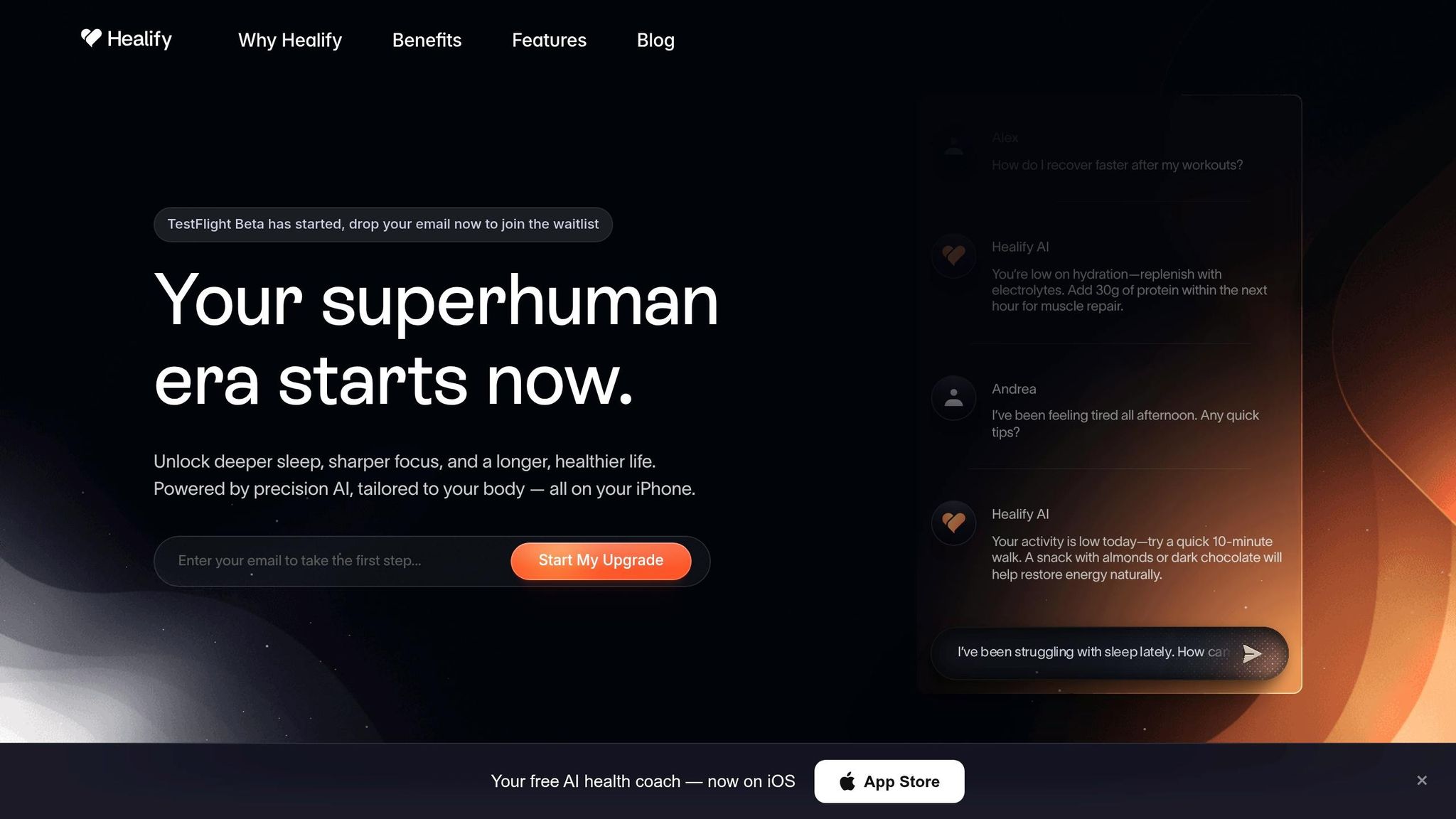
Healify takes personalization to the next level by combining data from wearables, biometrics, bloodwork, and lifestyle habits to create a detailed health profile for each user. Its AI health coach, Anna, doesn’t just send generic reminders - it provides specific, actionable insights based on the user’s data. Whether it’s a gentle nudge to improve sleep habits or a warning based on changes in biometrics, Healify translates raw data into clear steps for better health management.
Tracking and Improving Patient Engagement Over Time
Rolling out a virtual assistant is just the start. To truly make an impact, you need to measure its performance and refine it over time. This process transforms deployment into an ongoing cycle of improvement, ensuring the system meets both patient and organizational needs.
Key Metrics to Track
To understand how well your virtual assistant is performing, focus on four key metric categories:
- Performance: Look at response times, accuracy, and resolution rates.
- Engagement: Monitor adoption rates, task completion, and follow-up attendance.
- Operational Impact: Measure reductions in no-show rates and inbound call volume.
- Patient Sentiment: Gather satisfaction scores through post-visit surveys or in-app prompts.
For example, organizations using virtual assistants often see a 35–50% drop in inbound call volume to human agents [1]. Tracking long-term trends, like no-show rate reductions, can reveal how effective reminder sequences remain as workflows and patient demographics shift [1].
Using Data to Improve Engagement
Defining metrics is just the first step - what matters is how you use that data to improve. For instance, a high escalation rate (when the virtual assistant transfers a task to a human) may signal gaps in its knowledge base or confusing conversational flows. Often, the problem isn’t the technology itself but how the system interacts with patients.
To address this, review interactions where the assistant failed to resolve issues. Segmenting data by factors like location, age, or socioeconomic status can also uncover whether certain groups are being left behind [11].
Building a Feedback Loop
Improvement thrives on a consistent feedback cycle. Here’s a suggested schedule:
- Weekly: Check error rates and response times.
- Monthly: Analyze escalation trends and patient feedback.
- Quarterly: Dive deeper into workflows and retrain the model using real interaction data [12].
Feedback collection should happen across multiple channels - SMS, in-app prompts, and post-consultation surveys. Don’t forget to involve staff. If the virtual assistant adds to their workload instead of easing it, that’s an issue the data needs to highlight quickly.
"Evaluating performance ensures: Patients receive timely and accurate support; Staff workload remains manageable; Compliance with healthcare standards is maintained; Budget and resources are optimized." - SupportZebra [12]
The aim isn’t perfection from the start. It’s about building a system that improves steadily, adapts to real-world interactions, and gains patient trust by reliably closing care gaps. This feedback-driven approach ensures your engagement strategies grow alongside patient needs.
Conclusion: Using Virtual Assistants to Improve Patient Engagement
Virtual assistants are reshaping how patients and providers connect in the U.S. healthcare system, offering greater consistency and accessibility without replacing the human touch. The steps outlined here - defining engagement goals, creating personalized communication flows, implementing smart reminders, and maintaining a feedback loop - provide a clear framework for a patient-centered approach to care.
The results speak for themselves. Many organizations report fewer no-shows and reduced inbound call volumes, which free up staff and improve the overall patient experience [1].
"Virtual health assistants represent the beginning of a broader shift toward conversational healthcare - where natural language becomes the primary interface between patients and health systems." - CallSphere Team [1]
These tools don’t just support healthcare providers; they empower patients as well. Take Healify, for example. Its AI health coach, Anna, offers 24/7 personalized guidance by analyzing biometric data and benchmarks from wearables, blood tests, and other sources. This turns complex health information into simple, actionable steps, showing how virtual assistants can make healthcare more accessible and proactive.
The move toward conversational, proactive healthcare has already begun. Starting with straightforward, high-volume interactions and gradually expanding their capabilities ensures a smooth transition. This shift benefits everyone involved, creating a more efficient and responsive healthcare experience for both providers and patients.
FAQs
What should a clinic automate first with a virtual assistant?
Clinics can take a big step forward by automating patient follow-up tasks like appointment reminders and post-visit check-ins. This simple change can reduce no-show rates by as much as 36%, while also slashing administrative expenses.
Beyond that, virtual assistants are game-changers. They can manage real-time health monitoring, automate patient surveys, and even offer 24/7 support. This means clinic staff can focus on more complex responsibilities, all while boosting patient satisfaction and helping individuals stick to their care plans more effectively.
How do virtual assistants personalize messages using EHR and wearable data?
Virtual assistants tap into data from electronic health records (EHRs) and wearable devices to create tailored communication. By examining personal health metrics and behavior patterns, they provide support that fits each person's specific health requirements, offering reminders and messages that feel both relevant and individualized.
How can virtual assistants stay HIPAA-compliant while offering 24/7 support?
Virtual assistants ensure they stay within HIPAA guidelines while offering round-the-clock support by following stringent data security practices. This involves using encrypted communication, implementing strong privacy measures, and strictly adhering to HIPAA's privacy and security standards. These precautions are in place to keep patient information secure at all times.