
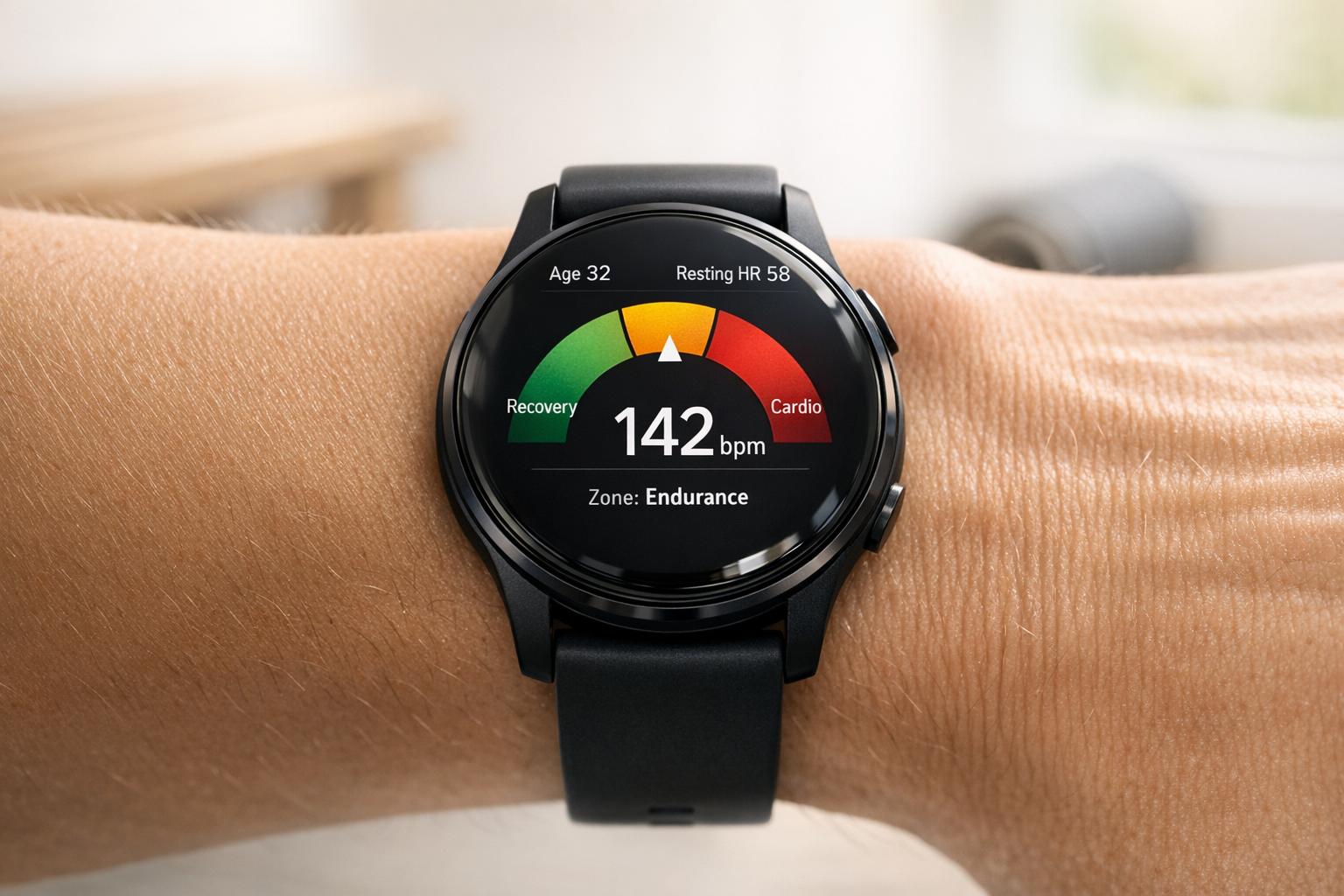
<iframe class="wrapifai-iframe" src="https://app.wrapifai.com/embed/c56364" frameborder="0" loading="lazy" id="wrapifai-iframe" width="100%" height="400px" marginheight="0" marginwidth="0" bgcolor="white" style="padding: 12px 0; border-radius: 12px" allow="clipboard-read;clipboard-write;" title="Embedded media"></iframe><h2 id="train-smarter-with-heart-rate-zones" tabindex="-1" class="sb h2-sbb-cls">Train Smarter With Heart Rate Zones</h2> <p>A <strong>heart rate zone calculator</strong> can take the guesswork out of cardio training. Instead of relying only on how a workout feels, you can use simple numbers to understand whether you're exercising at a light, moderate, or high intensity. That makes it easier to plan recovery days, steady endurance sessions, and harder efforts with a clear purpose.</p> <h2 id="why-heart-rate-zones-matter" tabindex="-1" class="sb h2-sbb-cls">Why Heart Rate Zones Matter</h2> <p>Each training zone reflects a different percentage of your estimated maximum heart rate. Lower zones are often used for warm-ups, cool-downs, and recovery work. Middle zones are popular for building stamina and supporting longer aerobic sessions. Higher zones are usually reserved for challenging intervals, race prep, and peak performance training.</p> <h2 id="a-simple-way-to-guide-your-workouts" tabindex="-1" class="sb h2-sbb-cls">A Simple Way to Guide Your Workouts</h2> <p>This <strong>heart rate zone calculator</strong> uses your age to estimate max heart rate, then shows five easy-to-read BPM ranges. It also includes practical descriptions so you know what each zone is generally best for. Whether you're walking, cycling, running, or doing circuit training, a clear <strong>heart rate zone calculator</strong> can help you pace yourself more effectively.</p> <p>If you have any medical concerns or notice unusual symptoms during exercise, talk with a doctor before starting or changing your training routine.</p> <h2 id="faqs" tabindex="-1" class="sb h2-sbb-cls">FAQs</h2> <h3 id="what-are-heart-rate-zones-used-for" tabindex="-1" data-faq-q>What are heart rate zones used for?</h3> <p>Heart rate zones help you match your workout intensity to a specific goal. Lower zones are usually used for recovery, easy movement, and building an aerobic base. Mid-range zones are often better for endurance and steady cardio, while higher zones are typically used for speed, power, and hard interval work. Using zones can make your training feel more intentional instead of guessing how hard you should be working.</p> <h3 id="why-does-the-tool-ask-for-my-resting-heart-rate" tabindex="-1" data-faq-q>Why does the tool ask for my resting heart rate?</h3> <p>Resting heart rate is a useful fitness marker, and many people like to track it alongside training data. In this version of the calculator, the workout zones are based on estimated maximum heart rate using the standard 220 minus age formula. Resting heart rate is included because users often want it on hand when reviewing overall cardio fitness, and it may support more advanced zone methods in other tools or training plans.</p> <h3 id="are-these-heart-rate-zones-completely-accurate-for-everyone" tabindex="-1" data-faq-q>Are these heart rate zones completely accurate for everyone?</h3> <p>Not always. The 220 minus age formula is a common estimate, but real maximum heart rate can vary quite a bit from person to person. That means your zones are best used as a practical starting point rather than a perfect medical measurement. If you have a heart condition, take medication that affects heart rate, or have any health concerns, it's smart to check with a doctor or qualified clinician before using heart rate data to guide intense exercise.</p>
<script src='https://app.wrapifai.com/embed/index.js'></script><script type="application/ld+json">{"@context":"https://schema.org","@type":"FAQPage","mainEntity":[{"@type":"Question","name":"What are heart rate zones used for?","acceptedAnswer":{"@type":"Answer","text":"<p>Heart rate zones help you match your workout intensity to a specific goal. Lower zones are usually used for recovery, easy movement, and building an aerobic base. Mid-range zones are often better for endurance and steady cardio, while higher zones are typically used for speed, power, and hard interval work. Using zones can make your training feel more intentional instead of guessing how hard you should be working.</p>"}},{"@type":"Question","name":"Why does the tool ask for my resting heart rate?","acceptedAnswer":{"@type":"Answer","text":"<p>Resting heart rate is a useful fitness marker, and many people like to track it alongside training data. In this version of the calculator, the workout zones are based on estimated maximum heart rate using the standard 220 minus age formula. Resting heart rate is included because users often want it on hand when reviewing overall cardio fitness, and it may support more advanced zone methods in other tools or training plans.</p>"}},{"@type":"Question","name":"Are these heart rate zones completely accurate for everyone?","acceptedAnswer":{"@type":"Answer","text":"<p>Not always. The 220 minus age formula is a common estimate, but real maximum heart rate can vary quite a bit from person to person. That means your zones are best used as a practical starting point rather than a perfect medical measurement. If you have a heart condition, take medication that affects heart rate, or have any health concerns, it's smart to check with a doctor or qualified clinician before using heart rate data to guide intense exercise.</p>"}}]}</script>