
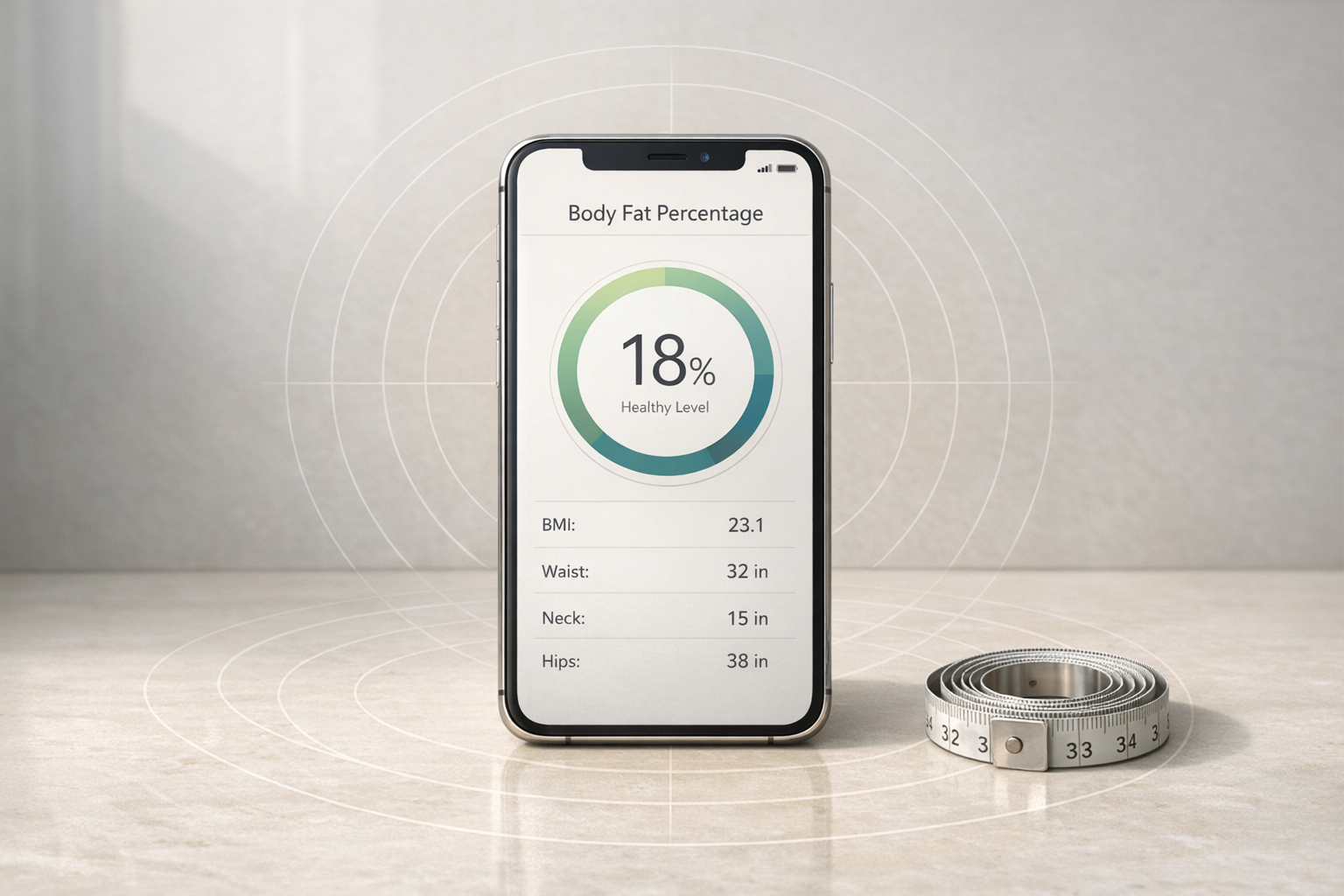
<iframe class="wrapifai-iframe" src="https://app.wrapifai.com/embed/c057ac" frameborder="0" loading="lazy" id="wrapifai-iframe" width="100%" height="400px" marginheight="0" marginwidth="0" bgcolor="white" style="padding: 12px 0; border-radius: 12px" allow="clipboard-read;clipboard-write;" title="Embedded media"></iframe><h2 id="understanding-body-fat-percentage-a-key-to-health" tabindex="-1" class="sb h2-sbb-cls">Understanding Body Fat Percentage: A Key to Health</h2> <p>When it comes to fitness and wellness, knowing your body composition can offer deeper insights than just stepping on a scale. A body fat calculator is a handy way to estimate how much of your weight comes from fat versus lean mass like muscle or bone. This isn’t about chasing a specific number—it’s about understanding your health and tracking progress over time.</p> <h2 id="why-measure-body-composition" tabindex="-1" class="sb h2-sbb-cls">Why Measure Body Composition?</h2> <p>Unlike weight alone, which doesn’t tell the whole story, calculating your fat percentage can reveal if you’re in a balanced range for your age and gender. For instance, someone might weigh more due to muscle mass, not excess fat. Using trusted methods like the US Navy formula, online tools can crunch the numbers for you, factoring in details like height, weight, and even waist size for better accuracy.</p> <h2 id="taking-control-of-your-fitness" tabindex="-1" class="sb h2-sbb-cls">Taking Control of Your Fitness</h2> <p>Whether you’re training for a marathon or just aiming to feel better, tools that estimate body composition are a great starting point. They’re quick, often free, and give you a baseline to work from. Pair these insights with a balanced diet and regular movement, and you’ve got a solid plan. Remember, though—digital calculators are just estimates. For tailored advice, a healthcare pro is your best bet.</p> <h2 id="faqs" tabindex="-1" class="sb h2-sbb-cls">FAQs</h2> <h3 id="how-accurate-is-this-body-fat-calculator" tabindex="-1" data-faq-q>How accurate is this body fat calculator?</h3> <p>Our tool uses well-established methods like the US Navy formula and BMI-based estimates, which are pretty reliable for most people. If you input optional measurements like waist or neck size, the results get even closer to the mark. That said, it’s still an estimate—think of it as a helpful guide rather than a definitive diagnosis. For precise readings, tools like calipers or DEXA scans with a professional are the way to go.</p> <h3 id="whats-a-healthy-body-fat-percentage-for-me" tabindex="-1" data-faq-q>What’s a healthy body fat percentage for me?</h3> <p>It depends on your gender, age, and fitness level. Generally, for men, 10-20% is considered healthy, while for women, 18-28% is a good range. Athletes often aim lower, and older adults might be fine with slightly higher numbers. Our tool will give you a quick interpretation of where you stand, but chatting with a doctor or trainer can help you set personal goals.</p> <h3 id="do-i-need-to-enter-all-measurements-for-a-result" tabindex="-1" data-faq-q>Do I need to enter all measurements for a result?</h3> <p>Nope, you don’t have to! Just the basics—gender, age, weight, and height—will give you a decent estimate using BMI-based calculations. Adding measurements like waist, hip, or neck size lets us use more detailed formulas (like the US Navy method) for a tighter result. It’s up to you how much info you want to provide.</p>
<script src='https://app.wrapifai.com/embed/index.js'></script><script type="application/ld+json">{"@context":"https://schema.org","@type":"FAQPage","mainEntity":[{"@type":"Question","name":"How accurate is this body fat calculator?","acceptedAnswer":{"@type":"Answer","text":"<p>Our tool uses well-established methods like the US Navy formula and BMI-based estimates, which are pretty reliable for most people. If you input optional measurements like waist or neck size, the results get even closer to the mark. That said, it’s still an estimate—think of it as a helpful guide rather than a definitive diagnosis. For precise readings, tools like calipers or DEXA scans with a professional are the way to go.</p>"}},{"@type":"Question","name":"What’s a healthy body fat percentage for me?","acceptedAnswer":{"@type":"Answer","text":"<p>It depends on your gender, age, and fitness level. Generally, for men, 10-20% is considered healthy, while for women, 18-28% is a good range. Athletes often aim lower, and older adults might be fine with slightly higher numbers. Our tool will give you a quick interpretation of where you stand, but chatting with a doctor or trainer can help you set personal goals.</p>"}},{"@type":"Question","name":"Do I need to enter all measurements for a result?","acceptedAnswer":{"@type":"Answer","text":"<p>Nope, you don’t have to! Just the basics—gender, age, weight, and height—will give you a decent estimate using BMI-based calculations. Adding measurements like waist, hip, or neck size lets us use more detailed formulas (like the US Navy method) for a tighter result. It’s up to you how much info you want to provide.</p>"}}]}</script>