Improve your health

Behavioral Data in Health Agent Workflows

Health agents need better data integration. Current systems struggle with fragmented data from wearables, apps, and medical records, limiting AI accuracy to just 22%. This "context gap" affects how well health agents can deliver personalized advice.

Key Points:

  • Fragmented Data Problem: Health data lives in silos - wearables, gym logs, nutrition apps, and medical records don't talk to each other.

  • AI Limitations: Without unified data, insights are often inaccurate or incomplete.

  • Solution: Tools like Healify act as a bridge, connecting data sources (e.g., Apple Health, lab results) for real-time, personalized guidance.

Research Highlights:

  • Multi-Agent Systems: Specialized AI agents (data analysis, medical expertise, behavior coaching) outperform all-purpose systems. Example: Google's PHA framework improved analysis success rates to 75.6%.

  • Behavioral Science Integration: AI tools addressing barriers like decision fatigue saw 83% user satisfaction in nutrition coaching trials.

How It Works:

  • Data Integration: Protocols like MCP enable agents to access multiple data sources without centralizing sensitive information.

  • Anomaly Detection: AI flags deviations (e.g., heart rate changes) and adjusts recommendations accordingly.

  • Predictive Modeling: Agents identify risks (e.g., adherence gaps) and apply strategies like SMART goals to keep habits on track.

Challenges:

  • Data Fragmentation: Wearables and apps use incompatible metrics, making cross-platform analysis tough.

  • System Latency: Multi-agent systems face delays, with some queries taking over three minutes.

  • Privacy Concerns: Escalation protocols and error handling need improvement to build user trust.

Future Trends:

  • Decentralized Architectures: Modular MCP servers reduce data silos and improve interoperability.

  • Collaborative Agents: Shared insights between agents (e.g., fitness and nutrition) improve health outcomes without manual effort.

The takeaway? Unified, agent-driven workflows are transforming health management by connecting fragmented data, improving accuracy, and enabling personalized, actionable insights.

Using AI Agents to Analyze Your Medical Data with n8n + PostgreSQL + Ollama + Apple Health
n8n

Research Studies on Behavioral Data in Health Optimization
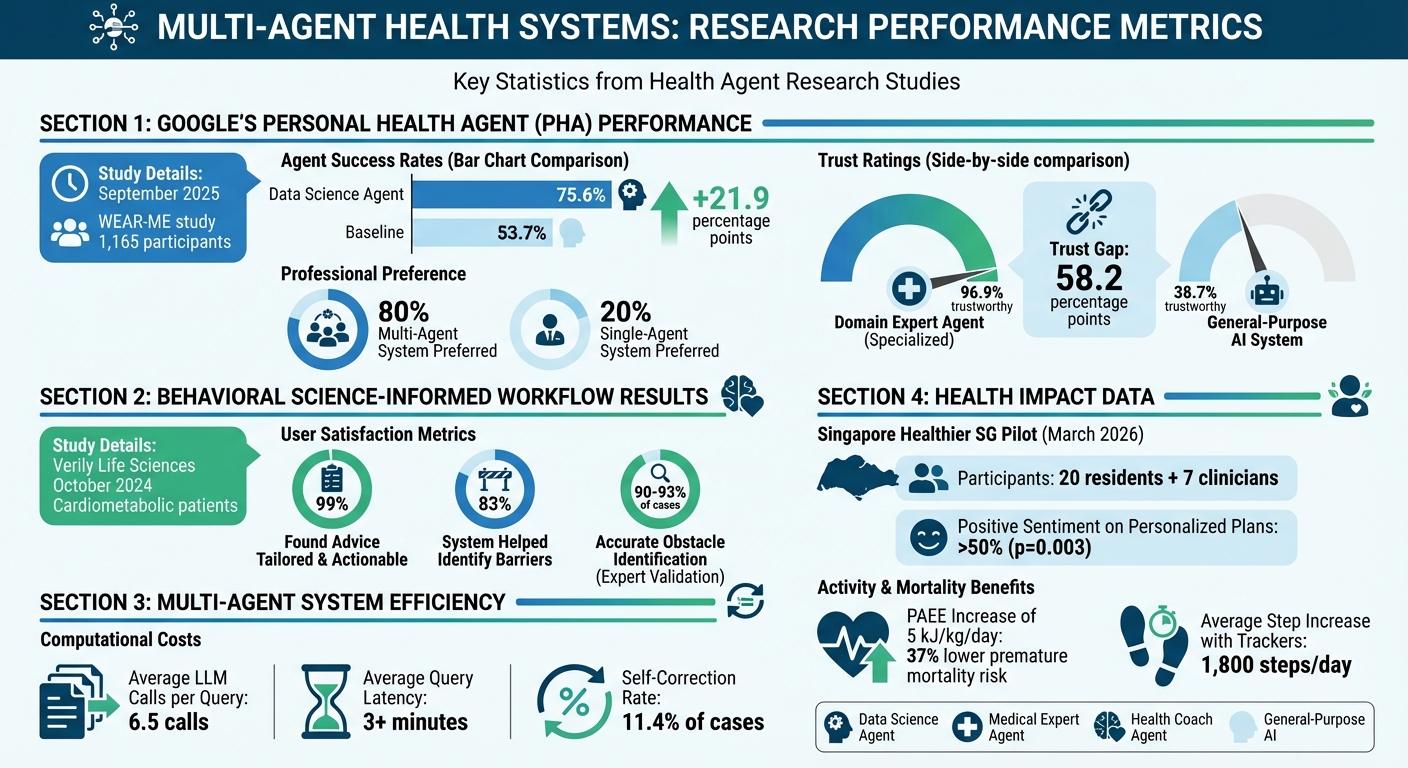
Multi-Agent Health Systems Performance: Key Statistics and Success Rates

Multi-Agent Health Systems Performance: Key Statistics and Success Rates

Multi-Agent Collaboration for Habit Insights

A recent study revealed that splitting health support tasks among specialized AI agents delivers better outcomes than relying on a single, all-purpose system. In September 2025, Google Research introduced the Personal Health Agent (PHA), a multi-agent framework tested with data from 1,165 participants in the WEAR-ME study. This framework integrated Fitbit metrics, blood biomarkers, and health questionnaires, distributing tasks among three specialized agents:

  • Data Science Agent: Focused on numerical analysis.

  • Domain Expert Agent: Provided medical expertise.

  • Health Coach Agent: Aimed at driving behavior change.

The results were promising. The Data Science agent achieved a 75.6% success rate in generating statistical analysis plans, significantly outperforming the baseline rate of 53.7%. Health professionals favored the collaborative system in 80% of evaluations, and users rated the Domain Expert agent as 96.9% trustworthy, compared to just 38.7% for general-purpose systems. These findings underscore the effectiveness of assigning specialized roles, opening doors for approaches that incorporate behavioral science into workflows.

Behavioral Science-Informed Workflows

Building on the idea of specialization, Verily Life Sciences introduced a behavioral science-informed workflow in October 2024, designed for personalized nutrition coaching. A key feature of this system was the Barrier Identification Agent, which mapped 28 common nutrition challenges - like decision fatigue and present bias - to over 100 evidence-based strategies.

The system's validation study, conducted with cardiometabolic patients, demonstrated high levels of engagement. Every participant found the AI coach's advice both tailored and actionable, and 83% reported that the system helped them pinpoint specific barriers to their health goals. Additionally, experts confirmed that the AI agent accurately identified primary health obstacles in 90% to 93% of cases. These results highlight how behavioral science can enhance personalization and effectiveness in health optimization tools.

How Behavioral Data Is Processed in Health Agent Workflows

Data Collection and Integration

Health agents rely on data from wearables, lab tests, and questionnaires, standardizing it for specialized analysis. The Model Context Protocol (MCP) plays a key role here, enabling seamless access to fragmented data sources - like Apple Health and clinic-based biomarkers - without the need to consolidate everything into one central database. This approach allows for real-time integration across various platforms.

A great example of this in action is Google Research's Personal Health Agent (PHA), showcased in September 2025 during the WEAR-ME study. With data from 1,165 participants, the PHA used an intelligent orchestrator to manage workflows. Tasks were dynamically assigned: numerical analysis went to the Data Science agent, medical interpretation to the Domain Expert agent, and behavior strategies to the Health Coach agent. This streamlined routing allowed for quicker, more precise interventions.

To minimize errors common with large language models, agents like PHIA and PHA translate natural language queries into Python/Pandas code. This code runs in a secure sandboxed environment, ensuring precise statistical analysis of time-series data. The process involves a two-stage pipeline: first, ambiguous queries are converted into detailed statistical plans; next, the system executes accurate Python/Pandas code. By separating the intent of computation from its execution, reliability is significantly improved.

This integrated system is designed to detect and respond to long-term health metric deviations effectively.

Anomaly Detection and Habit Deviations

Health agents monitor your metrics by comparing current data with long-term baselines. For instance, if your resting heart rate drops by 4.2 beats per minute compared to your three-month average, the Data Science agent flags this change through statistical analysis. The system uses the ReAct framework, cycling through three stages - Thought, Act, and Observe - to refine its understanding of deviations using wearable data and tool outputs.

When an anomaly is identified, the orchestrator routes the information from the Data Science agent to the Domain Expert agent for medical interpretation. From there, the Health Coach agent steps in to craft a response. Interestingly, these agentic systems can correct their own errors in about 11.4% of cases by identifying the mistake and recalculating in subsequent steps.

This anomaly detection framework sets the stage for predictive modeling, which takes proactive health management a step further.

Predictive Modeling for Adherence Risk

The insights gained from detecting anomalies feed directly into predictive models designed to address adherence risks. For example, if the Data Science agent notices trends like reduced step counts or irregular sleep patterns, it creates a statistical analysis plan. The Health Coach agent then uses this information to track progress and identify potential adherence gaps. Techniques like Motivational Interviewing and SMART goal setting are applied to prevent habits from breaking down entirely.

Emerging tools are now incorporating "Behavioral Token Conditioning", which identifies missing data or health risks before you even ask for help. This proactive approach allows for adjustments, such as scaling goals when sensor data indicates a disruption in habits. Every recommendation undergoes review by the Domain Expert agent to ensure it aligns with your health records and biomarkers, avoiding any physiological conflicts.

Healify's shared ontology enhances this process by enabling consistent interpretation of data from various wearables and lab systems. This means your sleep tracker can inform your fitness coach, lab results can update your supplement plan, and your long-term goals can guide real-time decisions - all seamlessly and without manual input or contradictory advice from disconnected apps.

Outcomes from Agent-Driven Habit Formation

Personalized Tactics and User Motivation

Agent-driven workflows are making strides in improving user engagement and adherence by blending personalized strategies with behavioral science. A notable example comes from Verily Life Sciences, which, in October 2024, tested a behavioral science-informed workflow for nutrition coaching with cardiometabolic patients. The study involved six participants and featured two key agents: a "Barrier Identification Agent" that pinpointed the root causes of dietary challenges - like decision fatigue or present bias - and a "Strategy Execution Agent" that provided practical advice, such as meal-planning "Rules of Thumb." The results were promising: 99% of participants felt the advice was tailored to their needs, and most reported feeling more confident about making positive changes. Additionally, five out of six participants said the assistant helped them identify obstacles to better health. This highlights the power of addressing behavioral barriers directly, rather than just managing surface-level symptoms, to boost motivation and improve outcomes.

Trust plays a crucial role in user motivation. For instance, in Google's PHA, the Domain Expert agent achieved a trustworthiness rating of 96.9% - far outperforming general-purpose AI systems, which scored only 38.7%. These personalized approaches demonstrate how agent-driven systems can go beyond habit-building to support long-term health improvements.

Healthspan Optimization Through Healify

Healify

When agents collaborate using shared insights, the benefits extend beyond habits to measurable healthspan improvements. A pilot study in March 2026, conducted as part of Singapore's Healthier SG program, tested an AI-powered digital assistant with 20 residents and seven clinicians. The results showed that most participants appreciated the detailed and personalized nature of their health plans. Over half of the feedback highlighted positive sentiment toward individualized exercise recommendations, with statistical significance (p=0.003).

Healify takes this a step further by integrating data from wearables and lab results, providing seamless, automated health guidance. Research underscores the impact of these tools: for example, users with a Physical Activity Energy Expenditure (PAEE) just 5 kJ/kg/day higher enjoy a 37% lower risk of premature mortality, while activity trackers typically encourage an average increase of 1,800 steps per day. When agents work together in harmony, they create a system where personalization, clarity, and automation operate in the background, helping to optimize healthspan effortlessly.

Challenges and Future Directions in Behavioral Data Research

Limitations in Current Research

Behavioral data research faces several ongoing challenges that complicate its workflows. One major issue is data fragmentation. Health information is scattered across various platforms - like Fitbit, Apple Health, Garmin, electronic health records, and wellness apps - none of which seamlessly integrate. This lack of compatibility forces researchers to rely on manual integration, which is both time-consuming and error-prone.

Another hurdle is the lack of metric standardization. For instance, a Garmin "stress score" cannot be directly compared to a Whoop "strain" metric, making cross-platform analysis nearly impossible. Without a unified framework, drawing meaningful insights from diverse data sets becomes a daunting task.

On the technical side, multi-agent systems often come with high computational costs. Studies show they average 6.5 large language model (LLM) calls per query, resulting in latencies exceeding three minutes. Interestingly, research has revealed a "parameter paradox", where smaller, lightweight models sometimes outperform larger ones in integration tasks. To improve personalized health agent workflows, fine-tuning these parameters is crucial.

Privacy and safety concerns also remain at the forefront. Effective escalation protocols to clinicians and clear guidelines for identifying critical red flags are essential to ensure user safety. Additionally, false positives in anomaly detection can erode user trust, emphasizing the need for a balanced approach that combines proactive support with careful restraint.

These challenges highlight the need for innovative solutions that can address these systemic issues.

Trends in Scalable Agent Ecosystems

To tackle these challenges, researchers and developers are increasingly adopting decentralized, agent-native architectures. These systems move away from traditional, deterministic microservices toward probabilistic agentic systems that are more adaptable and context-aware. For example, emerging protocols like the Model Context Protocol (MCP) and Agent-to-Agent (A2A) standards are designed to improve interoperability. They allow agents to access and orchestrate data from multiple sources without relying on centralized storage, enabling faster, more secure, and context-rich interactions.

Momentum's October 2025 release of open-source infrastructure, including an FHIR MCP Server and Apple Health MCP Server, represents a significant step forward. These tools provide a modular framework for connecting medical records and wearable data, streamlining the integration process.

Building on this vision, Healify offers a plug-and-play protocol that addresses the core issues of disconnected data and redundant tools. Instead of creating isolated data silos, developers can build specialized agents that interact through a shared context layer equipped with a health-specific ontology. This setup enables real-time decision-making across multiple health metrics.

The industry is also moving away from "super-apps" in favor of modular MCP servers. These servers allow agents to access data on demand, rather than storing it all in one place. As Cognaptus aptly described:

"Separate compute, context, and coaching, then make the handoffs auditable. That's how consumer health AI graduates from vibes to vitals".

This modular, decentralized approach not only scales precision health but also ensures privacy and compliance with regulatory standards.

Conclusion

Behavioral data is changing the way we think about health, moving us from broad, one-size-fits-all advice to precise, context-driven insights rooted in real-world behaviors. Systems using multiple specialized agents - handling tasks like data analysis, medical reasoning, and behavioral coaching - are proving to be more effective than all-in-one approaches. Research has shown that these multi-agent systems excel at creating detailed and reliable statistical plans.

The transition from “vibes to vitals” depends on infrastructure that can integrate fragmented data without creating new barriers. As Cognaptus aptly stated:

"A personal health agent shouldn't just chat about sleep; it should compute it, contextualize it, and coach you through changing it".

Healify plays a key role here, offering the interoperability needed for specialized agents to access wearable data and lab results in real time - without centralizing sensitive information. By connecting previously isolated data, Healify addresses the demand for cohesive, actionable insights.

In a 2025 My Heart Counts study, most participants favored AI-generated coaching messages, with the Personal Health Insights Agent receiving high marks for accuracy and user satisfaction.

These advancements set the stage for a new era in health ecosystems. Imagine a setup where your sleep tracker communicates with your fitness coach, your lab results adjust your supplement plan, and your long-term health goals guide everyday decisions. Healify's shared context layer and health-focused framework make this vision achievable now. Developers can create solutions that integrate seamlessly into a dynamic ecosystem, while users gain the clarity and personalization that’s been missing from a jumble of disconnected apps.

Behavioral data and health agents are already reshaping personal health. The next big challenge is scaling these precision-driven systems to deliver vitals over vibes on a much larger scale.

FAQs

What behavioral data should a health agent use?

To create personalized health interventions, a health agent should tap into a variety of behavioral data. This might include information from wearables, such as activity levels, sleep patterns, and heart rate, along with other inputs like blood biomarkers, medical records, and survey responses. By blending these data sources, agents can gain a well-rounded understanding of an individual's health habits. This approach allows for tailored recommendations and strategies for building healthier routines, all based on precise and up-to-date insights.

How does MCP connect my health data without centralizing it?

MCP links your health data without gathering it in one central location by utilizing a multi-agent system. Each AI agent handles data locally - whether it’s from wearables, lab results, or medical records - and collaborates through a shared context layer. This approach keeps your data decentralized, improving privacy and security while still delivering tailored insights and coordinated health management across all your sources.

How do multi-agent health systems stay accurate and safe?

Multi-agent health systems achieve precision and safety by employing specialized agents, each focusing on specific tasks like spotting anomalies, analyzing trends, or offering tailored recommendations. These agents work together within a well-organized framework, minimizing mistakes and boosting dependability. To ensure the insights are clinically meaningful, validation processes - such as expert reviews and testing with synthetic datasets - are integral. This setup not only supports ongoing improvements and customization but also ensures that health interventions remain safe and accurate.

Related Blog Posts

Health agents need better data integration. Current systems struggle with fragmented data from wearables, apps, and medical records, limiting AI accuracy to just 22%. This "context gap" affects how well health agents can deliver personalized advice.

Key Points:

  • Fragmented Data Problem: Health data lives in silos - wearables, gym logs, nutrition apps, and medical records don't talk to each other.

  • AI Limitations: Without unified data, insights are often inaccurate or incomplete.

  • Solution: Tools like Healify act as a bridge, connecting data sources (e.g., Apple Health, lab results) for real-time, personalized guidance.

Research Highlights:

  • Multi-Agent Systems: Specialized AI agents (data analysis, medical expertise, behavior coaching) outperform all-purpose systems. Example: Google's PHA framework improved analysis success rates to 75.6%.

  • Behavioral Science Integration: AI tools addressing barriers like decision fatigue saw 83% user satisfaction in nutrition coaching trials.

How It Works:

  • Data Integration: Protocols like MCP enable agents to access multiple data sources without centralizing sensitive information.

  • Anomaly Detection: AI flags deviations (e.g., heart rate changes) and adjusts recommendations accordingly.

  • Predictive Modeling: Agents identify risks (e.g., adherence gaps) and apply strategies like SMART goals to keep habits on track.

Challenges:

  • Data Fragmentation: Wearables and apps use incompatible metrics, making cross-platform analysis tough.

  • System Latency: Multi-agent systems face delays, with some queries taking over three minutes.

  • Privacy Concerns: Escalation protocols and error handling need improvement to build user trust.

Future Trends:

  • Decentralized Architectures: Modular MCP servers reduce data silos and improve interoperability.

  • Collaborative Agents: Shared insights between agents (e.g., fitness and nutrition) improve health outcomes without manual effort.

The takeaway? Unified, agent-driven workflows are transforming health management by connecting fragmented data, improving accuracy, and enabling personalized, actionable insights.

Using AI Agents to Analyze Your Medical Data with n8n + PostgreSQL + Ollama + Apple Health

n8n

Research Studies on Behavioral Data in Health Optimization

Multi-Agent Health Systems Performance: Key Statistics and Success Rates

Multi-Agent Health Systems Performance: Key Statistics and Success Rates

Multi-Agent Collaboration for Habit Insights

A recent study revealed that splitting health support tasks among specialized AI agents delivers better outcomes than relying on a single, all-purpose system. In September 2025, Google Research introduced the Personal Health Agent (PHA), a multi-agent framework tested with data from 1,165 participants in the WEAR-ME study. This framework integrated Fitbit metrics, blood biomarkers, and health questionnaires, distributing tasks among three specialized agents:

  • Data Science Agent: Focused on numerical analysis.

  • Domain Expert Agent: Provided medical expertise.

  • Health Coach Agent: Aimed at driving behavior change.

The results were promising. The Data Science agent achieved a 75.6% success rate in generating statistical analysis plans, significantly outperforming the baseline rate of 53.7%. Health professionals favored the collaborative system in 80% of evaluations, and users rated the Domain Expert agent as 96.9% trustworthy, compared to just 38.7% for general-purpose systems. These findings underscore the effectiveness of assigning specialized roles, opening doors for approaches that incorporate behavioral science into workflows.

Behavioral Science-Informed Workflows

Building on the idea of specialization, Verily Life Sciences introduced a behavioral science-informed workflow in October 2024, designed for personalized nutrition coaching. A key feature of this system was the Barrier Identification Agent, which mapped 28 common nutrition challenges - like decision fatigue and present bias - to over 100 evidence-based strategies.

The system's validation study, conducted with cardiometabolic patients, demonstrated high levels of engagement. Every participant found the AI coach's advice both tailored and actionable, and 83% reported that the system helped them pinpoint specific barriers to their health goals. Additionally, experts confirmed that the AI agent accurately identified primary health obstacles in 90% to 93% of cases. These results highlight how behavioral science can enhance personalization and effectiveness in health optimization tools.

How Behavioral Data Is Processed in Health Agent Workflows

Data Collection and Integration

Health agents rely on data from wearables, lab tests, and questionnaires, standardizing it for specialized analysis. The Model Context Protocol (MCP) plays a key role here, enabling seamless access to fragmented data sources - like Apple Health and clinic-based biomarkers - without the need to consolidate everything into one central database. This approach allows for real-time integration across various platforms.

A great example of this in action is Google Research's Personal Health Agent (PHA), showcased in September 2025 during the WEAR-ME study. With data from 1,165 participants, the PHA used an intelligent orchestrator to manage workflows. Tasks were dynamically assigned: numerical analysis went to the Data Science agent, medical interpretation to the Domain Expert agent, and behavior strategies to the Health Coach agent. This streamlined routing allowed for quicker, more precise interventions.

To minimize errors common with large language models, agents like PHIA and PHA translate natural language queries into Python/Pandas code. This code runs in a secure sandboxed environment, ensuring precise statistical analysis of time-series data. The process involves a two-stage pipeline: first, ambiguous queries are converted into detailed statistical plans; next, the system executes accurate Python/Pandas code. By separating the intent of computation from its execution, reliability is significantly improved.

This integrated system is designed to detect and respond to long-term health metric deviations effectively.

Anomaly Detection and Habit Deviations

Health agents monitor your metrics by comparing current data with long-term baselines. For instance, if your resting heart rate drops by 4.2 beats per minute compared to your three-month average, the Data Science agent flags this change through statistical analysis. The system uses the ReAct framework, cycling through three stages - Thought, Act, and Observe - to refine its understanding of deviations using wearable data and tool outputs.

When an anomaly is identified, the orchestrator routes the information from the Data Science agent to the Domain Expert agent for medical interpretation. From there, the Health Coach agent steps in to craft a response. Interestingly, these agentic systems can correct their own errors in about 11.4% of cases by identifying the mistake and recalculating in subsequent steps.

This anomaly detection framework sets the stage for predictive modeling, which takes proactive health management a step further.

Predictive Modeling for Adherence Risk

The insights gained from detecting anomalies feed directly into predictive models designed to address adherence risks. For example, if the Data Science agent notices trends like reduced step counts or irregular sleep patterns, it creates a statistical analysis plan. The Health Coach agent then uses this information to track progress and identify potential adherence gaps. Techniques like Motivational Interviewing and SMART goal setting are applied to prevent habits from breaking down entirely.

Emerging tools are now incorporating "Behavioral Token Conditioning", which identifies missing data or health risks before you even ask for help. This proactive approach allows for adjustments, such as scaling goals when sensor data indicates a disruption in habits. Every recommendation undergoes review by the Domain Expert agent to ensure it aligns with your health records and biomarkers, avoiding any physiological conflicts.

Healify's shared ontology enhances this process by enabling consistent interpretation of data from various wearables and lab systems. This means your sleep tracker can inform your fitness coach, lab results can update your supplement plan, and your long-term goals can guide real-time decisions - all seamlessly and without manual input or contradictory advice from disconnected apps.

Outcomes from Agent-Driven Habit Formation

Personalized Tactics and User Motivation

Agent-driven workflows are making strides in improving user engagement and adherence by blending personalized strategies with behavioral science. A notable example comes from Verily Life Sciences, which, in October 2024, tested a behavioral science-informed workflow for nutrition coaching with cardiometabolic patients. The study involved six participants and featured two key agents: a "Barrier Identification Agent" that pinpointed the root causes of dietary challenges - like decision fatigue or present bias - and a "Strategy Execution Agent" that provided practical advice, such as meal-planning "Rules of Thumb." The results were promising: 99% of participants felt the advice was tailored to their needs, and most reported feeling more confident about making positive changes. Additionally, five out of six participants said the assistant helped them identify obstacles to better health. This highlights the power of addressing behavioral barriers directly, rather than just managing surface-level symptoms, to boost motivation and improve outcomes.

Trust plays a crucial role in user motivation. For instance, in Google's PHA, the Domain Expert agent achieved a trustworthiness rating of 96.9% - far outperforming general-purpose AI systems, which scored only 38.7%. These personalized approaches demonstrate how agent-driven systems can go beyond habit-building to support long-term health improvements.

Healthspan Optimization Through Healify

Healify

When agents collaborate using shared insights, the benefits extend beyond habits to measurable healthspan improvements. A pilot study in March 2026, conducted as part of Singapore's Healthier SG program, tested an AI-powered digital assistant with 20 residents and seven clinicians. The results showed that most participants appreciated the detailed and personalized nature of their health plans. Over half of the feedback highlighted positive sentiment toward individualized exercise recommendations, with statistical significance (p=0.003).

Healify takes this a step further by integrating data from wearables and lab results, providing seamless, automated health guidance. Research underscores the impact of these tools: for example, users with a Physical Activity Energy Expenditure (PAEE) just 5 kJ/kg/day higher enjoy a 37% lower risk of premature mortality, while activity trackers typically encourage an average increase of 1,800 steps per day. When agents work together in harmony, they create a system where personalization, clarity, and automation operate in the background, helping to optimize healthspan effortlessly.

Challenges and Future Directions in Behavioral Data Research

Limitations in Current Research

Behavioral data research faces several ongoing challenges that complicate its workflows. One major issue is data fragmentation. Health information is scattered across various platforms - like Fitbit, Apple Health, Garmin, electronic health records, and wellness apps - none of which seamlessly integrate. This lack of compatibility forces researchers to rely on manual integration, which is both time-consuming and error-prone.

Another hurdle is the lack of metric standardization. For instance, a Garmin "stress score" cannot be directly compared to a Whoop "strain" metric, making cross-platform analysis nearly impossible. Without a unified framework, drawing meaningful insights from diverse data sets becomes a daunting task.

On the technical side, multi-agent systems often come with high computational costs. Studies show they average 6.5 large language model (LLM) calls per query, resulting in latencies exceeding three minutes. Interestingly, research has revealed a "parameter paradox", where smaller, lightweight models sometimes outperform larger ones in integration tasks. To improve personalized health agent workflows, fine-tuning these parameters is crucial.

Privacy and safety concerns also remain at the forefront. Effective escalation protocols to clinicians and clear guidelines for identifying critical red flags are essential to ensure user safety. Additionally, false positives in anomaly detection can erode user trust, emphasizing the need for a balanced approach that combines proactive support with careful restraint.

These challenges highlight the need for innovative solutions that can address these systemic issues.

Trends in Scalable Agent Ecosystems

To tackle these challenges, researchers and developers are increasingly adopting decentralized, agent-native architectures. These systems move away from traditional, deterministic microservices toward probabilistic agentic systems that are more adaptable and context-aware. For example, emerging protocols like the Model Context Protocol (MCP) and Agent-to-Agent (A2A) standards are designed to improve interoperability. They allow agents to access and orchestrate data from multiple sources without relying on centralized storage, enabling faster, more secure, and context-rich interactions.

Momentum's October 2025 release of open-source infrastructure, including an FHIR MCP Server and Apple Health MCP Server, represents a significant step forward. These tools provide a modular framework for connecting medical records and wearable data, streamlining the integration process.

Building on this vision, Healify offers a plug-and-play protocol that addresses the core issues of disconnected data and redundant tools. Instead of creating isolated data silos, developers can build specialized agents that interact through a shared context layer equipped with a health-specific ontology. This setup enables real-time decision-making across multiple health metrics.

The industry is also moving away from "super-apps" in favor of modular MCP servers. These servers allow agents to access data on demand, rather than storing it all in one place. As Cognaptus aptly described:

"Separate compute, context, and coaching, then make the handoffs auditable. That's how consumer health AI graduates from vibes to vitals".

This modular, decentralized approach not only scales precision health but also ensures privacy and compliance with regulatory standards.

Conclusion

Behavioral data is changing the way we think about health, moving us from broad, one-size-fits-all advice to precise, context-driven insights rooted in real-world behaviors. Systems using multiple specialized agents - handling tasks like data analysis, medical reasoning, and behavioral coaching - are proving to be more effective than all-in-one approaches. Research has shown that these multi-agent systems excel at creating detailed and reliable statistical plans.

The transition from “vibes to vitals” depends on infrastructure that can integrate fragmented data without creating new barriers. As Cognaptus aptly stated:

"A personal health agent shouldn't just chat about sleep; it should compute it, contextualize it, and coach you through changing it".

Healify plays a key role here, offering the interoperability needed for specialized agents to access wearable data and lab results in real time - without centralizing sensitive information. By connecting previously isolated data, Healify addresses the demand for cohesive, actionable insights.

In a 2025 My Heart Counts study, most participants favored AI-generated coaching messages, with the Personal Health Insights Agent receiving high marks for accuracy and user satisfaction.

These advancements set the stage for a new era in health ecosystems. Imagine a setup where your sleep tracker communicates with your fitness coach, your lab results adjust your supplement plan, and your long-term health goals guide everyday decisions. Healify's shared context layer and health-focused framework make this vision achievable now. Developers can create solutions that integrate seamlessly into a dynamic ecosystem, while users gain the clarity and personalization that’s been missing from a jumble of disconnected apps.

Behavioral data and health agents are already reshaping personal health. The next big challenge is scaling these precision-driven systems to deliver vitals over vibes on a much larger scale.

FAQs

What behavioral data should a health agent use?

To create personalized health interventions, a health agent should tap into a variety of behavioral data. This might include information from wearables, such as activity levels, sleep patterns, and heart rate, along with other inputs like blood biomarkers, medical records, and survey responses. By blending these data sources, agents can gain a well-rounded understanding of an individual's health habits. This approach allows for tailored recommendations and strategies for building healthier routines, all based on precise and up-to-date insights.

How does MCP connect my health data without centralizing it?

MCP links your health data without gathering it in one central location by utilizing a multi-agent system. Each AI agent handles data locally - whether it’s from wearables, lab results, or medical records - and collaborates through a shared context layer. This approach keeps your data decentralized, improving privacy and security while still delivering tailored insights and coordinated health management across all your sources.

How do multi-agent health systems stay accurate and safe?

Multi-agent health systems achieve precision and safety by employing specialized agents, each focusing on specific tasks like spotting anomalies, analyzing trends, or offering tailored recommendations. These agents work together within a well-organized framework, minimizing mistakes and boosting dependability. To ensure the insights are clinically meaningful, validation processes - such as expert reviews and testing with synthetic datasets - are integral. This setup not only supports ongoing improvements and customization but also ensures that health interventions remain safe and accurate.

Related Blog Posts

Finally take control of your health

Finally take control of your health

© 2026 Healify Limited
English
© 2026 Healify Limited